
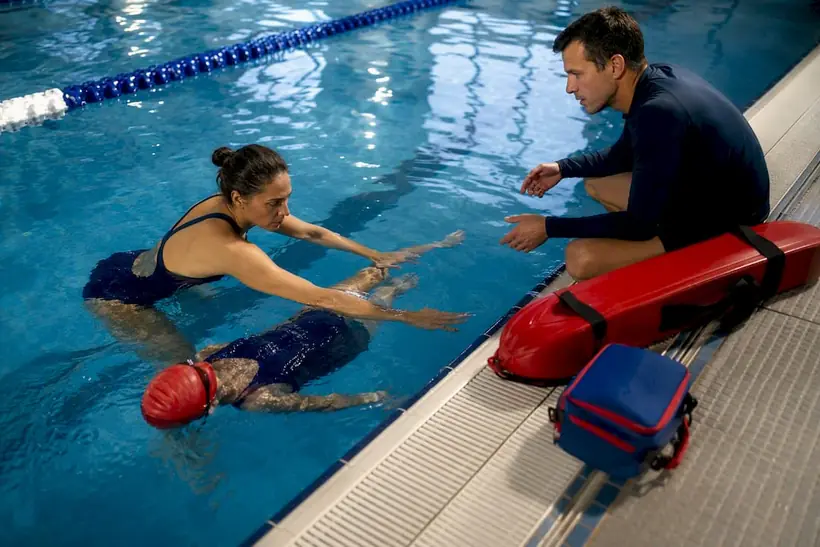
The fastest, most portable way to get qualified to teach survival swimming to infants and children is to earn the American Red Cross Water Safety Instructor (WSI) credential alongside current pediatric CPR and First Aid. Plan on a blended coursework of about a day or two spread over several sessions and tuition costs varying by provider. Once you’re enrolled, book your CPR class in the same week, and if you want to specialize in infants, start researching pediatric survival syllabi you can stack on afterward.
TL;DR:
- The American Red Cross WSI credential is the most widely recognized and suitable option for independent instructors and those aiming to work at multiple facilities.
- Certification requires current pediatric CPR/AED and First Aid, along with about 25 to 30 hours of training, including online modules and in-person practice.
- Selecting a program with dedicated infant content, ample supervised practicum hours, and recognized certification is crucial for safety and employability.
- Recertification of CPR and First Aid every one to two years is essential to maintain facility access and credibility, especially for independent instructors.
- Adding specialized infant survival syllabi enhances depth but typically supplements core credentials like WSI rather than replacing them.
Which Certification Path Should You Choose to Get Survival Swim Certified?
Four credentials dominate the U.S. market, and each one serves a different career goal. Picking the wrong one first can cost you months of redundant training.
- American Red Cross WSI: This is the default teaching credential most swim schools, community pools, and parents recognize on sight. It’s blended (online modules plus in-person skill sessions), it requires current CPR/AED as a prerequisite or add-on, and Red Cross backs it with a digital certificate carrying a unique ID and QR code that employers can verify instantly. If you plan to freelance, work at multiple facilities, or eventually run your own program, WSI is the credential to get first.
- ASCA (American Swimming Coaches Association): ASCA certification targets coaches building a competitive-swimming career track rather than beginner or survival instruction. Choose it if your long-term goal is club or team coaching, not infant water safety.
- Starfish Aquatics Institute and YMCA instructor training: Both run largely as employer-based systems. Many YMCA branches and Starfish-affiliated facilities train and certify their own staff internally, which makes these credentials strong choices if you already have a job lined up at one of those organizations, but weaker if you want to work independently.
- Specialized infant survival syllabi: These programs teach the specific skills survival swimming for babies and toddlers demands, like the back-float reflex and clothes-on water competency. They add real depth, but they rarely stand alone as a hiring credential. Most instructors add one on top of a WSI-level certification rather than instead of it.
Swim lessons in Palm Beach & Broward County
Free 30 minute assessment. Try before you enroll, no commitment.
Book Free AssessmentA practical industry comparison of these four paths reaches the same conclusion: WSI is the best starting point for most independent instructors because of how widely facilities and insurers recognize it.
What Prerequisites and Safety Credentials Do You Need?
Before any facility hires you or lets you touch a toddler in a pool, they’ll want proof of a specific set of safety credentials, not just a teaching diploma.
- Pediatric CPR/AED and First Aid: Nearly every employer requires current pediatric-inclusive CPR, and these courses typically need renewal every one to two years, a much shorter cycle than the teaching credential itself.
- Lifeguard certification vs. teaching certification: These are not interchangeable. A lifeguard cert covers rescue and pool supervision; a teaching cert like WSI covers instruction technique. If you’ll be renting a pool without lifeguard staff on deck, you may need to hold a lifeguard certification yourself or budget for coverage, depending on the facility’s policy.
- Age and fitness expectations: Most programs set a minimum age around 15 to 16 for CPR and 17 for full instructor certification, plus a basic swim-skill test before you’re admitted to training.
- Insurance and background checks: Independent instructors typically need general liability insurance, and any program working with minors will run a background check as a standard condition of certification or employment.
Pro Tip: Get your pediatric CPR card scheduled before your WSI course starts, not after. Several WSI programs require proof of current CPR just to sit the practical exam.
How Long Does It Take and What Does It Cost?
Formal swim instructor training generally runs 16 to 36 hours depending on the credential, with WSI landing on the higher end of that range at 25 to 30 hours split between online modules and in-person practicum sessions.
Budget for the credential itself and its supporting pieces separately:
- WSI tuition: roughly $250 to $400, varying by chapter and region.
- Pediatric CPR/AED and First Aid: usually $50 to $100 on top of the teaching course.
- Background check and insurance: costs vary by state and provider, typically under $100 combined.
- Specialized survival-instructor or business-launch programs: some intensive tracks that bundle mentorship and business setup support run into the thousands of dollars.
Ready to get your child in the water?
Book a free assessmentPrices swing based on who’s paying. Employer-sponsored trainees at a YMCA or aquatics club often get tuition covered or discounted, while independent instructors building a private practice pay the full rate and add business costs like liability coverage and marketing on their own.
How Do You Choose the Right Training Program?
Not every certification program that calls itself “survival swim training” actually prepares you to teach safely or get hired. Run every candidate program through this checklist:
- Does the curriculum include dedicated infant and toddler content, not just general learn-to-swim technique?
- How many supervised in-water practicum hours are built into the course?
- What’s the instructor-to-student ratio during hands-on sessions?
- Is pediatric CPR/First Aid included, bundled, or a separate requirement?
- Does the program offer mentorship or job placement support after certification?
- What’s the recertification interval, and what does renewal involve?
- Is the credential accepted by major swim schools, YMCAs, and insurers in your area?
- Can you talk to a current or recent trainee about their experience?
Programs that pair supervised teaching hours with real mentorship tend to produce more confident instructors in their first year on the job, especially in private and survival-swim niches where there’s no senior instructor watching over your shoulder every session.
Watch for these red flags before you hand over tuition:
Ready to get your child in the water?
Book a free assessment- No in-water practicum, just video modules and a written quiz.
- Vague learning outcomes (“water confidence”) instead of measurable skills.
- No CPR or First Aid requirement anywhere in the program.
- No verifiable certification recognized by aquatic associations or accepted by local facilities.
How Superhero Swim Academy Trains Its Instructors
Superhero Swim Academy built its instructor program around the same standards this guide recommends: current CPR and First Aid, structured in-water practicum, and a proprietary survival-swim curriculum layered on top of foundational teaching skills. Every instructor also trains in parent-engagement practices, since keeping caregivers informed with clear goals and regular progress updates is part of the academy’s model, not an afterthought.
That approach has run through more than 2,500 children taught across Palm Beach and Broward counties, with parents reporting meaningful gains in swim ability and water confidence in short windows of instruction. For a trainee, the model maps cleanly onto three paths: private in-home instruction, a role at an established swim school, or eventually building your own survival swim program using the same structure.
Ready to get your child in the water?
Book a free assessmentStacking Credentials Is the Real Strategy Here
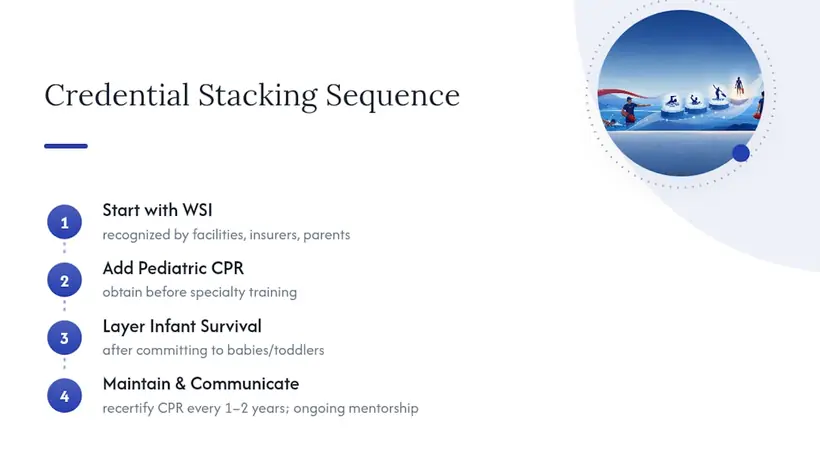
Most people ask “which certification is best” when the better question is which order to get them in. Start with WSI because it’s the credential facilities, insurers, and parents already recognize. Add pediatric CPR before, not after, and layer a specialty infant survival syllabus once you know you’re building a career around babies and toddlers rather than general swim lessons.
Recertification sneaks up on people. CPR lapses every one to two years, and letting it expire quietly is one of the fastest ways to lose facility access even when your teaching credential is still valid. Treat mentorship as ongoing, not a box you check during your first practicum. And be straightforward with parents about exactly what you’re certified in. Vague credentials erode trust faster than admitting you’re still building toward a specialty.
, SUPERHERO
Get Certified Through Superhero Swim Academy
Superhero Swim Academy runs a training model built specifically around infant and toddler survival swimming, not general swim lessons with a safety unit tacked on. That’s the practical difference for anyone comparing paths through the certifications discussed above: instructors here train in-person, in-water, alongside CPR/First Aid and the academy’s own pediatric-focused curriculum, so you’re not stitching together separate courses on your own.
Ready to get your child in the water?
Book a free assessment
Formats include private in-home instructor training, small-group sessions, and online course modules for trainees who want to study remotely before in-water practicum. Before you enroll, have your CPR/First Aid status ready and expect a background check as part of the process. For parents researching newborn-focused safety education alongside instructor training, newborn care fundamentals make a useful companion read.
Ready to start? Visit Superhero Swim Academy to check current enrollment options and get your training scheduled.