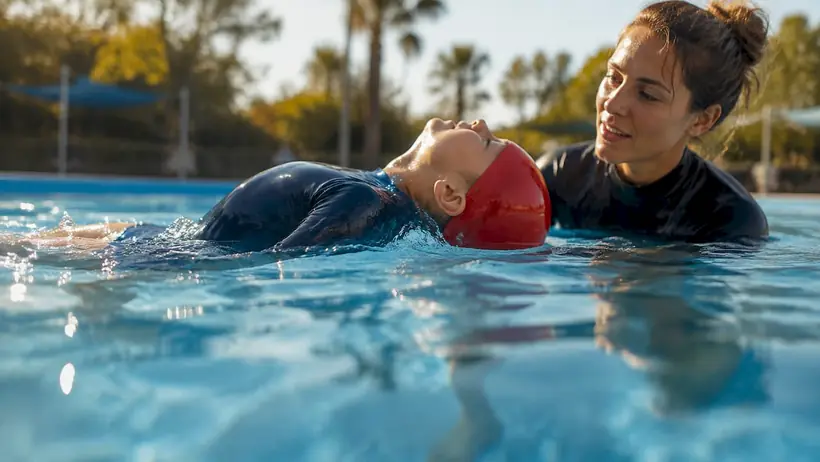
Roll to float is the skill that lets a young child flip from face-down in the water to a calm back float and breathe, without anyone’s help. It is the backbone of survival swimming for kids between roughly 6 months and 4 years old, and pediatric safety experts treat it as a non-negotiable piece of layered water safety. Casual pool time will not teach it reliably. Structured, professional lessons will.
TL;DR:
- Children should practice controlled, assisted rolls with consistent cues to develop the muscle memory needed for an automatic rollover to float in emergencies.
- Drills like jump-and-float and swim-float-swim chaining reinforce the reflex, with recommended sessions limited to under a minute to avoid fatigue and fear.
- Parents and instructors must prioritize safety by avoiding forceful submersions, ensuring constant supervision, and choosing properly supervised, structured lessons.
- Progression from passive floats to independent rolls varies by age, with infants focusing on basic breathing and older children linking movement with the float.
- Structured, consistent training with certified instructors faster and more reliably builds the critical survival skill than casual backyard practice.
What Roll to Float Is and Why It Works
Roll to float is a rollback maneuver: the child leads with the head and shoulders, rotates onto their back, and settles into a rest position with ears in the water and chest lifted toward the sky. It is considered the single most critical survival skill for children under age 4, because it converts a panicked fall into a breathing position in seconds.
The mechanics matter more than most parents realize. If a child lifts their head to look around, their hips drop and their legs sink, which burns energy fast and pulls them right back under. Leading with the head and shoulders during the roll keeps the body horizontal and the hips high, so breathing stays easy and effortless instead of a fight against gravity.
Swim lessons in Palm Beach & Broward County
Free 30 minute assessment. Try before you enroll, no commitment.
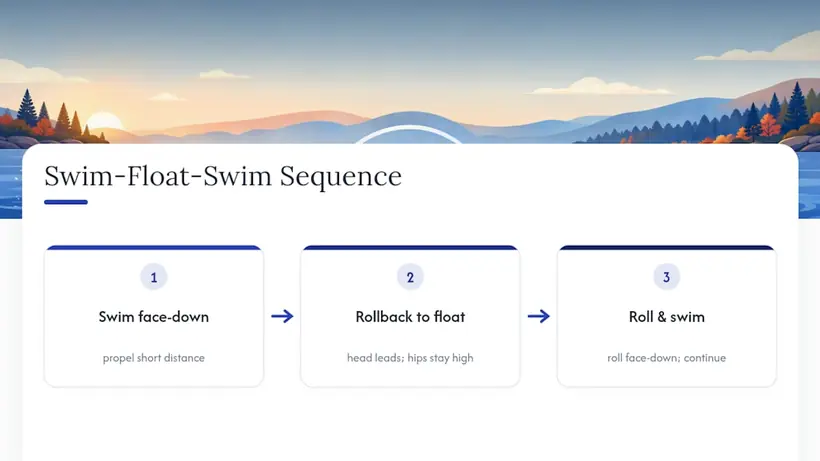
Book Free AssessmentThis rollback is the hinge of the swim‑float‑swim sequence, the method most survival programs build around. A child swims a short distance face-down, rolls to float and rests while breathing, then rolls back over and swims again. That alternation between propulsion and rest is what actually keeps kids alive in an unsupervised fall, not raw stroke speed.
How to Teach the Roll-to-Float Progression Step by Step
Teaching this skill works best as a ladder, not a single leap. Each rung builds the muscle memory for the one above it.
- Passive back float first. Support your child’s head and back in the water and let them practice breathing calmly while floating, with no rolling involved yet.
- Assisted roll with hand cues. Turn the child from face-down to back-float using a hand under the shoulder and a consistent verbal cue like “roll and rest,” so the motion pairs with language.
- Guided independent roll. Reduce your support gradually until the child initiates the roll themselves, with you ready to catch if they stall halfway.
- Sustained float. Once the roll is reliable, work on how long the child can hold the back float calmly before needing to move again.
Two warnings matter here. Never let the child lift their head during the roll. It is the single most common habit that wrecks the float, since a raised head sends the hips straight down. And never force repetition when a child is fighting you. Fear built into the drill defeats the purpose of training an automatic, calm response.
Pro Tip: Say the exact same cue phrase every single time you prompt the roll. Kids under 3 respond to consistent sound patterns faster than to varied instructions, even simple ones.
Ready to get your child in the water?
Book a free assessmentDrills That Build the Reflex: Jump-and-Float and Chaining
Two drills do most of the work in a real training plan.
- Jump-and-float: the child jumps from the pool edge with a spotter in the water, then immediately rolls back to float without touching the wall or reaching for anyone. This simulates an accidental fall far more realistically than a slow-motion practice roll.
- Swim‑float‑swim chaining: the child swims 3 to 5 feet face-down, rolls to float and rests, rolls back over, and swims again. Repeating this chain is what turns two isolated skills into one continuous survival response.
- Frequency: short, focused sessions two to three times a week beat one long weekend session, since the goal is repetition, not endurance.
- Adjust for age and comfort: infants stay in the rollback-to-float phase without added propulsion, while toddlers and preschoolers extend the swim distance as their comfort grows.
Pro Tip: Keep each rep under a minute. A child who is tired stops learning and starts merely surviving the drill, which is the opposite of what you want the water to feel like.
What to Expect at Each Age and Stage
Infants typically start with rollback-to-float alone in their first year. There is no expectation of propulsive swimming at this stage; the goal is simply teaching the body to find and hold a breathing position.
Toddlers from about 1 to 4 years add a short swim before the roll, gradually linking movement to the float so the two skills merge into one sequence. This is usually the widest stretch of skill development, since toddlers are also building general water comfort at the same time.
Older preschoolers chain the sequence faster and begin transitioning toward stroke-based breathing patterns, using the float as a rest point between longer swim segments rather than the main event. Progress at every stage looks less like a straight line and more like a series of small, sometimes stalled, steps. A child who nails the roll one week and forgets it the next is normal, not a setback.
Ready to get your child in the water?
Book a free assessment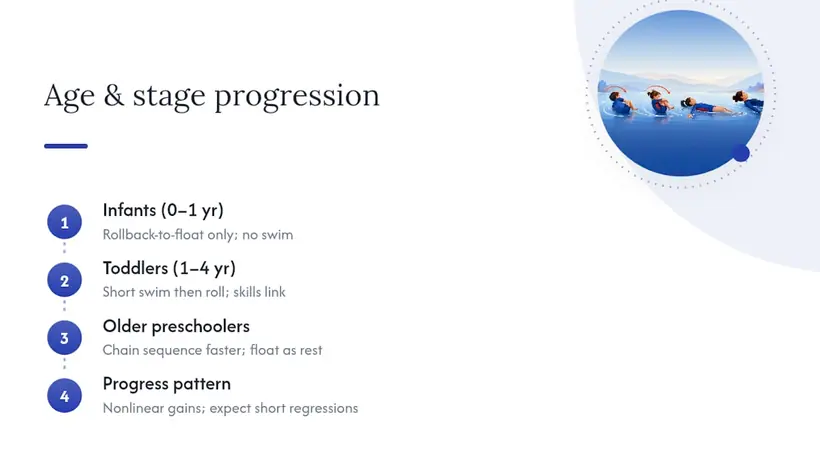
Keeping Practice Sessions Safe
Every drill needs a designated adult within arm’s reach, full attention on the water, no phone, no half-watching from a lounge chair. Choose a pool with appropriate depth for your child’s height, comfortable water temperature, and ideally a lifeguarded or otherwise supervised setting.
Never force submersion to “test” a child’s reaction. Simulated falls should come from safe, shallow setups like the pool edge, not from surprising a child mid-play. Drown-proofing programs that build back-floating skill this way report meaningfully lower drowning risk than no formal training at all.
Stop the session the moment you see real distress: coughing fits, panic crying, or a child physically fighting the water. Pushing through those signs teaches fear, not a reflex you can rely on in an emergency.
When Practice at Home Isn’t Enough
Backyard practice builds comfort, but it rarely builds the automatic motor response a real emergency requires. Survival-swim instructors train that reflex through structured, repeated drills specifically designed to hold up under stress, something casual pool play can’t replicate.
Before enrolling, check for these basics:
- Current CPR and First Aid certification for every instructor in the water.
- A defined, sequenced survival-swim curriculum rather than a loose lesson plan.
- Regular parent updates on measurable progress, not vague reassurance.
- Clear safety protocols for every session, stated up front.
Ready to get your child in the water?
Book a free assessmentWatch for red flags too: instructors who rush a child through rollback-to-float before it’s solid, or programs that keep parents entirely out of the loop on progress. The American Academy of Pediatrics has flagged drowning risk as a serious concern during periods when families spend more unsupervised time near water, and endorses structured lessons as a real countermeasure.
Superhero Swim Academy’s Approach to Roll-to-Float Training
Every Superheroswimacademy instructor carries CPR and First Aid certification and trains on the academy’s own survival-swim curriculum, built specifically around staged rollback-to-float progression. With a large number of children taught across Palm Beach and Broward counties, parents consistently report faster water comfort and stronger floating skills within just a few weeks. Lessons track each child’s rollback milestones and share regular progress updates directly with parents, so nobody is guessing where their kid stands.
Why Survival Skills Should Come Before Swim Lessons for Sport
Roll to float isn’t a nice add-on to swim lessons. It’s the floor everything else gets built on. Too many programs chase strokes and speed before a child can reliably breathe on their own in the water, and that ordering is backwards. Consistency beats intensity here: a few focused minutes a week, done right, outperforms one long session that leaves a child exhausted and scared. If your child hasn’t nailed this yet, this week is a good week to book a lesson or run a supervised drill at home.
, SUPERHERO
Ready to get your child in the water?
Book a free assessmentReady to Start Survival Swim Lessons?
If you’ve read this far, you already know backyard practice only goes so far. Superheroswimacademy is the option built specifically for this skill, not general swim lessons with survival training bolted on as an afterthought. Formats include private lessons at home, parent-and-child sessions, infant survival programs, and online parent training for families who want to reinforce the roll between lessons.
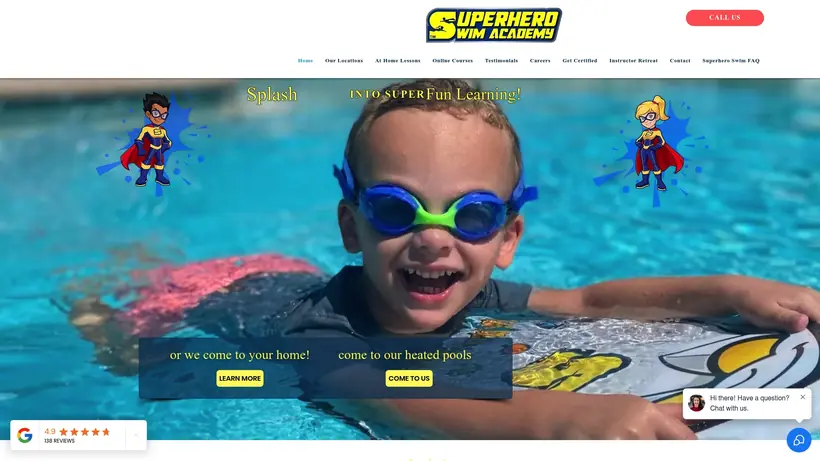
In the early weeks, expect steady, trackable markers: first assisted rolls, then independent rollback, then sustained floats that hold up even when your child is startled or tired. Parents get real updates on where their child stands, not vague check-ins. Booking starts on the Superhero Swim Academy landing page, where you can see available lesson formats for Palm Beach and Broward counties and pick the one that fits your child’s stage.