
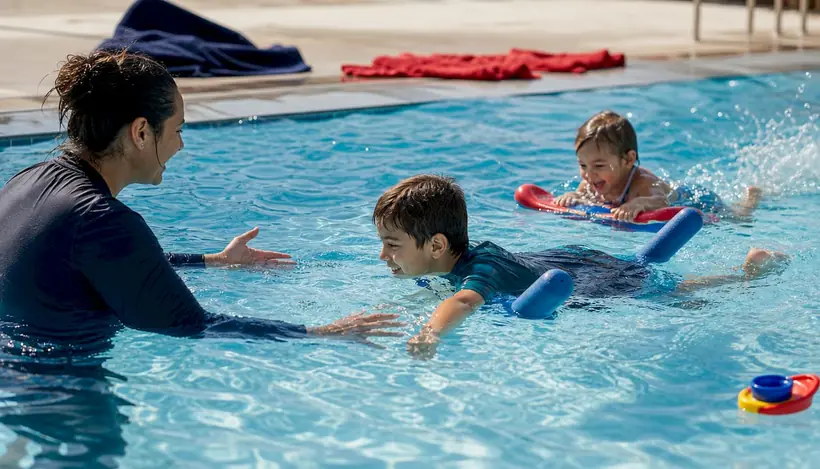
Yes, siblings can share swim lessons, but only when their age gap and skill level are close enough that neither child is bored or overwhelmed. The National Drowning Prevention Alliance stresses formal instruction and close supervision as the two biggest levers against child drowning, and that guidance doesn’t change whether your kids swim together or apart. What changes is logistics, pace, and how much one-on-one attention each child needs.
- Shared lessons work best when siblings are close in age and have similar comfort in the water.
- They work poorly when one child needs constant hand-holding and the other is much more comfortable with water.
Superhero Swim Academy instructors, all trained in CPR and First Aid and certified in a proprietary survival-swim curriculum, evaluate this fit before ever putting two siblings in the same slot.
Pro Tip: Book a single trial lesson before committing to a multi-week sibling package. One 30-minute session tells you more about compatibility than any age chart.
Key Takeaways
Siblings should share swim lessons only when their age gap, skill level, and temperament are closely matched, with a trained instructor confirming the fit before enrollment.
Point
Details
Age gap threshold
Aim for two years or less between siblings sharing a class for the best outcomes.
Match skill, not just age
A shy beginner paired with a confident swimmer usually needs separate lessons instead.
Semi-private splits cost
Two to three students per instructor keeps near-private attention while sharing the fee.
Swim lessons in Palm Beach & Broward County
Free 30 minute assessment. Try before you enroll, no commitment.
Book Free AssessmentWaiting sibling still needs supervision
Keep them in a visible seating area with a quiet activity, never unsupervised near the pool.
Superhero Swim Academy fit check
Certified instructors evaluate age, skill, and temperament before placing siblings together.
When Sibling Swim Lessons Work Best
Age and skill matter more than birth order or gender. A tight checklist helps you self-assess before you even call a swim school:
- Age gap of roughly two years or less (generally recommended by swim school instructors)
- Similar comfort level in water (both floaters, or both still nervous about submersion)
- Cooperative temperament, meaning neither child needs to “win” the instructor’s attention
- Comparable attention spans for a 25 to 30 minute lesson
Twins or kids born within a year of each other are usually the easiest pairing. A one to two year gap can still work if the older sibling isn’t already swimming laps while the younger one is scared of splashes. A four or five year gap almost always calls for separate lessons. Research on family dynamics in youth sports backs this up, highlighting the real benefits of nursery education for your child in early group learning and development. Siblings significantly influence each other’s participation, motivation, and skill development, sometimes through healthy modeling and sometimes through friction, and family climate determines which one you get.
Pro Tip: Ask the instructor to watch both kids for five minutes before the first real lesson. A trained eye spots skill mismatches faster than a parent guessing from the pool deck.
Ready to get your child in the water?
Book a free assessment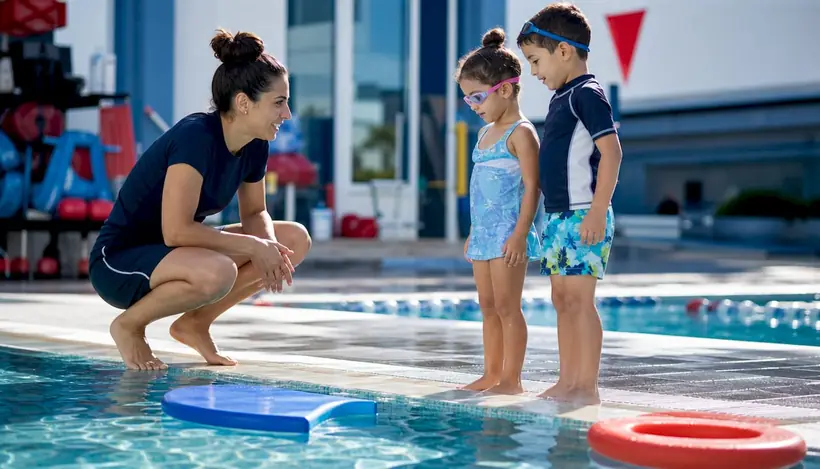
Lesson Formats That Fit Multiple Kids
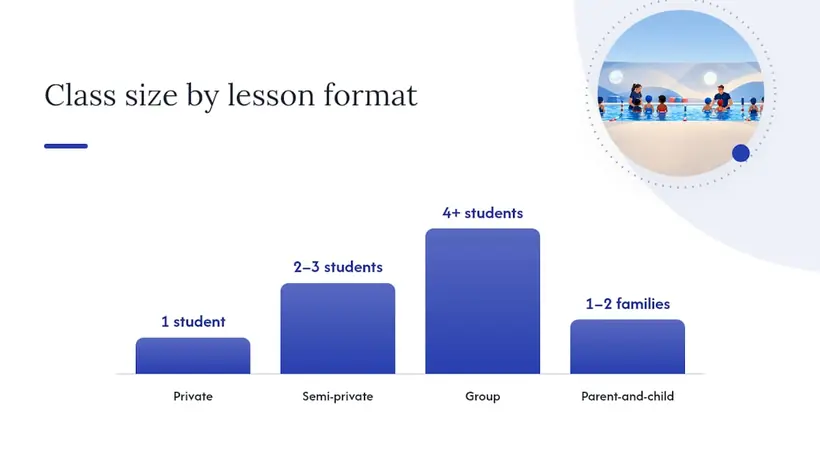
Private lessons put one instructor with one child. Best when siblings are years apart in skill or one has anxiety around water. Semi-private lessons, typically two to three students per instructor, split the cost of near-private attention. This is often the sweet spot for two siblings close in age. Group classes run four or more kids per instructor and work when both siblings are comfortable and don’t need individualized correction. Parent-and-child sessions suit infants and toddlers who aren’t ready to separate from a caregiver yet.
Format
Best For
Class Size
Cost Per Child
Personalization
Private
Different skill levels or anxious swimmers
1 instructor, 1 child
Highest
Maximum
Semi-private
Siblings close in age and skill
2 to 3 students
Moderate
High
Group
Both siblings comfortable in water
4+ students
Lowest
Low
Parent-and-child
Infants and toddlers
1 to 2 families
Ready to get your child in the water?
Book a free assessmentModerate
Guided by parent
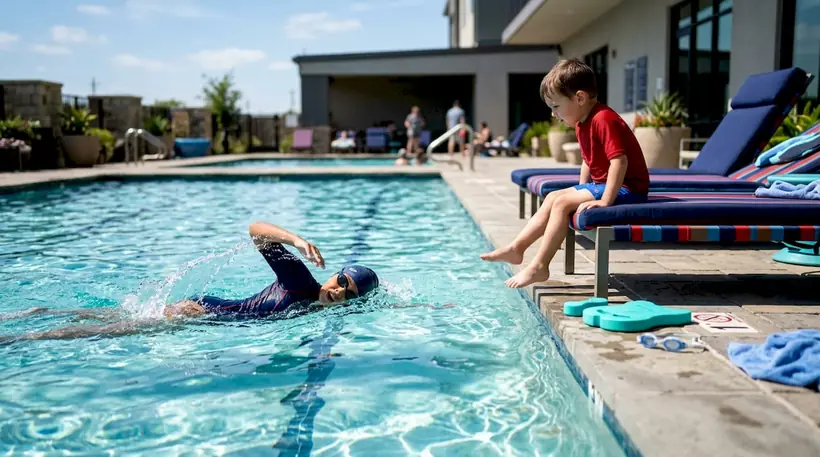
When siblings sit at different levels, private lessons often move faster for the more advanced child while the younger one gets a gentler, dedicated pace elsewhere.
The Real Trade-Offs of Combined Lessons
Putting siblings in one class isn’t automatically the smart move, even when it’s the cheaper one.
What works in your favor:
- Built-in motivation, since kids often push harder when a sibling is watching
- One trip to the pool instead of two separate schedules
- A familiar face nearby can calm a nervous swimmer
What can backfire:
- A confident older sibling can overshadow a hesitant younger one, slowing their progress
- Instructors split attention, so neither child gets full correction time
- Sibling rivalry can turn a lesson into a competition instead of a learning session
Ready to get your child in the water?
Book a free assessmentA confident 6-year-old paired with a timid 4-year-old sibling often means the instructor spends most of the lesson coaxing the younger child while the older one treads water, literally, waiting for a turn. Elite swimmers like Katie Ledecky credit early sibling presence with sparking her love of the pool, but that story involved kids close in age and drive, not a wide skill gap.
Scheduling and Cost for Sibling Swim Lessons
Most swim schools price sibling enrollment three ways: per-child rates (each kid pays full price), flat-slot pricing for semi-private lessons (one fee split two or three ways), or family discounts stacked on top of either model.
- Ask directly whether semi-private slots reduce the per-child rate compared to two separate private lessons.
- Back-to-back scheduling, one sibling right after the other with the same instructor, cuts a two-trip week down to one.
- Same-time scheduling with two different instructors works if your pool deck allows supervision of both.
- Staggered start times let one parent handle drop-off while the other manages the waiting sibling.
Booking siblings into the same session or adjacent slots cuts down on driving time and makes it far more likely the lessons actually stay on your calendar through a full season.
Pro Tip: Always ask “what happens if my kids’ skill levels drift apart mid session?” before signing a package. A good swim school has a plan to split you into separate classes without penalty.
Ready to get your child in the water?
Book a free assessmentWhat to Do With the Sibling Who’s Not Swimming Yet
The waiting sibling needs supervision just as much as the one in the water; pool decks are still drowning risk zones for unattended kids. Keep them in a designated seating area within your direct line of sight, never wandering near the pool edge alone.
- Bring quiet activities: coloring books, a tablet with headphones, or simple puzzles
- Give older waiting siblings a small “job,” like counting laps or watching for the instructor’s signal
- Position yourself between the pool and the waiting area so you can see both
Parent-tested tactics like staggered arrival times and designated locker-room sequencing cut down on the pre-lesson chaos of two kids changing at once. A family-friendly facility with a visible waiting area matters more than most parents realize until they’re juggling a squirmy toddler poolside.
A Quick Checklist Before You Sign Up
- Confirm the age gap. Two years or less is the general green light; beyond that, lean toward separate lessons.
- Match skill levels. If one child is already swimming freestyle and the other is scared of getting their face wet, split them.
- Watch temperament. Cooperative, non-competitive pairs share lessons better than rivals.
- Ask about ratios. Trained instructors and low student-to-instructor ratios are the clearest quality signal a swim school can offer.
- Request an observation lesson. If a school won’t let you watch or trial a class, that’s a red flag.
Watch for these warning signs:
Ready to get your child in the water?
Book a free assessment- The instructor won’t explain their certification or curriculum
- One child gets 80% of the attention while the other treads water
- No clear plan exists for splitting siblings if skill levels diverge
Why Instructor Training and Safety Come First
None of this scheduling or pairing advice matters if the instructor isn’t qualified. Superhero Swim Academy requires every instructor to hold current CPR and First Aid certification and to teach from a proprietary survival-swim curriculum built specifically for infants, toddlers, and young children.
- Small student-to-instructor ratios, whether private, semi-private, or group
- Regular parent progress updates tied to specific swim goals
- Over 2,500 children taught, with documented improvement in swim safety skills
Formal instruction paired with constant, attentive supervision remains the most reliable way to lower a young child’s drowning risk, regardless of whether siblings share a class or swim separately.
That principle, backed by drowning-prevention guidance, should outrank convenience every time you’re deciding how to enroll more than one child.
A note from Superhero
Balancing safety with a packed family schedule is the whole job. I’ve seen the instinct to save a trip to the pool override the instinct to protect a nervous swimmer’s pace, and it rarely ends well. Start siblings together if they’re truly matched, but don’t be afraid to split them the moment one starts outpacing the other. That flexibility, not a rigid one-size-fits-all class, is what keeps kids safe and confident.
Ready to get your child in the water?
Book a free assessmentMaking Sibling Swim Lessons Work for Your Family
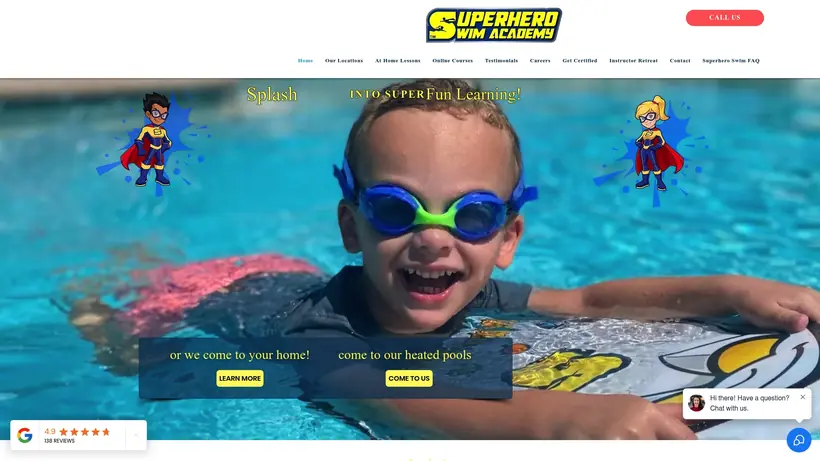
Superhero Swim Academy is built around exactly this decision, matching siblings to the right format instead of forcing every family into one class size. In Palm Beach and Broward counties, that means private lessons at home, small-group sibling slots capped at a low ratio, and back-to-back scheduling so you’re not making two separate trips to the pool.
- Private and semi-private lessons for siblings at different skill levels
- Small-group slots for kids who are genuinely ready to learn together
- Back-to-back scheduling that keeps your week simple
- Online parent-training courses if you want to reinforce lessons at home between sessions
If you’re weighing whether your kids should share a lesson or split into separate classes, check current availability and ask about a sibling-friendly trial slot. An instructor can watch both kids for a few minutes and tell you, on the spot, which format actually fits.
Ready to get your child in the water?
Book a free assessmentFrequently Asked Questions
What is the best age gap for siblings to take swim lessons together? Two years or less generally works well, provided both children have similar comfort levels in the water.
Can siblings with very different swim skills still take one class? Rarely with success. A large skill gap usually means one child dominates instructor time while the other falls behind, so private or semi-private lessons work better.
How much do sibling swim lessons typically cost compared to solo lessons? Pricing varies by school and format, but semi-private slots often split a flat rate between two or three children, which can lower the per-child cost compared to two separate private lessons.
What should the non-swimming sibling do during a lesson? Stay in a supervised, visible waiting area with a quiet activity like a book or a simple task, such as counting laps, while a parent maintains a clear sightline to both the pool and the seating area.
This article is general information, not a substitute for advice from a qualified doctor. Consult a qualified healthcare professional about your own circumstances before acting on anything here.