
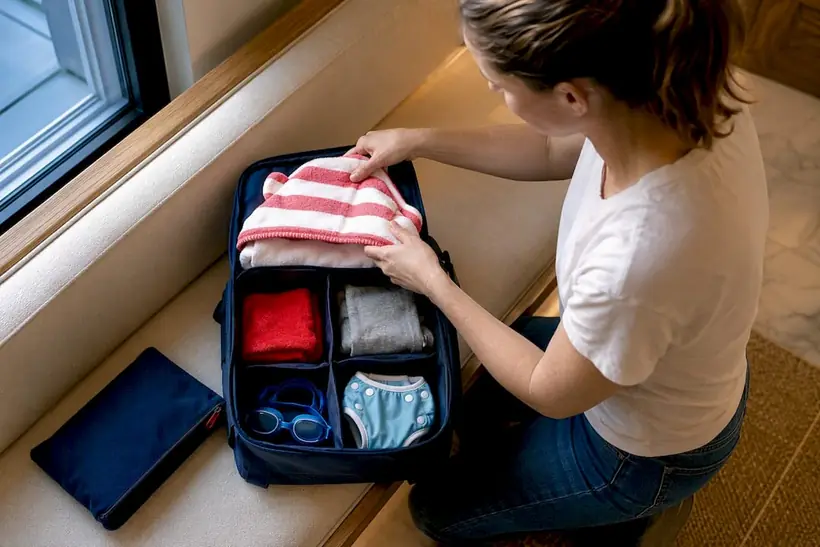
Pack these tonight and you’re covered: a swimsuit already worn under clothes, a towel, a full change of dry clothes, a water bottle, a swim diaper plus one spare if your child isn’t potty-trained, and well-fitting goggles if your class uses them. Toss in a small snack for after. Always double up on anything small enough to lose, and get to the pool about 10 minutes early.
TL;DR:
- Bringing a backup swimsuit and a second towel is essential for managing accidents and ensuring comfort during swim lessons.
- Goggles and swim caps should be tested for a proper seal and fit to avoid interruptions and ensure safety in the water.
- Potty-trained children typically need only a swimsuit, towel, and dry clothes, while younger kids require swim diapers, spare clothes, and comfort items.
- Packing the night before and arriving early helps reduce morning stress and allows for quick, smooth transitions into the lesson.
- Most pools limit phone and camera use for privacy reasons, so verifying policies beforehand prevents disruptions or damage during lessons.
The Complete Swim Class Packing Checklist
Not every item on a swim class packing list carries the same weight. Some things end the lesson if you forget them. Others just make the afternoon smoother. Here’s how to sort them, based on what actually goes wrong at the pool deck.
Must-haves (skip lessons without these):
- Swimsuit, plus a backup if your child is prone to accidents or you’re short on laundry time
- One or two towels (a second one saves you if the first gets soaked in the car)
- A full change of dry clothes, socks included
- A water bottle
- A light snack for after class
- Swim diaper for children not yet potty-trained, plus a spare. Many pools enforce this rule strictly, since a single accident can shut the pool down for cleaning, according to the YMCA of Greater Brandywine’s swim-lesson checklist
- Flip-flops or pool shoes to avoid bare feet on wet tile
Swim lessons in Palm Beach & Broward County
Free 30 minute assessment. Try before you enroll, no commitment.
Book Free AssessmentImportant extras (worth the extra five minutes to pack):
- Goggles, and a spare pair if you own one. Kiefer Aquatics’ swim-bag guide lists goggles with a spare as one of four core essentials, right alongside the suit
- Swim cap or hair ties for longer hair
- A wet bag or waterproof pouch to keep soaked gear away from everything else
- A plain plastic bag as a backup for wet clothes
- A combination lock, or exact coin change if your facility uses coin-operated lockers
Hygiene items that make the ride home tolerable:
- Swimmer-friendly shampoo. Chlorine strips natural oils fast, and Speedo’s bag checklist recommends a quick rinse and swimmer-specific shampoo right after getting out
- Body wash
- A wet brush for detangling
- Moisturizer, since chlorinated water dries out skin fast, especially on toddlers
Optional, but nice to have:
- A small first-aid kit for minor scrapes on the pool deck
- Sunscreen if any part of the wait happens outdoors
- A small comfort item for toddlers, like a favorite toy that stays in the bag, not the water
Two quick selection tips worth knowing before you buy anything. First, test goggles with the press test: press the lenses gently against closed eyes without the strap, and if they stay sealed for a second or two on their own, they’ll fit. Second, choose a chlorine-resistant polyester swimsuit over cheaper spandex blends for regular lessons. Aquaplan’s gear guide points out that polyester holds up far longer under repeated chlorine exposure, which matters when your child is in the pool two or three times a week.
Ready to get your child in the water?
Book a free assessmentAdjusting the Checklist by Age and Potty-Training Status
A 6-month-old and a 6 year old need almost nothing in common on a packing list beyond the basics. Age changes what actually matters.
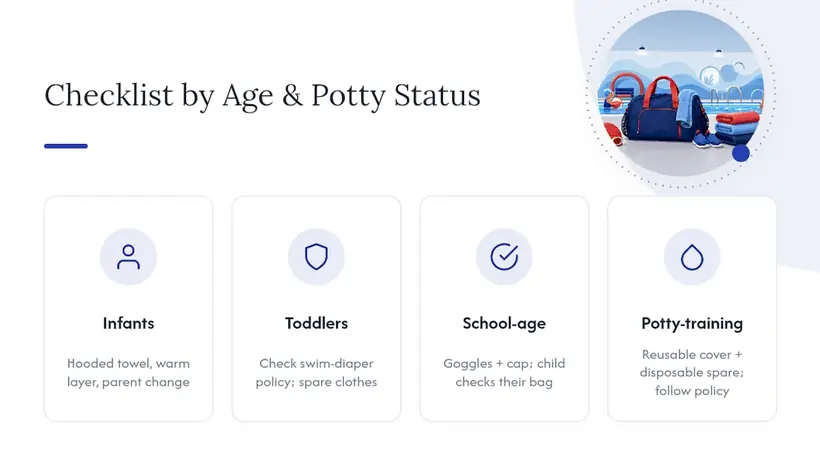
Infants and parent-and-baby classes need a hooded towel for fast heat retention, a warm layer to throw on immediately after the pool, and a full change of clothes for the parent too, not just the baby. Bring wipes and a short feeding plan if the class runs close to a meal.
Toddlers and preschoolers are the group where swim diaper policy matters most. Check your facility’s exact rule before the first class. Bring a spare set of clothes, a small comfort item, and a consistent post-lesson snack. Toddlers do better with routine than variety here.
School-age kids need less gear overall, mainly a well-fitting pair of goggles and a cap. This is also the age to start handing over packing responsibility. Have your child check their own bag before you leave. It builds independence and cuts down on the “I forgot my goggles” moment at the pool door.
For potty-training kids specifically, bring a reusable swim diaper cover plus a disposable spare, and follow the facility’s posted policy exactly, since pool rules on swim diapers vary by facility and some are stricter than others.
Ready to get your child in the water?
Book a free assessmentThe Small Extras That Prevent a Ruined Lesson
Goggles crack. Straps snap. Caps rip getting pulled on wet hair. None of these are dramatic failures, but any one of them can turn a 30-minute lesson into a miserable one if there’s no backup in the bag. Keep a spare goggle and cap in a small zippered pouch so they’re protected and easy to find.
A two-bag system works better than one big tote: a wet bag for anything coming out of the pool, and a dry pocket for your lock, coins, and phone. As for flotation devices and training aids, leave the decision to your instructor. Most quality programs bring their own equipment and will tell you directly if they want you to supply something specific.
Pro Tip: Anti-fog spray is cheap and lasts weeks longer than the free coating that comes on new goggles. If you’re stuck without it, a quick spit-and-rinse on the lens works as a short-term fix, according to Aquaplan’s gear guide.
How to Pack the Night Before and Move Fast at the Pool
Morning stress is almost always a packing problem, not a parenting problem. Fix it the night before and the whole routine gets easier.
- Lay out the swimsuit, towel, and dry clothes the night before, and have your child put the swimsuit on under regular clothes before you leave the house. This single step, recommended in WaterWiseKids’ printable swim lesson checklist, skips the changing-room wrestling match entirely.
- Arrive about 10 minutes early. That buffer covers a bathroom stop and gives an anxious toddler a minute to settle before class starts.
- At the locker, keep wet and dry items separated. Use the lock or coins for valuables, and a mesh pocket for anything that needs to air out on the way home.
- Rinse off right after the lesson, apply swimmer-friendly shampoo, comb through wet hair while it’s still manageable, and follow with a light moisturizer to counter the chlorine.
If this is your child’s very first class, a little extra preparation beyond gear helps too. Our guide on preparing your child for their first swim lesson covers what to expect emotionally, not just what to pack.
Ready to get your child in the water?
Book a free assessmentPrint-and-Go Checklist by Age Group
Save this as a screenshot or print it and stick it on the fridge.
Category
Baby / Parent-and-Me
Toddler
School-Age
Non-negotiable
Swimsuit, hooded towel, warm layer, change of clothes (baby and adult)
Swimsuit, towel, swim diaper + spare, dry clothes
Swimsuit, towel, dry clothes
Swim diaper needed?
Yes
Yes, unless fully potty-trained
Usually no
Spare goggles/cap?
Not usually used
Optional
Yes, if goggles are worn
Extra item
Feeding plan, wipes
Comfort item, snack
Lock/coins for locker
Do You Need to Bring an ID or Membership Card?
Most swim programs require some form of check-in, and it’s easy to forget when you’re focused on towels and goggles. Bring whatever your facility uses to confirm enrollment: a membership card, a digital pass on your phone, or a printed confirmation email for a one-off lesson package.
Facilities that run on a membership model, like many YMCA branches, generally scan a physical or digital card at the front desk before you’re allowed onto the pool deck. Private lesson providers and smaller academies more often check you in against a class roster, so having your confirmation email pulled up on your phone speeds things along. If your provider uses an app for scheduling, keep it logged in rather than scrambling to remember a password at the front desk.
Ready to get your child in the water?
Book a free assessmentNew students should ask directly during enrollment what check-in looks like. Some places issue a physical card on day one. Others simply keep a name-based roster and never ask for anything beyond your verbal confirmation. Either way, showing up without any way to verify enrollment can cost you five awkward minutes at the desk while staff track down your registration, and that’s five minutes that come straight out of a 30-minute lesson.
If you’re enrolled in multiple classes across different weeks, keep confirmation emails organized in a single folder on your phone so you’re never digging through your inbox pool-side with a wet toddler pulling at your arm.
Health and Safety Items Worth Keeping in the Bag
A pool deck sees its share of minor scrapes, mostly from bare feet on rough concrete or a stubbed toe climbing out of the water. A small first-aid kit with a few adhesive bandages and antiseptic wipes covers most of what comes up.
If your child has a diagnosed allergy, particularly one severe enough to require an epinephrine auto-injector, that device travels with you to every single lesson, no exceptions. Tell the instructor and front desk staff about the allergy during enrollment, not after an incident. Most reputable programs will ask about allergies and medical conditions on the intake form specifically so they know what’s in your bag and what to do if something happens.
Ear infections come up often enough with regular swimmers that it’s worth asking your pediatrician whether swimmer’s ear drops make sense for your child, especially if lessons run several times a week. Keep any prescribed medication in its original labeled container, not transferred into an unmarked pill case, so instructors can identify it instantly in an emergency.
For eczema-prone kids, chlorine exposure can flare skin within a single session. A gentle, fragrance-free moisturizer applied right after the post-swim rinse helps more than waiting until you’re home. None of this needs to live in a big kit. A gallon zip bag with bandages, a small tube of antiseptic, any prescribed medication, and a moisturizer covers the realistic range of what comes up at a children’s swim lesson.
Ready to get your child in the water?
Book a free assessment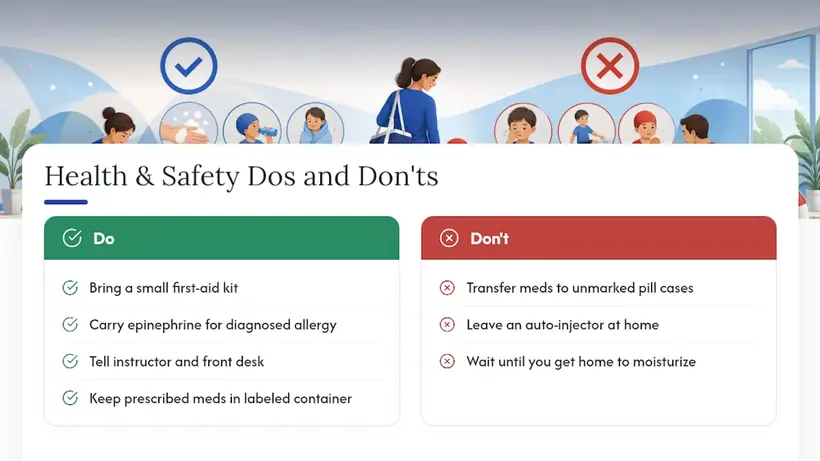
Flotation Devices and Training Aids: What to Actually Bring
The honest answer for most families: nothing, until your instructor asks for something specific. Quality swim programs supply their own kickboards, noodles, and flotation belts, calibrated to what that particular curriculum is teaching that week. Showing up with your own gear can actually work against the lesson plan if it doesn’t match what the instructor wants a child using at that stage.
That said, some instructors do send home a short list of recommended aids for at-home practice between sessions, particularly for survival-swim-style curriculums where consistent repetition between lessons speeds up progress. If yours does, buy exactly what’s recommended rather than guessing. A puddle jumper works differently than a back float, and using the wrong one at home can teach a habit the instructor then has to undo in the pool.
Beginners in particular benefit from minimal gear rather than a shelf full of flotation devices bought in a hurry. Aquaplan’s gear guide makes this point directly: start with the basics, and add training aids only once a coach recommends them, since buying ahead of the curriculum usually means money spent on something the child outgrows in a month. If you’re setting up practice sessions outside of formal lessons, our guide on preparing backyard pool swim lessons for kids walks through what a facility typically provides versus what a family should have on hand at home.
Ready to get your child in the water?
Book a free assessmentWhat to Know About Phones and Cameras Poolside
Policies on phones and cameras vary a lot by facility, and it’s worth checking before your first class rather than assuming. Some pools ban phones entirely on the deck for privacy reasons, since other people’s children are in frame any time you snap a photo. Others allow phones in the viewing area but not deck-side. A few programs actively encourage parents to record short clips for progress tracking, particularly in private or small-group lessons where instructors want you watching specific milestones.
Ask directly during enrollment or check posted signage at the facility. If phones are restricted to a viewing gallery, keep yours in your bag rather than your pocket. Wet hands and a phone are a bad combination, and a cracked screen from a splash zone is a preventable annoyance.
If you do get the green light to record, store the phone in a dedicated dry pocket inside your bag between uses, not loose at the bottom where it can end up near wet towels. A small zip pouch works fine and keeps it away from anything damp until you actually need it for a photo.
Emergency Contacts and Paperwork You Shouldn’t Skip
Every swim program worth enrolling your child in should require an emergency contact form before the first lesson, not as an afterthought but as a condition of participation. This typically covers a primary and secondary contact number, any medical conditions or allergies, medication details, and authorization for staff to seek emergency care if a parent can’t be reached immediately.
Fill this out completely and update it whenever anything changes, particularly phone numbers or new allergies discovered after enrollment. A form filled out once at sign-up and never touched again is only useful if nothing about your family has changed since. Keep a copy of what you submitted, either photographed on your phone or printed, so you can hand it over quickly if a different instructor covers a session and needs the details fast.
Ready to get your child in the water?
Book a free assessmentIf your facility requires a liability waiver or medical release, sign and return it before the first lesson rather than the day of. Programs that take safety seriously, including survival-swim curriculums, generally won’t let a child in the water without this paperwork on file, and rightly so. It protects the child as much as it protects the facility.
Why the Right Routine Matters More Than the Right Gear
Kids settle into lessons faster when the same things happen in the same order every time. A packed bag matters less for what’s in it than for the fact that it’s consistent, week after week. Our instructors are trained in CPR, first aid, and a survival-swim curriculum specifically because routine and safety reinforce each other. Expect steady progress in the first month, not instant mastery, and regular updates from your instructor along the way.
, SUPERHERO
Ready for Lessons That Take Safety as Seriously as You Do
Survival swim lessons for infants, toddlers, and young children are offered across Palm Beach and Broward counties, with private in-home sessions, small heated-pool group classes, parent-and-child instruction, and concierge options for families who want a more personalized setup.
If your child is already comfortable in the water and just needs consistent weekly practice, small group classes might be all you need. If you’re seeing hesitation around water, want a faster path to real safety skills, or prefer one-on-one attention in your own pool, private lessons close that gap faster. Parents who’d rather teach their own children at home, or instructors looking to build their own credentials, can start with our online courses instead. Either way, every child gets clear progress goals and regular updates so you’re never guessing how the lessons are going. Visit Superhero Swim Academy to check current class availability and get your child started.
Ready to get your child in the water?
Book a free assessmentWhere This Checklist Comes From
- YMCA of Greater Brandywine: swim diaper policy and the original 10-item essentials list
- US Swim Schools: national directory and swim-education standards
- WaterWiseKids: printable checklist and packing routine
- Kiefer Aquatics and Aquaplan: gear selection and backup strategy
- VAIN NEW YORK: example of a durable children’s one-piece swimsuit