
Two policies matter more than any other: general liability and professional liability (errors and omissions). Most instructors need at least a $1 million per occurrence limit with a $2 million aggregate, since many pools and municipal facilities set that as the minimum requirement before allowing instruction. If a facility is asking for proof today, Thimble issues a certificate of insurance within minutes of purchase, and its hourly, daily, or monthly policies fit instructors who teach only a few sessions a week.
Swim instruction carries a level of legal exposure that most fitness activities don’t, since a missed cue in the water can turn into a drowning claim or a negligence suit overnight. That’s the reasoning behind why specialist providers and broker marketplaces dominate this niche rather than generic small-business insurers.
Here’s a shortlist worth calling this week:
- Thimble, instant certificates, hourly and monthly terms, ideal for instructors juggling multiple facilities.
- Tivly, a broker that shops several carriers at once, useful if you want quotes to compare side by side.
- K&K Insurance, specialty underwriting built around sports and private in-home lessons.
- Sadler Sports, strong on clinic-level coverage and abuse and molestation endorsements.
- CPH, competitively priced annual policies for part-time instructors.
If you’re staring down a same-day deadline, Thimble’s app is the fastest path to a valid COI.
Swim lessons in Palm Beach & Broward County
Free 30 minute assessment. Try before you enroll, no commitment.
Book Free AssessmentKey Takeaways
Swim instructors reduce both risk and premiums fastest by pairing $1 million per occurrence liability coverage with documented certifications and a fast COI process.
Point
Details
Buy two core policies
General liability and professional liability (E&O) form the baseline every instructor needs.
Match limits to your setup
Most facilities require at least $1M per occurrence and $2M aggregate before booking time.
Speed matters for COIs
Thimble issues instant certificates, which matters when a facility needs proof same-day.
Membership isn’t full coverage
USA Swimming covers sanctioned club activities only, not private or off-clock lessons.
Documentation lowers friction
Superheroswimacademy’s CPR, First Aid, and lesson-plan practices reflect the records insurers reward.
Comparing Swim Coach Insurance Providers: Thimble, Tivly, K&K, Sadler Sports, and CPH
Picking the right provider comes down to matching your teaching setup to what each company actually specializes in. A solo instructor teaching backyard lessons three days a week has completely different needs than someone running clinics for forty kids at a rec center.
Thimble built its reputation on speed. You can buy a policy and get a usable certificate of insurance the same day, sometimes within minutes, which matters when a pool manager won’t let you in the water without paperwork in hand. Its hour, day, and month terms mean you’re not locked into a full annual premium if you only teach seasonally or fill in for another instructor occasionally.
Ready to get your child in the water?
Book a free assessmentTivly works differently. It’s not a single insurer but a marketplace that pulls quotes from multiple carriers and agencies, so you get to compare pricing and coverage terms before committing. That’s worth the extra ten minutes if you’re not sure what limits you need or you want a second opinion on pricing before signing anything.
K&K Insurance has built programs specifically around sports instruction, including private, in-home lessons where general contractors’ insurers often balk. If you teach in clients’ backyard pools rather than a commercial facility, K&K’s underwriting tends to understand that risk profile better than a generalist carrier would.
Sadler Sports leans hard into clinic and club-level coverage, and it publishes some of the clearest guidance in the industry on sexual abuse and molestation endorsements. If you run group clinics or operate under a club structure with multiple instructors, Sadler’s endorsement language is worth reading before you buy anywhere else.
CPH shows up repeatedly in industry roundups as one of the more affordable options for part-time instructors who need a straightforward annual policy without the bells and whistles of a full commercial package.
Provider
Best for
Policy limits
COI / additional insured
Short-term options
Equipment coverage
Typical annual cost
Thimble
Independent instructors needing instant proof
Up to $1M/$2M common tiers
Instant COI, easy additional insured
Hourly, daily, monthly
Limited add-on options
Varies by hours taught
Tivly
Ready to get your child in the water?
Book a free assessmentInstructors comparing multiple carriers
Varies by carrier matched
Depends on carrier selected
Some carriers offer flexible terms
Depends on carrier
Varies by quote
K&K Insurance
Private in-home and sport-specific instructors
Program-dependent limits
Available on standard policies
Typically annual
Available for training gear
Not publicly listed
Sadler Sports
Clinic operators needing broad endorsements
Program-dependent limits
Strong endorsement documentation
Typically annual
Available for club equipment
Not publicly listed
CPH
Part-time instructors on a budget
Standard annual limits
Standard COI process
Primarily annual
Not a primary focus
Reported as lower-cost
A few practical notes on when to call which provider:
- Need proof of coverage before tomorrow’s lesson? Start with Thimble.
- Not sure what limits your facility actually requires? Get quotes through Tivly and let the comparison guide you.
- Teaching in a client’s backyard pool rather than a commercial facility? K&K’s private-instruction focus fits that risk better.
- Running a clinic and worried about abuse and molestation language specifically? Sadler Sports has published detailed guidance on exactly that endorsement.
- Teaching a handful of hours a week and want the lowest reasonable annual premium? CPH is worth a quote.
Ready to get your child in the water?
Book a free assessmentWhere you teach and how often should drive the decision more than brand recognition. An instructor working solo out of a single backyard pool has almost the opposite insurance profile from someone managing four part-time instructors across three rec centers.
What Does General Liability vs. Professional Liability Actually Cover?
General liability and professional liability solve two different problems, and confusing them is where a lot of instructors get burned. General liability covers bodily injury and property damage claims, the classic slip-and-fall on a wet deck or a parent tripping over your equipment bag. Professional liability, also called errors and omissions, covers claims that your instruction itself caused harm, like an allegation that you gave negligent guidance that led to a near-drowning.

Common coverage types for swim businesses include General Liability, Professional Liability, Inland Marine for equipment, and Business Owner’s Policies that bundle several protections into one package. A BOP typically combines general liability and property coverage at a lower combined cost than buying each separately, which makes it attractive if you own equipment worth protecting.
Here’s where the gap usually shows up: an instructor buys general liability thinking it covers everything, then faces a claim that a student’s parent alleges improper technique caused an injury. General liability won’t touch that. It’s a professional liability claim, and without E&O coverage, you’re paying legal defense costs out of pocket even if the claim eventually gets dismissed.
Ready to get your child in the water?
Book a free assessmentInland marine coverage protects the equipment you haul between locations: kickboards, pool noodles, flotation devices, portable ramps, even a trailer if you’re transporting gear to multiple sites. If someone breaks into your car and steals $2,000 in training equipment, inland marine is what reimburses you, not general liability.
Three endorsements worth requesting specifically:
- Affirmative sexual abuse and molestation coverage. Facilities increasingly require this coverage explicitly named in the policy rather than assumed to be included, and they will reject “silent” coverage that doesn’t spell it out.
- Additional insured status. This adds the facility or club to your policy so they’re protected if a claim names both you and the location.
- Waiver of subrogation. This prevents your insurer from going after the facility to recover costs after paying your claim, which some venues require before they’ll let you book space.
Pro Tip: Ask your insurer to send the endorsement page, not just the declarations page, when a facility wants proof of abuse and molestation coverage. Facilities often want to see the actual policy language, and a declarations page alone frequently gets rejected.
How Do You Choose the Right Limits and Policy Type for Your Setup?
Your teaching environment determines almost everything about what you need to buy, so start there before comparing quotes.
- Private home instructor. You need general liability at minimum, professional liability if you’re giving instruction rather than just supervising play, and you should ask whether the homeowner’s policy at that address creates any coverage gaps you’re expected to fill.
- Rented public facility (rec center, hotel pool, community pool). Expect the facility to require a signed agreement plus a COI naming them as additional insured, typically at $1 million per occurrence and $2 million aggregate.
- Employer or club-based instructor. Check whether your employer’s policy actually names you individually or only covers the entity. Many instructors assume they’re covered because “the club has insurance,” then discover the policy excludes individual instructor negligence claims.
- Instructor who owns a facility. You need the fullest package: general liability, professional liability, property coverage for the building and pool, and likely a BOP rather than piecing together separate policies.
Municipalities and private facilities tend to set their minimums around the same benchmark. Facilities commonly require Commercial General Liability with minimum per occurrence limits generally accepted as appropriate for swim instructors, and many also require the city or facility to be added as additional insured before you’re allowed to book pool time. Push past $1 million if you’re running multi-student clinics or you have employees teaching under your business name, since claims involving multiple children in one incident tend to exceed lower limits fast.
Ready to get your child in the water?
Book a free assessmentGetting a facility what it needs usually takes three steps:
- Request the COI from your insurer with the facility’s exact legal name and address, not a shortened version.
- Confirm the additional insured endorsement is attached, not just mentioned in an email.
- Ask the facility directly what wording they require, since some municipalities have specific boilerplate language they won’t deviate from.
Private lessons booked at a municipal pool deserve special attention here. Municipal or employer coverage typically doesn’t extend to private, paid lessons given off the clock, so instructors moonlighting at a public pool for private pay almost always need their own policy plus a signed facility use agreement.
How Much Does Swim Instructor Insurance Cost?
Premiums vary widely, but published small-business figures give a useful anchor. The Hartford reports sample costs of roughly $1,687 a year for a Business Owner’s Policy and about $810 a year for stand-alone general liability, though your actual quote depends heavily on location, limits chosen, number of employees, and claims history.
A few things move your price up or down more than anything else:
- Location. Coastal states and areas with higher litigation rates tend to see higher base premiums.
- Coverage limits. Jumping from $1 million to $2 million per occurrence raises your premium, but usually by less than instructors expect.
- Employees. Adding even one part-time assistant instructor changes your risk profile and your premium.
- Equipment value. If you’re insuring $5,000 in portable pool equipment through inland marine, that adds a separate line to your bill.
- Claims history. A single past claim, even a small one, can push renewal quotes noticeably higher.
Ready to get your child in the water?
Book a free assessmentThree rough scenarios illustrate how this plays out. A solo instructor teaching ten hours a week out of a single backyard pool, with no employees and modest equipment, tends to land closer to the lower end of the general liability range. A part-time instructor teaching at two different rec centers with a small equipment inventory sits somewhere in the middle, often closer to BOP pricing since they’re bundling equipment protection with liability. A small swim school with two or three instructors, a rented facility, and a training equipment cache easily exceeds both of those figures once payroll and premises exposure enter the underwriting.
Short-term policies from providers like Thimble change this math for occasional teachers. If you only teach six weekends a year, paying for a full annual policy makes little financial sense when an hourly or monthly option covers the exact dates you’re working.
Do Facilities Really Require Written Insurance Agreements?
Most do, and it’s rarely optional once you ask. Municipal and private facilities alike tend to set a floor of $1 million per occurrence and $2 million aggregate, often paired with a written facility use agreement that spells out what your COI needs to say. Some cities won’t even schedule pool time until the paperwork clears legal review, which can take days if you’re not prepared.
The affirmative sexual abuse and molestation endorsement deserves its own mention here because it trips up more instructors than any other requirement, and understanding sports participation waivers can also help reduce liability exposure. A “silent” policy, meaning one that doesn’t explicitly exclude or include this coverage, isn’t good enough for most facilities anymore. They want the endorsement named directly in the policy documents, not implied. Sadler Sports has published detailed guidance on exactly why facilities insist on this affirmative language rather than accepting ambiguity.
Ready to get your child in the water?
Book a free assessmentSpeed matters as much as coverage type when a facility calls asking for proof by end of day. A handful of steps keep you ready:
- Save a pre-filled COI template in your insurer’s app or portal with the facility fields already populated.
- Keep the exact legal name and address of every facility you regularly work with on file.
- Ask your current insurer how long a COI reissue typically takes, before you’re in a time crunch.
- If your current policy takes days to produce paperwork, a Thimble-style instant-COI provider may be worth adding as a backup.
Does USA Swimming Membership Cover You as an Instructor?
Membership helps, but it has real limits that surprise plenty of coaches. USA Swimming provides General Liability and Participant Accident and Excess Medical coverage for clubs and members when the club is in good standing and the activity in question qualifies as a “covered activity.”
What that membership generally includes:
- General liability protection tied to sanctioned club activities.
- Participant accident and excess medical coverage for registered athletes.
- COIs issued on behalf of member clubs for covered events.
What it typically excludes:
- Premises property coverage for a facility you own or rent independently.
- Private lessons given outside sanctioned club programming.
- Coverage for instructors teaching off the clock or outside club-sanctioned hours.
Ready to get your child in the water?
Book a free assessmentIf you coach for a USA Swimming club but also take private clients on the side, your club membership almost certainly doesn’t follow you into that side work. You need your own policy for anything outside the club’s sanctioned umbrella.
Superhero Swim Academy: What Insurers Look For in Instructor Documentation
Underwriters reward instructors who can prove they manage risk, not just claim they do. Superheroswimacademy trains every instructor in CPR and First Aid alongside its own survival swim curriculum, and that kind of documented, standardized training is exactly what insurers want to see attached to a policy application. Having taught over 2,500 children, the academy also keeps the kind of records that smooth underwriting: written lesson plans, incident logs, and documented instructor credentials on file for every session.
Practices worth borrowing regardless of who insures you:
- Keep a signed lesson plan on file for every class, not just group sessions.
- Log incidents immediately, even minor ones, rather than relying on memory later.
- Share instructor certification dates and renewal status with parents and facilities proactively.
- When a facility requests a COI, have your business name, address, and coverage limits ready to hand over instantly rather than searching for them.
Pro Tip: When a facility asks for a sample insurance clause, keep the language simple: name the facility as additional insured, specify the per-occurrence and aggregate limits, and confirm the policy period covers your actual teaching dates. Overcomplicating this paperwork is one of the most common reasons approvals stall.
How We Chose These Providers and Price Ranges
This shortlist draws on insurer product pages, broker marketplace listings, and published municipal insurance protocols rather than a single source. Providers were evaluated on how quickly they issue a certificate of insurance, the breadth of policy limits offered, whether they support short-term or hourly terms, and whether pricing information was publicly available to verify.
Ready to get your child in the water?
Book a free assessmentCost ranges cited here come from published small-business figures rather than instructor-specific averages, since insurers rarely publish swim-instructor-only pricing. Treat every quote as a starting point. Your actual premium depends on your zip code, claims history, employee count, and whether you’re buying a stand-alone policy or a bundled BOP.
The Insurance Advice Most Instructors Get Wrong
Most guides treat swim instructor insurance like a checkbox: buy a policy, get a certificate, move on. That misses the part that actually determines whether a claim gets paid, which is whether your endorsements match what you actually do. An instructor with general liability but no professional liability coverage is exposed the moment a parent alleges bad instruction rather than a wet-deck injury. That gap gets discovered at the worst possible moment, mid-claim, not before.
The other blind spot is treating USA Swimming membership as a substitute for personal coverage. It’s not, and conflating the two leaves side work and private lessons completely uninsured. If you coach for a club and also teach privately, assume the club’s policy stops the moment you’re not on their clock.
What actually separates instructors who sail through underwriting from those who get flagged or denied isn’t the size of their policy. It’s documentation: certifications on file, incident logs, written lesson plans. Insurers price risk based on what you can prove, not what you claim.
, SUPERHERO
Ready to get your child in the water?
Book a free assessmentA Different Way to Build Insurer-Ready Credibility
Buying the right policy solves half the problem. The other half is building the kind of documented, credentialed teaching practice that keeps premiums reasonable and claims rare in the first place, and that’s where Superheroswimacademy fits differently than any provider compared above. Rather than selling you a policy, Superheroswimacademy trains instructors in a structured survival swim curriculum backed by CPR and First Aid certification, the exact kind of documented training insurers reward with smoother underwriting.
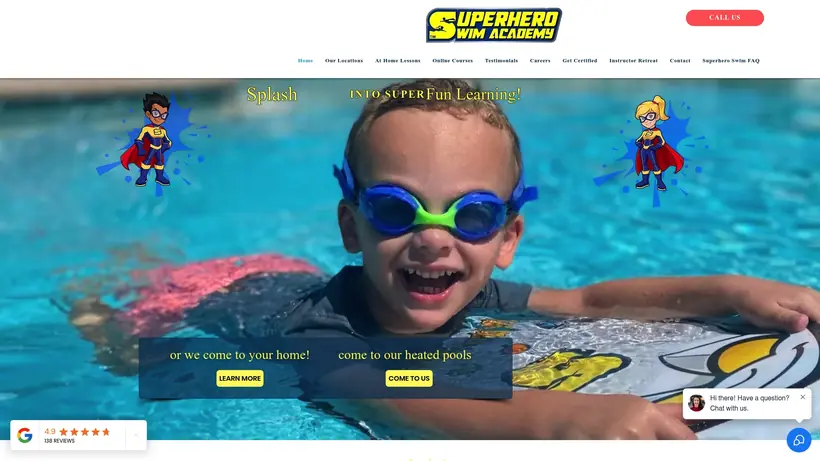
If you’re an instructor looking to strengthen your credentials before your next renewal, or a parent looking for lessons taught by instructors who take documentation this seriously, explore Superheroswimacademy’s programs and see how a certified curriculum backs up the paperwork facilities and insurers want to see.