
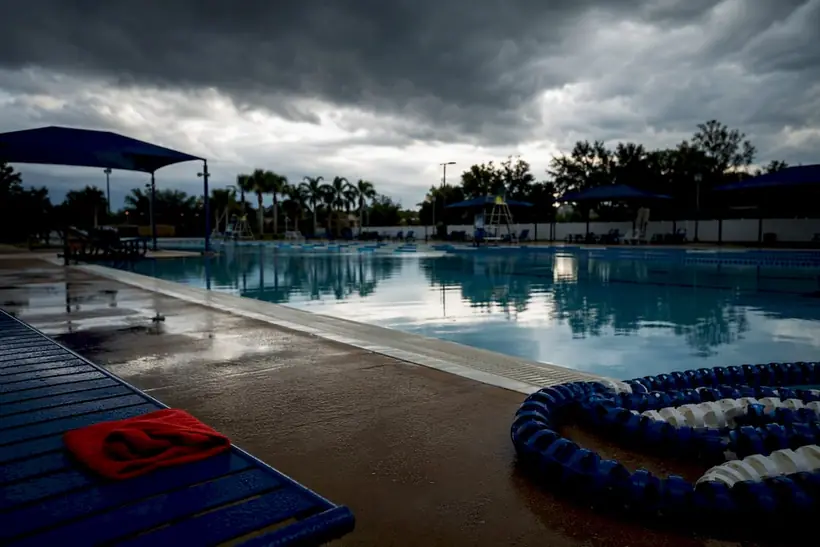
Light rain almost never cancels swim lessons, but thunder or visible lightning stops class immediately and triggers a 30-minute restart clock before anyone gets back in the water. Most reputable programs also pause for heavy rain that blocks visibility, unsafe air quality, or pool contamination, and they back those closures with make-up classes, credits, or partial refunds. Expect a text, email, or phone call as soon as conditions change.
TL;DR:
- Lightning or thunder immediately cancels lessons, with a 30-minute restart clock that resets with every new lightning strike or thunder sound.
- Heavy rain and reduced visibility lead to pool closures regardless of lightning presence, especially when safety supervision is compromised.
- Pool closures from contamination or poor air quality follow strict 24-hour rules, with make-up classes, credits, or refunds issued accordingly.
- Weather alerts are typically sent 30 to 60 minutes in advance or in real time during sudden storms, based on current contact information.
- Indoor pools can still close during severe weather if equipment fails or flooding occurs, with clear protocols for these scenarios.
What Is the 30-Minute Lightning Rule for Swim Lessons?
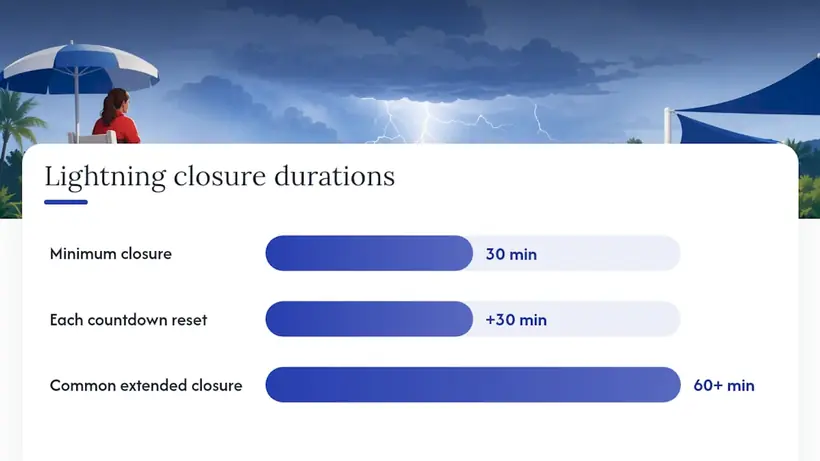
Every credible aquatics program follows some version of the same standard: clear the pool the moment anyone sees lightning or hears thunder, and keep it closed for 30 minutes after that. This comes straight from National Weather Service lightning safety guidance, and it is treated as a floor, not a suggestion, across pools nationwide.
Statistic Callout: The 30-minute window is a widely cited minimum closure period after lightning or thunder, and the countdown restarts with each new sighting or sound of thunder.
Swim lessons in Palm Beach & Broward County
Free 30 minute assessment. Try before you enroll, no commitment.
Book Free AssessmentThat reset is the part parents underestimate. A single storm cell can push a 30-minute delay into an hour or more if lightning keeps showing up on the back end. On site, staff typically follow three steps before resuming: clear swimmers from the pool and deck, take a headcount against the class roster, and get a head lifeguard or manager to confirm the 30 minutes have fully elapsed with no new strikes.
When you enroll somewhere, ask these three questions:
- Who makes the call to clear the pool, and how fast does it happen?
- Does the facility use a lightning detection tool or rely on staff spotting and counting thunder?
- What happens to the rest of my child’s lesson time if the clock resets twice?
Does Rain Cancel Swim Lessons, and What About Wind or Cold?
Rain and lightning are not the same hazard, and good policies treat them differently. A steady drizzle rarely stops class because it does not block a lifeguard’s view of the pool bottom or the swimmer’s face. Heavy rain is another story. Once rainfall reduces sightlines, staff clear the pool even without a single lightning flash, because visual supervision is the entire safety system for young swimmers.
Air and water temperature matter too. Many outdoor programs pause lessons when air temperature drops into the mid-60s Fahrenheit combined with a heated pool below roughly 82 degrees, since cold shock affects small children faster than adults. Wind and wave action factor in for open-water or exposed outdoor pools, where whitecaps or gusty conditions make it hard to spot a struggling swimmer.
Look for policy wording like this when you’re shopping for a program:
- “Lessons continue in light rain; lightning or thunder suspends class immediately.”
- “Class pauses if visibility across the pool is significantly reduced.”
- “Cold weather thresholds apply separately from storm policy.”
Ready to get your child in the water?
Book a free assessmentWhat Happens If the Pool Is Contaminated or Air Quality Is Poor?
Bad weather isn’t the only reason a pool closes. A fecal incident or a chemical imbalance can shut a pool down just as fast, and these closures follow their own rules separate from storms.
Statistic Callout: Some municipal programs use Air Quality Index thresholds to cancel outdoor aquatic activities when air quality reaches unhealthy levels, often using readings from tools like AirNow.
Contamination events commonly trigger a 24-hour closure so the facility can remediate the water properly, a standard many county-run programs also apply. That mandatory wait applies whether it happens on a sunny Tuesday or in the middle of a storm week, and it’s a hard rule, not a judgment call.
Both contamination and poor-air-quality closures typically get folded into the same make-up system as weather cancellations:
- A scheduled make-up class during the session’s built-in make-up week
- A credit applied to a future session at the daily lesson rate
- A pro-rated refund if closures stack up and no make-up slot exists
Ready to get your child in the water?
Book a free assessmentHow Will I Know Lessons Are Canceled, and What Do I Get If They Are?
Timing is everything for parents juggling drop-off schedules. Most programs try to notify families 30 to 60 minutes before a lesson if a storm is already forecast, but a sudden pop-up thunderstorm means the notification happens in real time, sometimes just minutes before your child’s slot.
Keep your contact information current, because the message usually arrives one of these ways:
- Text or SMS alert to the phone number on file
- Email notification, often with a rescheduling link
- A phone call for immediate, same-hour cancellations
- An in-app or team-portal message if the program uses booking software with parent notifications
Make-up policies vary, but the common patterns are:
- A dedicated make-up week built into the session calendar
- One make-up lesson allowed per two or three weather cancellations
- A credit at the program’s standard daily rate toward a future session
- A pro-rated refund only when an entire session is wiped out by closures
Partial lessons get handled differently than full cancellations. Many programs count a class as delivered if your child completed at least 20 minutes before the pool cleared; anything shorter usually earns an automatic make-up slot.
Ready to get your child in the water?
Book a free assessmentWhat Should Parents Pack for Unpredictable Weather Days?
Weather-proofing your swim bag saves you from standing in a parking lot with a shivering, soaked toddler and no backup plan. A few items make the difference between a minor inconvenience and a miserable afternoon.
- A full change of dry clothes, including socks
- An extra towel beyond the one your child swims in
- A compact rain cover or umbrella for the walk to the car
- Quick-dry sandals or water shoes instead of sneakers
- A spare outfit for siblings who tag along
- Any emergency medication your child needs, clearly labeled
- Updated phone numbers and emergency contacts on file with the front desk
Many facilities have a brief grace period before marking a lesson a no-show, so it is important to arrive as scheduled unless notified otherwise by the program organizing school sport activities. If a text comes through mid-drive, call the front desk rather than guessing; a 30-second phone call beats turning around based on a partial notification.
Pro Tip: Keep a five-minute backup childcare plan ready for last-minute cancellations, even something as simple as a grandparent’s number saved under “swim backup” in your phone, so a canceled lesson doesn’t derail your whole afternoon.
Ready to get your child in the water?
Book a free assessmentHow Superhero Swim Academy Handles Weather Decisions
The academy has built its weather protocols around one priority: never put a child back in the water until conditions are actually safe, not just technically clear. Instructors complete CPR and First Aid training before running solo lessons, and that training shapes how staff read a storm, a pool chemical reading, or a visibility problem in real time.
Having taught thousands of children, the academy has refined its communication habits around one simple goal: parents should never have to guess.
A typical enrollment clause reads something like this: “Lessons canceled due to weather, contamination, or facility closure will be rescheduled during the session’s make-up week or credited.” Families get that language in writing before their first lesson, not after a storm has already caused confusion.
- CPR and First Aid certification required for every instructor
- Weather and safety decisions tied to the academy’s survival swim training standards
- Written make-up and credit terms provided at enrollment, not improvised after a cancellation
Does Extreme Heat Cancel Outdoor Swim Lessons Too?
Heat gets less attention than storms, but it can be just as dangerous for small children. Many outdoor aquatics programs adjust or pause lessons when the National Weather Service issues a heat advisory or excessive heat warning for the area, especially during peak afternoon hours.
The concern isn’t the pool water itself, which usually stays cool enough. It’s what happens on deck: hot concrete, direct sun exposure, and dehydration risk for toddlers who don’t yet know how to tell an adult they feel overheated. Programs that take heat seriously tend to shift lesson times to early morning or evening during advisory days, add shade structures poolside, or shorten lesson length while keeping the water time the same.
Ready to get your child in the water?
Book a free assessment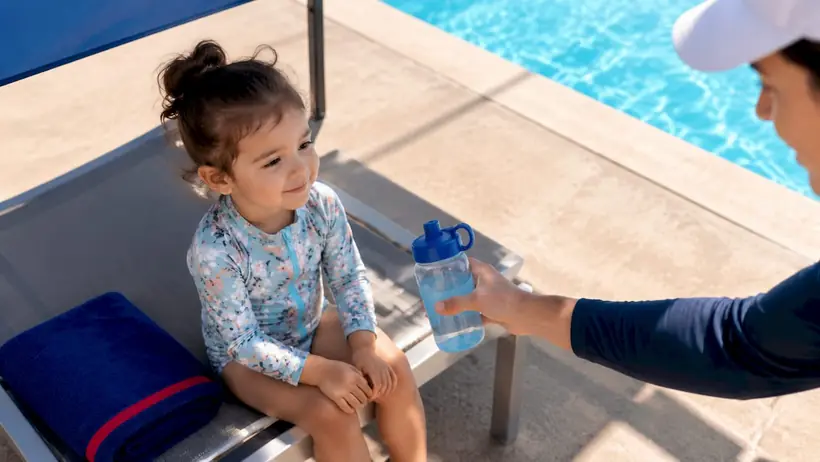
Ask your provider directly whether they have a heat threshold written into their policy, separate from their storm policy. A program that has thought through 95-degree afternoons with high humidity, not just thunderstorms, is one that’s planned for Florida summers realistically. Sunscreen reapplication, water breaks between skill drills, and shaded waiting areas for siblings are all small signals that a facility treats heat as seriously as lightning.
If your child’s lesson gets shortened or moved for a heat advisory rather than canceled outright, that typically still counts as a completed session, similar to how partial-rain lessons are counted, as long as the minimum lesson time was met on deck.
What Happens to Indoor Swim Lessons During Severe Weather?
Indoor pools dodge most weather problems, but they aren’t immune to every disruption. A power outage during a hurricane or severe thunderstorm can shut down pool heaters, pumps, and lighting even when the water itself sits untouched by the storm outside. Flooding is the other real risk, particularly for ground-level facilities in low-lying areas that see heavy rainfall back up drainage systems.
A well-run indoor program has a separate protocol from its outdoor storm policy. If backup power fails and pool lighting or filtration goes down, staff typically clear the pool immediately, regardless of how calm the water looks, because a dark or improperly filtered pool is a visibility and sanitation hazard. Flooding around locker rooms or decks triggers a similar response: the area gets evacuated and closed until facilities staff confirm it’s safe.
Ready to get your child in the water?
Book a free assessmentAsk specifically how a facility handles indoor closures during a hurricane watch or tropical storm warning, since these are common concerns for programs operating in Palm Beach and Broward counties. A facility that treats “indoor” as automatically “storm proof” is missing a real risk. The stronger answer involves backup generators, a clear evacuation plan for the building, and the same make-up and credit terms applied to any other weather-driven cancellation.
How Do Swim Schools Communicate Weather Policy to Families?
A weather policy only works if parents actually know it exists before the first storm hits, not after a confused phone call. Strong programs hand new families a written policy at enrollment, covering the lightning rule, rain thresholds, contamination closures, and make-up terms in plain language rather than legal boilerplate.
For continuing families, the better approach is a seasonal reminder, sent at the start of hurricane season or the summer heat stretch, refreshing parents on how notifications work and confirming contact information is current. This matters more than it sounds: a family that changed phone numbers in March and never updated the front desk is the family that misses a 7:00 a.m. cancellation text in July.
The clearest programs put the same policy in three places: the enrollment paperwork, a parent portal or app, and a printed sign near the pool entrance. Redundancy beats elegance here. If you’re comparing programs, ask to see the actual written policy before you enroll, not just a verbal summary from the front desk. A program that hesitates to hand over that document in writing is telling you something about how it handles disputes later.
Ready to get your child in the water?
Book a free assessmentWhat Should Kids Wear When Weather Changes Mid-Lesson?
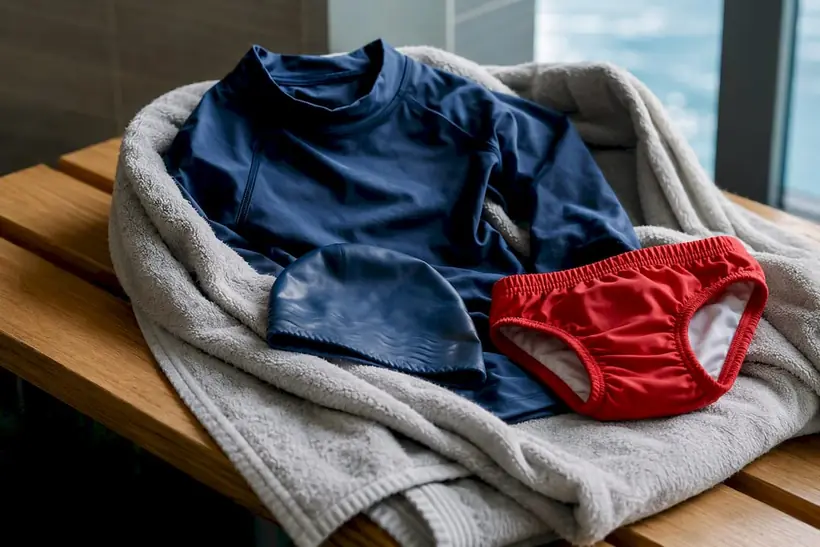
Weather doesn’t always cooperate with what a child put on that morning, so gear adjustments matter more for young swimmers than adults realize. Cooler mornings call for a thin rash guard or swim shirt, which cuts wind chill on wet skin without restricting movement in the water. On sunnier days, that same rash guard doubles as sun protection, reducing how often you need to reapply sunscreen mid-lesson.
For rainy or overcast days when lessons continue as scheduled, a swim cap or snug-fitting hat keeps hair out of a child’s eyes, which matters when visibility for both the swimmer and the instructor is already reduced by weather. Quick-dry swim diapers for infants and toddlers need more frequent checking on cooler days, since children tend to notice discomfort faster when the air temperature drops.
If a lesson gets paused for a lightning delay, don’t leave your child sitting poolside in a wet swimsuit for 30 minutes. A dry towel wrap or a light cover-up during the wait keeps body temperature stable, which matters more for toddlers than most parents expect, since small children lose heat faster than adults even in mild weather. Packing that cover-up alongside your usual swim bag items turns a frustrating delay into a manageable one.
Ready to get your child in the water?
Book a free assessmentWhy Safety-First Weather Policies Are Worth the Occasional Inconvenience
Predictability feels good until it costs a child’s safety. A program that never cancels for weather isn’t more reliable, it’s cutting a corner. The trade-off is real: a rigid 30-minute lightning restart or a same-day cancellation is genuinely inconvenient for a working parent’s schedule, but it exists because the alternative risk isn’t worth it.
Favor programs with clear notification windows, transparent make-up terms, and credit or refund language that doesn’t require an argument to invoke. Before enrolling anywhere, ask how fast they notify, what counts as a completed lesson, and how disputes over credits get resolved.
, SUPERHERO
Superhero Swim Academy’s Weather Policy at a Glance
Superheroswimacademy runs on the same safety-first standard covered throughout this guide, applied consistently across every private, group, and concierge lesson in Palm Beach and Broward counties.
- Lightning or thunder clears the pool immediately, followed by the full 30-minute restart before lessons resume.
- Light rain doesn’t stop class, but reduced visibility or unsafe air quality does, following the same thresholds outlined above.
- Canceled lessons get a scheduled make-up or session credit, laid out in writing before your first class, not decided on the fly.
If you want to see current session availability, confirm scheduling in your area, or ask a specific weather-policy question before enrolling, please visit the Superhero Swim Academy homepage for details on private, group, and parent-and-child lesson options. Parents who want to learn the same survival swim techniques themselves, including how to make weather-related judgment calls during home practice, can also check the academy’s online parent courses. Either way, the next step is simple: reach out, ask about current openings, and get your child into the water with a program that treats a storm cloud the way it should be treated.