
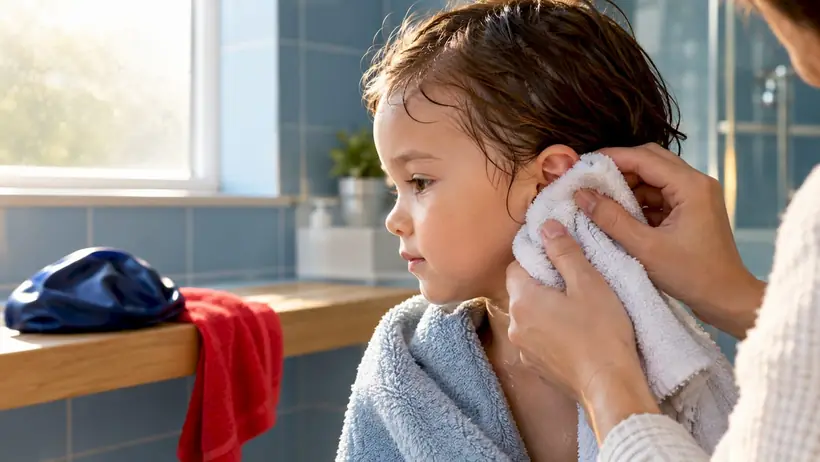
Most swimming-related ear infections in toddlers are preventable by keeping the ear canal dry and never inserting anything into it. After swimming, tilt your toddler’s head to each side, towel-dry the outer ear, and let it fully air out. If your child develops severe pain, fever, or drainage from the ear, call the pediatrician rather than waiting it out.
TL;DR:
- Placing a towel-dried microfiber towel and a low, cool hair dryer nearby after swimming helps prevent water from remaining in the ear canal, reducing infection risk for frequent swimmers.
- Using swimming-specific earplugs and a snug swim cap can significantly cut down on repeated water exposure in toddlers who swim multiple times per week.
- Excess moisture from baths, sweating, or untreated water can also cause swimmer’s ear, so consistent drying habits are necessary beyond pool days.
- Administering physician-approved drying drops after swimming can help but are not suitable for children with ear tubes or suspected ruptures, so always consult a pediatrician first.
- Regular, enforced post-swim ear care routines demonstrated during structured lessons build long-term prevention, especially for toddlers prone to recurrent infections.
Simple Steps To Prevent Swimming Ear Infections In Toddlers
The window right after swimming matters more than anything else you do all day for ear health. Water sitting in a toddler’s narrow ear canal creates exactly the warm, damp environment bacteria need to multiply, so the goal is simple: get it out fast and keep it out.
Here’s the priority order that actually works:
- Tilt your toddler’s head to each shoulder immediately after swimming and towel-dry the outer ear.
- If water feels stuck, use a hair dryer on the lowest, coolest setting held at least 12 inches away for 20 to 30 seconds.
- For toddlers who swim often, soft swimming-specific earplugs and a snug swim cap cut down repeat exposure.
- Never put cotton swabs, fingers, or any object into the ear canal to “dry” or clean it.
- Ask your pediatrician about drying drops (often a mix of vinegar and rubbing alcohol) before using them, and skip them entirely if your child has ear tubes or a suspected ruptured eardrum, per Healthychildren.
Swim lessons in Palm Beach & Broward County
Free 30 minute assessment. Try before you enroll, no commitment.
Book Free AssessmentPro Tip: Keep a small zip bag by the pool bag with a microfiber towel, a travel hair dryer, and your child’s earplugs. Making the drying routine automatic, the same way you’d buckle a car seat, is what actually prevents infections over a whole summer.
Is It Swimmer’s Ear Or A Middle Ear Infection?
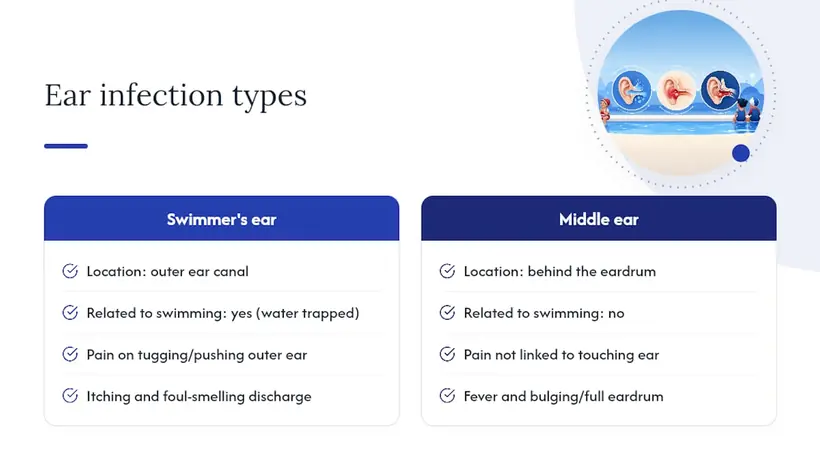
These are two different conditions that get lumped together, and telling them apart changes what you do next. Swimmer’s ear, medically called otitis externa, is an infection of the outer ear canal caused by trapped water letting bacteria grow. A middle ear infection, or otitis media, happens behind the eardrum and isn’t related to swimming at all, according to MedlinePlus.
Swimmer’s ear tends to show up as localized pain in or around the ear canal, itching, a foul-smelling discharge, and pain when you gently tug the outer ear or push on the small flap in front of it. A middle ear infection looks different: fever, a full or bulging eardrum on exam, general fussiness that isn’t tied to touching the ear, and sometimes muffled hearing.
Toddlers who can’t say “my ear hurts” give other clues. Watch for tugging or batting at one ear, tilting the head to one side, resisting lying down, or fussing more during bath time when water touches that ear. A toddler who cries specifically when you touch the outer ear, rather than acting sick overall, is pointing you toward swimmer’s ear rather than a middle ear infection.
Ready to get your child in the water?
Book a free assessmentWhen To Call The Pediatrician
Most ear pain in toddlers resolves with basic care, but certain signs mean you shouldn’t wait for a callback.
- A high fever, especially combined with ear pain or pulling.
- Severe or worsening pain that isn’t easing with children’s acetaminophen or ibuprofen.
- Pus, blood, or thick discharge coming from the ear canal.
- Spreading redness or swelling around the outer ear or into the neck.
- Any fever in an infant under 3 months old needs immediate medical attention.
- No improvement after 48 to 72 hours, or hearing that seems noticeably muffled, warrants a call even without a fever.
Pediatricians often use a watchful-waiting approach for mild middle ear infections since most resolve without antibiotics, but swimmer’s ear rarely improves without drops, so don’t apply the same “wait and see” logic to both conditions.
How Toddler Ear Infections Get Treated
A pediatrician will look in your toddler’s ear with an otoscope and, for swimmer’s ear, often clean the canal first with suction or a small curette. That cleaning step matters more than parents expect: it’s what lets the medicated drops actually reach the inflamed skin instead of sitting on top of debris, according to Mayo Clinic.
Ear drops are the main treatment for swimmer’s ear, typically an acidic solution combined with a steroid, an antibiotic, or both. If the canal is too swollen for drops to get in, the doctor may place a small wick soaked in medication, which you’ll need to keep moist with drops on a schedule they’ll give you. Oral antibiotics come into play only when the infection is severe, spreading, or not responding to drops, and a culture may be ordered at that point.
Ready to get your child in the water?
Book a free assessmentAt home:
- Give acetaminophen or ibuprofen for pain, dosed by weight per your pediatrician’s guidance.
- Keep your toddler out of pools and baths that submerge the ear until fully cleared.
- Finish every drop in the prescribed course, even after symptoms fade.
Pro Tip: Parents often stop drops the moment their toddler stops fussing, usually around day 3 or 4. Stopping early is the single biggest reason swimmer’s ear comes back within weeks.
Building A Real Prevention Routine For Frequent Swimmers
If your toddler is in the pool three or four times a week, one good drying habit isn’t enough. You need a routine that survives distracted afternoons and cranky post-swim moods.
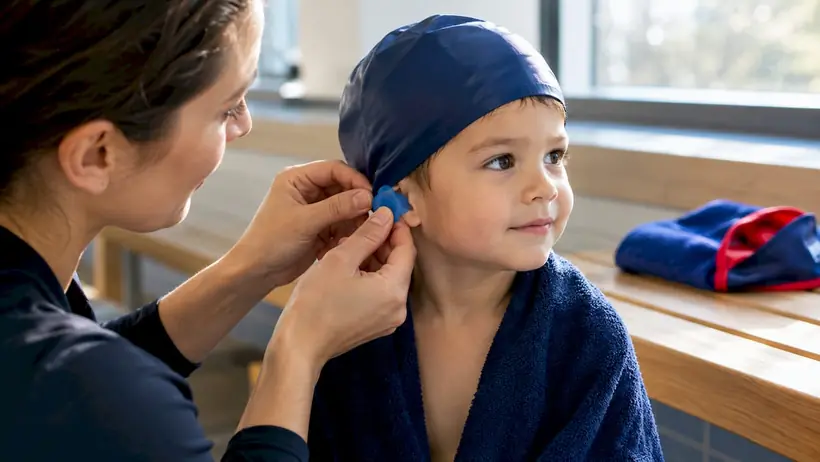
Start with gear. Soft, swimming-specific earplugs fit the ear canal without forcing it, and they’re worth the fitting time it takes to find a pair that seals without discomfort. Hard plastic plugs, or any plug jammed in without checking the fit, can scratch or bruise the delicate skin of a toddler’s canal, which ironically raises infection risk instead of lowering it, per AboutKidsHealth. Pair plugs with a snug-fitting cap that covers the ears for extra water resistance during group lessons or open swim.
The drying sequence stays the same every single time: tilt each side, towel the outer ear, and finish with a low, cool hair dryer if water lingers. For toddlers with a history of repeat infections, ask your pediatrician about a physician-approved drying drop used after each swim session, not just when symptoms appear.
Ready to get your child in the water?
Book a free assessmentA few other habits matter more than parents assume:
- Break up back-to-back swim sessions so ears get real time to dry between them.
- Skip visibly cloudy, algae-heavy, or untreated water, including some lakes and ponds after heavy rain.
- Remember trapped moisture from baths and heavy sweating can cause the same problem, so the drying habit applies beyond pool days too.
Pro Tip: Custom-fit earplugs from a pediatric audiology clinic are worth the cost for toddlers who get swimmer’s ear more than once a season. They seal better than anything off the shelf.
Why Structured Swim Lessons Support Ear Health Too
Trained instructors notice things distracted parents miss poolside, and that matters for ear health as much as for water safety. Some swim lesson programs have instructors who complete CPR, First Aid, and survival swim curriculum training, which means lessons can be built around consistent, low-drama routines rather than chaotic splash time that leaves toddlers with water trapped in their ears for hours.
Small-group and private lesson formats give instructors time to reinforce the same post-swim drying habits every session, and parents get regular progress updates that keep them looped into what’s working. Many swim programs have taught thousands of children and have observed how consistent routines, not one-off precautions, are what actually keep toddlers’ ears healthy across a swim season.
Ready to get your child in the water?
Book a free assessmentAn Instructor’s Take On Keeping Ears Healthy
The parents who never deal with swimmer’s ear aren’t lucky. They’re consistent. A pool-side drying kit and a 20 to 30 second pass with a cool hair dryer after every single swim, no exceptions for tired toddlers or short sessions, prevents the vast majority of cases. Build the habit once, and the ears take care of themselves. When something looks off anyway, calling the pediatrician is always the right move.
, SUPERHERO
Structured Lessons As A Prevention Habit, Not A Medical Fix
Superhero Swim Academy exists to build the routines that keep toddlers safer in water, not to treat infections once they start. Lessons in Palm Beach and Broward counties, whether private, small-group in a heated pool, or parent-and-child sessions, are built around instructors who reinforce the same drying and ear-care habits covered above, session after session, so they stick.
If your toddler already has ear pain, drainage, or fever, that’s a pediatrician visit, not a swim lesson, full stop. But for parents building long-term water habits, structured instruction fills the gap that a single blog post can’t: someone watching your child in the water every week, catching small issues before they become patterns. Browse lesson options and instructor credentials to see what fits your toddler’s age and comfort level, or look into how the academy trains its staff through its instructor safety retreat. For a deeper look at how often toddlers should be in the water for lessons to actually build lasting skills, see this guide on how many toddler swim lessons your child likely needs.