
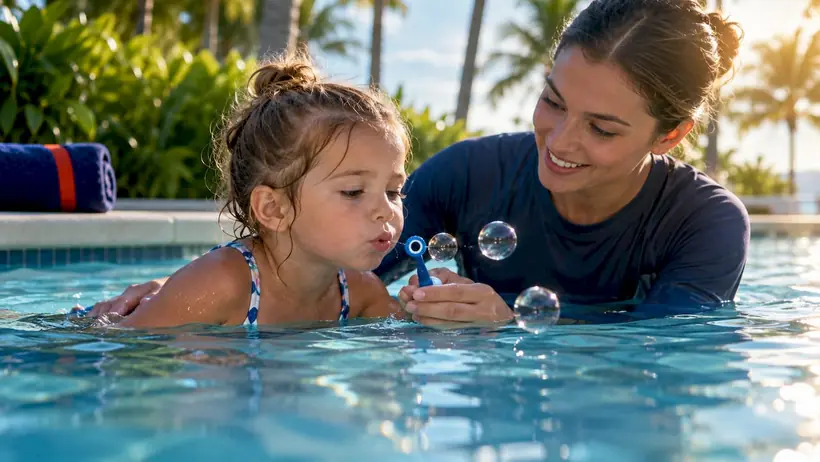
For toddlers in Palm Beach, the summer wins come from a short list: shaded parks and splash pads, sensory-friendly museum and aquarium visits, parent-and-toddler classes, and quick wildlife encounters. Parks and splash pads suit ages 1 to 4 and demand only sunscreen and a water bottle. Indoor spots like Cox Science Center work for any age when the heat spikes. Parent-and-child classes fit toddlers who thrive on routine. The next sections cover exactly where to go, what to bring, and how to book.
TL;DR:
- Shaded parks and splash pads are ideal for toddlers ages 1 to 4, especially before 10 a.m. or after 4 p.m. to avoid peak heat.
- Indoor attractions like science centers and aquariums provide climate-controlled environments that suit any age, with 90-minute visits recommended to prevent sensory overload.
- Water safety steps, including proper supervision, life vests, and limited water exposure time, are essential to minimize injury risks during water play.
- Summer camps and parent-child classes offer consistent routines, but early registration is crucial due to limited spots and high demand during peak season.
- Short, engaging wildlife and sensory activities at botanical gardens and wildlife sanctuaries fit well into a toddler’s attention span, with brief visits encouraged for best engagement.
Toddler Summer Activities in Palm Beach: Picking the Right Category
Not every “kid-friendly” attraction is actually toddler-friendly. A 2-year-old and a 6-year-old do not want the same afternoon, and matching the activity to your toddler’s nap schedule and sensory tolerance matters more than the attraction’s star rating. Here’s how the main categories break down by age and practical need.
- Parks and shaded playgrounds (best for ages 1 to 4): Patch Reef Park has a fenced toddler play area and enough shade trees to avoid full midday sun. Go before 10 a.m. or after 4 p.m.
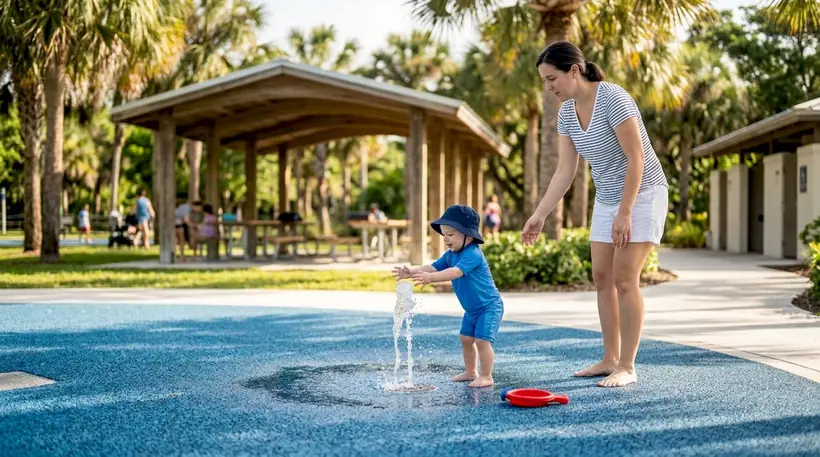
- Splash pads and shallow water (best for ages 2 to 4, supervised infants can dip toes): free-to-enter splash pads let toddlers cool off without the depth risk of a pool. Bring water shoes since concrete surfaces heat up fast.
- Indoor museums and science centers (best for any toddler age, especially during afternoon storms): Cox Science Center & Aquarium runs hands-on exhibits scaled for small hands, plus air conditioning that buys you an extra hour of patience.
- Zoo and wildlife encounters (best for ages 2 to 4, strollers essential): Palm Beach Zoo works well in early morning slots before the animals retreat from the heat themselves.
- Parent-and-toddler classes (best for ages 1 to 3): weekly sessions like Alef Preschool’s summer program give toddlers structure and social exposure in short, predictable blocks.
Swim lessons in Palm Beach & Broward County
Free 30 minute assessment. Try before you enroll, no commitment.
Book Free AssessmentA few logistics apply across the board. Zoo and science center visits benefit from booking timed tickets online, especially on weekends when lines form early. Splash pads and parks need zero reservations, but arrive early on Saturdays. Stroller access is solid at every location listed here, though sand at beach spots slows a stroller down, so a carrier is worth packing as backup.
The one-sentence rule that saves most summer outings: pick a morning activity, plan for one nap window, and treat anything after 2 p.m. as indoor or water-based only. Palm Beach heat by early afternoon in June and July turns any uncovered playground into a 20-minute visit at best.
Parks, Beaches, and Shaded Spots Toddlers Actually Tolerate
Patch Reef Park in Boca Raton remains one of the more reliable toddler stops in the area, with a separate small-child play zone, splash features, and enough covered picnic space to wait out a rain shower. Parking is free and rarely full before 10 a.m. Restrooms are on site, which matters more with toddlers than almost anything else on this list.
John D. MacArthur Beach State Park offers calmer water than the open ocean beaches nearby, since the park sits along a protected inlet. It suits toddlers ages 2 and up who can walk the boardwalk to the beach without being carried the whole way. There’s a small entrance fee per vehicle, and the boardwalk itself is a decent activity for younger toddlers who aren’t ready for sand.
Mounts Botanical Garden works differently: it’s a slow-walk destination, not a run-around one. Toddlers respond well to the sensory garden sections, and shade cover is better here than at most open parks. Stroller access is smooth on the paved paths, though the wild garden areas are gravel.
Ready to get your child in the water?
Book a free assessment- Patch Reef Park: free, shaded, splash features, best 8 to 10 a.m.
- John D. MacArthur Beach State Park: small entrance fee, calm water, best before 11 a.m.
- Mounts Botanical Garden: paid admission, heavy shade, best late morning or after 4 p.m.
Pro Tip: Pack a pop-up shade tent even at “shaded” parks. Florida tree cover moves with the sun, and you’ll want backup shade by 10:30 a.m. no matter where you land.
Indoor Options When the Heat or Rain Wins
Some days, the smartest toddler activity is the one with air conditioning. Cox Science Center & Aquarium runs exhibits built for small hands, including water tables and a planetarium show short enough to hold a toddler’s attention without a meltdown. Plan for a 90-minute visit, which tends to be the ceiling before toddlers hit sensory overload.
Sandoway Discovery Center in Delray Beach leans smaller and quieter, with touch tanks and a coastal ecosystem focus that works well for toddlers who get overwhelmed in bigger crowds. It’s a good backup when the Science Center feels too busy.
Palm Beach Zoo isn’t purely indoor, but its covered pavilions and the Koala Experience give toddlers a shaded, up-close encounter that doubles as a break from sun exposure. Booking that experience ahead of time avoids the disappointment of a sold-out slot on arrival.
- Cox Science Center: hands-on exhibits, aquarium, planetarium, best for 90-minute visits.
- Sandoway Discovery Center: smaller crowds, touch tanks, coastal focus.
- Palm Beach Zoo Koala Experience: shaded, bookable, works as a heat-break activity.
Ready to get your child in the water?
Book a free assessmentBuy tickets online where possible. Walk-up lines at the Science Center and Zoo stretch long on weekend mornings in June and July, and a toddler in a stroller line for 20 minutes is a toddler who’s done before the visit starts.
Water Play Without the Risk: Splash Pads, Shallow Beaches, and Supervision Rules
Water play is where most toddler summer injuries happen, and it’s also where the fun peaks, so the safety checklist matters as much as the location list. Splash pads win for toddlers under 3 because the water depth stays at zero, there’s no current, and most Palm Beach County facilities use non-slip surfacing. Shallow, calm beach spots like the inlet side of John D. MacArthur Beach State Park work for toddlers ready to handle sand and gentle wave action.
The World Health Organization recommends at least 180 minutes of physical activity daily for children under five, spread across the day rather than in one long stretch. Water play counts toward that total, and a 20 minute splash pad session plus a walk to and from the car often covers a meaningful chunk of it.
Run through this checklist every time before your toddler enters water:
- Apply sunscreen 20 minutes before arrival, reapply every 80 minutes.
- Use a properly fitted life vest for open water, not just pool noodles or inflatable arm rings.
- Keep a hand on your toddler in any water deeper than their knees.
- Pack water shoes, since splash pad concrete and beach rocks both cause slips.
- Set a hard exit time before heat exhaustion sets in, typically 45 minutes to an hour in direct sun.
Formal swim lessons are the single highest-impact safety step you can add on top of supervision. A toddler who’s had structured, survival-focused instruction reacts differently in unexpected water situations than one who hasn’t. If you’re weighing when to start, swim lesson progress milestones for toddlers breaks down what skill development typically looks like month by month.
Ready to get your child in the water?
Book a free assessmentSummer Camps and Toddler Classes Worth the Registration Fee
Structured programs solve a problem parks can’t: consistency. A toddler who attends the same class weekly builds comfort with new adults and routines faster than one bouncing between random outings.
Camp Palm Beach runs through the summer with published weekly rates and age cutoffs, and it fills fast, so registering in May rather than June is the difference between a spot and a waitlist. Alef Preschool of Palm Beach accepts children starting at age 2 in its summer camp sessions, with weekly rates and dates posted directly on its site rather than buried in a phone call. Both programs publish age minimums clearly, which matters since some camps quietly favor kids closer to 4 even when they list a younger minimum.
For a lighter commitment, Palm Beach Gardens’ Tot Time program offers short, inexpensive parent-and-child sessions built around music and movement rather than a full camp day. It suits toddlers ages 1 to 3 who aren’t ready for a drop-off environment.
- Camp Palm Beach: weekly sessions, published rates, register early for popular weeks.
- Alef Preschool summer camp: accepts age 2 and up, session dates and rates listed online.
- Palm Beach Gardens Tot Time: parent-and-child format, low cost, short sessions.
Before registering anywhere, ask four questions: What’s the child-to-staff ratio? Is there scheduled water play, and if so, what’s the supervision policy? What’s the sunscreen and reapplication policy? What’s the cancellation or refund policy if your toddler gets sick mid-session?
Ready to get your child in the water?
Book a free assessmentWildlife and Nature Outings That Fit a Toddler’s Attention Span
Toddlers don’t need a two-hour nature hike, but they do benefit greatly from engaging in sensory play and child development activities that provide meaningful sensory input. They need ten minutes of genuinely interesting sensory input, which is exactly what a well-chosen wildlife stop delivers. Mounts Botanical Garden offers short sensory garden loops that hold a toddler’s attention through texture and smell alone. Busch Wildlife Sanctuary in Jupiter lets toddlers see rehabilitated native animals up close on a stroller-friendly path, without the crowds of a full zoo.
MarineLife Center programming in the area focuses on sea turtles and coastal wildlife, giving toddlers a short, guided look that works well as a 20 to 30 minute stop rather than a full outing.
The WHO’s 180-minute daily activity guidance supports exactly this approach: short, frequent bursts of movement and sensory engagement add up faster than one long outing a toddler can’t sustain. Strollers work at all three locations, though Busch Wildlife’s natural trail sections have some uneven ground.
Why Water Safety Should Anchor Every Summer Plan
Every activity on this list eventually intersects with water, whether it’s a splash pad, a pool, or a beach day. The WHO’s under-five activity guidelines frame movement as something that should happen in short, frequent bursts rather than one marathon session, and water play is one of the easiest ways to hit that target without a toddler melting down from overexertion.
Safety around water follows a clear hierarchy, and skipping a level doesn’t make the next one optional.
The order matters: physical barriers and lifeguarded venues come first, constant adult supervision comes second, appropriate flotation comes third, and formal swim instruction comes fourth. None of these substitutes for another. A life vest doesn’t replace a hand on your toddler. A lifeguard doesn’t replace your own eyes on the water.
Ready to get your child in the water?
Book a free assessmentFormal instruction is the piece parents most often delay, usually because “they’re too little” or “we’ll start next summer.” The approach runs as early as 4 months, built around small class sizes and instructors trained in CPR and First Aid alongside the swim curriculum itself. Parents get regular progress updates rather than a vague “they’re doing fine,” which matters when you’re trying to judge actual water competence versus splashing confidence.
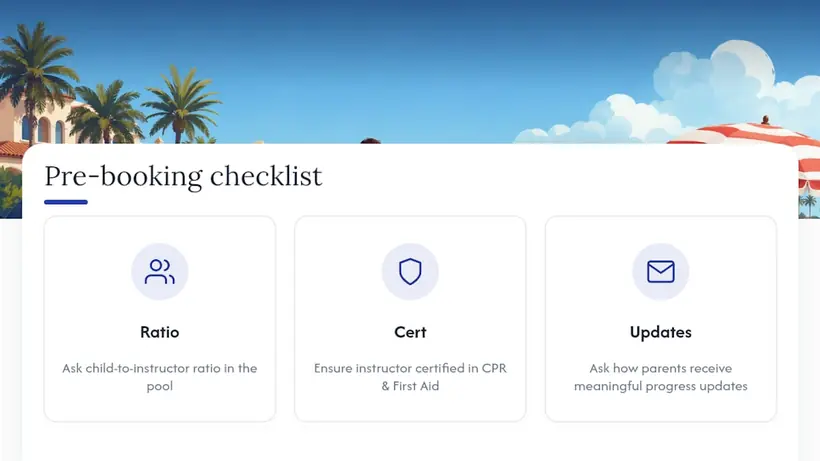
When you’re evaluating any swim program in Palm Beach, ask three questions before booking: What’s the child-to-instructor ratio in the pool? Is the instructor certified in CPR and First Aid, not just swim technique? How will you, as the parent, get updates on actual progress rather than a general “great class today”?
Pro Tip: If your toddler is nervous around water, book a private or at-home lesson before a group class. A one-on-one first session tends to lower anxiety faster than jumping straight into a group setting, since there’s no waiting turn and no comparison to other kids.
For home pool owners, these three safety steps for backyard pools cover the barriers and supervision habits worth setting up before summer really gets going.
Ready to get your child in the water?
Book a free assessmentFinding This Week’s Events and Avoiding a Wasted Trip
The fastest way to waste a morning with a toddler is showing up somewhere that changed its hours or canceled for weather. A handful of sources stay reliably current.
- Discover PBC parks pages list county park details, hours, and event calendars updated directly by Palm Beach County.
- Town and city recreation department pages, including Palm Beach Recreation, post camp and program registration windows before they open.
- Museum and zoo event pages, like Palm Beach Zoo’s own site, list ticketed programs and any weather-related closures same-day.
- Local parenting calendars such as Macaroni KID aggregate smaller community events that official sites sometimes miss.
Set a recurring reminder to check these pages every Sunday night for the coming week, and join waitlists immediately when a class fills. Popular toddler sessions often open a second spot within days as families’ schedules shift.
An Author’s Quick Note on Surviving Your Own Summer Plan
The best toddler summer isn’t the one with the most activities booked. It’s the one where you picked a single solid outing per day and left room for the nap that actually happens. Two outings in one day sounds efficient until the second one turns into a meltdown in a parking lot.
Keep a go bag packed and ready: sunscreen, water shoes, a snack that doesn’t melt, and a change of clothes. Grab it and go rather than repacking each morning. After any outdoor or water outing, build in twenty quiet minutes before the next transition. Toddlers don’t switch gears instantly, and neither should your schedule.
, SUPERHERO
Ready to get your child in the water?
Book a free assessmentReady for Water Safety Lessons? Here’s Where to Start
Every splash pad, beach day, and pool visit on this list gets safer once your toddler has real swim skills behind it, not just floaties and good intentions. Superhero Swim Academy runs survival swim instruction for kids as young as 4 months, with a maximum of two children per class so instructors can actually watch each child instead of managing a crowd.
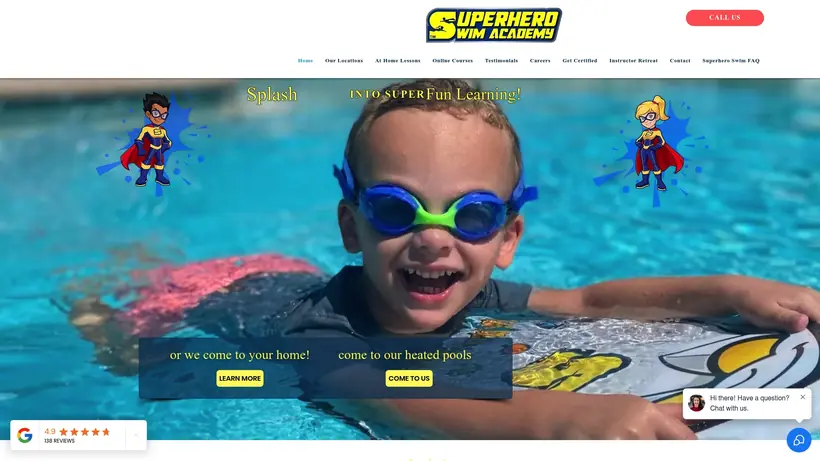
Families choose their format based on schedule and comfort level. Parent and toddler classes run $115 a month and suit toddlers who do best with a caregiver in the water alongside them. Semi-private lessons start from $185 a month for families who want more one-on-one instructor attention without full private pricing. Private lessons at our pool run $325 to $600 a month depending on frequency, and at-home lessons bring a certified instructor to your own pool if travel with a toddler feels like more trouble than it’s worth. Parents who want to build water safety skills themselves can also look at the online courses, which teach caregivers how to guide their own child’s early swim development.
Before booking anywhere, ask about the instructor’s CPR and First Aid certification and the actual child-to-instructor ratio in the pool. If you’re ready to get your toddler started this summer, book a class through Superhero Swim Academy and get on the schedule before the peak summer weeks fill up.