
How Group Swim Instructors Manage Safety in 2026
- superheroswim
- 13 hours ago
- 8 min read

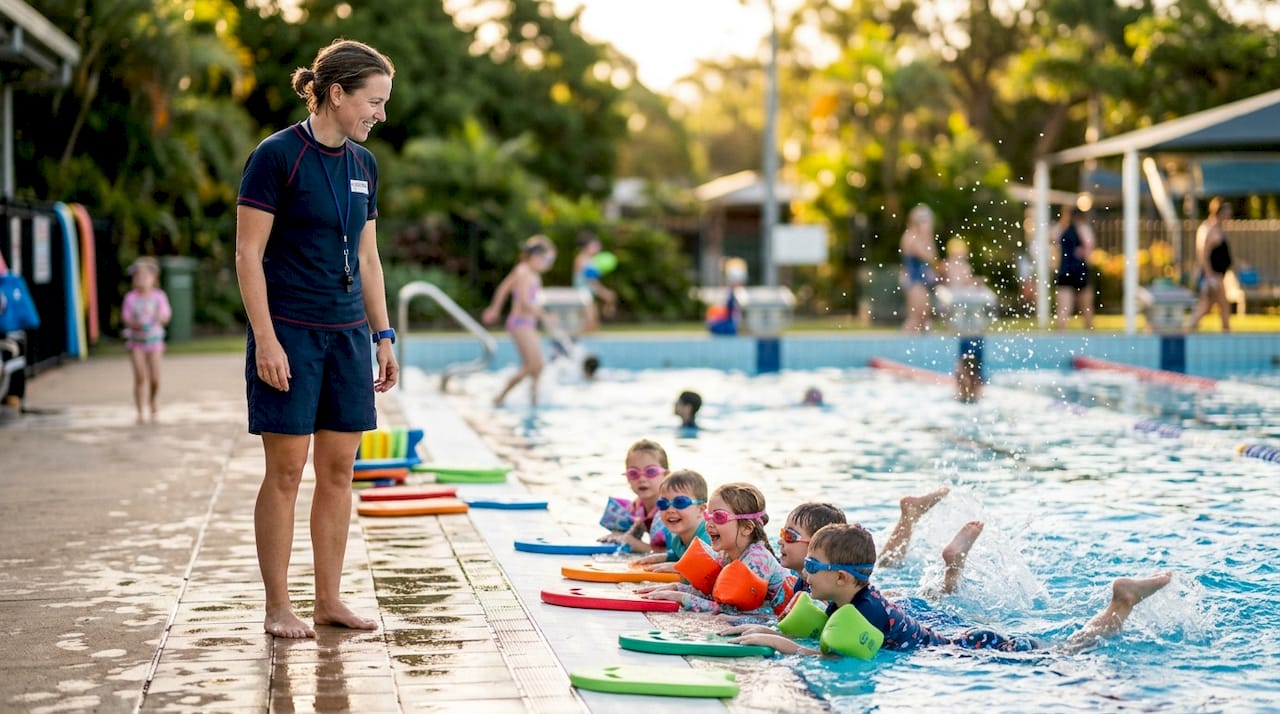
Group swim instructor safety management is defined as the continuous practice of maintaining visual and physical oversight of every child in the water through controlled ratios, certified supervision, and structured protocols. For swim instructors and facility managers working with young children, this is not a background concern. It is the operating system of every lesson. The industry standard for beginner groups sits below a 4:1 ratio, and certified lifeguard presence is required as a separate safety layer from the instructor role. Superheroswimacademy has built its entire curriculum around these principles, training every instructor in CPR, First Aid, and a proven survival swim curriculum before they ever step poolside.
How group swim instructors manage safety through optimal ratios
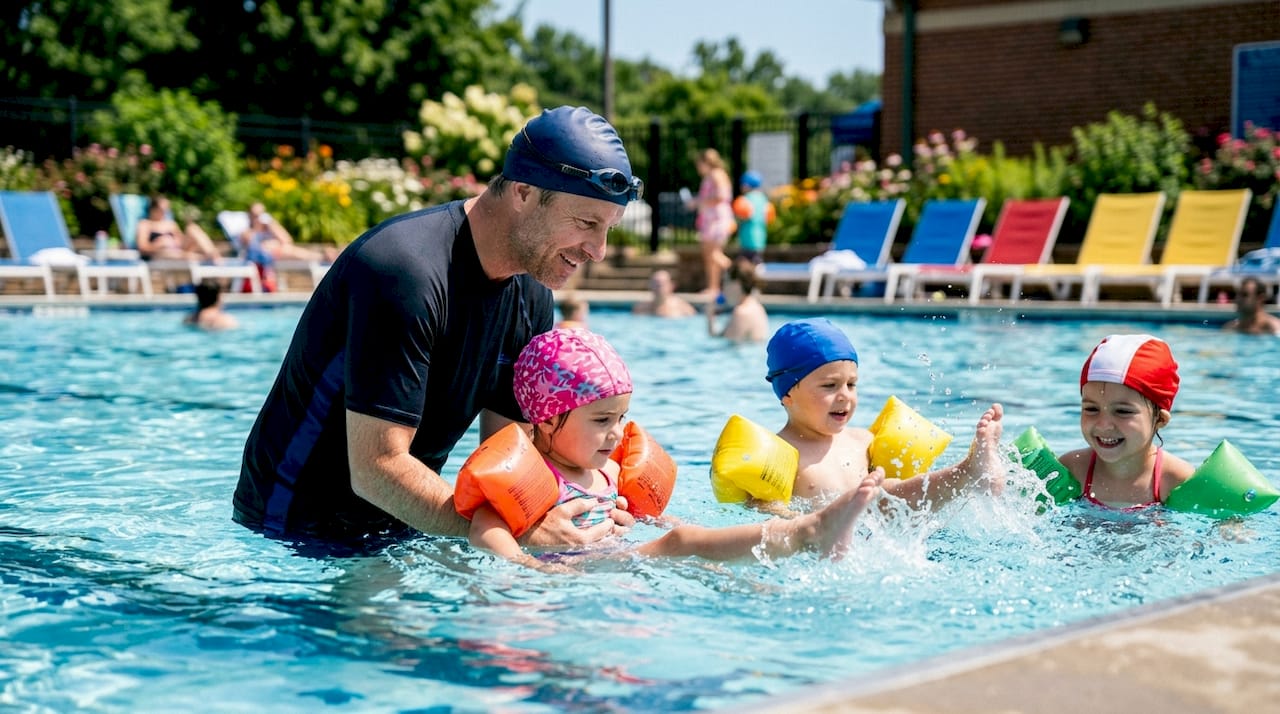
The single most controllable safety variable in a group swim lesson is the instructor-to-student ratio. Ratios for beginners should stay at 1:2 or 1:3 to allow continuous visual contact and fast physical intervention. An instructor managing ten students cannot guarantee oversight of any one child. That gap is where drowning incidents happen.
The difference between a 1:3 and a 1:6 ratio is not just a number. It determines whether an instructor can physically reach a struggling child within seconds. In-water positioning closes that gap further. An instructor standing on the deck has a reaction time measured in steps. An instructor already in the water has a reaction time measured in arm lengths.
Ratio | Supervision quality | Intervention speed | Recommended for |
1:2 | Continuous, individual | Immediate | Non-swimmers, infants |
1:3 | Strong, consistent | Very fast | Early beginners |
1:4 | Adequate with structure | Fast | Beginner swimmers |
1:6+ | Compromised | Delayed | Not recommended for beginners |
Pro Tip: Place yourself in the water at the child’s depth level during beginner lessons. Deck supervision feels safer for the instructor but puts you farther from the child who needs you most.
Ability grouping and ratios work together. Lower ratios accelerate skill acquisition and maintain continuous visual oversight simultaneously. You do not have to choose between safety and learning speed. The right ratio delivers both.
How ability-based groupings improve swimmer safety
Grouping swimmers by ability is the most underused safety tool in group instruction. Before any child enters the water, a standardized swim test determines their level. That test result controls water depth, activity type, and supervision intensity for the entire session.
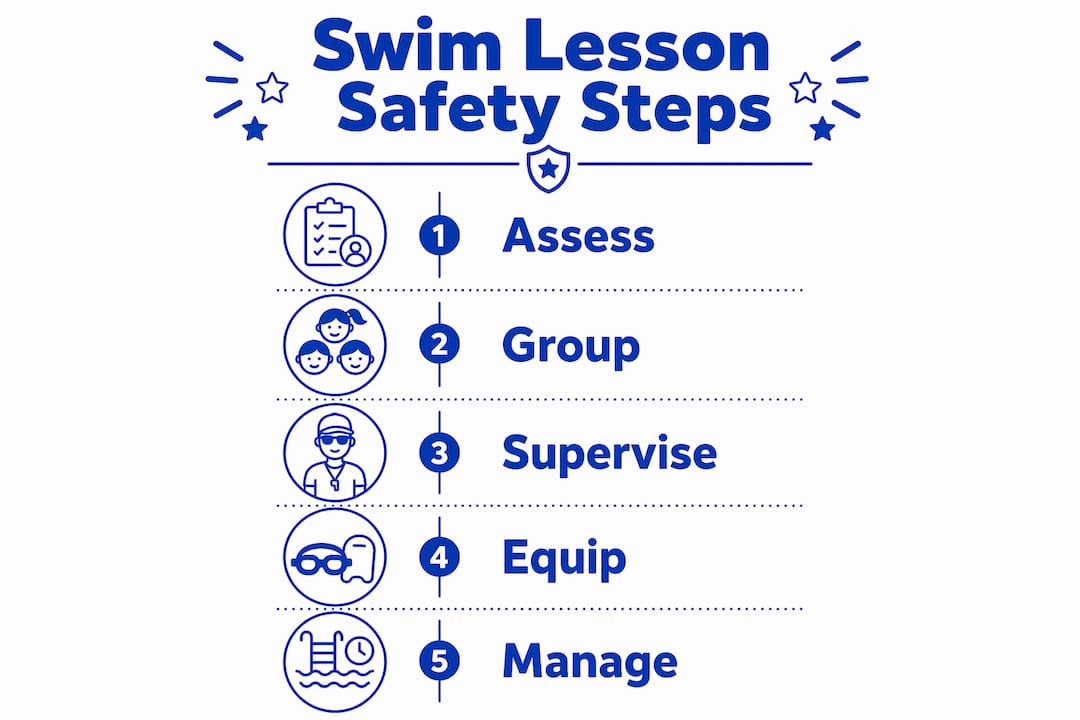
Color-coded grouping systems like White, Red, Yellow, Green, and Double Green separate non-swimmers from advanced swimmers with clear visual logic. White-level swimmers stay in shallow water with maximum supervision. Double Green swimmers operate in deeper water with greater independence. The color tells every instructor and lifeguard exactly what that child needs without a conversation.
The practical benefits of ability-based grouping include:
Depth control: Non-swimmers never enter water above their comfort or skill level.
Activity matching: Drills match what each group can safely execute, reducing panic and flailing.
Supervision calibration: Instructors allocate attention based on actual risk, not assumed risk.
Faster identification: In a crowded pool, a colored wristband or cap tells you instantly who needs the most eyes on them.
Reduced mixed-ability confusion: Instructors do not split attention between a child who can float independently and one who cannot.
Pro Tip: Run swim tests on dry land or in a controlled shallow area before the group enters the main pool. This prevents the chaos of discovering ability mismatches mid-lesson.
Reviewing standardized swim assessments before pool time is a pre-session habit that pays off every single lesson. Misplaced swimmers create supervision gaps that no ratio can fix.
What coordinated safety protocols and equipment support group lessons
Certified lifeguard presence is mandatory during group swim lessons and is never a substitute for instructor vigilance. The lifeguard and the instructor serve two different functions. The instructor teaches. The lifeguard scans. Combining those roles into one person creates a gap in both.
2026 safety guidelines require visual markers like brightly colored buoys for open-water sessions, with swimmers maintaining 1–1.5 meters of distance from those markers. Buoys are never attached to ankles or wrists. In pool settings, lane lines and depth markers serve the same boundary function.
Safety role | Primary responsibility | Secondary responsibility |
Certified lifeguard | Continuous water scan | Emergency response |
Swim instructor | Teaching and in-water supervision | Immediate child intervention |
Water Watcher | Dedicated pool observation | Rotating every 15–20 minutes |
Facility manager | Protocol enforcement | Staff coordination |
The Water Watcher system assigns one sober adult, identified by a physical badge or lanyard, to scan the pool continuously. This person rotates every 15–20 minutes to prevent attention fatigue. The role is entirely separate from instruction and from lifeguarding. It adds a third layer of eyes to the water.
Pro Tip: Buddy checks work best when they happen at fixed transition points, not randomly. Build them into your lesson structure at the start, mid-point, and end of every session.
CPR-certified instructors add a critical response capability that lifeguard presence alone does not guarantee. When every adult in the pool area holds current CPR and First Aid certification, the emergency response chain has no weak links.
How behavior and class structure management keeps young swimmers safe
Behavior management is a safety protocol. An unsupervised child who wanders to the pool edge or jumps in without permission is a drowning risk, not a discipline problem. Proactive structure prevents that scenario before it starts.
Visual schedules and paced activities reduce restlessness and keep swimmers within supervised boundaries. When children know what comes next, they wait in place instead of drifting. That predictability is a safety mechanism disguised as classroom management.
The concept of “structured chaos” describes a controlled environment where children have freedom of movement within firm boundaries. It is the opposite of rigid silence, and it is also the opposite of uncontrolled noise. Instructors who master this balance keep children engaged without losing track of anyone.
Practical techniques for maintaining safe, engaged group lessons:
Minimize wait time: Rotate drills so every child is active. Idle swimmers drift toward hazards.
Use side-by-side drills: Parallel practice keeps the group compact and within arm’s reach of the instructor.
Set clear transitions: Announce each activity change before it happens. Surprise transitions cause rushing and falls.
Redirect, do not punish: Correcting behavior through re-engagement keeps the child in the lesson and in your sight.
Pro Tip: Post a visual schedule at the pool edge for older children. Even a simple sequence of pictures reduces the “what are we doing next?” disruptions that pull your attention away from the water.
Small group swim instruction works best when the structure is tight enough to prevent hazards but flexible enough to respond to how children actually behave. Rigid scripts break down. Structured routines hold.
What pre-season collaboration between facility managers and instructors ensures safety
Pre-season planning is the most cost-effective safety investment a facility can make. Clear communication before sessions begin on ratios, emergency protocols, and swim testing eliminates the ad-hoc decisions that cause accidents under pressure.
Facility managers and lead instructors should complete the following before the first group lesson:
Define ratios in writing. Every instructor knows their maximum group size before they arrive at the pool.
Assign emergency roles. One person calls emergency services. One person enters the water. One person manages the remaining group. These assignments do not get made during an incident.
Document swim test procedures. The test format, pass criteria, and group placement rules are written and shared with all staff.
Walk the pool deck together. Identify blind spots, slippery surfaces, and equipment locations before children are present.
Confirm lifeguard certification dates. Expired certifications are a liability and a safety failure. Check them before the season starts.
Collaborative pre-season planning creates shared responsibility. When every staff member knows their role, no one waits for someone else to act during an emergency. That clarity is the difference between a controlled response and a chaotic one.
Qualified swim instructors who arrive at a facility with documented training and clear role expectations reduce the burden on facility managers to fill gaps in real time. Hire for preparation, not just credentials.
Key Takeaways
Effective group swim safety requires low instructor-to-student ratios, ability-based grouping, certified lifeguard presence, and pre-season role clarity working together as a single system.
Point | Details |
Ratio control | Keep beginner groups at 1:2 or 1:3 to maintain continuous visual contact and fast intervention. |
Ability-based grouping | Use standardized swim tests and color-coded levels to match depth and supervision to each child’s skill. |
Layered supervision | Combine instructor oversight, certified lifeguard scanning, and a dedicated Water Watcher for full coverage. |
Behavior as safety | Visual schedules and structured transitions keep swimmers engaged and within supervised boundaries. |
Pre-season planning | Assign emergency roles and document protocols before the first lesson to eliminate real-time guesswork. |
What I have learned from years of watching group swim safety succeed and fail
The most common safety failure I see in group swim instruction is not a missing lifeguard or a broken protocol. It is complacency in scanning. Instructors who have taught for years develop a rhythm, and that rhythm can become automatic in the wrong way. They scan the same path, at the same pace, and stop truly seeing what is in front of them.
Deck-flow and scanning protocols need to be trained explicitly and refreshed regularly. Physical positioning in the water allows faster intervention than deck supervision. That fact alone should change how most instructors think about where they stand during a lesson.
The second failure I see is role confusion. When a lifeguard thinks the instructor is watching, and the instructor thinks the lifeguard is watching, nobody is watching. Pre-season role assignments fix this. They are not bureaucratic paperwork. They are the reason a child gets pulled from the water in time.
What actually works is the combination of low ratios, ability grouping, and a Water Watcher who rotates on a fixed schedule. None of these elements is optional. Remove one, and the system has a gap. The gap is where incidents occur.
Facility managers who invest in pre-season collaboration with their instructors see fewer incidents and less confusion during busy sessions. That investment takes a few hours before the season. The alternative costs far more.
— SUPERHERO
Superheroswimacademy: training instructors who keep every child safe
Superheroswimacademy has trained over 2,500 children in Palm Beach and Broward counties using a curriculum built entirely around the safety principles covered in this article. Every instructor completes rigorous CPR, First Aid, and survival swim training before teaching a single lesson.
For swim instructors looking to sharpen their skills, the Instructor Retreat covers scanning protocols, ratio management, and behavior strategies in a hands-on format. Facility managers can also explore online courses designed to build safety expertise across entire teams. If you are ready to see what a fully safety-focused swim program looks like in practice, visit Superheroswimacademy to learn more about locations and lesson structures near you.
FAQ
What is the safest instructor-to-student ratio for beginner swimmers?
The safest ratio for beginner young swimmers is 1:2 or 1:3. Ratios above 4:1 make continuous visual contact impossible and significantly increase risk for non-swimmers.
Why is a lifeguard required if an instructor is already present?
The instructor’s primary role is teaching, not scanning. A certified lifeguard provides a dedicated, continuous water scan that the instructor cannot maintain while actively teaching.
What is the Water Watcher system in group swim lessons?
The Water Watcher system designates one adult, identified by a badge or lanyard, to scan the pool continuously. This person rotates every 15–20 minutes to stay alert and holds no other responsibilities during their watch.
How does ability-based grouping reduce safety risks?
Ability-based grouping matches each child’s water depth and activity type to their actual skill level. This prevents non-swimmers from entering deep water and allows instructors to calibrate supervision intensity accurately.
What should facility managers do before group swim sessions begin?
Facility managers should assign emergency roles in writing, confirm lifeguard certifications, document swim test procedures, and walk the pool deck with instructors before the first lesson of the season.
Recommended
Comments