
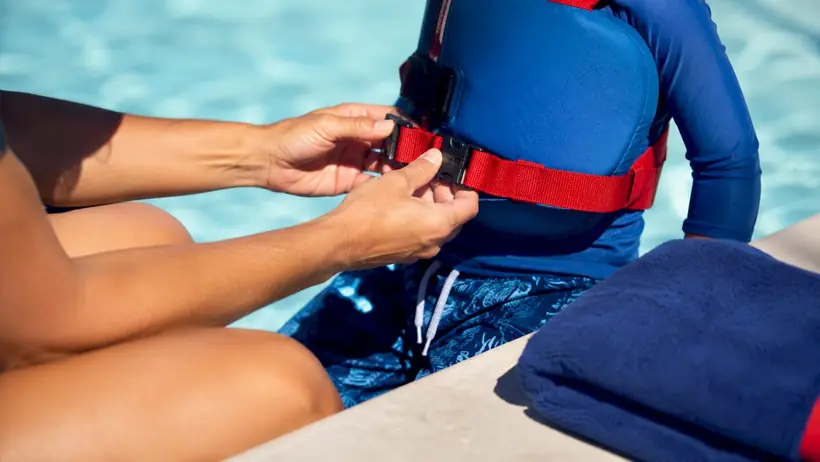
For open water, docks, and boats, use a properly fitted, USCG-approved life jacket. For supervised pool play, a puddle jumper is acceptable, but it’s a flotation aid, not a swimming lesson. Neither device replaces adult supervision within arm’s reach or enrollment in real survival swim instruction.
TL;DR:
- Always use a USCG-approved life jacket for open water, docks, and boats, ensuring it fits snugly and is appropriate for your child’s weight.
- Puddle jumpers are only suitable for supervised pool play, not open water, waves, or current, and are not certified for rescue situations.
- Flotation devices should never replace active supervision, safety barriers, or formal swim lessons, which are essential for water safety.
- Relying on puddle jumpers can reinforce vertical drowning postures, delaying the development of independent floating and self-rescue skills.
- Properly fitting a life jacket takes less than five minutes and should be paired with a structured swimming program focused on horizontal floating and self-rescue techniques.
Life Jacket vs Puddle Jumper: The Design and Buoyancy Differences
A life jacket and a puddle jumper solve different problems, even though parents often shop for them side by side. A true life jacket, sometimes called a Type II or Type III personal flotation device, distributes buoyancy across the torso with foam panels, a snug body fit, and usually a crotch strap that keeps the jacket from riding up over a child’s head in the water. Some models add head support or a collar designed to help turn an unconscious wearer face up. That’s the entire point of a life jacket: keep someone safe even if they can’t help themselves.
A puddle jumper works on a completely different principle. It’s arm floats connected by a chest band, and it holds a child’s arms up and out, pushing the torso into a vertical position. That’s fine for treading water in a shallow pool. It is not designed to turn a face-down child over, nor is it built for waves, current, or boat wakes.
Swim lessons in Palm Beach & Broward County
Free 30 minute assessment. Try before you enroll, no commitment.
Book Free AssessmentSwim vests sit in a third category entirely. They’re classified as swimming aids, not life-saving devices, and they assume the wearer already has basic swimming and treading skills rather than providing them.
Here’s what U.S. Coast Guard approval actually confirms:
- The device meets construction and buoyancy standards for its labeled weight range.
- It does not certify the device as a swim-teaching tool.
- It does not guarantee face-up turning in open water or rough conditions.
- Approval on a puddle jumper aligns with supervised, calm water use, not open-water emergencies.
When to Use a Life Jacket vs a Puddle Jumper
Federal guidance is specific here: children under 13 must wear a Coast Guard–approved life jacket on moving vessels. That includes boats, and it’s the safer call for lakes, rivers, and any water with current, waves, or unpredictable depth. A puddle jumper belongs in the backyard pool or a calm, shallow swim lesson setting, and only under constant, active supervision.
Follow this sequence before your child gets in the water:
- Check the device’s weight range against your child’s actual weight, not their age.
- Confirm the fit is snug but not tight, with a crotch strap for toddlers so the device can’t slip up over their head.
- Test the fit in shallow water first, watching how the device sits once wet.
- Reject any life jacket with excessive “grow room.” A loose jacket can ride up and expose a child’s face.
- Keep a phone within reach, know infant/child CPR, and never leave a swimming child, even for a few seconds.
Ready to get your child in the water?
Book a free assessmentLayers of protection matter more than any single product. Pool fences, locked gates, constant touch supervision, and formal swim lessons work together. None of them work well alone. A pool fence is one layer, not the whole system.
Pro Tip: If your child falls in unexpectedly, don’t waste time calling out. Get in the water immediately, get their face above the surface, and call for help once you have physical contact.
The biggest risk isn’t the device itself. It’s what the device does to your attention. Parents routinely relax supervision the moment a child is strapped into flotation, which is exactly backward.
How Puddle Jumpers Can Slow Down Swim Skill Development
Puddle jumpers hold kids in what safety experts call the “drowning position.” A vertical body with the head tilted back is the same posture a struggling swimmer takes on naturally, and that posture, reinforced daily, becomes muscle memory. Instructors then spend weeks unteaching it before a child can learn to float horizontally or kick with a proper stroke.
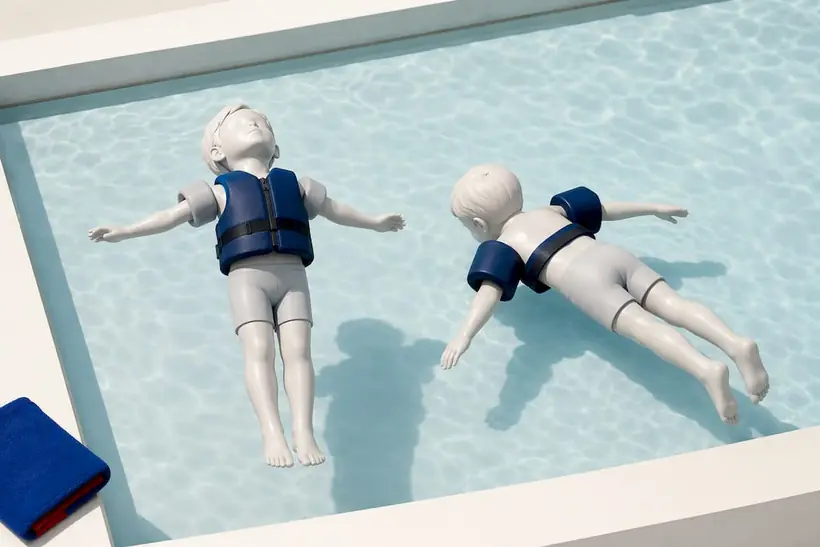
Structured, instructor-led practice focused on floating, rolling, and self-rescue produces faster, measurable progress than unsupervised splashing in a flotation device. The strategy that works best is graduated: short daily sessions without any device, paired with instructor-guided floating drills, building toward independence over a few weeks rather than an abrupt switch.
Watch for these warning signs that a device is working against your child, not for them:
- They panic or sink immediately the moment the device comes off.
- They can’t lift their face out of the water on their own after months of use.
- They resist any floating or kicking drill that isn’t done vertically.
- Their comfort in water hasn’t improved despite regular pool time.
Ready to get your child in the water?
Book a free assessmentIf you see two or more of these, it’s time to talk to a qualified instructor about weaning off the device rather than adding more pool visits with it on.
Choosing and Fitting a Flotation Device: A Quick Checklist
Buying the right device takes less than five minutes if you check the right things. Start with the label, not the color or cartoon character on the front.
- Confirm USCG approval and read the intended-use statement. Some devices are labeled for pool play only.
- Match the weight range on the tag to your child’s current weight, not a guess.
- Test the fit in shallow water before trusting it anywhere deeper.
- Look for a crotch strap on any toddler-sized device.
- Ask directly: is this a life-saving PFD or a swim aid? Never bring a “play” labeled device on a boat.
- Set a rough transition timeline, generally two to six weeks depending on the child, to move from flotation toward independent floating skills.
A properly fitted life jacket shouldn’t ride up over a child’s ears when lifted by the shoulders during a fit test. That single check catches most sizing mistakes before they matter in the water. Pair any device decision with a real plan for lessons; the checklist habits you build now around barriers and supervision matter as much as the gear itself.
Ready to get your child in the water?
Book a free assessmentWhy Lessons Beat Flotation Dependence
Instructors at some swim schools train specifically for this gap between what a puddle jumper does and what a drowning child actually needs. Many instructors complete CPR and First Aid training alongside specialized survival swim curricula that teach skills flotation devices don’t build.
Structured lessons directly target the three problems puddle jumpers create:
- They rebuild horizontal floating instead of reinforcing the vertical “drowning position.”
- They correct stroke mechanics that arm-float muscle memory works against.
- They teach self-rescue, the skill that matters most in an unsupervised moment.
If your child has relied on a puddle jumper for a season or more, a parent-observed lesson is the fastest way to see where they actually stand. Ask any instructor about measurable goals and progress tracking rather than vague reassurance.
The Bottom Line on Life Jackets and Puddle Jumpers
Use a USCG-approved life jacket on boats, docks, and open water, and treat a puddle jumper as a pool-play aid only, never a lesson substitute. Three things to do this week: check your device’s fit and label against your child’s actual weight, book a real swim lesson, and stay within arm’s reach every single time your child is near water. Superhero Swim Academy’s in-person lessons in Palm Beach and Broward counties build the skills flotation devices can’t.
Ready to get your child in the water?
Book a free assessmentWhat Parents Get Wrong About Flotation Devices
The industry has done parents a disservice by marketing puddle jumpers as a step toward swimming rather than what they actually are: a babysitting tool for calm water. That’s not a knock on the product. It’s a knock on how it gets sold and how quickly parents let their guard down once a child is strapped in.
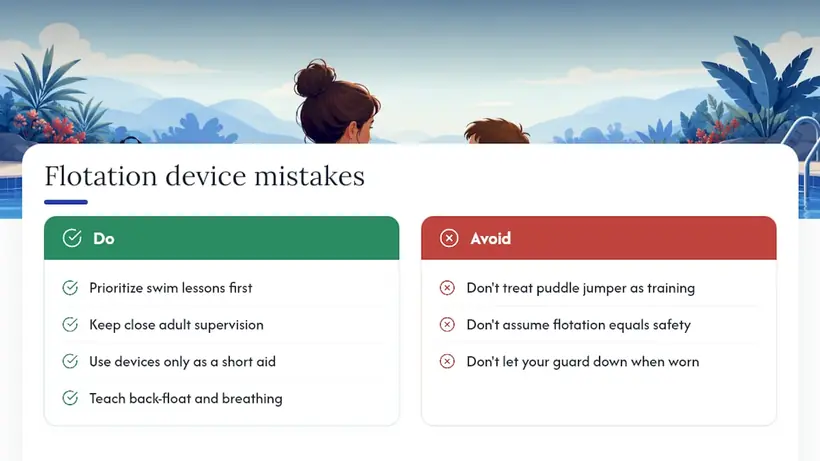
The research is consistent on this point. Devices that hold kids vertical build habits instructors then have to undo, and that undoing takes real time. Meanwhile, the conventional advice, “just get any flotation device and let them play,” skips the part that matters most: a device is not a safety plan. Supervision is. Instruction is.
If you take one thing from this, prioritize lessons before gear. A $15 puddle jumper feels like progress. It isn’t the same as a child who can flip onto their back and breathe on their own.
, SUPERHERO