
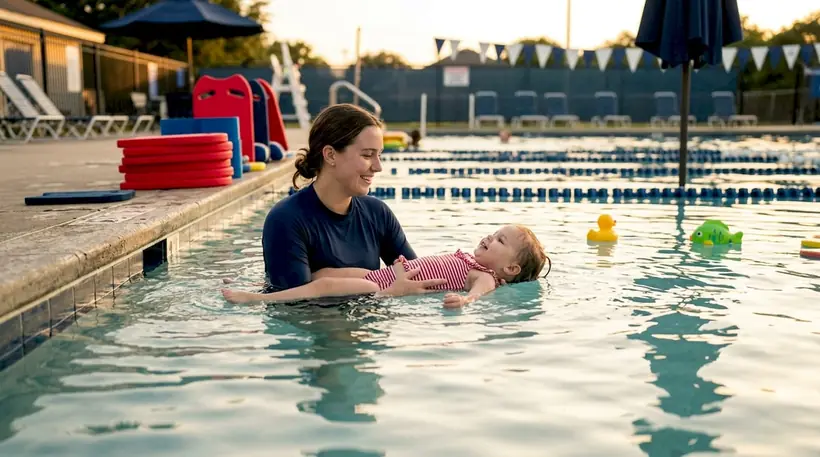
Start water exposure whenever you like, but treat age 1 as the point where formal lessons begin paying off, and age 4 as the deadline for enrolling every child. The American Academy of Pediatrics says many children can begin lessons at age 1, and most should be swimming by age 4. The American Red Cross backs the same window for building real proficiency, though evidence for infants under 1 stays thin.
One caveat matters more than any age chart: lessons lower drowning risk, they don’t erase it. A child who can float and self-rescue still needs a watching adult, every time, near any water.
Some kids can’t wait for the “ideal” timeline. Consider starting earlier if:
- You have a pool, pond, or hot tub at home with year-round access
- Your family boats, fishes, or vacations near open water often
- Your child is on the autism spectrum, which raises drowning risk substantially
- A sibling or close relative has had a near-drowning incident
Programs like Superhero Swim Academy build around this exact logic: survival skills first, stroke development second, starting as early as a child’s development allows.
Swim lessons in Palm Beach & Broward County
Free 30 minute assessment. Try before you enroll, no commitment.
Book Free AssessmentKey Takeaways
Swim readiness depends on age, developmental markers, and water exposure risk together, not on the calendar alone, and lessons work best as one layer in a broader safety system.
Point
Details
Start window
Lessons can begin around age 1 as a protective layer; most kids should be enrolled by age 4.
Watch development, not just age
Independent walking, following two-step commands, and separation tolerance predict readiness better than birthdate.
Water temperature matters under 3
Programs for infants and toddlers should keep pools between 87°F and 94°F with touch supervision.
Lessons reduce risk, don’t eliminate it
Fencing, locked gates, life jackets, and constant supervision remain necessary regardless of skill level.
Superhero Swim Academy fits every stage
Parent-and-child, small group, and private formats map to infant through school-age readiness, backed by CPR-certified instructors and progress tracking.
What’s the Best Age for Swim Lessons at Each Stage?
Age tells you roughly what to expect, but development tells you what’s actually possible. Here’s how the milestones break down.
- Infants, 6 to 12 months. Parent-child classes at this age teach water acclimation, not swimming. Babies get comfortable with splashing, brief submersion, and the sensation of floating while a parent holds them. The AAP stays cautious about infants under 1, noting the evidence for drowning-prevention benefit at this stage is limited. Real stroke mechanics won’t happen yet. Think of this phase as laying emotional groundwork, not skill-building.
- Ages 1 to 3. This is where foundational survival skills start forming: rolling to a back float, kicking toward the pool edge, and holding a breath on cue. Water temperature matters enormously here. Look for pools kept between 87 and 94°F, since younger bodies lose heat fast and get miserable in anything cooler. Reputable programs also enforce “touch supervision” for kids under 3, meaning an adult stays within arm’s reach at all times, in the water.
- Ages 4 to 6. Most children hit a developmental sweet spot here. Coordination, attention span, and the ability to follow multi-step directions all improve enough for formal lessons to click. This is typically when treading water, basic self-rescue, and the beginnings of front crawl arm and leg coordination show up. A child enrolled consistently at this age often moves from “uncomfortable in water” to “swimming short distances independently” within a few months, though pace varies by kid.
- Ages 7 and up. Older beginners sometimes worry they’ve missed their window. They haven’t. Kids this age bring better body awareness, stronger muscles, and the patience to practice a skill repeatedly, so they frequently progress faster per lesson than a 4 year old does. The catch is consistency. A 9 year old who takes lessons sporadically will lag behind a 5 year old who swims weekly for a year.
Ready to get your child in the water?
Book a free assessmentResearch on aquatic skill acquisition puts the window for basic competency anywhere between 18 and 60 months of age, with wide variation from child to child. That range is the whole point: two 3 year olds can be at completely different readiness levels, which is why the next section matters as much as the calendar does.
Is My Child Ready for Swim Lessons? A Quick Checklist
Age gets you in the door, but readiness determines whether the lesson actually sticks. A few concrete signs to check before you book anything:
- Can your child walk independently and manage basic balance on land?
- Do they follow a simple two-step instruction, like “pick up the ball, then hand it to me”?
- Can they tolerate a few minutes of separation from you without full meltdown?
- Have they shown any comfort with water in the bath, like tolerating a splash to the face?
- Do they respond cooperatively when a familiar adult guides their body, like during a diaper change or dressing?
Instructors often weigh these motor and cognitive markers more heavily than birthdate, as highlighted in why newborn care classes matter for first-time parents to support early developmental milestones. Independent walking, following two-step commands, and tolerating brief supervised separation predict how well a child will actually participate in a lesson.
You can test some of this at home before ever booking a class. In the bathtub or a shallow kiddie pool, with you close enough to touch your child at all times, see how they react to water on their face, whether they’ll lie back with support, and whether they follow a simple cue like “kick your feet.” None of this needs to be formal. It’s just information.
Ready to get your child in the water?
Book a free assessment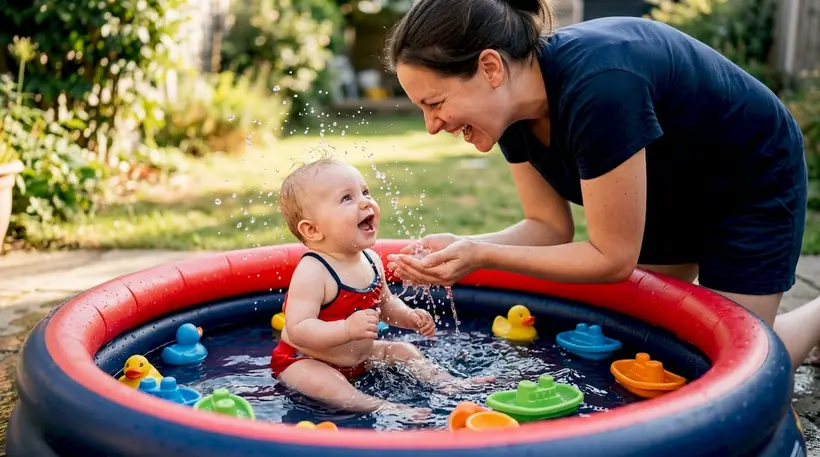
Pro Tip: If your child has sensory sensitivities or is on the autism spectrum, call ahead and ask specifically whether instructors have experience with neurodivergent learners. Not every program does, and the right fit matters more than the closest pool.
If a pediatrician has flagged developmental delays, or if your child reacts to water with extreme distress rather than typical wariness, loop in your doctor before choosing a program. A specialized instructor beats a generic group class in these cases, every time.
How Do You Choose the Right Swim Program?
Not all swim programs are built the same way, and the differences matter more once you know what to look for. Prioritize three things in this order: safety credentials, curriculum focus, and instructor experience with your child’s age group.
On safety, ask directly whether instructors hold current CPR and First Aid certification, and whether a lifeguard is on deck separate from the instructor teaching the class. On curriculum, decide whether you want survival-first training (self-rescue, back floating, treading) or stroke-focused development, since programs built around one don’t always emphasize the other equally.
Class format changes by age too:
- Parent-and-child sessions work best for babies and young toddlers who need a familiar adult in the water.
- Small group classes suit kids 4 and up who can separate from parents and benefit from peer motivation.
- Private lessons make sense for kids needing extra attention, whether due to fear, a scheduling constraint, or a developmental need.
- Intensive short-term programs can accelerate progress for older beginners with limited weekly availability.
Ready to get your child in the water?
Book a free assessmentWater temperature for children under 3 should sit in that same 87 to 94°F range mentioned earlier, and class sizes for toddlers should stay small enough that an instructor can maintain hands-on contact with each child regularly.
When you visit a facility, ask pointed questions:
A program that can answer that clearly, with specifics rather than vague reassurance, is usually one that takes accountability seriously. For more on preparing your child before that first session, see how to prepare your child for their first swim lesson.
Do Swim Lessons Actually Prevent Drowning?
Swim lessons reduce drowning risk. They do not eliminate it, and treating them as a substitute for supervision is one of the more dangerous assumptions a parent can make. Research on children ages 2 to 5 in formal lessons shows a measurable drop in drowning risk, but every study pairs that finding with the same warning: lessons are one layer in a system, not the whole system.
The layers that actually work together include:
- Four-sided fencing around any pool, isolating it from the house and yard
- Self-latching, self-closing gates and locked doors leading to water
- Constant, undistracted adult supervision, with touch supervision for kids under 3
- Life jackets for weak or developing swimmers in open water or boats
- CPR training for every parent and regular caregiver, not just instructors
- Pool alarms as a backup layer, never a replacement for watching eyes
Ready to get your child in the water?
Book a free assessmentAt home, you can reinforce lesson progress with low-stakes practice: supervised exit drills where a child climbs out of a pool unassisted, or even practicing swimming in light clothing so a real-world fall doesn’t feel unfamiliar. Kids who stop lessons around age 8, which many do, often lose ground on endurance and advanced skills. The Cleveland Clinic recommends continuing well into early adolescence, both for stamina and for the judgment that only comes with years of water experience.
What Does Superhero Swim Academy Offer at Each Age?
Every instructor at Superhero Swim Academy trains in CPR, First Aid, and the academy’s own survival swim curriculum before ever teaching a class, so safety protocol isn’t an afterthought bolted onto a stroke-focused program. It’s the starting point.
The academy has taught more than 2,500 children, with parents regularly reporting noticeable swimming gains within a short stretch of consistent lessons. Progress isn’t left to guesswork either: families get clear goals and regular updates, so you know exactly where your child stands rather than hoping the improvement is happening.
Program formats map to the age breakdown covered earlier:
- Parent-and-child sessions for infants and toddlers building comfort and touch-supervised skills
- Small group classes for kids 4 and up ready to work on independent survival skills and stroke basics
- Private and concierge lessons, including at-home instruction, for families wanting individualized pacing or scheduling flexibility
If you’re deciding whether your child is ready, the most useful next step is simple: observe a class in person, ask to see a sample progress report, and talk through your child’s specific readiness signs with an instructor before committing. For toddlers specifically, structured lessons build the foundation that later stroke work depends on.
Ready to get your child in the water?
Book a free assessmentWhy the “Just Wait Until Four” Advice Misses the Point
The conventional wisdom, wait until 4, then enroll, isn’t wrong exactly, but it flattens a much more useful truth: readiness is a spectrum, not a birthday. Two children born the same week can be months apart developmentally, and treating age 4 as a magic threshold ignores every motor and cognitive marker instructors actually rely on.
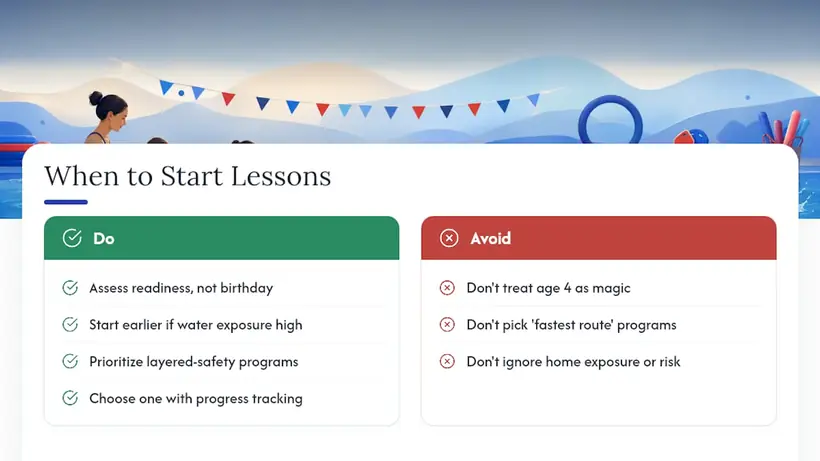
What gets underestimated is how much a home environment changes the calculus. A toddler with daily backyard pool access needs different urgency than one who sees water twice a year at a public pool. The research supports starting meaningfully earlier when exposure or risk factors are high, and starting the standard survival-first curriculum by 4 for everyone else.
If there’s one thing parents should prioritize over the calendar, it’s this: pick a program built around layered safety and honest progress tracking, not one selling the fastest route to “swim ready.” Speed without supervision habits is how confident kids drown.
, SUPERHERO
Ready to get your child in the water?
Book a free assessmentReady to Start Swim Lessons With Superhero Swim Academy?
If you’ve read this far, you already know the honest answer: there’s no single perfect age, just a window that gets safer to wait past the longer you delay. Superhero Swim Academy exists for parents in Palm Beach and Broward counties who want that window handled by instructors trained specifically in survival swim, not just general stroke coaching.
What sets this apart from a standard swim school is the structure: every instructor carries CPR and First Aid certification, classes run in heated pools kept in the appropriate range for young children, and you get real progress updates instead of vague reassurance that your kid is “doing great.” Formats cover the full age range this guide just walked through, from parent-and-child infant sessions to private and concierge lessons for families who want individualized scheduling. If regular in-person classes aren’t practical for your household, the academy’s online courses teach parents to run survival-focused practice at home between sessions.
The next step is straightforward: book a class or consultation and ask about age-appropriate placement for your child.