
Social Skills Developed in Group Swim Lessons for Kids
- superheroswim
- 3 days ago
- 7 min read

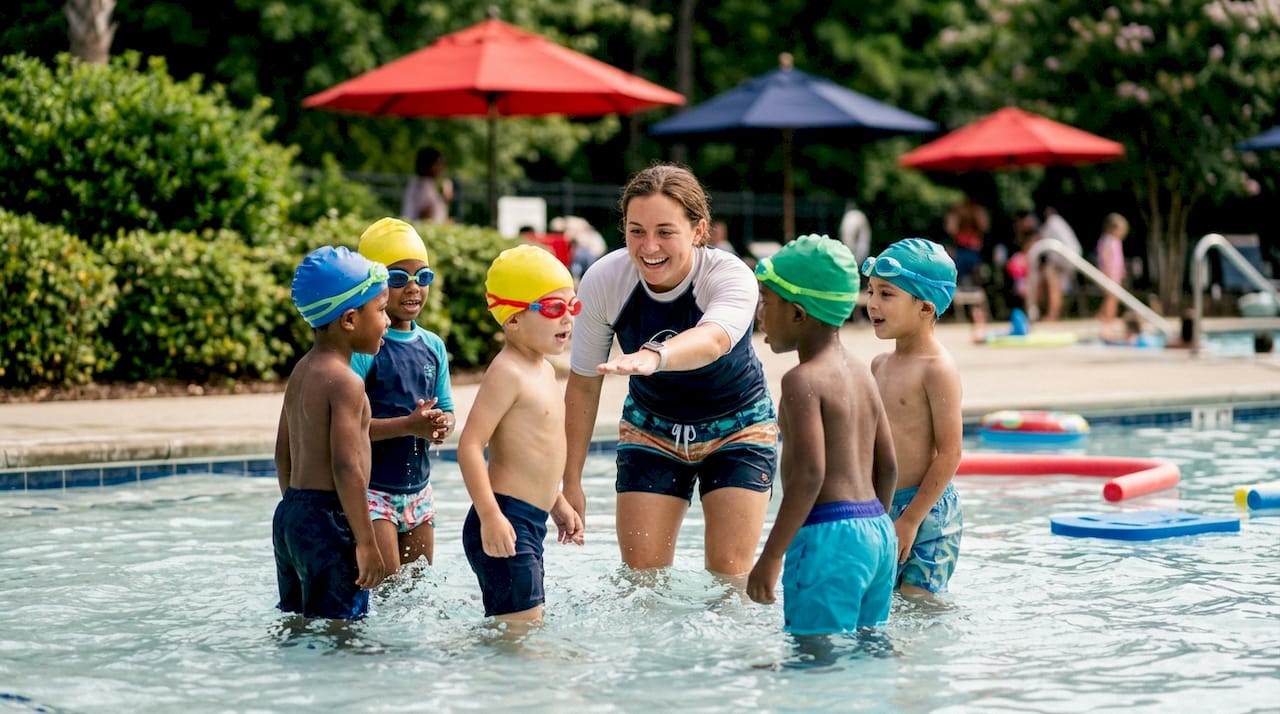
Group swim lessons are structured, peer-based aquatic classes where children learn to swim while building teamwork, communication, and empathy alongside their classmates. The social skills developed in group swim lessons are just as significant as the physical ones. Formal swim lessons can reduce drowning risk by up to 88% in children aged 1 to 4. That number alone makes enrollment worthwhile. But the social payoff, including confidence, patience, and peer connection, is what keeps families coming back year after year. Superheroswimacademy has seen this firsthand with over 2,500 children taught across Palm Beach and Broward counties.
1. What social skills do children develop in group swim lessons?
Group swim classes build a specific set of social skills that most other childhood activities cannot replicate. The water creates equal footing. Every child is a beginner in some way, and that shared vulnerability opens the door to genuine peer connection.
Children develop these core social skills in group swim settings:
Teamwork and cooperation. Children complete drills together, share lane space, and cheer each other through challenges. Teamwork in swimming lessons grows naturally when kids rely on each other to keep activities moving.
Communication. Children must listen to instructors, respond to directions, and talk with peers, all while managing the physical demands of the water. Swimming requires multi-step instructions in a distracting environment, which sharpens listening skills and working memory.
Patience and turn-taking. Waiting for a lane, a float, or a turn at the wall teaches children to manage frustration in real time.
Empathy and sportsmanship. Children learn to handle wins and setbacks gracefully. Group swim lessons teach patience and sportsmanship through real-time social interaction, including waiting turns and cheering peers.
Confidence and independence. Many children experience their first structured activity away from parents in a swim class. That separation builds trust in authority figures and age-appropriate self-reliance.
Pro Tip: Ask your child’s instructor to name one peer interaction they observed during class. That specific feedback tells you far more than a general progress report.
2. How group swim lessons create a social learning environment
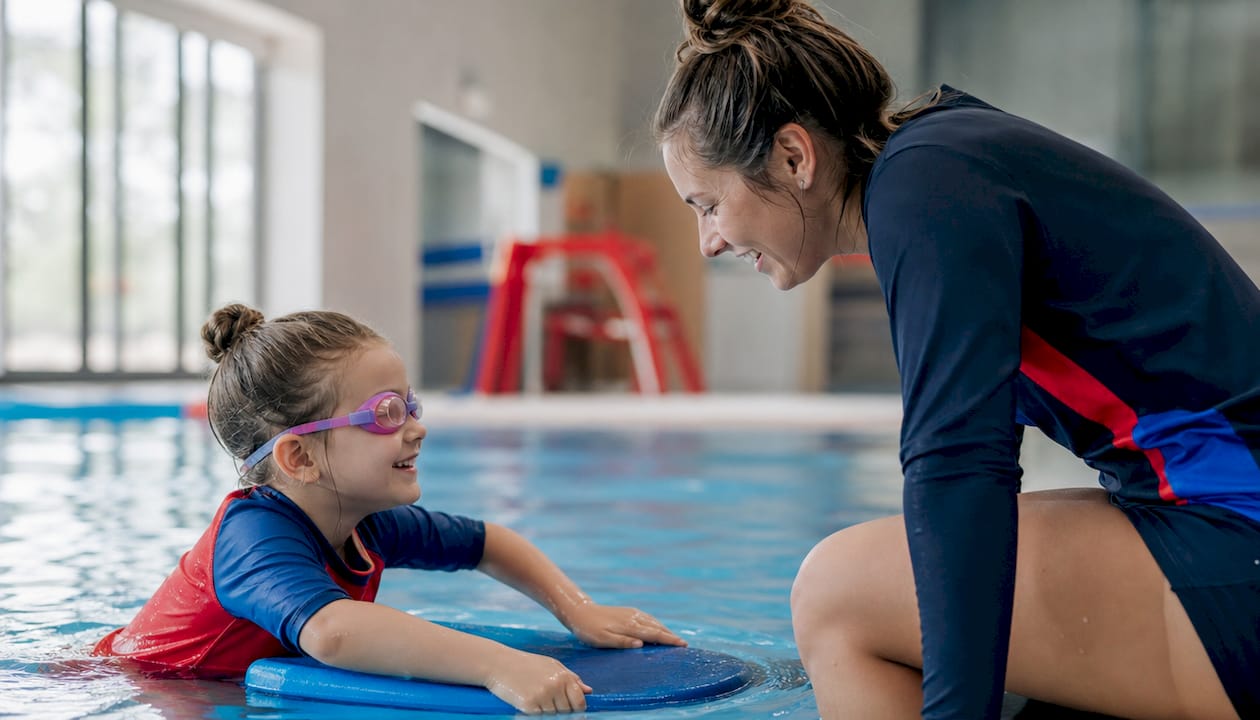
The pool is not just a place to practice strokes. It functions as a social laboratory where children read, respond to, and learn from each other in real time.
Peer modeling accelerates learning
Peer modeling in group swim lessons accelerates individual progress by encouraging skill adoption through observation. When a child watches a classmate push off the wall without fear, the mental barrier drops. Seeing a peer succeed is more persuasive than any instructor’s verbal encouragement alone.
Physical space creates unique social cues
Pool settings require children to interpret physical social cues intensely. Sharing lane space, managing body proximity, and coordinating movement with others are skills children practice nowhere else. Group swim lessons function as social laboratories where children learn to interpret and respond to immediate, non-verbal social cues.
Water levels the social playing field
Swimming flattens traditional childhood social hierarchies. The child who dominates the playground may struggle in the water, while the quieter child may excel. This shift creates inclusion and egalitarian peer relationships that carry beyond the pool deck.
“Resilience develops through supportive adult relationships, adaptive skills, and overcoming manageable challenges. Group swim lessons combine all three in a single session.”
Instructors play a central role in shaping these dynamics. A skilled instructor does not just correct technique. They narrate positive peer interactions, redirect conflict, and model the communication style they want children to use with each other.
3. Who benefits most from social skills developed in group swim lessons?
The short answer is most children. The longer answer depends on where a child is developmentally and what social challenges they face at home or school.
Children who gain the most from group swim activity benefits include:
Infants and toddlers (6 months and up). Baby and Me classes introduce the earliest forms of social interaction, including eye contact, shared attention, and responsive play. Water-based activities support emotional regulation and communication skills even in children as young as 6 months.
Neurotypical children building social etiquette. For children without developmental challenges, group lessons reinforce the social rules they are learning at preschool and kindergarten, including sharing, waiting, and encouraging others.
Children with ADHD. The structured, physical nature of swim lessons channels excess energy productively. The multi-step instruction format also builds focus and working memory over time.
Children with social anxiety. The pool environment reduces some of the verbal and eye-contact pressure that makes traditional social settings hard. Movement and shared physical activity create connection without forcing conversation.
Children experiencing their first group setting. Group swim lessons are vital milestones in childhood social development as one of the first times children interact without parents present.
Parents consistently report improvements in focus, communication, and empathy after just a few weeks of consistent group lessons. The benefits of swimming for kids extend well beyond the water.
4. Industry best practices for structuring lessons that build social skills
Not all group swim classes are built the same way. The structure of a lesson determines how much social learning actually happens, not just how much swimming gets done.
Session length matters
Industry standards favor 30-minute group swim sessions to maintain children’s engagement and focus. Longer sessions lead to fatigue, which erodes both skill retention and positive social behavior. Thirty minutes keeps energy high and interactions constructive.
Class size shapes interaction quality
Smaller classes give instructors more time to facilitate peer interaction, not just correct strokes. A class of four to six children allows the instructor to observe social dynamics and step in when a child needs support. Larger classes can still work, but they require more structured activities to prevent children from disengaging.
Pro Tip: Before enrolling, ask how many children share a lane or activity station. The answer tells you how much peer interaction your child will actually experience per session.
Positive reinforcement builds social confidence
Effective instructors use specific praise directed at both swimming skills and social behavior. “Great job waiting for your turn” reinforces the social skill as clearly as “great kick” reinforces the physical one. This dual reinforcement is what separates a swim class from a social skills class that happens to take place in water.
Connecting lessons to home and school
The social skills children practice in the pool transfer most effectively when parents reinforce them at home. Naming the skills your child used in class (“You were so patient waiting for your turn today”) helps children recognize and repeat those behaviors in other settings. Structured group activities like preschool programs and group experiences outside the pool reinforce the same social milestones.
Here is a quick comparison of lesson formats and their social skill outcomes:
Lesson format | Best for | Primary social skill developed |
Baby and Me (6–18 months) | Earliest social bonding | Shared attention, trust |
Toddler group (18–36 months) | First peer interaction | Turn-taking, parallel play |
Preschool group (3–5 years) | Structured cooperation | Teamwork, communication |
School-age group (6+ years) | Peer leadership | Empathy, sportsmanship |
Key Takeaways
Group swim lessons build social skills through peer modeling, structured cooperation, and a physical environment that naturally levels social hierarchies among children.
Point | Details |
Social skills are a core outcome | Group lessons build teamwork, empathy, and communication alongside swimming technique. |
Peer modeling drives growth | Children learn faster and overcome fear by watching classmates succeed. |
30-minute sessions are optimal | Shorter lessons keep engagement and positive social behavior high. |
All children benefit | Neurotypical kids and those with ADHD or social anxiety both gain measurable social skills. |
Structure determines outcomes | Class size, instructor approach, and positive reinforcement shape how much social learning occurs. |
What I have seen that most swim class guides miss
Parents often ask me whether group swim lessons are really better than private lessons for social development. My honest answer is that private lessons are better for technique. Group lessons are better for the child.
The social interactions in swim classes create something a one-on-one lesson simply cannot replicate: the experience of being part of a group that is working toward the same goal. I have watched children who barely spoke at drop-off become the loudest cheerleaders for their classmates by the end of a six-week session. That shift does not happen because of the water. It happens because of the other kids.
What surprises most parents is how quickly children with social anxiety adapt to the pool setting. The physical activity gives them something to focus on besides the social pressure. By week three, many of these children are initiating conversation with peers without any prompting. The confidence built in group swim classes carries directly into school, sports, and family settings.
My advice to parents selecting a program: watch a class before you enroll. Look at how the instructor responds when two children disagree over a float or a lane position. That moment tells you everything about whether the program treats social skills as a real outcome or an afterthought.
— SUPERHERO
How Superheroswimacademy supports your child’s social growth
Superheroswimacademy designs every group lesson to develop the whole child, not just the swimmer. Each instructor holds CPR and First Aid certification and trains in the academy’s proven survival swim curriculum. That preparation means instructors can focus on what happens between children, not just what happens in the water.
Parents receive regular updates on their child’s progress, including social milestones alongside swimming benchmarks. With over 2,500 children taught across Palm Beach and Broward counties, Superheroswimacademy has the experience to meet your child where they are. Visit Superheroswimacademy to learn about group lesson options, or check the locations page to find a class near you.
FAQ
What social skills do children gain from group swim lessons?
Children develop teamwork, communication, patience, empathy, and independence through group swim lessons. These skills grow through peer interaction, shared activities, and structured feedback from instructors.
At what age can children start building social skills in swim classes?
Water-based activities support emotional regulation and communication skills in children as young as 6 months. Baby and Me classes introduce the earliest forms of social bonding and shared attention.
Are group swim lessons better than private lessons for social development?
Group lessons are the better choice for social skill development because they create peer interaction, cooperative activities, and real-time social feedback that private lessons cannot replicate.
How do group swim lessons help children with ADHD or social anxiety?
The structured, physical format of swim lessons channels energy productively and reduces the verbal pressure of traditional social settings. Children with ADHD and social anxiety show measurable gains in focus, communication, and peer connection through consistent group lessons.
How long should a group swim lesson be for young children?
Industry standards favor 30-minute sessions for young children. That length maintains engagement, preserves positive social behavior, and prevents the fatigue that undermines both skill retention and peer interaction.
Recommended

Comments