
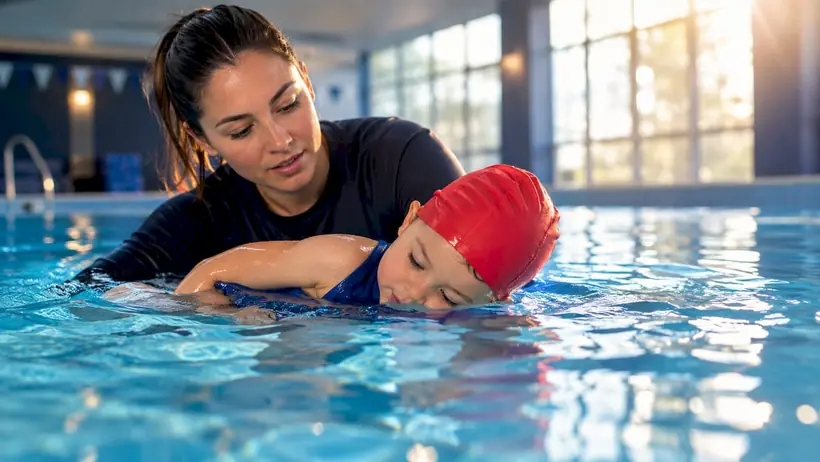
Survival swim programs typically charge weekly tuition, with group classes generally costing less than private and at-home instruction, which run higher. Most programs bill weekly rather than charging a flat course fee, and that weekly tuition continues until your child masters the survival sequence, not for a fixed number of weeks. Programs also typically require a one-time registration fee in addition to weekly tuition. Compare any local quote against that weekly rate and format, before you sign up.
TL;DR:
- Weekly tuition for survival swim programs varies widely by format, with group classes typically costing less than private or at-home lessons.
- The total cost depends heavily on how many weeks it takes for a child to master survival skills, influenced by lesson frequency and individual pace.
- Additional expenses like registration fees, maintenance lessons, travel fees, and equipment often increase the final bill beyond the headline weekly rate.
- Ask providers about mastery definitions, instructor credentials, ratio specifics, and refund policies to ensure the program matches safety and outcome expectations.
- Starting early, considering scholarships, and choosing group formats can help balance safety objectives with budget constraints.
How Much Does a Survival Swim Lesson Cost?
Survival swim programs almost never sell a single “lesson.” They often sell weekly tuition, because a child’s path to mastering a survival sequence depends on that individual child’s pace, not a preset calendar. That’s a different model from a recreational swim class, and it’s the first thing to understand before you start comparing prices.
Weekly tuition for group-format survival lessons commonly falls in a lower band than private instruction, while private and semi-private formats charge more per week for the smaller ratio and faster individual attention. For context outside the survival niche, private lesson sessions across the broader U.S. swim lesson market typically run $20 to $85 per session, and pricing swings hard by metro area, with urban markets pushing costs well above what community pools and nonprofits charge.
Swim lessons in Palm Beach & Broward County
Free 30 minute assessment. Try before you enroll, no commitment.
Book Free AssessmentHere’s a rough scan of what parents encounter across formats:
- Group survival lessons: lower weekly rate, larger class size, slower individual pacing
- Semi-private lessons: mid-range weekly rate, two to four children per instructor
- Private lessons at a pool: higher weekly rate, one-on-one instruction, fastest typical progress
- At-home or concierge lessons: highest rate, includes instructor travel and scheduling flexibility
- Package/multi-week bundles: deposit or registration fee up front, then billed weekly through the program
If a quote looks unusually low, ask what’s excluded. A rock-bottom weekly rate that skips registration, medical screening, or maintenance lessons almost always costs more once those extras get added back in.
Format, Frequency, and Duration: What Drives Your Total Bill
The advertised weekly rate only tells half the story. What actually determines your total spend is how many weeks it takes your child to reach the survival benchmark, and that depends heavily on lesson frequency.
- Daily intensive format. Most survival programs run short sessions (10 to 15 minutes) four to five days a week. This is the model built for speed. A child might master the sequence in three to six weeks. If weekly tuition runs $150, that’s roughly $450 to $900 total before maintenance.
- Once or twice weekly format. Some families choose a slower cadence, often for scheduling reasons. Progress stretches out, sometimes doubling the number of weeks needed, which raises total cost even though the weekly rate looks identical.
- Private or concierge path. A private program at $325 to $600 a month often compresses the timeline because instruction is fully individualized, but the monthly rate is substantially higher than a group format.
Two quick scenarios show how this plays out. A toddler in a group program for several weeks might spend several hundred dollars total, plus registration. A toddler in a private, at-home program can cost more, reflecting added convenience and individual attention, plus travel fees. Neither number is “wrong.” They reflect different tradeoffs between pace, ratio, and convenience.
Ready to get your child in the water?
Book a free assessmentHidden and Ongoing Costs Parents Forget to Budget For
Weekly tuition is the headline number, but it’s rarely the final number. Registration fees typically cover medical or developmental screening and basic administration, and most programs charge this once, upfront, and it’s usually non-refundable.
Maintenance matters just as much as initial mastery. Skills fade without practice, so budgeting for periodic refresher lessons protects the investment you already made.
- Registration fee: one-time charge covering screening and enrollment paperwork
- Maintenance/refresher lessons: typically billed at a lower per-lesson rate than the initial program
- Travel fees for at-home or concierge instruction: usually a flat add-on per visit, separate from tuition
- Equipment: goggles, appropriate swimwear, sometimes a mat or aid the instructor requires
- Sibling discounts: some programs reduce the second child’s registration or weekly rate
Maintenance lessons commonly cost less per session than the original weekly rate, which makes ongoing upkeep far cheaper than restarting a full program from scratch after a long gap.
For a deeper look at what pushes any given quote up or down, this breakdown of factors that influence the cost of swim lessons walks through location, pool type, and instructor credentials in more detail.
Ready to get your child in the water?
Book a free assessmentWhat Should You Ask Before Enrolling?
A good enrollment checklist saves you from paying survival-program prices for a program that isn’t actually built around survival outcomes. Ask how the provider defines “mastery,” what the student-to-instructor ratio actually is (not just the marketing ratio), whether medical screening happens before lessons start, and what the maintenance policy looks like once your child passes.
Red flags worth walking away from: no screening process, a vague or shifting definition of mastery, no refund or attendance policy in writing, and no maintenance option after the initial program ends. For a longer breakdown of specific warning signs, see this guide to swim lesson red flags.
What to compare
Ask this
Instructor training
Are they CPR and First Aid certified, with specific survival curriculum training?
Ratio
How many kids per instructor, in writing, not just advertised
Mastery standard
What exact skill triggers “graduation” from weekly billing?
Maintenance
What does a refresher lesson cost, and how often is it recommended?
Refund policy
What happens if you cancel mid-program or your child is sick?
To estimate your real total cost, multiply the advertised weekly or monthly rate by your provider’s typical weeks-to-mastery estimate, then add registration and any travel fee.
Pro Tip: If you have more than one child close in age, ask providers whether they’ll group them into one semi-private slot instead of two separate private bookings. It often costs less than paying full private rates twice, and siblings tend to motivate each other in the water.
Ready to get your child in the water?
Book a free assessment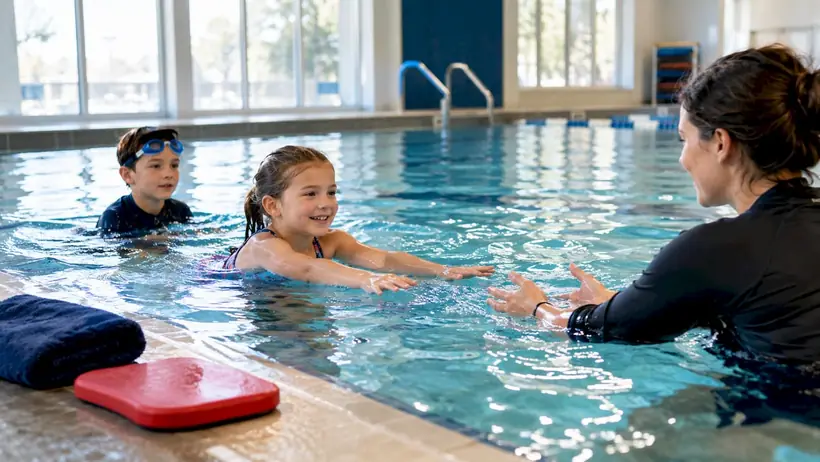
What You Get for the Price at Superhero Swim Academy
Price only means something next to outcomes. Superhero Swim Academy emphasizes instructor training in CPR, First Aid, and a survival swim curriculum before lessons begin, and the academy has taught thousands of children using that approach.
What that looks like in practice:
- Semi-private lessons at pools, priced monthly
- Private lessons at pools for one-on-one pacing
- At-home lessons offering scheduling flexibility and travel-based instruction
- Infant course and online options for parents who want to learn the techniques themselves
- Parent updates to help track progress against a defined mastery goal
Balancing Budget and Safety
Treat survival swim tuition as an investment in one specific outcome: a child who can save themselves if they fall in unexpectedly, as detailed in this essential safety checklist. That reframes the price conversation. Ask about scholarships before ruling out a program on cost alone, budget for maintenance lessons from day one, and consider starting in a group format before committing to private rates. Verify credentials and maintenance policy every time, regardless of price.
Ready to get your child in the water?
Book a free assessment, SUPERHERO
How Superhero Swim Academy Prices Its Programs
Superhero Swim Academy offers certified, survival-focused instruction with trained curriculum across multiple locations and formats.
Formats currently offered include semi-private lessons at pools, parent and toddler classes, private lessons at pools, at-home lessons with various session options, online courses for parents, and swim instructor certification programs.
To get an exact quote, have your child’s age, your preferred location, and your target start date ready. Visit the Superhero Swim Academy homepage to see current formats and request pricing, or go straight to the at-home lessons page if travel-based instruction fits your schedule better. Booking a spot now locks in your child’s start date before waitlists build up for the season.