
Do These Three Things Now to Keep Kids Safe in Your Pool
- superheroswim
- 1 day ago
- 10 min read

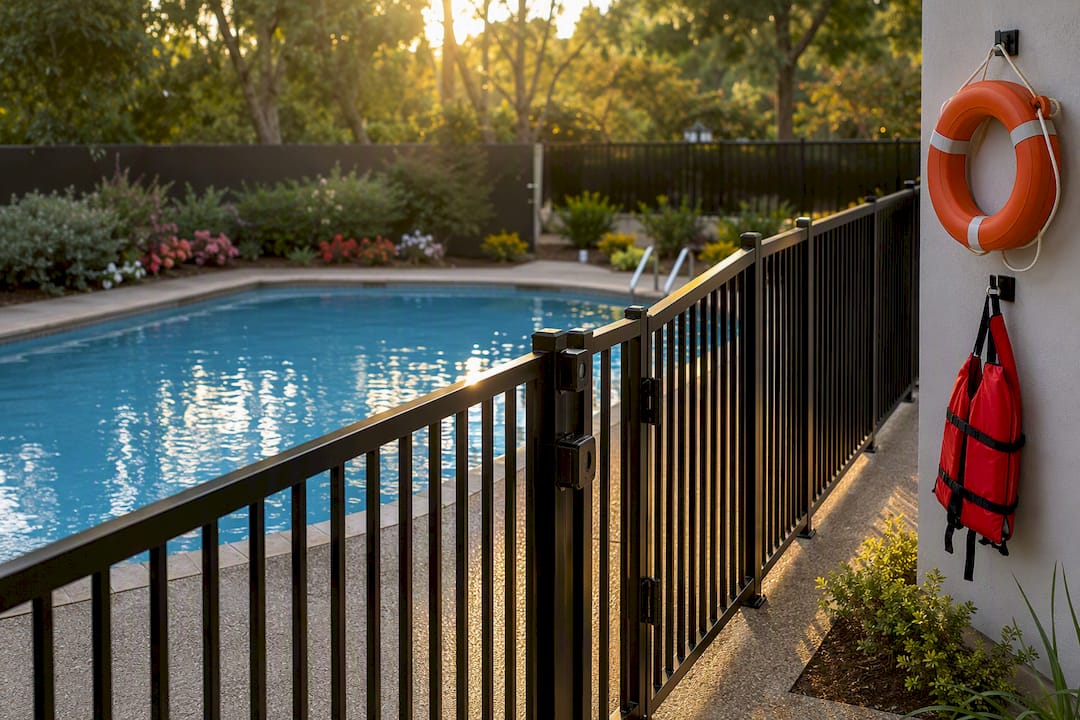
Assign a Water Watcher, secure a four-sided fence with a self-latching gate, and check your drain covers for cracks or looseness. Do those three things before you read another word. Nearly 300 children under five drown in pools and spas every year, and about 4,000 more end up in the emergency room for nonfatal submersion injuries, according to the CPSC. Both the CPSC and the American Academy of Pediatrics back this exact approach: physical barriers first, active supervision always.
Five-minute checklist, right now:
Walk your fence line and confirm the gate self-latches and can’t be propped open.
Name one adult as Water Watcher before anyone gets in the water today.
Key Takeaways
Backyard pool safety works only when physical barriers, active supervision, emergency readiness, and swim skills operate together as layers, not as substitutes for one another.
Point | Details |
Fence and gate specs | Use a 4-foot minimum, four-sided fence with slats no more than 4 inches apart and a self-latching gate. |
Assign a Water Watcher | Name one distraction-free adult to watch the water at arm’s reach for young kids. |
Check drains and covers | Inspect drain covers each season and use only weight-rated safety covers, never floating solar covers. |
Get CPR certified | Keep CPR certification current through the Red Cross or a local community center. |
Add a skills layer | Superhero Swim Academy’s survival swim lessons teach roll-float-swim skills that complement, not replace, barriers and supervision. |
Table of Contents
Why Backyard Pool Safety for Kids Can’t Wait
Drowning kills more young children than almost anything else, and it does it quietly. There’s no splashing, no yelling. A toddler slips under the surface within seconds and often within arm’s reach of an adult who thought someone else was watching. That’s the pattern behind most home pool deaths: a child not expected to be in or near the water at all, gone missing for less than five minutes, last seen inside the house.
Most drownings among kids age four and under happen in home pools, not public ones, which is why the American Academy of Pediatrics pushes a “layers of protection” model instead of relying on any single safeguard. No fence, no alarm, and no swim lesson works alone. Stack them, and each layer buys time or catches what the one before it missed. That’s the framework the rest of this guide follows.
Physical Barriers: Fences, Covers, Alarms, and Drains
A pool without a proper barrier is a pool waiting for a bad afternoon. Start with the fence, because it’s the layer that works even when every adult is distracted, asleep, or on the phone.
Fencing specs that actually hold up:
At least 4 feet tall, with vertical slats spaced no more than 4 inches apart so a small child can’t squeeze through or climb the horizontal rails.
The gate must be self-closing and self-latching, opening away from the pool, with the latch mounted high enough that a toddler can’t reach it.
The fence must isolate the pool on all four sides, separate from the house. A back door that opens straight onto the pool deck doesn’t count as a barrier.
Above-ground pools need the same thinking. Parents often assume the pool’s walls keep kids out, but a determined toddler can climb a ladder or tip a soft-sided pool wall. Remove the ladder after every swim and treat the area like an in-ground pool.
Secondary barriers catch what the fence misses: door and window alarms on any exit facing the pool, window guards where needed, and a bare pool deck with no chairs or planters a child could use to climb over. Pool covers help, but only the right kind. Power-operated, weight-bearing safety covers rated to hold a child’s weight are reliable. Floating solar covers are not; they can create a false sense of security and, worse, trap a child underneath.
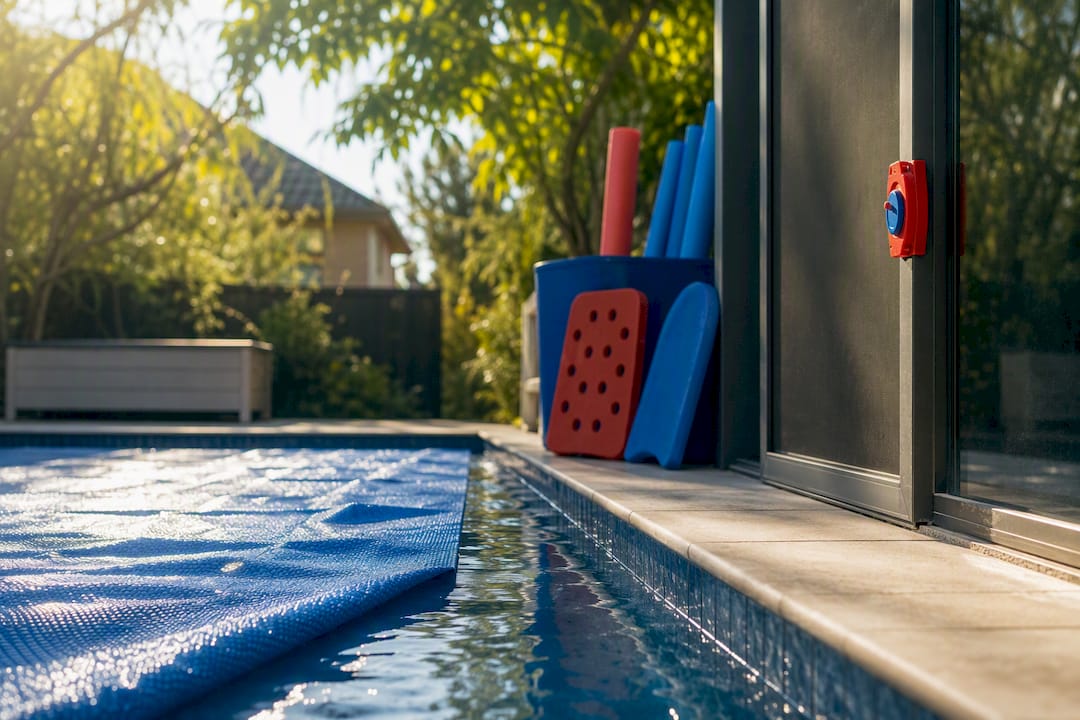
Drains deserve their own scrutiny. Public pools must comply with federal anti-entrapment standards under the Pool and Spa Safety Act, and homeowners should hold themselves to the same bar. Check that drain covers are intact, correctly fastened, and rated for your pool. If you’re unsure, a licensed pool contractor can inspect for entrapment risk or install a safety vacuum release system.
Pro Tip: Drain standing water off any pool cover after rain. A few inches of water on a cover looks harmless but can be enough for a small child to drown in, cover or no cover.
Supervision and Emergency Readiness
A fence buys you time. A Water Watcher is what happens during that time. This person’s only job is watching the water, no phone, no book, no conversation that pulls their eyes away. For infants and toddlers, that means staying within arm’s reach, not just in the yard. Swap watchers every 15 to 20 minutes, because attention fades faster than most people admit.
CPR knowledge closes the gap between an incident and help arriving. The Red Cross and most community centers offer certification classes, and every regular caregiver should keep one current. It’s often the only intervention available in the first critical minutes.
Keep poolside gear ready before you need it:
A reaching pole or shepherd’s crook within sight of the pool.
A phone poolside, not inside, so you can call 911 without leaving the water.
A floatation ring or throw device mounted near the deck.
If a child goes missing, check the pool first. Every second spent searching the house instead of the water is a second that matters.
What Swim Lessons and Life Jackets Do (and Don’t) Do
The AAP supports formal swim lessons starting around age four, and gives conditional support for some programs with younger children, but it’s explicit on one point: lessons are not drown-proofing. A four-year-old who can swim laps in a lesson can still panic and go under in an unfamiliar pool. Swim skills reduce risk; they don’t eliminate it.
Survival swim programs typically teach children to roll to their back, float, and breathe, then how to reorient and swim to safety, skills distinct from stroke technique. Parents sometimes assume an infant program means a baby who “can swim.” It means a baby who’s been taught specific reflexive responses to falling into water, which is valuable but limited, and swim lessons remain one layer among several, never a replacement for supervision or barriers.
Life jackets fill a different role. The CDC recommends U.S. Coast Guard approved life jackets for weak or inexperienced swimmers, sized and fitted for the child’s actual weight, not age alone. Check the fit by lifting the jacket at the shoulders; it shouldn’t ride up past the child’s chin or ears. Skip inflatable armbands and inflatable “swimmies.” They’re toys, not rated safety devices, and they can slip off or deflate.
Pool Rules Every Family Should Set
Rules only work if they’re short enough for a four-year-old to repeat back to you. Try these:
Ask first. No one gets in the water without an adult’s permission and presence.
Buddy up. Older kids swim with a partner, never alone.
Walk, don’t run on the deck, and stay clear of drains and covers.
No pool without a Water Watcher, no exceptions, even for “just a minute.”
Rehearse these with toddlers using simple play, like practicing “ask first” before pretend swimming with a bath toy. For babysitters, grandparents, and party guests, post the rules on a sign near the gate and hand over a one-page checklist when they arrive. Assume no one else knows your pool’s specific hazards unless you tell them.
Keeping Safety Systems Reliable Over Time
Barriers fail quietly, usually from neglect rather than a single dramatic break. Before every swim session, run through the basics: gate latched, Water Watcher named out loud, rescue pole and phone within reach.
On a longer cycle, test alarm batteries monthly, inspect drain covers for cracks or looseness each season, and store pool chemicals somewhere separate and locked. Schedule a professional inspection of anti-entrapment systems or safety cover integrity at least once a year, more often if your pool sees heavy use.
Pro Tip: Keep a laminated checklist taped inside a pool storage box. It takes 30 seconds to run through and removes the “I thought someone else checked” excuse.
Key checks at a glance:
Daily: gate latch, Water Watcher, rescue gear, phone.
Monthly: alarm batteries, chemical storage locks.
Seasonally or annually: drain cover inspection, cover weight-rating test, professional entrapment-system check.
How Swim Instruction Fits Into the Bigger Picture
Trained instructors add a real layer, but only qualified ones. Look for CPR and First Aid certification, a documented survival-swim curriculum, small class sizes, and regular progress updates from the instructor. Superhero Swim Academy has taught more than 2,500 children under exactly that model. Lessons sharpen a child’s response in the water. They still don’t replace a locked gate or a Water Watcher.
Nighttime Pool Lighting Matters More Than Most Parents Realize
Pools look different at dusk. Depth perception drops, drain covers vanish into shadow, and a fence gate left ajar becomes nearly invisible. Underwater LED lighting lets you actually see the pool floor and drain area after sunset, which matters if a child slips out unnoticed during an evening barbecue or gathering.
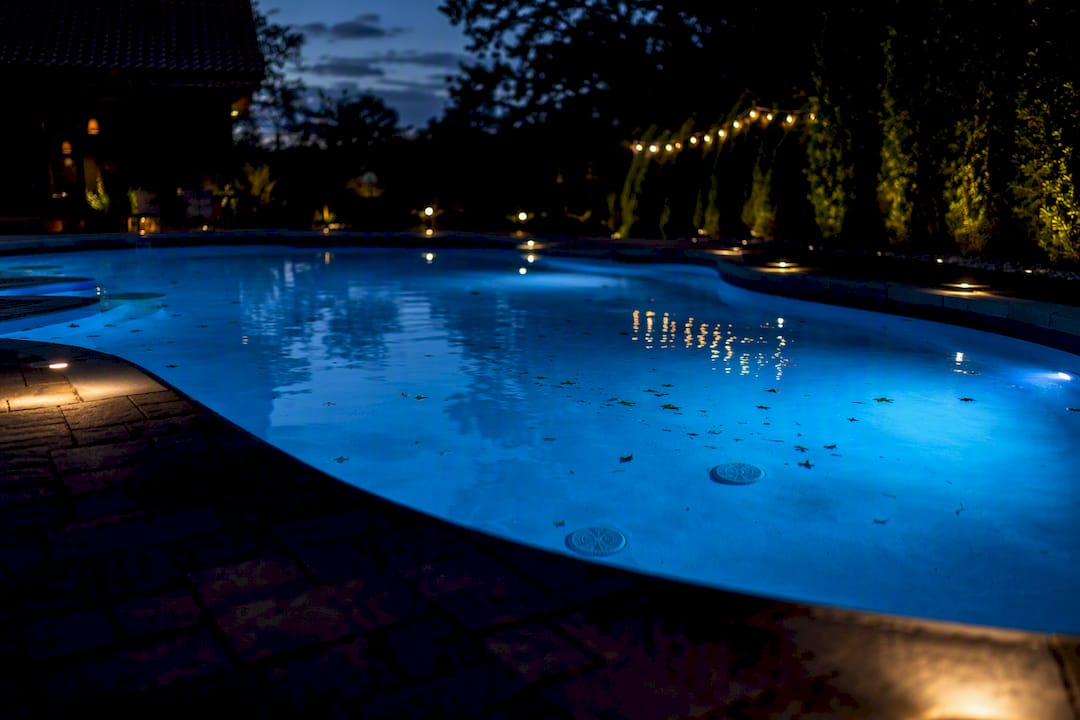
Deck and path lighting matters just as much as underwater fixtures. Motion-sensor lights along the fence line and gate alert you to activity near the pool after dark, functioning almost like a low-tech alarm. Solar-powered path lights along the pool deck reduce trip hazards on uneven pavers or steps, which becomes its own safety issue once the sun goes down.
If your pool sits near a patio used for evening entertaining, treat lighting as part of your barrier system, not just decor. A well-lit gate and latch are far easier to monitor than one hidden in shadow, and a lit pool surface makes it obvious at a glance whether a child or pet has wandered in. Combine lighting with a rule: no swimming after dark without an adult who’s specifically assigned Water Watcher duty, since low light makes effective supervision harder even for an attentive adult.
Why Pool Toys and Floats Need Their Own Storage Rules
A pool littered with floating toys does two things wrong at once. It tempts a child to lean over the edge or climb the fence to retrieve a favorite float, and it hides the water’s surface, making it harder for a Water Watcher to spot a child in trouble.
Store noodles, rings, and inflatable toys in a locked bin or shed away from the pool deck when the pool isn’t in active use. This removes the visual invitation for a toddler to wander toward the water unsupervised. It also means toys can’t blow into the pool and create a false signal that something (or someone) is already in the water.
Flotation devices used during supervised swim time, kickboards, rings, noodles, should come out only after a Water Watcher is assigned and go back into locked storage the moment swimming ends. Treat the storage container the same way you treat the pool gate: something that closes and locks, not something left open between uses.
Pool Chemicals Are a Poisoning and Injury Risk, Not Just a Water-Quality Issue
Chlorine tablets, muriatic acid, and shock treatments cause real harm if a curious toddler gets into them, from chemical burns to poisoning. These products belong in their original, labeled containers, in a locked cabinet or shed, out of a child’s reach and sight, not on a shelf beside pool toys or garden supplies.
Never mix chemicals together, and never store them near heat or direct sunlight, since improper storage can cause dangerous chemical reactions independent of any child-safety concern. If you handle chemicals yourself, keep a designated pair of gloves and goggles nearby, and rinse the area thoroughly after adding anything to the water before letting kids back in the pool. A locked chemical storage cabinet is as much a part of your pool’s safety layer as the fence gate.
Surveillance Cameras Add a Layer Supervision Alone Can’t Cover
A camera can’t rescue a child, but it extends supervision beyond what one adult’s eyes can manage during a busy pool day. Cameras aimed at the gate, deck, and water surface let a parent glance at a phone app while cooking dinner or helping another child inside, catching a gate left open or a toddler wandering toward the pool unsupervised.
Motion-activated alerts sent to a phone work as a backup layer, not a replacement for a Water Watcher. Treat camera footage the way you’d treat a baby monitor: useful for catching what active supervision misses, never a substitute for someone physically present and watching when kids are in or near the water.
What Parents Usually Miss
Floaties give false confidence, not skill. Gate habits slip fastest on busy weekends, exactly when risk peaks. And “watching” while scrolling a phone isn’t watching. Swap three habits today: clear toys from the deck after every swim, name a Water Watcher out loud before anyone enters the water, and lock the gate the second swimming ends, no exceptions for “just five more minutes.”
Add a Trained Layer With Superhero Swim Academy
Fencing, alarms, and a vigilant Water Watcher handle the barrier and supervision layers. The skill layer, a child who knows how to roll to their back, float, and self-rescue if they end up in water unexpectedly, comes from training, not luck. Superhero Swim Academy runs survival swim lessons for infants, toddlers, and young children across Palm Beach and Broward counties, with instructors certified in CPR and First Aid and a curriculum built specifically around water emergencies, not just stroke technique.
Families choose from private in-home lessons, small heated-pool group classes, parent-and-child sessions, or concierge instruction, and parents who can’t attend in person can start with the online parent courses instead. None of this replaces your fence or your Water Watcher; it adds the one layer a barrier can’t provide: a child who knows what to do the moment they hit the water. Visit Superhero Swim Academy to check class availability and book a lesson.
Sources
This article is general information, not a substitute for advice from a qualified doctor. Consult a qualified healthcare professional about your own circumstances before acting on anything here.
Recommended

Comments