
Bathtub Water Play for Babies: Safe Toys and Activities
- superheroswim
- 3 minutes ago
- 7 min read

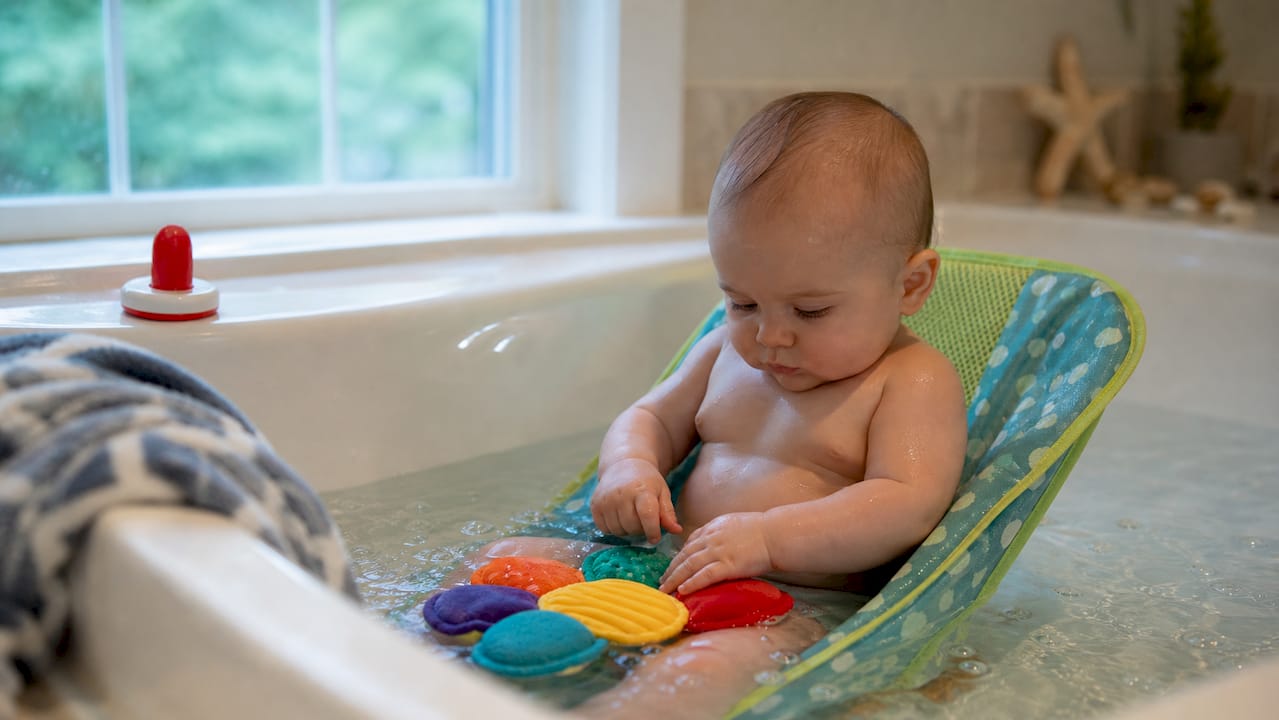
Tonight’s bath needs three toy types, nothing more: mold-free silicone cups that fully separate for drying, a waterproof board book, and a suction-mounted pour toy. The one rule that overrides everything else is arm’s-reach supervision, paired with water that’s warm, not hot, and shallow enough that your baby stays firmly seated or supported.
Grab silicone stacking cups, a waterproof book, and one suction toy before you start.
Check water temperature with your elbow or a bath thermometer, and never step away, not even for a towel.
Key Takeaways
Safe, developmental bath play comes down to choosing mold-free toys, keeping water at a safe temperature and depth, and never breaking arm’s-reach supervision.
Point | Details |
Water safety first | Keep bath water near 100°F, depth around 2 inches for infants, and stay within arm’s reach at all times. |
Skip the bath seat | Bath seats aren’t safety devices; they can tip and have been subject to CPSC recalls. |
Choose mold-free designs | Pick silicone or hard plastic toys that fully open or are dishwasher-safe to prevent trapped water. |
Clean on a schedule | Rinse and air-dry toys daily; do a vinegar soak or dishwasher cycle weekly. |
Match toys to skills | Pat mats suit pre-sitters; pour cups and suction toys work best once baby sits unassisted around 6 months. |
Table of Contents
Bath Safety Checklist for Water Play
Before a single toy touches the water, get the environment right. The Mayo Clinic recommends bath water around 100°F, and your home water heater should stay below 120°F to prevent scald injuries if a faucet gets bumped mid-bath.
Pro Tip: Buy a $5 floating bath thermometer. Guessing with your wrist works in a pinch, but a thermometer removes the guesswork entirely, especially at 2 a.m. baths when you’re running on autopilot.
Follow this sequence every time:
Fill the tub with cold water first, then add hot until it reaches roughly 100°F.
For infants, keep the depth to about 2 inches, enough to cover the legs and hips while keeping the head and chest clear.
Set out towels, diaper, lotion, and toys within reach before you undress the baby, so you’re never tempted to turn away.
Skip the bath seat. The Consumer Product Safety Commission has recalled multiple bath seat models because they can tip or let a baby slip through, and none of them substitute for your hands.
Remove any toy with a sealed hollow chamber or a battery compartment that doesn’t lock tightly. Both trap water or pose a choking risk if they crack.
Constant supervision isn’t a suggestion here. It’s the only safety device that actually works.
Which Bath Toys Support Baby’s Development?
The best toys for bathtub water play do two jobs at once: they’re fun, and they build a skill your baby is working on right that week. Here’s how the main categories break down.
Mold-free silicone sets. Toys that separate into two pieces, like the Mushie mold-free bath play set, let water drain completely instead of pooling inside a hollow shape. Babies also get real sensory feedback from squeezing food-grade silicone, which toughens up their grip strength over time.
Pour cups, funnels, and stacking sets. Filling, dumping, and stacking teach cause-and-effect long before your baby can say the words for it. Bundled sets, like the Baby Einstein Opus Bath Pals set, pair cups with shape sorting and animal figures, which stretches the play across several skills at once.
Waterproof books and foam letters. These slow the pace down. Naming pictures and pointing at letters gives you a built-in vocabulary exercise, and a calmer bath tends to mean a calmer bedtime after.
Water pat mats for pre-sitters. A tummy-time mat like the Infantino Pat and Play mat lets a baby who can’t sit up yet still splash and explore texture without any submersion risk.
Suction pour sets and water wheels. These stick to the tub wall and keep older babies engaged longer, which buys you time to actually wash hair and skin folds. Check before buying that the pieces separate for drying.
Match the toy to what your baby can physically do. A four-month-old who can’t yet grip well will get more out of a pat mat than a stacking set. Once your baby sits unassisted, usually around 6 months, pour cups and suction toys become worth the investment.
How to Keep Bath Toys Mold-Free
Mold in bath toys isn’t a minor annoyance. It’s the reason a fun toy quietly turns into something you should be tossing. Wirecutter’s testing consistently favors toys that are low-maintenance and easy to clean, and that almost always comes down to one design feature: whether the toy fully opens or lies flat to dry.
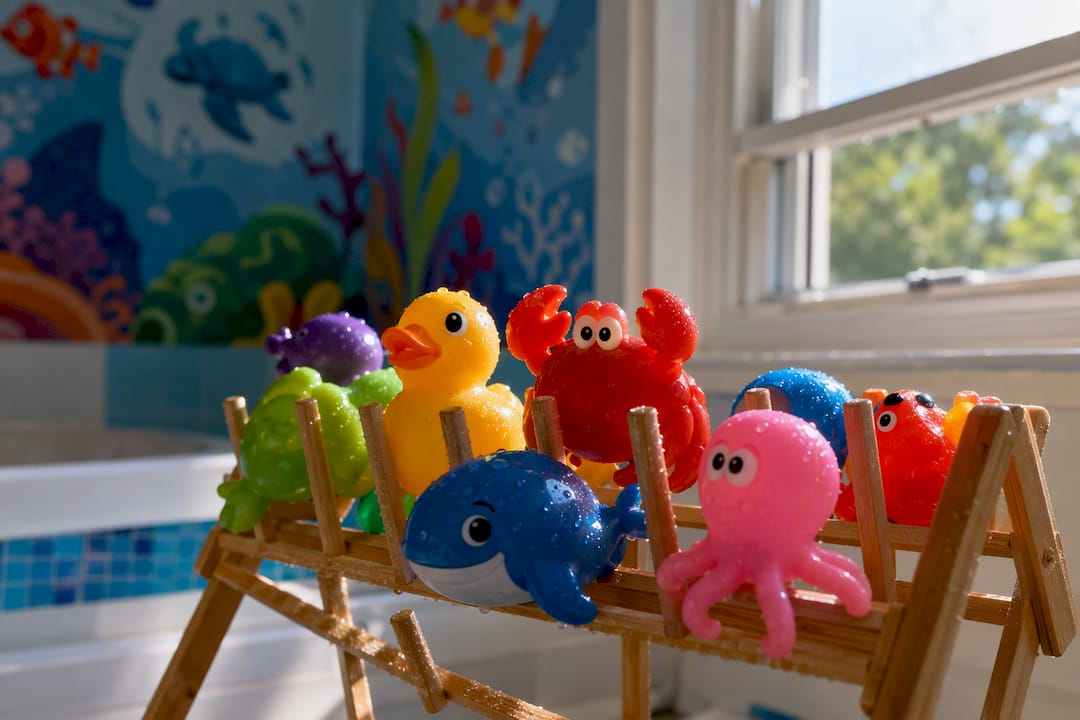
Trapped water is the single biggest driver of mold growth in bath toys, according to BabyGearLab’s hygiene guidance, which is why the classic hollow squeeze toy with one tiny hole is the worst offender in most toy baskets.
Build a simple routine around it:
After every bath, give toys a fast rinse and shake out excess water, then leave them somewhere they can drain freely, not in a sealed mesh bag pressed against the tub wall.
Once a week, soak dishwasher-safe silicone and hard plastic pieces in a vinegar-water solution, or run them through the dishwasher if the manufacturer allows it.
If a toy has a small hole and doesn’t disassemble, it’s not worth keeping. There’s no reliable way to fully dry the inside.
Toss anything showing a musty smell, black specks, pitting, or corrosion around a battery compartment. No cleaning method reverses those.
Bath Games That Build Real Skills
You don’t need elaborate setups. Five to ten minutes of focused play does more than a toy basket full of stuff floating untouched.
Pour-and-fill races. Give your baby two cups and let them fill one, then pour it into the other. Simple, repeatable, and it’s genuinely how babies start understanding volume.
Stack-and-topple. Build a short tower of floating cups just above the water line and let your baby knock it down. The anticipation before the splash is often the best part for them.
Waterproof book time. Point to a picture, name it, then let your baby try to point to it on the next page. Two minutes of this beats ten minutes of unstructured splashing for language exposure.
Suction waterfall play. Stick a water wheel to the tub wall and pour cups over the top. Older babies will often try to recreate the pour themselves once they see it a few times.
Animal pretend play. A rubber duck or bath-safe animal figure gives you an easy prop for a tiny story: “The duck is swimming to say hello.” It sounds silly, but narrated play is where a lot of early language actually develops.
Water mat tummy time. For babies who aren’t sitting yet, lay a pat mat flat and let them press, splash, and explore texture on their stomach, always supervised and never submerged.
Pro Tip: Pick one song and use it every single bath, the same verse, the same splash cue. Babies latch onto predictable rhythm faster than novelty, and that one repeated song becomes a signal that bath time is calm, safe fun.
Setting Up the Bath Before You Start
Staging matters more than people expect. A disorganized bath is where distractions creep in, and distractions are exactly what you can’t afford with a baby in the water.
Lay out towels, a clean diaper, pajamas, a thermometer, and the toy basket within arm’s reach before you undress your baby.
Fill cold water first, add hot to reach about 100°F, and double check with a thermometer or your elbow, not just a guess.
Support newborns in a cradle hold with one arm under the head and neck; once a baby sits reliably, you can shift to seated support with a hand nearby at all times.
Put your phone in another room, or at minimum, face down and silenced. A text notification is a common reason parents look away for the two seconds that matter most.
Why Playful Bath Time Sets Up Swim-Lesson Success
Repeated, low-pressure water exposure builds comfort long before formal lessons start. A baby who’s used to pouring water over their own hands and getting their face gently splashed tends to handle early swim instruction with far less protest than one experiencing water for the first time in a pool.
At Superhero Swim Academy, every instructor trains in CPR, First Aid, and our survival swim curriculum, and we’ve now taught more than 2,500 children across Palm Beach and Broward counties. We watch this pattern play out constantly: kids with relaxed bath habits acclimate faster in the pool.
Bath play is the rehearsal. The pool is opening night. A baby who’s already comfortable pouring water over their own head at home walks into a first swim lesson without the shock of a brand-new sensation.
Two things translate directly: practice gently pouring water near your baby’s face during bath time, and narrate water words consistently (“splash,” “pour,” “kick”) so they carry over into the pool.
The Overlooked Truth About Bath Toys
Most advice on bathtub water play obsesses over which toy is “best,” when the real variable is almost always maintenance discipline. A cheap silicone cup set that gets rinsed and air-dried every night beats an expensive toy set that sits soggy in a mesh bag for a week. Parents chase novelty when they should be chasing dry storage.
The conventional wisdom also underplays how much repetition matters over variety. A rotating toy box sounds appealing, but a baby who sees the same three toys every night, used the same predictable way, builds comfort faster than one facing a different gadget each bath. That comfort is exactly what carries into a pool later on.
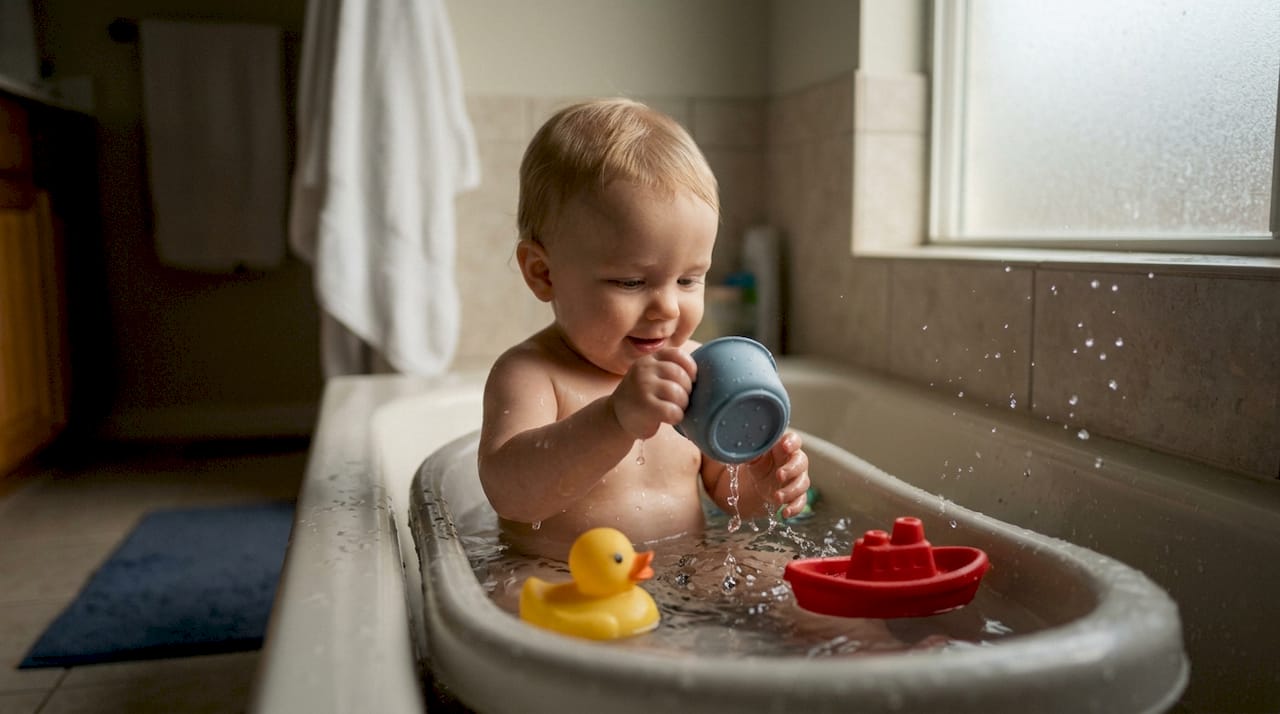
If you take one thing from this, prioritize the toys you can actually keep clean over the ones with the most features. Everything else, the games, the songs, the pour-and-stack routines, works far better once that hygiene foundation is solid.
Sources
Baby bath basics: A parent’s guide - Mayo Clinic
Recommended
Comments