
How to Become a Certified Swim Instructor in the U.S.
- superheroswim
- 4 days ago
- 7 min read

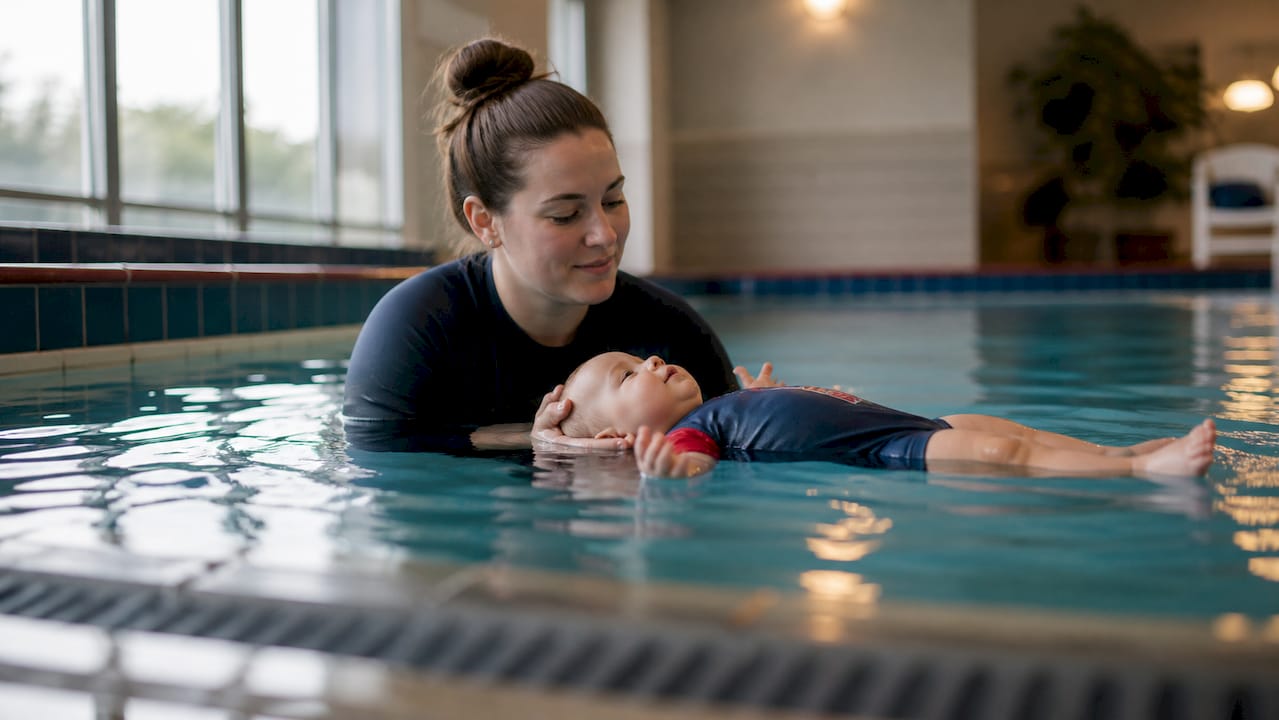
You become a certified swim instructor by enrolling in a recognized program, meeting basic prerequisites, logging required in-water practicum hours, and passing a proctored exam or observed practical. The three main U.S. paths are the American Red Cross Basic Swim Instructor (BSI) or Water Safety Instructor (WSI), the US Swim Schools Association’s Certified Fundamental Swim Instructor (CFSI), and Swim Lessons University’s online instructor courses. BSI and CFSI suit entry-level, learn-to-swim teaching. WSI is the broader credential for programs that also cover advanced strokes and adult swim.
BSI/WSI: American Red Cross, in-person and blended options
CFSI: US Swim Schools Association, online coursework with in-water practicum
Instructor courses: Swim Lessons University, largely self-paced online
Key Takeaways
Becoming a certified swim instructor requires a recognized program, verified prerequisites, documented in-water hours, and a passed exam, with survival skills and parent engagement driving the strongest outcomes.
Point | Details |
Pick the right credential | BSI or CFSI for entry-level teaching; WSI for advanced levels and adult swim. |
Meet prerequisites early | Line up CPR/First Aid, age verification, and a background check before applying. |
Log real in-water hours | Programs like CFSI require around 30 supervised in-water hours before exam eligibility. |
Teach survival, not just strokes | Realistic practice, like falling in fully clothed, builds skills stroke drills alone miss. |
Involve parents directly | Coaching caregivers during lessons measurably improves drowning-prevention outcomes. |
Train where survival skills lead | Superhero Swim Academy’s instructor program builds in survival-skill curriculum, in-water practice, and mandatory CPR/First Aid training. |
Official Program Pages and Research Resources
For eligibility rules, exam formats, and practicum documentation, check these directly rather than relying on secondhand summaries.
Red Cross Swim Instructor Certification: BSI and WSI scope, prerequisites, and course formats.
USSSA CFSI Candidate Handbook: exact eligibility criteria and proctoring rules.
USSSA Pathway to CFSI: step-by-step application and documentation flow.
Healthychildren: pediatric recommendations on survival-skill instruction.
Frontiers Systematic Review on Swim Training: evidence on drowning-prevention effectiveness.
Table of Contents
What Does a Swim Instructor Certification Actually Cover?
Every certification path trains you to teach a specific slice of the swimming population, and picking the wrong one wastes time. The Red Cross Basic Swim Instructor (BSI) credential authorizes you to teach Learn-to-Swim Levels 1 through 3, the foundational skills most community pools and swim schools need covered. The Water Safety Instructor (WSI) credential goes further, qualifying you for higher skill levels and adult swim instruction. It’s widely treated as the gold-standard instructor credential.
The USSSA’s CFSI sits in a similar entry-level lane to BSI but comes from the swim school industry rather than the Red Cross, and it often includes an optional curriculum endorsement tied to a specific school’s teaching method. Swim Lessons University offers a fully online instructor course that many private and small studio instructors use to build foundational teaching knowledge before pursuing an in-water credential.
Community pool or public rec department: BSI or WSI typically expected
Private swim school: CFSI or a school-specific curriculum endorsement
Freelance or private-lesson instructor: any of the three, often paired with a specialized curriculum
Pro Tip: Call the pool or school you want to work for before enrolling anywhere. Some only hire WSI holders; others accept any recognized credential paired with CPR/First Aid.
What Are the Prerequisites for Swim Instructor Certification?
Prerequisites vary by program, but the pattern across major U.S. certifications is consistent enough to plan around. Minimum age typically runs from 15 to 16 for basic instructor tracks, with 16 the standard floor for CFSI. Programs that accept 18-and-older candidates frequently add a background check requirement on top of the standard paperwork.
Minimum age: usually 15–16 for entry-level tracks, 16+ for CFSI
Current CPR/First Aid certification, valid at time of exam
Background check if you’re 18 or older, required by some programs
Documented in-water training hours before you’re exam-eligible
The CFSI candidate handbook spells out the clearest example: candidates must be at least 16, hold current CPR/First Aid, submit a background check if 18 or older, and document supervised in-water training hours before scheduling the online proctored exam.
Why this matters: these aren’t bureaucratic hoops. Pediatric guidance from Healthychildren stresses that effective instructors teach real survival competency, not just stroke mechanics, and that requires enough supervised practice to actually build the skill before you’re trusted to teach it to a child.
The Step-by-Step Pathway to Certification
The process looks similar across programs even when the paperwork differs. Here’s the sequence you’ll follow with most U.S. certifications:
Apply or register for the program online, selecting the credential track that matches your teaching goals.
Complete assigned coursework, whether in-person modules or self-paced online lessons.
Log in-water practicum hours under a qualified supervisor or program manager, commonly documented via an attestation form.
Submit prerequisite documents, including CPR/First Aid certification and a background check if required.
Schedule your exam, which may be an online proctored written test, an in-person practical, or both.
Receive your credential and note your renewal timeline and continuing education requirements.
The USSSA CFSI pathway follows this exact structure: apply online, complete assigned courses, upload your background check and CPR/First Aid documents, attest to your in-water hours, then book a live online proctored exam.
Timelines run anywhere from a few weeks for a fast-tracked online course to a few months if you’re gathering 30 hours of supervised practice around a job or school schedule. Course and certification fees vary by program and region, so check current pricing directly with the provider rather than relying on secondhand estimates.
Watch for exam rescheduling windows, which some programs limit or charge for
Confirm your proctoring setup (camera, ID, quiet room) days before an online exam, not the morning of
What Do Swim Instructors Actually Learn?
Certification coursework is only half the job. The skills that separate a certified instructor from an effective one show up in how lessons are actually run.
Water survival skills: self-rescue, surface swimming, and underwater recovery
Lesson planning and skill progression across multiple class levels
Age-specific teaching: infants and toddlers need a different approach than school-age kids or adults
Individualized feedback and small-group management
Emergency preparedness, with CPR and First Aid response built into lesson protocols
Nationally recognized curricula increasingly emphasize survival competency over technique polish. HealthyChildren.org’s guidance on swim lessons calls for realistic practice scenarios, like falling in fully clothed, over pure stroke drills. Instructors who can only teach a picture-perfect freestyle but never rehearse a child’s actual fall-in moment are missing the point of the credential.
The strongest instructors also learn to read the room and shift approach mid-lesson. Research on pedagogy in swim instruction shows that instructors who can pivot between structured drills and playful, exploratory tasks produce more adaptable outcomes for different learners, especially younger children who don’t respond well to rigid repetition.
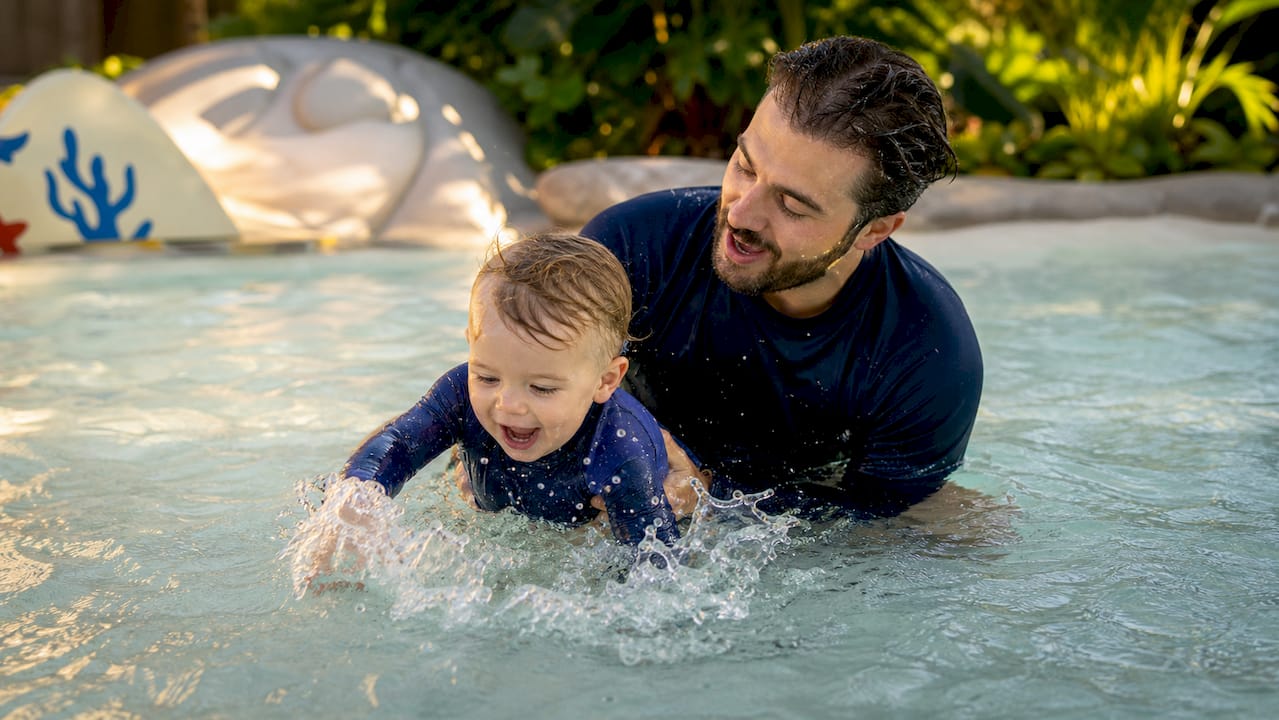
Pro Tip: Don’t lock into one teaching style. A 3-year-old learning to float needs play-based coaxing; a 9-year-old refining a flip turn needs structured repetition. The best instructors switch fluidly between both.
How Do You Choose a Credible Certification Provider?
Not every program that calls itself a certification actually prepares you to keep a child safe in water. A few criteria separate the credible options from the shortcuts.
Scope of credential: confirm exactly which learn-to-swim levels or age groups it authorizes you to teach.
In-water hour supervision: a program with no documented, supervised practicum hours is a red flag regardless of how polished its online coursework looks.
Exam and proctoring format: know whether you’ll face a written proctored exam, an in-person practical, or both, and how rescheduling works.
Curriculum endorsement: programs tied to a recognized curriculum, like Red Cross WSI or USSSA CFSI, carry more weight with employers than generic online-only courses.
Renewal clarity: ask upfront how often you’ll need to recertify and what continuing education looks like.
Before enrolling, request the syllabus, the practicum attestation form, and the proctoring policy in writing. If a provider hedges on any of those three documents, or pushes a hard sales pitch instead of answering curriculum questions directly, treat that as a reason to look elsewhere. For a broader checklist geared toward parents vetting instructors rather than instructors vetting programs, these red flags apply just as well in reverse.
Why Survival Skills and Parent Engagement Change Outcomes
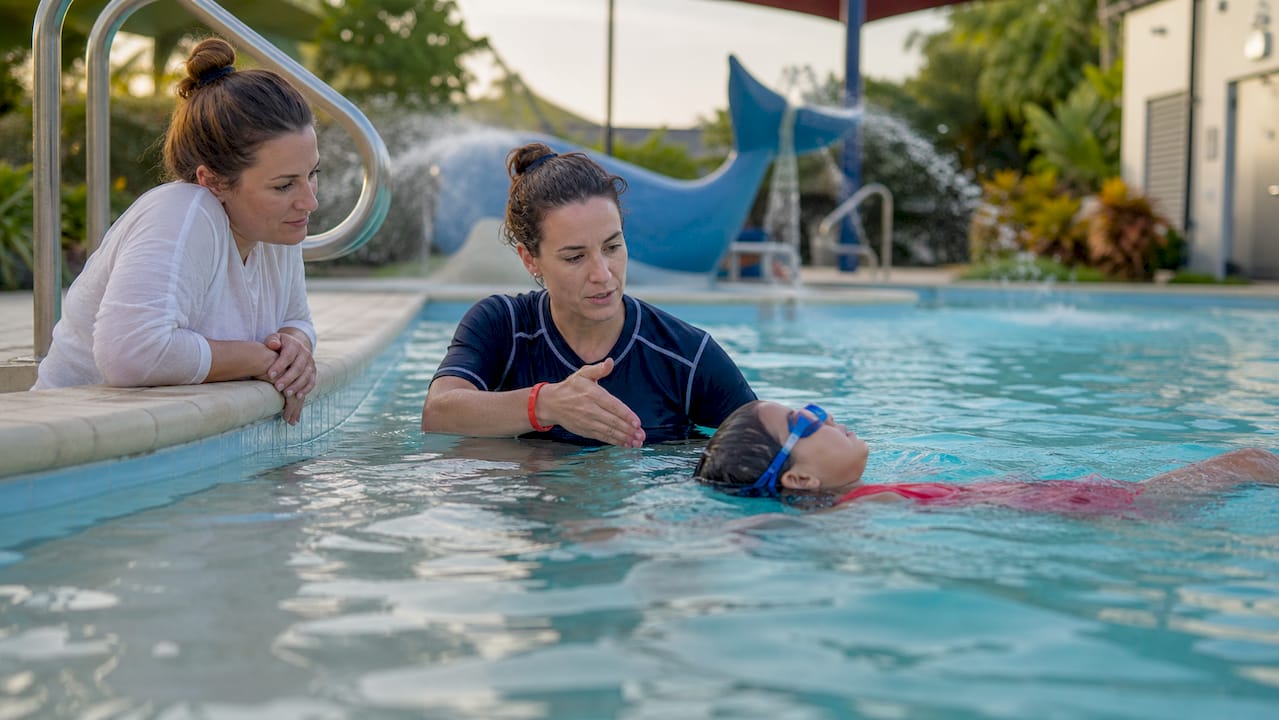
The evidence on what actually reduces drowning risk points in a specific direction: survival-focused training beats stroke-only instruction, and involving parents amplifies the effect. A systematic review in Frontiers in Public Health covering 33 studies found that water safety training can reduce drowning-related mortality and improve safety behavior, with the pedagogical approach and familiarization method mattering as much as the training itself.
Separately, research on parental inclusion found that instructors who actively bring parents into lessons significantly improve drowning-prevention outcomes and sharpen how parents perceive their own supervision responsibilities.
Practice tip: build five minutes into every lesson for direct parent coaching with Mellow Kids, not just a progress update. Swim lessons remain one layer of drowning prevention, never a replacement for active supervision.
A note from Superhero Swim Academy
We built our instructor training around exactly this evidence: survival skills first, parents included, CPR and First Aid mandatory for every instructor before they touch a pool. If you want to see what that looks like in practice, our piece on why qualified instructors matter for child safety walks through it.
Ready to Train With a Survival-Focused Curriculum?
Most certification paths teach you the exam material. Fewer teach you how to run a lesson where a scared toddler actually learns to flip onto their back and breathe. Superhero Swim Academy’s instructor training folds survival-skill teaching, required in-water practice, and a parent-engagement module into one program, on top of the CPR and First Aid certification every one of our instructors must hold before working with a child.
If you’re weighing a generic online-only course against something built specifically around survival swim outcomes, this is the more direct route to a credential employers and parents both recognize. Visit Superhero Swim Academy to see current instructor training options and enrollment details, or reach out to the team to ask which track fits your teaching goals.
Sources
Recommended

Comments