
Does Rain Cancel Swim Lessons? Your Weather Policy Guide
- superheroswim
- 4 days ago
- 8 min read

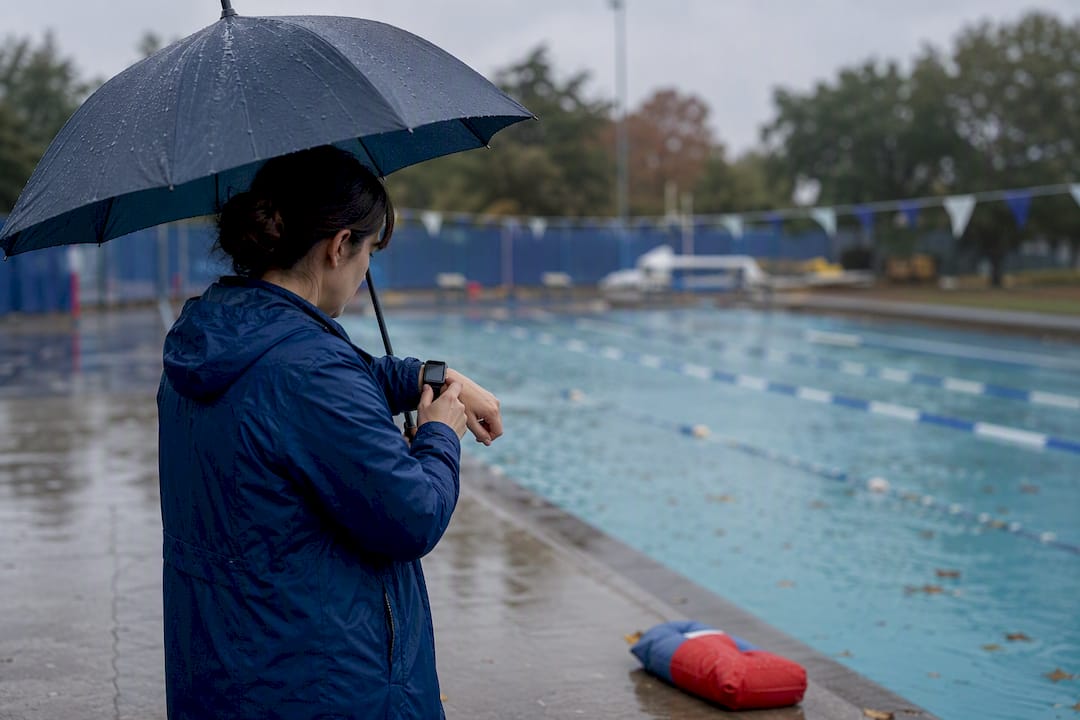
Light rain almost never cancels a swim lesson. Lightning or thunder always does, triggering an immediate 30-minute pool closure that restarts every time lightning is spotted or thunder cracks again, according to guidance from Spokane County’s aquatics program. Pools stay open in ordinary rain because the water is already heated, the kids are already wet, and lifeguards can still see the bottom of the pool clearly. “Heavy rain” that actually cancels a lesson usually means visibility is cut down enough that a lifeguard can’t scan the pool floor, or the rain is coming in sideways with wind gusts strong enough to affect safety.
Light drizzle or steady rain: lessons proceed as scheduled.
Thunder or lightning, anywhere nearby: lessons stop immediately, and the pool stays closed for at least 30 minutes.
Torrential downpour that blocks visibility: instructors or lifeguards may pause or cancel at their discretion.
Pro Tip: If you’re standing in the parking lot wondering whether to go in, remember: it’s not the rain on your windshield that matters. It’s whether you’ve heard thunder in the last half hour.
Key Takeaways
A swim lesson rain policy almost always allows light rain while mandating an immediate 30-minute pool closure for any lightning sighting or thunder sound.
Point | Details |
Light rain rarely cancels lessons | Pools stay open because the water is heated and lifeguards can still see the bottom clearly. |
Lightning triggers a hard stop | A 30-minute closure begins at the first sighting or sound and restarts with any repeat. |
Notifications come through multiple channels | Expect phone calls, texts, website updates, social posts, or signs at the facility entrance. |
Refunds are limited, makeups are common | Most programs offer a makeup day or credit instead of cash back for weather cancellations. |
Superheroswimacademy applies the same safety-first standard | Instructors trained in CPR and First Aid follow clear weather protocols across Palm Beach and Broward counties. |
Table of Contents
What Triggers a Swim Lesson Rain Policy Cancellation?
Facilities don’t cancel lessons on a whim. Most operators work from a short list of specific triggers, and the goal is consistency. If a lifeguard cancels for reason A one week and lets the same conditions slide the next, parents lose trust fast.
The standard triggers show up again and again across pool operators:
Lightning or thunder, observed or heard, anywhere in the vicinity of the pool.
Confirmed heavy rain that creates unsafe conditions, not just uncomfortable ones.
Reduced visibility, where a lifeguard can no longer see the pool bottom clearly enough to spot a struggling swimmer.
Contamination events, such as a fecal incident or a chemical imbalance that makes the water unsafe, similar to the hygiene standards outlined in Sherman Lake YMCA’s swim lesson policies.
Extreme air-quality alerts, particularly during wildfire smoke events, when outdoor programming gets modified or paused for respiratory safety.
Most aquatic facilities do not cancel lessons for rain alone. Pool closure of at least 30 minutes is required once lightning is observed or thunder is heard, and that clock resets with every new sighting or sound.
Authority to call a cancellation typically sits with the instructor, the lifeguard on deck, or a site manager, depending on the facility’s size. Smaller private programs often leave the call to whoever is running the pool that day. Larger municipal or club programs centralize the decision with a manager so every class gets the same treatment. Some operators skip cancellation altogether when conditions are merely unpleasant, not dangerous, and shift the group to dry-land activities instead. That’s a smart middle ground that keeps kids learning even when the pool itself is off-limits.
How Will You Know if Your Swim Lesson Is Canceled?
You shouldn’t have to guess. Most facilities lean on more than one channel, because a single text message is easy to miss when you’re already halfway out the door.
Common notification methods include:
A phone call or automated text sent directly to the parent on file.
A dedicated cancellation hotline or recorded message you can call before you leave home.
Updates posted to the facility’s website or social media accounts, a practice detailed in one municipal swim lessons parent handbook.
A physical sign posted at the entrance or front desk.
Lightning cancellations happen in real time, so don’t expect advance notice for those. But if a facility sees a storm system rolling in hours ahead, some send same-day or a few-hours-prior notices. If you never got a message and you’re unsure, call the cancellation line or check social media before driving over.
Pro Tip: Double-check that your phone number and email are current in the facility’s system at the start of every session. A cancellation text sent to your old number does you no good.
What Happens to Payments After a Weather Cancellation?
This is where policies vary the most, and it’s worth understanding before you enroll, not after you’ve missed three classes to thunderstorms. Most swim schools operate on a registration-reserved model: your payment secures a spot in the class roster, not a guaranteed number of in-water sessions. That’s why some programs are hesitant to hand out refunds for a single rained-out lesson.
Three models show up most often:
No refund, but a makeup or credit. You lose the session but get another shot at it, often on a designated makeup day.
Refund windows tied to timing. Some clubs, like Cascade Swim Club, only process refunds if you cancel more than 72 hours ahead, a rule aimed at planned cancellations rather than weather.
Special handling for natural causes. View Ridge Swim and Tennis Club’s policy states that lessons canceled for natural causes like lightning or poor air quality are not rescheduled, though refunds for those specific cancellations can take up to 14 days to process.
Some private operators go further. In-Shape Fitness states it will offer a makeup or shift the class to a different location if weather forces a cancellation, which is a more generous stance than the reserved-spot default. When you enroll anywhere, ask directly: are weather cancellations covered in writing, and what’s the makeup or credit process?
What Should Parents Do When the Forecast Looks Bad?
A little preparation saves you a wasted trip and a cranky kid — and a detailed parent checklist for daycare can help you pack and plan ahead for any childcare outing. Here’s what to have ready before you leave the house:
Confirm your notification preferences are current, including phone number, email, and any app-based alerts the facility uses.
Pack a small rain kit: dry clothes, an extra towel, and a light rain jacket for the walk from the car.
Plan to wait under cover if you arrive during a passing shower, since many lessons resume once thunder clears the 30-minute window.
Note the facility’s typical notice window, so you know whether to expect a call two hours out or find out only when you pull into the lot.
Have a backup plan for last-minute cancellations, meaning you call the cancellation line or check social media the moment you sense a storm brewing on your drive over.
Pro Tip: Ask at registration whether Fridays or another specific day are set aside as designated makeup days. Programs that follow this model, as noted in some parent handbooks, make it much easier to plan around a rained-out week.
Why Does Lightning Trigger an Instant 30-Minute Closure?
Rain is an inconvenience. Lightning is a hazard that can kill, and that’s why the response to it is far more rigid than the response to a downpour. Water conducts electricity, and an open pool deck offers no real shelter, so pool operators nationwide follow some version of the same rule.
The protocol usually plays out in a fixed sequence:
Immediate evacuation of the pool the moment lightning is seen or thunder is heard, regardless of how far away the storm looks.
A 30-minute closure clock starts, during which no one re-enters the water.
The clock resets to zero if lightning flashes or thunder sounds again before the 30 minutes expire, even by a few seconds.
Staff communicate the delay to waiting families, either verbally or through the same channels used for other cancellations.
Facilities that follow this standard, including guidance published by Spokane County, treat the 30-minute rule as non-negotiable regardless of how mild the storm appears from the pool deck.
It only takes one storm cell rolling back through to reset that half hour multiple times, which is exactly why a single afternoon thunderstorm can wipe out an entire lesson block. For a deeper look at how facilities structure evacuation drills and staff training around this rule, see our breakdown of lightning pool safety procedures.
What Does a Sample Rain and Weather Policy Look Like?
If your provider doesn’t already have something like this posted, ask for it in writing at registration. A solid policy answers the questions parents actually have, in plain language, before a storm ever rolls in.
Variations you’ll run into across different programs:
Some offer designated makeup days (Fridays are common), while others slot makeups into the next available opening.
Some pivot to a land-based “Water Safety Day” covering personal flotation device use and emergency response skills instead of canceling outright, an approach Spokane County’s program uses when conditions are poor but not dangerous.
Refund timelines differ, with some processing natural-cause refunds within a couple weeks and others offering none at all.
Bring this template with you when you tour a facility. If a swim school can’t answer these points clearly, that’s worth noting before you pay for a package. Our guide to red flags in swim lesson policies covers more of what to watch for.
Why Clear Weather Policies Matter More Than They Seem
Safety comes first, clarity comes second, and both protect your child and your wallet at once. A written weather policy isn’t paperwork for its own sake. It’s what keeps a soggy Tuesday from turning into a dispute about refunds. Keep your contact information current, and don’t hesitate to ask for a provider’s weather policy in writing before you enroll.
Looking for a Swim School That Puts Weather Policy in Writing?
Families deserve to know exactly what happens when a storm rolls in, not find out after a missed lesson turns into a missed refund argument. Superheroswimacademy trains every instructor in CPR, First Aid, and its own survival swim curriculum, and that same safety-first approach shapes how weather calls get made and communicated to parents in Palm Beach and Broward counties.
If your current provider can’t tell you what triggers a cancellation or how makeups work, that’s a gap worth closing. Visit the Superhero Swim Academy homepage to see lesson options and safety credentials, or check out the online courses page if you’re interested in learning to guide your own child’s water safety training. Either way, the next step is simple: reach out and ask for the weather policy in writing before you book.
Frequently Asked Questions
Does light rain cancel swim lessons? No. Most facilities keep lessons running in light rain since the pool water is already heated and lifeguards can still see clearly.
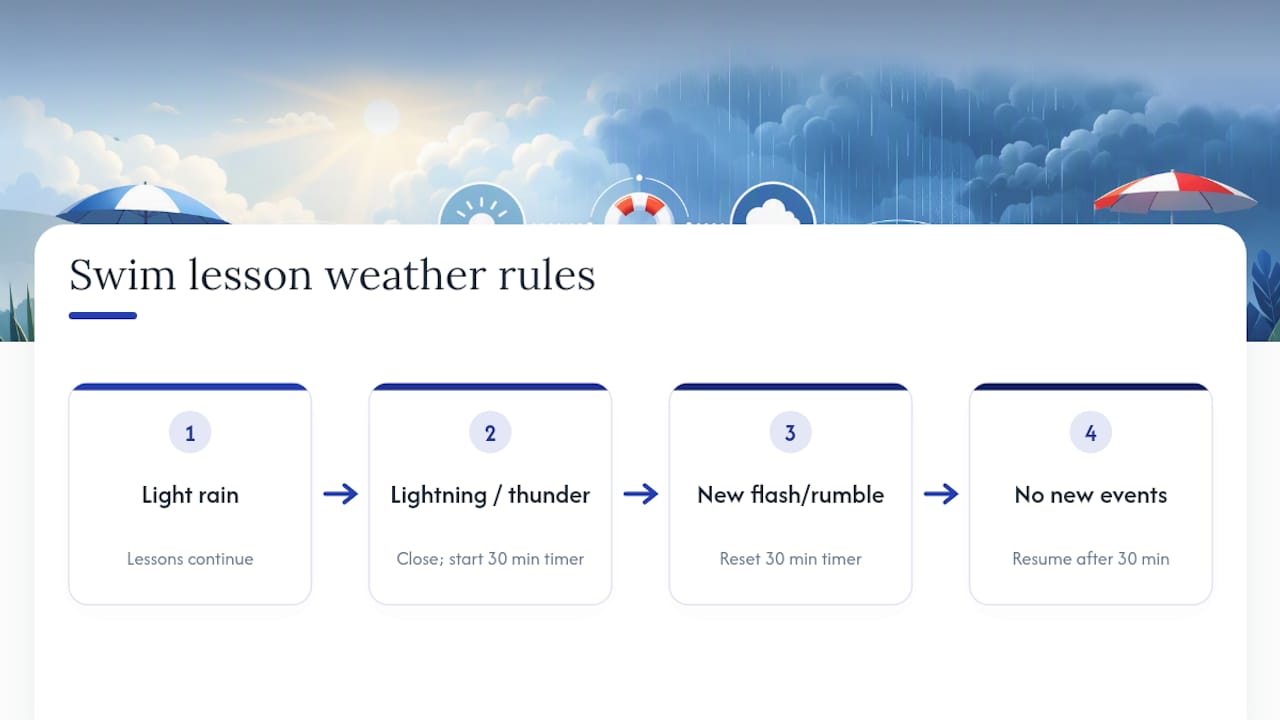
How long do pools stay closed after lightning? At least 30 minutes from the last lightning sighting or thunder sound, per widely used guidance from Spokane County. Any new flash or rumble resets that clock.
Will I get a refund if my lesson is canceled for weather? Usually not a cash refund. Most programs offer a makeup session or account credit instead, though some, like View Ridge Swim and Tennis Club, allow up to 14 days for refunds tied specifically to natural causes.
Who decides whether to cancel a lesson for weather? The instructor, lifeguard on deck, or site manager, depending on the facility’s structure and size.
What should I do if I don’t hear about a cancellation? Call the facility’s cancellation line, check its social media accounts, or call the front desk directly before heading over.
Sources
Recommended
Comments