
Benefits of CPR Certified Swim Instructors for Kids
- superheroswim
- Jun 7
- 9 min read

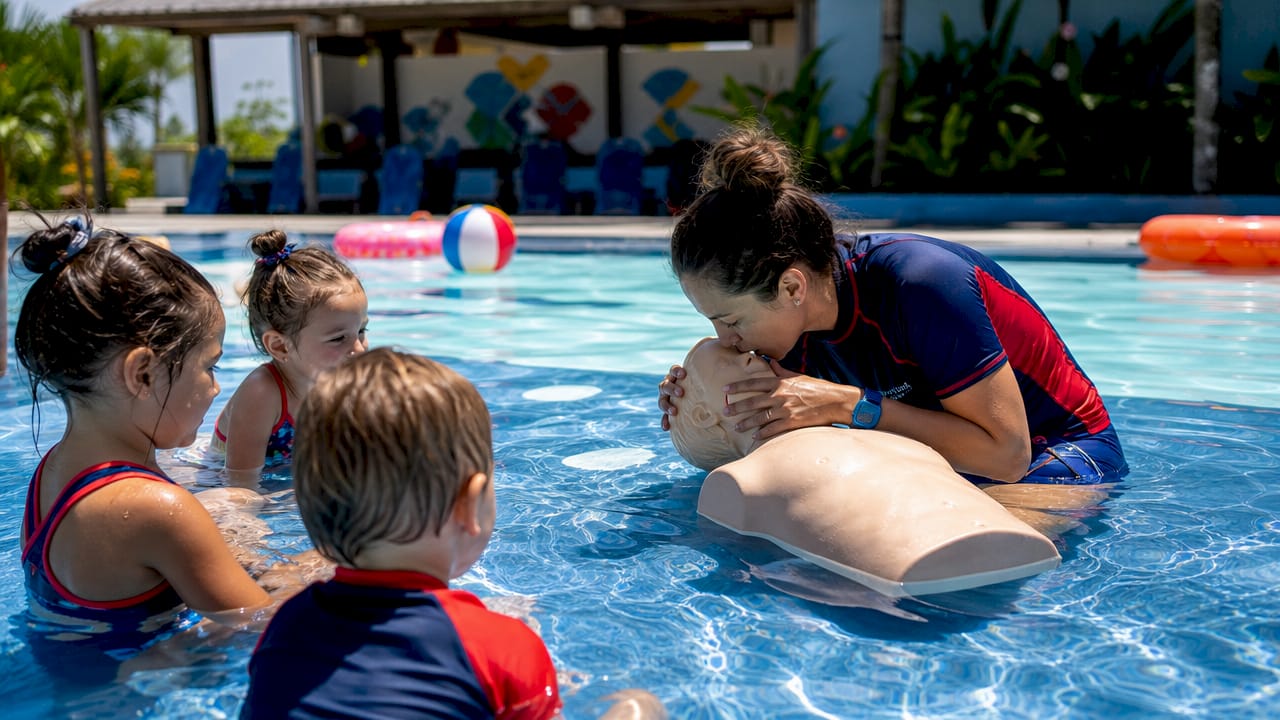
CPR-certified swim instructors are defined as aquatic educators who hold current, recognized emergency response credentials alongside their swim teaching qualifications, making them uniquely prepared to protect children’s lives in and around the water. The American Heart Association and American Red Cross set the training standards that govern these certifications, and the gap between a certified and uncertified instructor in a real emergency is not marginal. Bystander CPR can double or triple survival chances in sudden cardiac arrest outside hospitals. For parents choosing swim lessons for young children, understanding the full benefits of CPR certified swim instructors is the most practical safety decision you can make.
1. Immediate, high-quality emergency response when seconds matter
When a child goes under, the clock starts immediately. Approximately 90% of out-of-hospital cardiac arrest victims do not survive without immediate CPR. That statistic means the instructor standing at the pool edge is often the only person who can change that outcome before emergency services arrive.
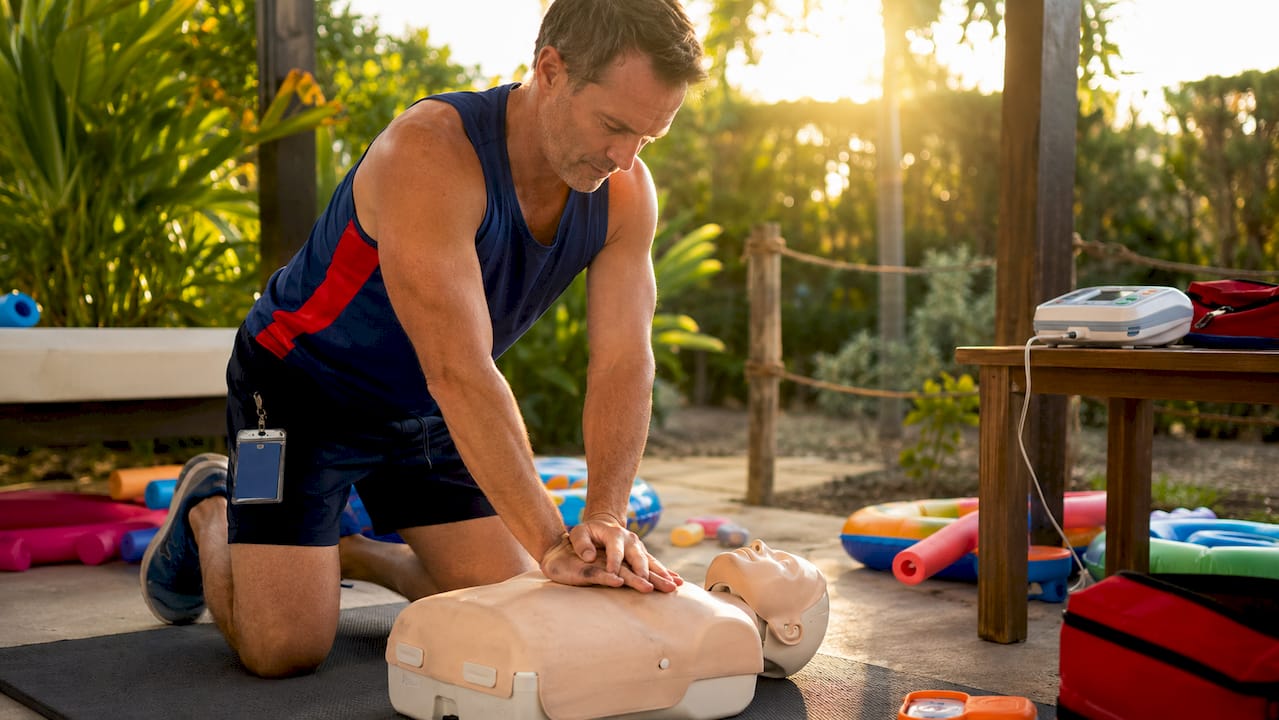
Certified instructors are trained to maintain compression depth of 2 to 2.4 inches at a rate of 100 to 120 compressions per minute. These are not arbitrary numbers. Deviating from these standards reduces blood flow to the brain and heart, lowering the chance of recovery. An uncertified instructor guessing at technique in a panic is a fundamentally different situation.
Certification also standardizes the 30:2 compression-to-breath cadence, which means consistent team response with no confusion over procedures if multiple staff members respond. At Superheroswimacademy, every instructor trains to these exact standards before teaching a single lesson.
Certified instructors perform chest compressions at the clinically correct depth and rate
Standardized protocols eliminate hesitation during multi-responder emergencies
Certification requires hands-on practice, not just written knowledge
Pro Tip: When you tour a swim facility or meet an in-home instructor, ask specifically which organization issued their CPR card and when it was last renewed. A card older than two years may not reflect current protocols.
2. A proactive safety mindset that prevents emergencies before they start
CPR training for swim instructors does more than prepare them to respond. Certified instructors learn to identify, monitor, and mitigate water-related risks before emergencies occur. This prevention mindset is trained alongside emergency response skills and changes how an instructor scans a pool, positions themselves relative to young swimmers, and structures lesson pacing.
A certified instructor notices when a child is fatiguing before the child does. They recognize pool deck hazards, monitor water conditions, and adjust lesson intensity based on real-time observation. This is the difference between an instructor who reacts and one who prevents.
Parents gain something beyond emergency coverage when they choose CPR certified aquatic instructors. They gain an instructor whose entire professional framework is built around keeping children safe, not just teaching them to kick and breathe.
Monitoring swimmer behavior for early signs of distress
Assessing pool deck and water conditions before each lesson
Adjusting lesson structure based on individual child readiness
Communicating safety expectations clearly to children and parents
3. Professional credibility backed by recognized industry standards
The American Red Cross and American Heart Association are the industry gold standards trusted by employers and insurers across the aquatic industry. Holding certification from either organization signals that an instructor has met evidence-based training requirements, not a self-reported claim of competence.
Here is what professional credibility from CPR certification means in practice:
Employer preference. Aquatic facilities and swim academies consistently prioritize certified staff during hiring. Certification is not a bonus qualification. It is a baseline requirement at reputable programs.
Insurance and liability compliance. Facility managers require biannual certification renewal to maintain liability coverage. An instructor without current credentials can expose a facility to significant legal and financial risk.
Legal protection for instructors. Maintaining up-to-date CPR certification acts as a legal safeguard, demonstrating adherence to recognized medical standards if an incident occurs during a lesson.
Career development. Certified instructors qualify for advanced aquatic roles, including lifeguard supervision and aquatic program management, that are closed to uncertified candidates.
When you choose swimming lessons with CPR certified staff, you are also choosing a program that meets the professional standards insurers and regulators require. That alignment protects your child and the organization teaching them.
4. Confidence under pressure that makes better swim teachers
Repeated CPR training transforms psychological readiness from panic to calm, immediate action. Practicing realistic emergency scenarios builds procedural memory, which means the body responds correctly before the conscious mind has processed the situation. For a swim instructor working with toddlers and infants, that calm is not just useful in emergencies. It shapes every lesson.
An instructor who has trained for worst-case scenarios carries a baseline confidence that children and parents both sense. Young children are acutely responsive to adult anxiety. An instructor who is calm, prepared, and in control creates a learning environment where children feel safe enough to try new skills, tolerate water on their face, and build genuine aquatic confidence.
Hands-on instruction by certified trainers improves both skill retention and psychological preparedness compared to self-study or uncertified instruction. This means the certification process itself produces better instructors, not just safer ones.
Pro Tip: Watch how a swim instructor responds when a child becomes upset or resistant in the water. A certified, well-trained instructor will de-escalate calmly and adapt the lesson. That composure comes directly from emergency preparedness training.
5. Parental trust built on verified, not assumed, competence
Parents entrust swim instructors who hold recognized certifications because those credentials represent verified competence, not a self-assessment. There is a meaningful difference between an instructor who says they know what to do and one who has demonstrated it to a certified examiner under timed, realistic conditions.
For parents of infants and toddlers, this distinction is personal. You are handing your child to someone in an environment where drowning is the leading cause of accidental death in children ages one to four. The instructor’s credentials are not a formality. They are the primary evidence that your child is in capable hands.
Knowing your instructor holds current CPR and First Aid certification also changes how you engage with lessons. You can focus on your child’s progress rather than scanning the pool for hazards. That shift in attention benefits the child directly, because parental anxiety transfers to children faster than most parents realize.
6. Faster, more effective response through trained muscle memory
CPR skill decay can occur within six months of initial training, which is why re-certification is not optional. A certification card from two years ago does not guarantee that an instructor can perform correct compressions today. This is one of the most overlooked facts in aquatic safety.
Regular renewal keeps compression technique sharp, updates instructors on protocol changes, and reinforces the procedural memory that makes emergency response automatic. Standard CPR and First Aid courses run 4 to 6 hours and cost between $40 and $125, with certifications valid for two years. The investment is minimal relative to the protection it provides.
At Superheroswimacademy, instructors renew their certifications on schedule, not when it is convenient. That commitment to current training is what separates a safety-first program from one that treats certification as a checkbox.
7. Certified instructors as role models for water safety culture
Children learn safety behaviors by watching adults. An instructor who demonstrates deliberate, safety-conscious behavior around the pool teaches children that water deserves respect, not fear and not carelessness. This modeling effect extends beyond the lesson itself.
Children who train with qualified swim instructors who prioritize safety internalize those habits. They learn to enter the water correctly, to wait for permission before jumping in, and to recognize when a situation feels unsafe. These behaviors reduce drowning risk long after the lesson ends.
A certified instructor also communicates safety expectations to parents in a structured, credible way. When an instructor with recognized credentials explains why a child is not ready for a certain skill, parents listen differently than they would to an uncertified instructor making the same recommendation.
8. Side-by-side comparison: certified vs. uncertified swim instructors
The safety advantages of CPR certification become clearest when you compare what each type of instructor brings to a lesson.
Category | CPR certified instructor | Uncertified instructor |
Emergency response | Trained in high-quality CPR, AED use, and First Aid | No verified emergency response skills |
Risk prevention | Trained to identify and mitigate hazards proactively | Relies on general awareness only |
Professional credentials | Recognized by Red Cross, AHA, employers, and insurers | No standardized credential verification |
Legal protection | Certification documents adherence to medical standards | No formal liability protection |
Parental confidence | Verified competence through third-party examination | Self-reported competence only |
Skill currency | Renewed every two years to reflect current protocols | No renewal requirement or protocol updates |
The table above reflects why choosing swimming instructors with CPR training is not a preference. It is the baseline standard for any program working with young children.
Key takeaways
CPR-certified swim instructors are the only category of aquatic educator equipped to prevent, identify, and respond to life-threatening emergencies while simultaneously delivering high-quality swim instruction to young children.
Point | Details |
Immediate survival impact | Bystander CPR doubles or triples survival chances, making instructor certification directly lifesaving. |
Prevention over reaction | Certified instructors identify risks before emergencies occur, reducing incident rates at the source. |
Legal and professional standard | Red Cross and AHA certifications satisfy employer, insurer, and regulatory requirements for aquatic programs. |
Skill decay is real | CPR effectiveness drops within six months without practice, making biannual renewal non-negotiable. |
Parental trust is earned | Verified credentials give parents confidence that is grounded in third-party examination, not self-assessment. |
Why I believe certification is the non-negotiable standard in swim instruction
After working with over 2,500 children at Superheroswimacademy, I have seen firsthand what separates a good lesson from a safe one. The instructors who handle unexpected moments with the most composure are always the ones whose CPR and First Aid training is current. That is not a coincidence.
Parents sometimes ask whether certification really matters if an instructor has years of experience. My answer is direct: experience teaches you what usually happens. Certification prepares you for what should never happen but sometimes does. Those are two different skill sets, and you need both.
I also want to address something most programs do not say out loud. Verifying an instructor’s credentials before your child’s first lesson is your right as a parent, not an imposition. Ask for the certification card. Check the expiration date. A qualified instructor will hand it over without hesitation.
Certification renewal is where many programs cut corners. A card issued 22 months ago may still be technically valid, but the research on skill decay tells us that compression quality degrades significantly without regular practice. At Superheroswimacademy, we treat renewal as a professional obligation, not an administrative task.
The bottom line is this: CPR certification is not a credential that makes an instructor look more qualified. It is the training that makes them actually more capable of protecting your child’s life.
— SUPERHERO
Swim safely with Superheroswimacademy’s certified instructors
Every instructor at Superheroswimacademy holds current CPR and First Aid certification alongside our proven survival swim curriculum, which is designed specifically for infants, toddlers, and young children in Palm Beach and Broward counties.
With over 2,500 children taught and parent-reported improvements in swimming ability within weeks, our safety-first approach delivers results you can see and confidence you can feel. Parents receive regular progress updates and clear goals for every stage of their child’s development. Whether you are looking for local lesson locations near you or want to explore our online safety courses, Superheroswimacademy makes it straightforward to get your child into the water with an instructor you can trust.
FAQ
What does CPR certification mean for a swim instructor?
CPR certification means an instructor has completed hands-on training from a recognized provider such as the American Red Cross or American Heart Association and passed a skills evaluation. It verifies they can perform high-quality chest compressions, rescue breathing, and AED use to current medical standards.
How often do swim instructors need to renew their CPR certification?
CPR certifications are valid for two years, but skill decay can begin within six months of initial training. Reputable aquatic programs require instructors to renew biannually to maintain both competency and liability coverage.
Why should I choose a swim instructor with CPR training over one without?
A CPR certified aquatic instructor brings verified emergency response skills, a proactive safety mindset, and legal accountability that uncertified instructors cannot offer. For children ages one to four, who face the highest drowning risk of any age group, that difference is significant.
Can I ask a swim instructor to show me their CPR certification?
Yes, and you should. Any qualified instructor will provide their certification card on request, including the issuing organization and expiration date. This is a standard part of vetting an in-home swim instructor and should be done before lessons begin.
Does CPR certification improve the quality of swim instruction, not just safety?
Certification training builds calm under pressure and procedural confidence, both of which directly improve teaching quality. Instructors who have trained for emergencies are more composed during lessons, which creates a more effective and reassuring learning environment for young children.
Recommended
Comments