
Fit Swim Lessons Into a Busy Schedule: A Parent's Guide
- superheroswim
- 1 day ago
- 7 min read

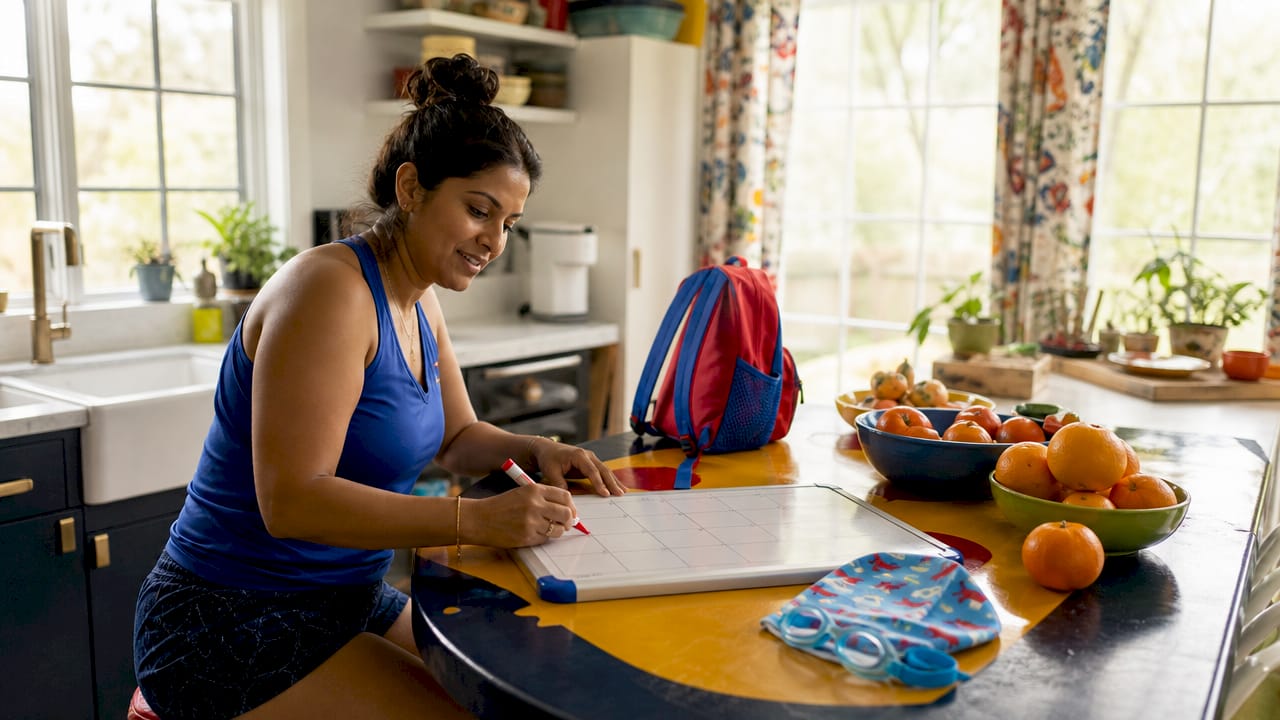
Flexible swim lesson scheduling is defined as any enrollment model that lets parents adjust lesson timing, frequency, or format without losing their child’s progress. For busy families in Palm Beach and Broward counties, fitting swim lessons into a busy schedule comes down to three choices: the right enrollment format, the right lesson length, and the right daily anchor point. Superheroswimacademy has taught over 2,500 children using a survival swim curriculum built around exactly these constraints. Short, focused, one-on-one sessions and perpetual enrollment options make consistent water safety education realistic, even for the most packed family calendars.
How to fit swim lessons into a busy schedule
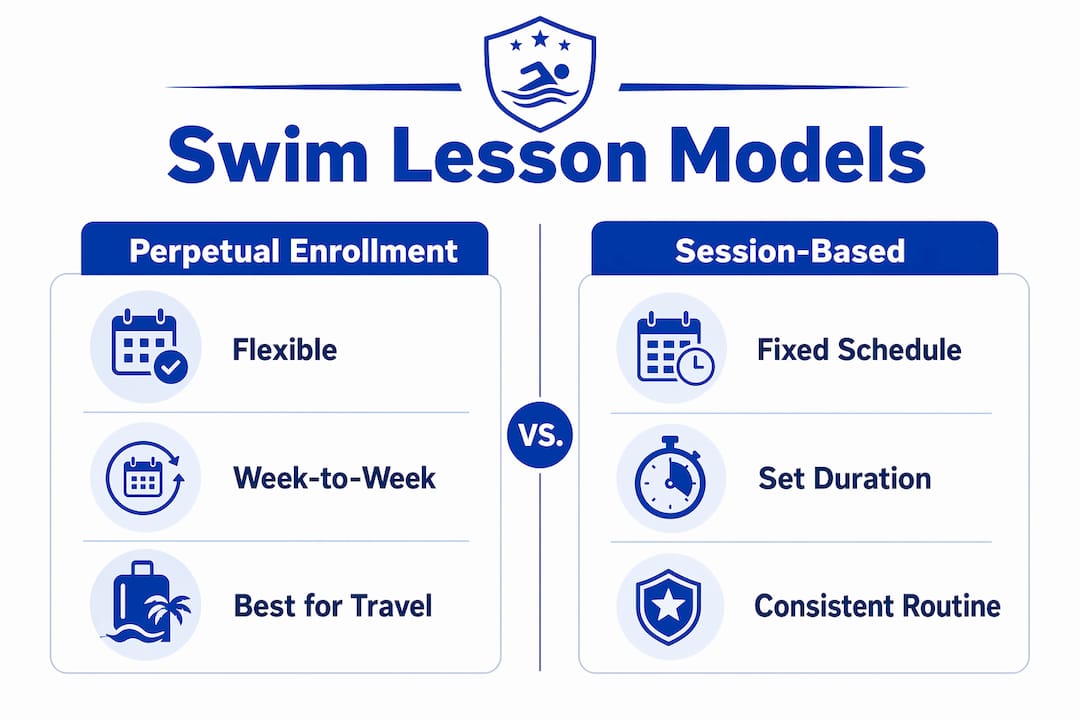
The two main enrollment models are perpetual enrollment and session-based programs. Each one solves a different scheduling problem.
Perpetual enrollment offers week-to-week flexibility and lets families pause during travel or illness without losing their spot. That makes it the better fit for unpredictable schedules. Session-based programs run in structured blocks, typically four to eight weeks, and build consistent peer groups. They work well when a family’s calendar is predictable for a defined stretch of time.
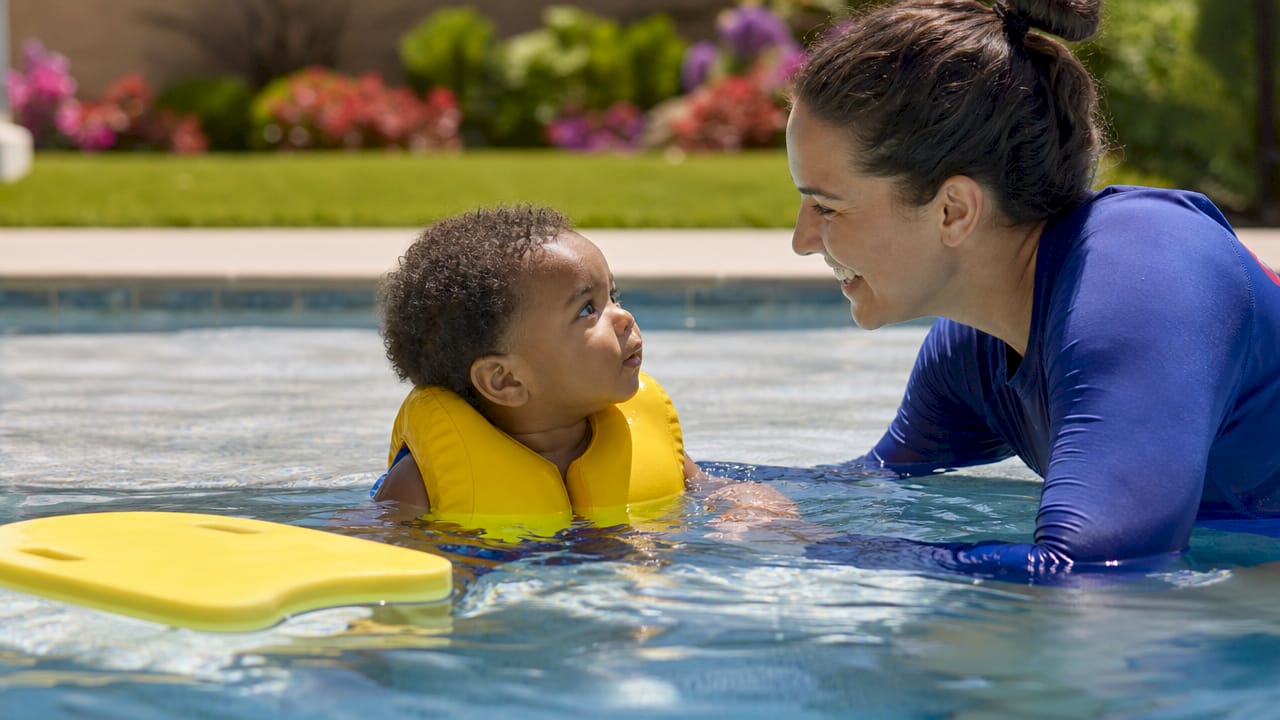
A third option sits between both: intensive formats. Intensive lesson packs allow students to complete five private lessons within seven days, accelerating progress equivalent to more than a month of weekly lessons. Families who cannot commit to weekly lessons use these packs to jump-start skills or maintain them between regular sessions.
Format | Flexibility | Best for | Pace of progress |
Perpetual enrollment | High | Unpredictable schedules | Steady, ongoing |
Session-based | Moderate | Predictable 4–8 week windows | Structured, peer-supported |
Intensive 7-day pack | High | Gaps between regular sessions | Rapid, concentrated |
Pro Tip: If your family travels frequently, ask about perpetual enrollment before signing up. Pausing enrollment for a week costs nothing and keeps your child’s slot secure.
Why short lessons work better for young children
Brief, focused lessons are not a compromise. They are the standard for infant and toddler swim instruction. The Infant Swimming Resource model uses lessons of about 10 minutes, delivered several days per week, to build real water safety skills. That short duration matches a young child’s attention span and keeps instruction quality high throughout every session.
One-on-one lessons amplify this effect. When a child has an instructor’s full attention for 10–15 minutes, the learning density per minute is far higher than in a group class. Parents who choose private lessons for young children consistently report faster skill gains in less total time.
Short sessions also reduce the logistical burden on parents. A 10-minute lesson fits into a gap between daycare drop-off and a work call. A 45-minute group class does not.
Key benefits of short, focused lessons for busy families:
Minimal time commitment. A 10-minute lesson plus travel is often under 30 minutes total.
Higher retention. Young children absorb more when sessions end before fatigue sets in.
Easier scheduling. Short windows open up more days and times on a family calendar.
Consistent safety focus. Instructors cover survival skills every session without rushing.
Pro Tip: Schedule lessons right after daycare pickup or just before a regular errand run. Attaching the lesson to an existing routine removes the decision fatigue of “when do we fit this in?”
How to integrate swim lessons into your family’s daily routine
Treating swim lessons as a fixed part of the daily rhythm is the single most effective scheduling strategy. Families who anchor lessons to stable daily events, like daycare pickup or a regular meal time, report fewer missed sessions and less stress around scheduling. The lesson stops feeling like an extra task and starts feeling like part of the day.
Here is a step-by-step approach to building that anchor:
Map your availability windows. Write down every recurring commitment for the week: work hours, school pickup, nap times, and standing appointments. The gaps that appear consistently are your real scheduling options.
Pick one anchor event. Choose a daily event that happens at the same time most days. Pair the lesson with that event, either just before or just after.
Book the same slot every week. Consistency reduces friction. When the lesson is always on Tuesday at 4:30 PM, it becomes automatic.
Set a cancellation rule in advance. Decide now how many absences per month you will allow before pausing enrollment. Having a rule removes guilt and prevents a single missed lesson from becoming a pattern.
Use make-up lessons proactively. Most flexible programs offer make-up options. Schedule them within the same week as the missed lesson, not weeks later, to maintain momentum.
“Commitment becomes easier when lessons align with stable parts of the daily routine. Parents who treat swim lessons like school pickup, not like an optional activity, show up consistently and see the fastest results.”
Balancing swim lessons with school activities and other commitments gets easier once the lesson has a fixed home in the week. The scheduling guide for school-age families from Superheroswimacademy covers this in detail for parents managing multiple children and activities at once.
Twice-weekly lessons accelerate progress noticeably compared to once-weekly sessions. If your schedule allows two short sessions per week, even for a month, the skill gains are worth the extra coordination.
Common challenges parents face and how to solve them
Schedule conflicts are the most common reason families drop swim lessons. The fix is not more willpower. It is a better program structure.
Conflicting appointments. Perpetual enrollment lets you skip a week without penalty. Use this feature instead of canceling outright.
Transportation logistics. Choose a location within 15 minutes of your home or daycare. Distance is the hidden killer of lesson consistency.
Seasonal disruptions. Year-round lessons in heated indoor pools remove the seasonal gap that causes children to lose skills every winter. Look for programs that operate 12 months a year.
Inconsistent progress. If a child seems stuck, the issue is often lesson frequency, not lesson quality. Moving from once to twice weekly often breaks the plateau.
Caregiver coordination. When two parents or a nanny share drop-off duties, write the lesson time into a shared calendar app. Verbal agreements fail under pressure.
Flexible programs with make-up and pause options directly reduce dropout rates. Scheduling flexibility keeps children progressing even when family life gets unpredictable.
The right mindset matters too. Water safety is not a seasonal activity. Drowning is the leading cause of accidental death in children ages 1–4 in the United States. Framing swim lessons as a safety non-negotiable, not a hobby, changes how parents prioritize them when the calendar gets tight.
Pro Tip: Use a shared family calendar app with push notifications for lesson reminders. Set the reminder 90 minutes before the lesson, not 15, so you have time to pack a bag and get out the door without rushing.
Key takeaways
Flexible swim lesson formats and consistent daily anchoring are the two most reliable ways to maintain a child’s swim education through a busy family schedule.
Point | Details |
Choose the right enrollment model | Perpetual enrollment suits unpredictable schedules; session-based suits predictable blocks. |
Use short, focused sessions | Infant Swimming Resource lessons of about 10 minutes deliver real progress with minimal time demand. |
Anchor lessons to daily routines | Pairing lessons with existing events like daycare pickup removes scheduling friction. |
Intensive packs fill schedule gaps | Five lessons in seven days maintain or accelerate skills when weekly lessons are not possible. |
Address conflicts with program features | Make-up lessons and pause options prevent a single missed week from derailing progress. |
What I’ve learned from watching families make swim lessons stick
The families who succeed with swim lessons are not the ones with the most open calendars. They are the ones who stopped treating lessons as optional.
I have watched parents with genuinely packed schedules, two working adults, multiple kids, and long commutes, show up every week without fail. The common thread is never convenience. It is a decision made once, firmly, that water safety comes before schedule optimization. Everything else follows from that.
The format matters less than the commitment. A 10-minute lesson twice a week beats a 45-minute lesson once a month in every measurable way. Short, frequent swim instruction builds muscle memory and confidence faster than longer, infrequent sessions. Parents who understand this stop searching for the “perfect” time slot and start working with what they have.
The other thing I have noticed: parents who get regular progress updates stay engaged longer. When you can see your child moving from floating to self-rescue, the lesson stops feeling like a chore and starts feeling like a win. That feedback loop is what keeps families enrolled through the hard weeks.
Experiment with formats. Try an intensive pack during a school break. Switch to perpetual enrollment when summer travel starts. The goal is continuous progress, not a perfect schedule.
— SUPERHERO
Swim lessons that work around your schedule at Superheroswimacademy
Superheroswimacademy builds its programs around the reality that busy families need flexibility without sacrificing safety. Every instructor holds CPR and First Aid certification and trains in the academy’s own survival swim curriculum, so short sessions deliver real results.
Families in Palm Beach and Broward counties can choose from perpetual enrollment for week-to-week flexibility or intensive lesson packs for rapid progress during school breaks. For parents who need even more adaptability, online swim courses supplement in-water lessons with guidance parents can access on their own time. Over 2,500 children have learned to swim safely through Superheroswimacademy’s approach. Visit Superheroswimacademy to find a lesson format that fits your family’s calendar.
FAQ
How do I fit swim lessons into a busy family schedule?
Choose a flexible enrollment model like perpetual enrollment, which lets you pause or adjust week to week. Anchor the lesson to an existing daily routine, such as daycare pickup, to reduce scheduling friction.
How long are swim lessons for infants and toddlers?
Infant Swimming Resource lessons typically last about 10 minutes. That short duration matches a young child’s attention span and delivers consistent safety skill-building without requiring large time blocks.
What is the difference between perpetual and session-based swim lessons?
Perpetual enrollment runs week to week with pause options, making it better for unpredictable schedules. Session-based programs run in structured blocks and work well when a family’s calendar is stable for four to eight weeks.
Can intensive swim lesson formats replace weekly lessons?
Intensive formats, such as five lessons in seven days, accelerate progress equivalent to more than a month of weekly lessons. They work well as a bridge between regular sessions or during school breaks.
How often should young children take swim lessons?
Twice-weekly lessons produce noticeably faster progress than once-weekly sessions. For families with limited availability, even one consistent lesson per week, held at the same time each week, builds meaningful skills over time.
Recommended
Comments