
Goal Setting in Swim Lessons: A Parent's Guide
- superheroswim
- a few seconds ago
- 8 min read
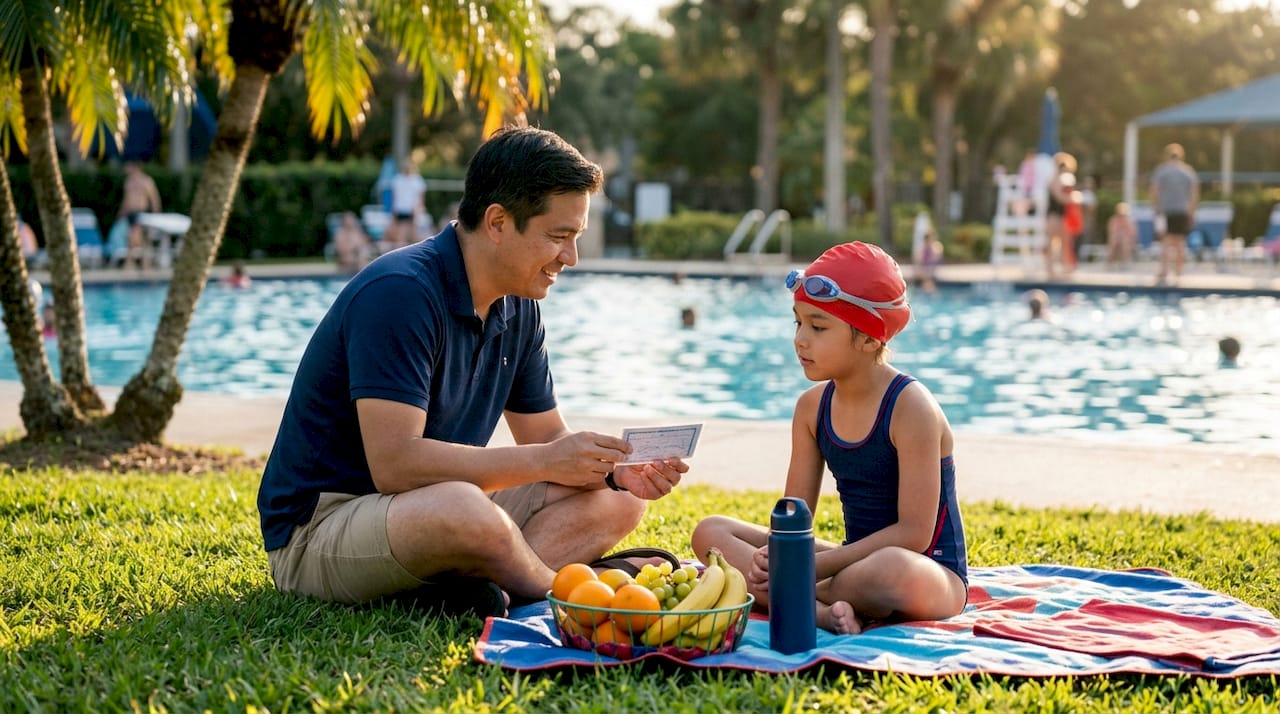
Goal setting in swim lessons is defined as the practice of creating clear, specific, and measurable targets that guide a child’s progress toward water safety and swimming skill. The role of goal setting in swim lessons goes far beyond keeping kids busy in the pool. Specific, measurable goals improve skill acquisition by 72% compared to vague encouragement like “do your best.” That number reflects a real gap between children who have direction and those who simply splash around hoping improvement happens. The American Academy of Pediatrics and Superheroswimacademy both treat structured, goal-oriented lessons as the foundation of genuine water safety for young children.
What is the role of goal setting in swim lessons?
Goal setting gives swim lessons a structure that vague encouragement cannot. When a child knows exactly what she is working toward, say floating on her back for five seconds or blowing bubbles without holding the wall, her attention sharpens and her effort increases. Specific objectives outperform “do your best” instructions by 72% in skill acquisition. That gap exists because clear goals focus the brain on a defined task rather than leaving it to wander.
There is an important nuance here, though. A goal without mental skill support can backfire. A goal time without mental skills often increases stress and pressure in young swimmers. That means parents and instructors need to pair outcome goals with mental strategies like visualization, positive self-talk, and process goals.
Visualization means asking your child to picture herself completing the skill before she tries it. Positive self-talk means replacing “I can’t do this” with “I’m getting better every time.” Process goals focus on what the child controls, such as keeping her chin down or kicking from the hips, rather than on a result she cannot fully control. Together, these tools make goal setting a confidence builder rather than a pressure cooker.
Concrete examples of specific swim goals parents can help set include:
Float unassisted on the back for three seconds by the end of the week
Blow five bubbles in a row with face fully submerged
Kick across the width of the pool without stopping
Jump in from the pool edge and return to the wall independently
Complete one full lap of freestyle with proper arm rotation
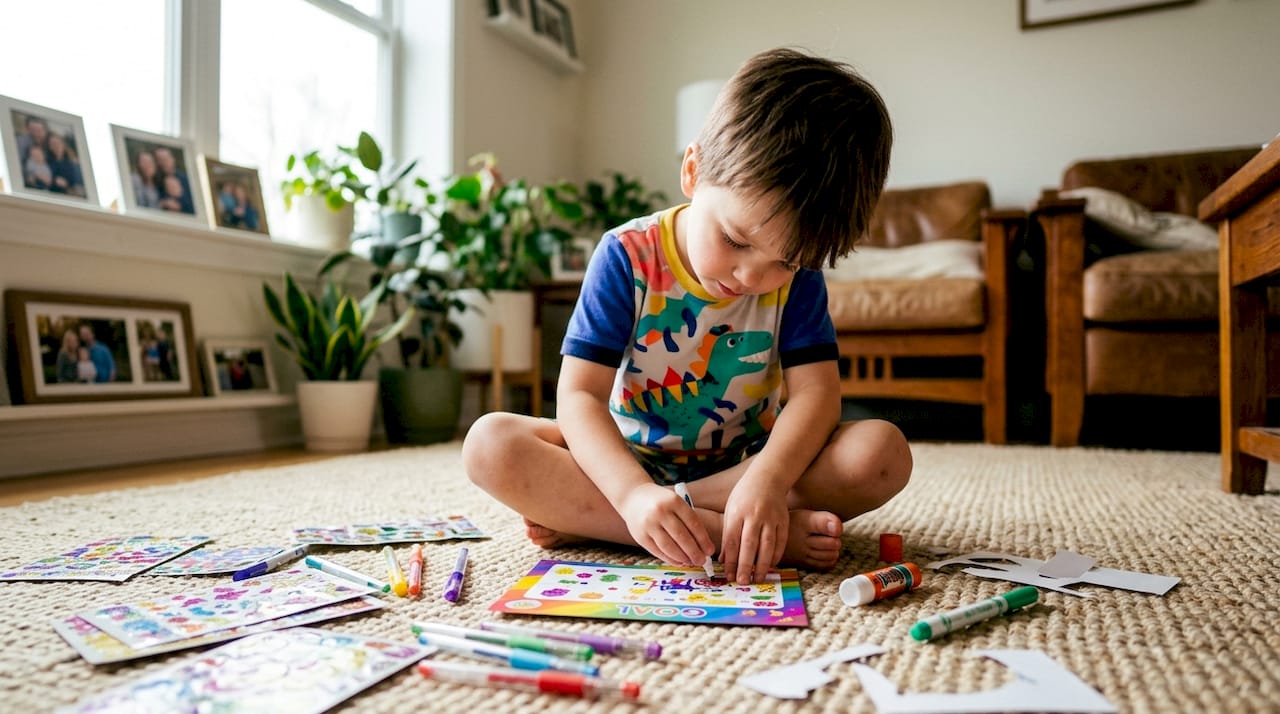
Pro Tip: Write the goal on a small card and let your child decorate it. Posting it somewhere visible at home keeps the target fresh and turns the goal into something your child owns.
How should swim lesson goals align with a child’s developmental stage?
Goals that exceed a child’s physical or emotional readiness do not build confidence. They build frustration. Children’s swim goals should align with their physical, emotional, and cognitive development to stay achievable and motivating. This is why developmental stage matters as much as the goal itself.
The American Academy of Pediatrics recommends formal swim lessons starting at age 1 as a vital safety layer against drowning. That recommendation comes with an implicit framework: goals for a one-year-old look nothing like goals for a six-year-old. Matching the target to the child’s readiness is what makes progress feel possible rather than punishing.
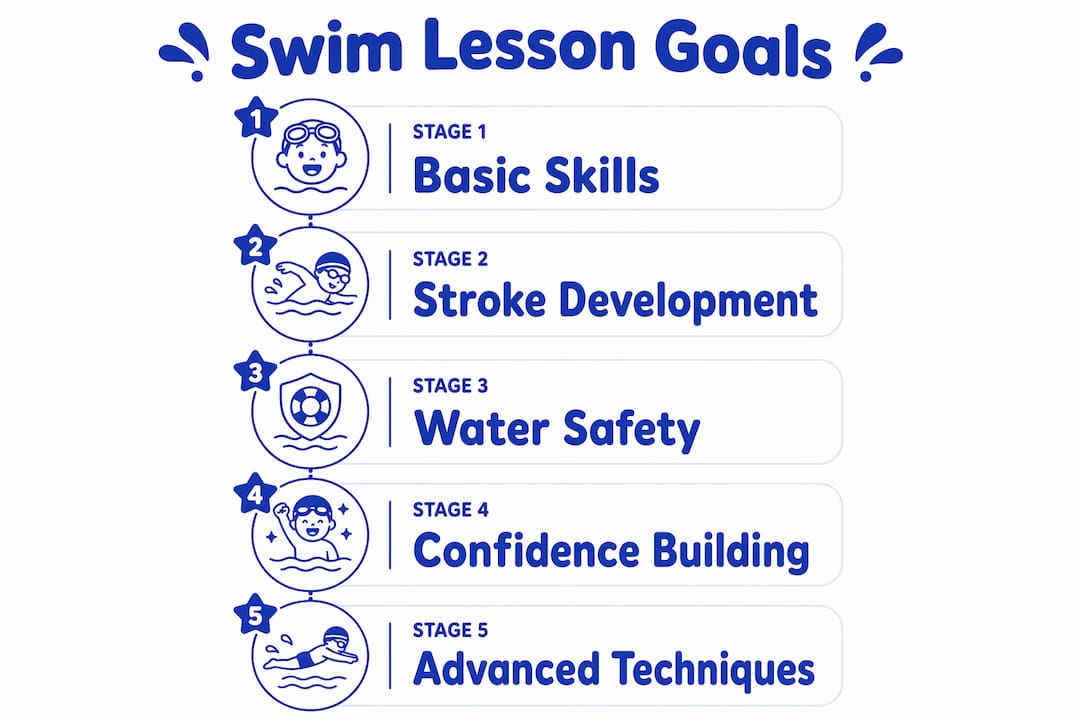
Age-appropriate goal progressions generally follow this path:
Infants (ages 1–2): Water comfort goals. Tolerating submersion, floating with support, and responding calmly to water on the face.
Toddlers (ages 2–3): Independence goals. Reaching the pool wall unassisted, kicking with a floatboard, and jumping in with a caregiver nearby.
Preschoolers (ages 3–5): Skill foundation goals. Floating independently, basic freestyle arm motion, and rolling from front to back.
School-age children (ages 5 and up): Technique and endurance goals. Full stroke completion, breathing patterns, and swimming a defined distance without stopping.
Structured progression plans minimize fear and maximize skill retention by giving children clear targets at each stage. Fear shrinks when a child knows what comes next and believes she can reach it.
Each lesson should carry one primary goal. Stacking multiple new skills into a single session overwhelms young learners and dilutes focus. Ending every lesson on a success is not optional. Never end a swim lesson on a failed attempt. Finishing with a task the child can confidently perform preserves positive momentum and keeps her wanting to return. A consistent lesson routine reinforces both skill memory and emotional comfort in the water.
Pro Tip: Before each lesson, ask your child to name one thing she wants to practice. Even a small choice gives her ownership of the session and increases her buy-in.
How does goal setting in swim lessons build life skills beyond the pool?
Swimming teaches discipline, patience, and perseverance through the simple act of setting and reaching milestones. These are not abstract character traits. They are habits formed by repeatedly showing up, trying, falling short, and trying again until the skill clicks. Every time a child achieves a swim goal, she learns that effort produces results.
That lesson transfers. Goal setting builds habits that carry into academic, social, and sports contexts, enhancing overall child development. A child who learned to float by breaking the skill into daily practice steps uses the same mental framework when tackling a difficult math unit or a new sport.
Group swim lessons add a social dimension to this process. When children share a goal, such as all reaching the wall without stopping, they cheer each other on. That peer encouragement builds confidence in group settings and teaches children how to support others working toward the same target. The social skills developed in shared goal environments extend well beyond the pool deck.
Celebrating milestones matters as much as setting them. Specific benefits of milestone celebration include:
Reinforces the connection between effort and achievement
Creates a positive feedback loop that motivates the next goal
Builds self-esteem through visible, concrete proof of progress
Encourages risk-taking because the child trusts that hard work pays off
Strengthens the parent-child bond through shared pride in accomplishment
Small celebrations work best. A sticker chart, a high-five ritual, or a special post-lesson snack signals to the child that her progress is seen and valued. The size of the reward matters far less than its consistency.
What are the best ways for parents to support swim goal setting?
Parents who involve children in setting their own swim goals see better motivation and ownership of progress. Child-chosen goals pull swimmers forward. Goals imposed by adults, even well-meaning ones, often cause stress and disengagement. The difference between “I want to swim to the wall by myself” and “Mom wants me to swim to the wall” is the difference between intrinsic and extrinsic motivation.
Pairing outcome goals with process goals reduces pressure significantly. An outcome goal is “swim one lap.” A process goal is “keep my face down and breathe every three strokes.” The process goal focuses on what the child controls in the moment. That focus reduces anxiety and builds the technique that eventually produces the outcome.
Parents can also use visualization at home. Ask your child to close her eyes and picture herself completing the skill she is working on. Walk her through it step by step: “You jump in, you kick hard, you reach the wall.” This mental rehearsal primes the brain for the physical task. Research on mental skills for young swimmers confirms that visualization and positive self-talk reduce performance anxiety and improve execution.
Communication with the swim instructor is non-negotiable. Ask for feedback after each session. Find out which goal the instructor is prioritizing and reinforce it at home. When parents and instructors align on the same target, the child gets consistent signals rather than conflicting messages. You can also explore how swim academies track progress to understand what metrics instructors use and how to read them.
Boosting confidence extends beyond the pool. Resources on screen-free confidence strategies show that children who build self-belief in one area carry it into others, making swim goal achievement part of a larger developmental picture.
Pro Tip: After each lesson, ask your child one question: “What felt easier today than last time?” That question trains her to notice her own progress rather than waiting for someone else to point it out.
Key Takeaways
Goal setting in swim lessons is the single most effective tool for building water safety, skill, and confidence in young children when goals are specific, developmentally matched, and paired with mental skills like visualization and positive self-talk.
Point | Details |
Specific goals outperform vague ones | Measurable swim targets improve skill acquisition by 72% compared to “do your best” instructions. |
Match goals to developmental stage | Align swim objectives with a child’s physical and emotional readiness to keep progress achievable and motivating. |
Pair outcome goals with process goals | Focus children on controllable behaviors to reduce pressure and build technique that produces results. |
End every lesson on success | Finishing with a confident achievement preserves positive momentum and keeps children eager to return. |
Involve children in goal creation | Child-chosen goals drive intrinsic motivation; imposed goals cause stress and reduce engagement. |
Why goal clarity changes everything in the water
The most common mistake I see parents make is treating swim lessons like a drop-off service. They enroll their child, wave goodbye at the pool gate, and wait for swimming to happen. Goal setting does not work that way. It requires a parent who knows what the child is working on, reinforces it at home, and celebrates every step forward.
What I have found working with young swimmers is that the goal itself matters less than the child’s belief that the goal is reachable. A child who thinks she cannot float will not float, regardless of how many times the instructor demonstrates. But a child who has visualized floating, who has a specific target, and who knows her parent is watching for progress? That child tries differently. She tries with intention.
The research on mental skills confirms what I have seen firsthand. Outcome goals without mental support create pressure. Process goals paired with visualization create confidence. The distinction sounds small. In practice, it is the difference between a child who dreads lessons and one who runs to the pool.
My honest advice to parents: get curious about your child’s goals before each lesson, not just after. Ask what she is working on. Ask what feels hard. Then ask what she thinks would help. You will be surprised how clearly children can articulate their own barriers when someone takes the time to ask. That conversation is where goal setting actually begins.
— SUPERHERO
How Superheroswimacademy supports goal-oriented swim lessons
Superheroswimacademy builds every lesson around clear, child-specific goals tied directly to water safety and skill development. Each instructor completes rigorous training in CPR, First Aid, and the academy’s own survival swim curriculum, so goal setting happens within a safety-first framework from day one.
Parents receive regular updates on their child’s progress, so you always know which goal is active and how close your child is to reaching it. With over 2,500 children taught across Palm Beach and Broward counties, Superheroswimacademy has refined a lesson structure that keeps children motivated, safe, and genuinely excited about the water. Families who prefer learning at home can also access online swim courses built around the same goal-setting framework. For in-person lessons with instructors who treat goal clarity as a safety tool, visit Superheroswimacademy to get started.
FAQ
What is the role of goal setting in swim lessons?
Goal setting in swim lessons creates specific, measurable targets that focus a child’s attention, increase effort, and build the persistence needed for water safety. Specific goals improve skill acquisition by 72% compared to vague encouragement.
When should children start structured swim lessons with goals?
The American Academy of Pediatrics recommends formal swim lessons starting at age 1, with goals matched to each child’s physical and emotional readiness at every stage.
How do I set swim goals without adding pressure to my child?
Pair outcome goals with process goals that focus on controllable behaviors, and let your child help choose the target. Child-chosen goals build motivation; adult-imposed goals often create stress and disengagement.
Should every swim lesson end on a success?
Yes. Ending a lesson on a failed attempt undermines confidence and weakens the child’s positive association with the water. Always finish with a skill the child can perform confidently to preserve momentum.
How does swim goal setting help children outside the pool?
Swimming teaches discipline, patience, and perseverance through milestone achievement. These habits transfer directly to academic performance, team sports, and social development, making goal-oriented swim lessons a broader developmental investment.
Recommended