
Time Efficient Swim Training Approaches for Busy Families
- superheroswim
- 1 day ago
- 7 min read

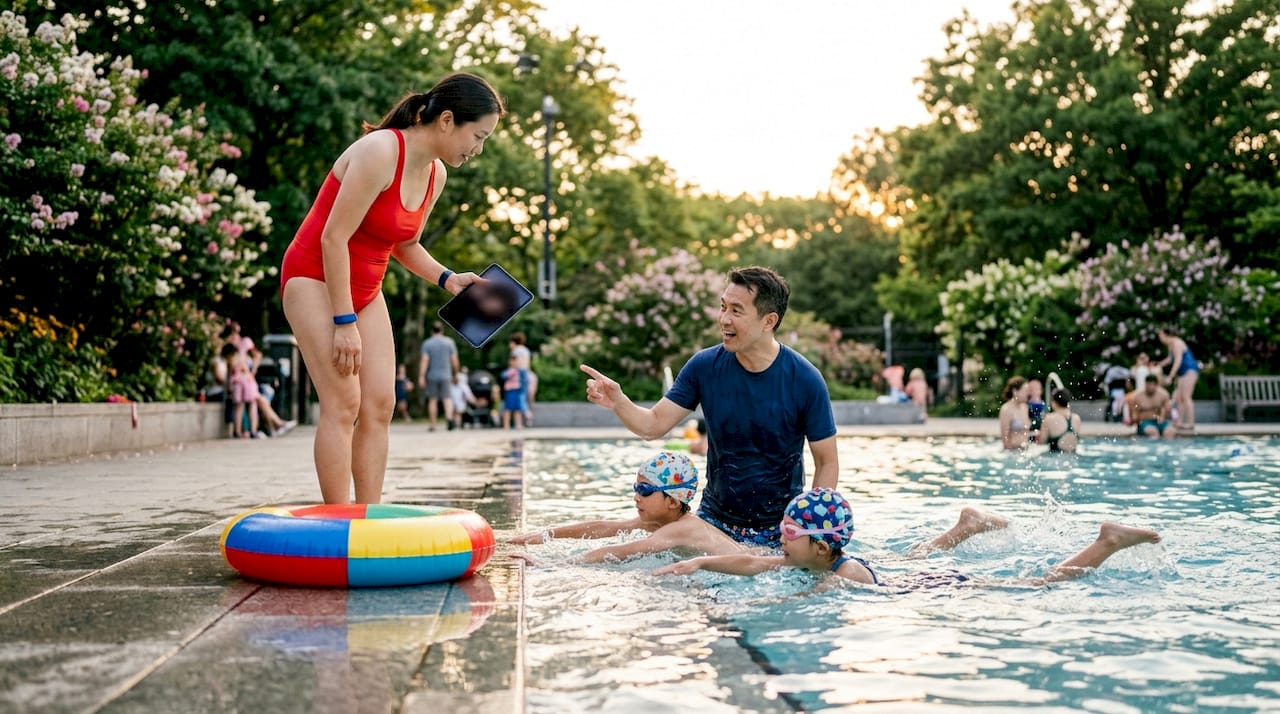
Time efficient swim training approaches are defined as structured, purposeful sessions that prioritize technique quality and measurable effort over raw lap volume. The most effective method combines Critical Swim Speed (CSS) interval training with efficiency tracking tools like the SWOLF score. Busy parents and swimming enthusiasts who apply these methods consistently see faster skill gains than those who simply log more pool time. Superheroswimacademy has worked with over 2,500 children and confirms the same principle holds for young learners: focused repetition beats endless laps every time.
1. How to use Critical Swim Speed for efficient interval training
CSS is the most time-efficient method for improving swim performance because it targets your aerobic threshold directly. You calculate CSS by subtracting your 200m time trial result from your 400m time trial result, then dividing by 2. That number gives you your target pace per 100m for interval sets.
A standard CSS session looks like 12 x 100m at CSS pace with only 10–15 seconds of rest between each repeat. That short rest forces your body to adapt at the aerobic threshold, building both speed and endurance at the same time. Most swimmers see measurable pace improvements within four to six weeks of consistent CSS work.
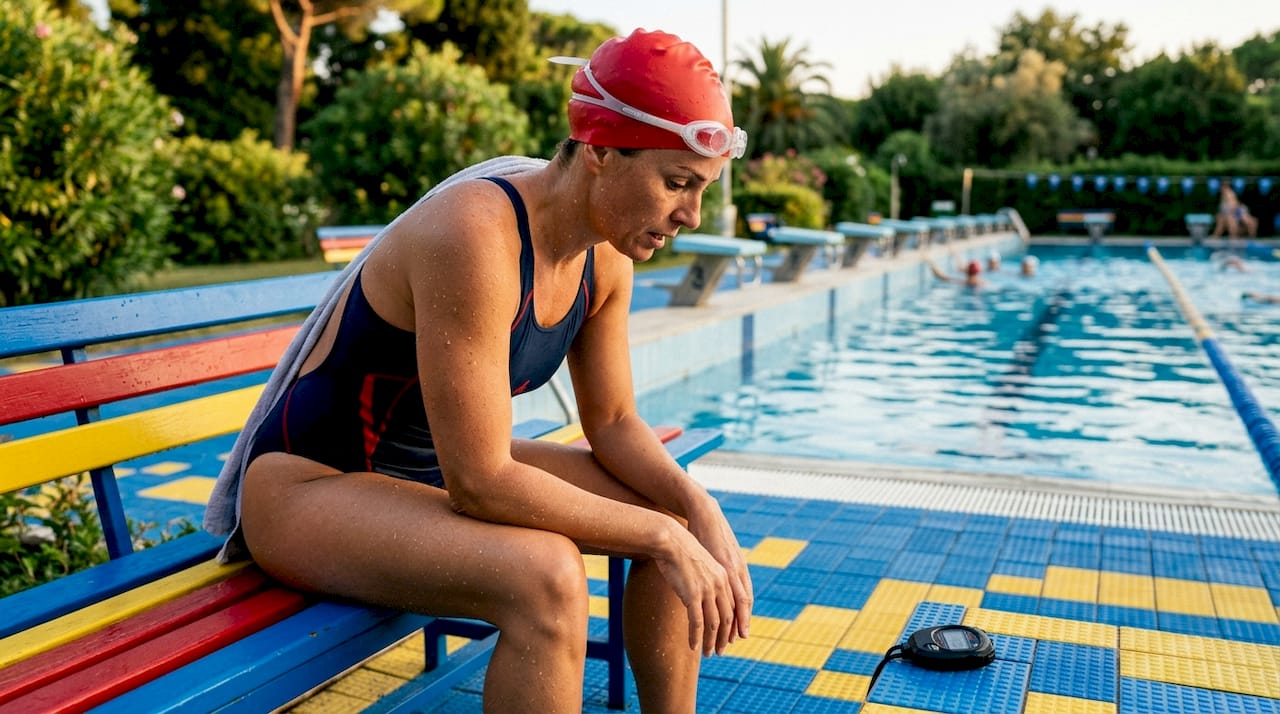
As your fitness improves, you adjust. Drop your rest period by five seconds or add two more repeats to the set. The goal is progressive overload without adding more total yards to your week.
Pro Tip: Run your CSS time trials on a day when you are fully rested. Fatigue during the trial skews your pace target and makes every subsequent interval set less effective.
2. Using SWOLF score to measure swimming efficiency
SWOLF combines time and stroke count per pool length into a single number that objectively measures how efficiently you move through water. You count your strokes for one length, add that number to the seconds it took to swim the length, and that total is your SWOLF score. Lower is better.
Elite swimmers score between 25 and 30. Recreational swimmers typically land between 45 and 55. A drop of 2–5 points signals a real improvement in economy and less wasted energy per stroke. That kind of gain translates directly to faster times without any extra effort.
The drills that lower SWOLF fastest are the high-elbow catch and a streamlined body position. Small technical adjustments in the catch phase alone can cut 5–10 seconds per 100m without swimming harder. Focus on one adjustment per session rather than trying to fix everything at once.
Tracking a single efficiency metric consistently over 4–8 weeks yields better progress insights than jumping between multiple measurements. Pick SWOLF as your primary number and record it at the same point in every session, such as after your warm-up set.
Pro Tip: If your SWOLF score stays flat despite more effort, your stroke length is the problem. If your score improves but your pace does not, shift focus to increasing stroke rate while holding the same mechanics.
3. Top quick swim drills for busy swimmers
Focused drill work for 15 minutes per session, three times per week, produces fast technique gains when you target specific faults. The key is choosing one or two drills per session and executing them with full attention, not cycling through a long list carelessly.
The three drills that deliver the most return for limited time are:
Catch-up freestyle: One arm stays extended until the other completes its pull. This forces a longer stroke and trains body rotation.
Fingertip drag: Your fingertips skim the water surface during recovery. This corrects a wide, swinging arm path and builds a high-elbow recovery habit.
Sculling: You move your hands in a figure-eight pattern at the front of your stroke. This develops feel for the water and strengthens the catch position.
The technique sandwich session format places drill work before and after your main high-intensity set. You practice form when you are fresh, then you hold that form under fatigue after the hard set. That combination transfers technique into race conditions faster than drills alone.
A practical session structure for a 45-minute pool visit looks like this:
Warm-up: 200m easy freestyle
Drill block: 4 x 50m catch-up freestyle with 20 seconds rest
Main set: 8 x 75m at CSS pace with 15 seconds rest
Drill block: 4 x 50m fingertip drag with 20 seconds rest
Cool-down: 100m easy backstroke
This format fits a short swim workout routine into a realistic family schedule without sacrificing quality.
4. Strategies for structuring sessions to maximize gains without more laps
Three purposeful weekly sessions outperform five unfocused ones in measurable swim improvement. Each session needs a single defined goal: aerobic base, threshold pace, or speed. Mixing all three goals into one session dilutes the training signal your body receives.
Here is how to assign purpose to each session:
Session 1 (aerobic base): Long, easy intervals at 70–75% effort. Build your engine without stressing your technique.
Session 2 (threshold pace): CSS intervals with short rest. This is where speed and endurance meet.
Session 3 (speed): Short, fast repeats at 90–95% effort with full recovery between each. These train your neuromuscular system to fire faster.
Stroke degradation signals the need for shorter intervals. When your stroke count per length rises toward the end of a set, your form is breaking down. Dropping from 100m repeats to 50m repeats lets you maintain perfect mechanics and builds better long-term speed than grinding through sloppy longer sets.
Busy parents can fit swim lessons into a tight schedule by treating each session as non-negotiable but capping it at 45 minutes. Quality within that window beats a two-hour unfocused practice every week.
Pro Tip: Count your strokes on the final repeat of every set. If the count is more than two strokes higher than your first repeat, shorten the interval distance at your next session. Your body is telling you the set is too long for your current fitness.
5. Applying these methods to young swimmers and children
Children benefit from the same core principles, but the application changes. Young swimmers need water confidence before any structured interval work begins. The progression moves from breathing control and body position to stroke-specific drills, then to simple timed repeats once mechanics are solid.
Private lessons accelerate this progression because an instructor can identify and correct a single fault in real time rather than waiting for a group session to cycle back around. For children, one targeted correction per session produces faster gains than a long list of feedback.
Tracking progress for young swimmers works best with simple metrics. Stroke count per length is the most accessible measurement for children and parents. A child who swims 25m in 20 strokes and later does it in 16 strokes has made a concrete, visible gain. That kind of feedback builds motivation alongside skill.
Monitoring improvement consistently over weeks gives parents a clear picture of whether the current approach is working. If stroke count stays flat for three consecutive sessions, the drill focus needs to change.
Key takeaways
Structured, purposeful sessions built around CSS intervals, SWOLF tracking, and the technique sandwich format produce faster swim improvement than high-volume unfocused training, even when total pool time is limited.
Point | Details |
CSS drives interval training | Calculate CSS from 400m and 200m time trials; train at that pace for aerobic threshold gains. |
SWOLF tracks real efficiency | A drop of 2–5 SWOLF points signals genuine improvement in stroke economy and speed. |
Three sessions beat five | Three goal-specific weekly sessions outperform five unfocused ones for measurable progress. |
Technique sandwich works | Placing drills before and after hard sets transfers form into fatigue conditions faster. |
Shorten intervals to protect form | Dropping from 100m to 50m repeats preserves stroke mechanics and builds better long-term speed. |
What I have learned coaching swimmers with limited time
The single biggest mistake I see busy swimmers make is treating every session as a chance to get tired. Fatigue is not the goal. Adaptation is. When you swim hard with poor mechanics, you train your body to be efficiently bad, and that pattern is genuinely difficult to undo.
The metrics matter more than most parents realize. A child who drops two SWOLF points in a month has made a real physiological change. That number tells you something a stopwatch alone cannot: the swimmer is moving through water with less wasted energy. I have watched that kind of feedback completely change a child’s attitude toward practice because progress becomes visible and concrete.
Enhancing swimming abilities quickly requires consistency above all else. Three focused sessions per week, held consistently for eight weeks, will outperform sporadic hard training every time. The families who see the fastest results are not the ones who push hardest. They are the ones who show up regularly with a clear plan.
The technique sandwich format changed how I think about session design. Drilling before a hard set makes sense. Drilling after one is where the real magic happens. Holding good form when you are tired is the skill that separates swimmers who plateau from those who keep improving.
— SUPERHERO
Superheroswimacademy: structured swim training for busy families
Superheroswimacademy applies these exact principles in every lesson, from water confidence for toddlers to stroke refinement for older children. Each instructor follows a structured curriculum built around technique-first progressions, clear session goals, and regular progress updates for parents.
Lessons run across Palm Beach and Broward counties with scheduling designed around family life, not the other way around. Every instructor holds CPR and First Aid certification and trains in Superheroswimacademy’s proven survival swim curriculum. If you want your child to build real water skills without wasting a single session, enroll at Superheroswimacademy and see why over 2,500 families have trusted this program to deliver results.
FAQ
What is Critical Swim Speed and how do I calculate it?
Critical Swim Speed is your sustainable aerobic threshold pace per 100m. Calculate it by subtracting your 200m time trial result from your 400m result, then dividing by 2.
How many swim sessions per week produce the best results?
Three purposeful sessions per week outperform higher-volume unfocused training. Each session should target a single goal: aerobic base, threshold pace, or speed.
What is a good SWOLF score for a beginner?
Recreational swimmers typically score between 45 and 55. A drop of 2–5 points over four to eight weeks signals real improvement in swimming economy.
How long should a time-efficient swim session last?
A well-structured session of 45 minutes, including warm-up, drill blocks, and a main interval set, delivers full training benefit without requiring extra pool time.
At what age can children start structured swim training?
Children can begin structured technique work as soon as they have basic water confidence and breath control. Superheroswimacademy starts this progression with infants and toddlers using age-appropriate survival swim methods.
Recommended
Comments