
How to Prepare Your Child for Their First Swim Lesson
- superheroswim
- Jun 5
- 8 min read

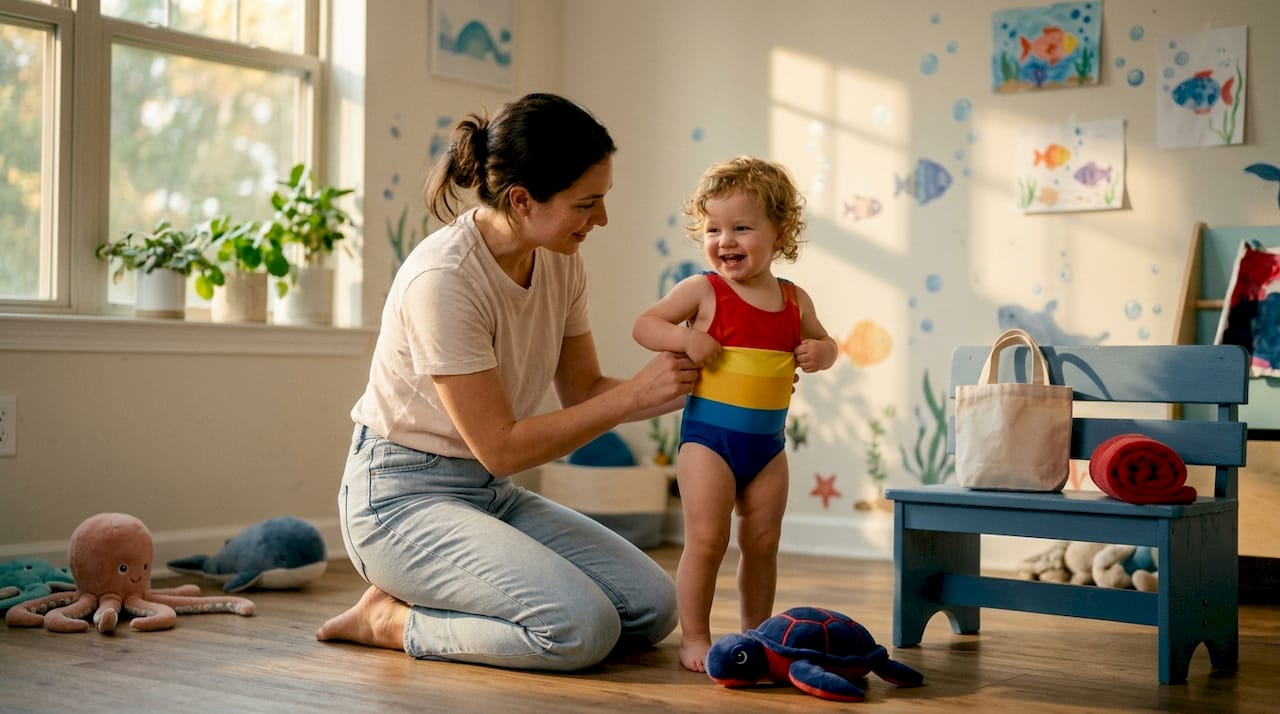
Preparing your child for their first swim lesson means assessing their readiness, gathering the right gear, building positive water associations, and setting clear expectations before they ever touch the pool. The American Academy of Pediatrics (AAP) recommends that parents consult a pediatrician when assessing readiness, since factors like emotional maturity and physical ability vary widely between children. Done right, this preparation does more than reduce first-day nerves. It lays the groundwork for a lifetime of water confidence and safety.
How to prepare your child for their first swim lesson: readiness first
The right starting point for child swim lesson preparation is an honest look at where your child stands developmentally. Swim lessons can begin for many children starting at age 1, but age alone is not the deciding factor. Emotional maturity, physical coordination, and genuine curiosity about water all play equal roles.
Signs your child may be ready include:
Comfort during bath time, including splashing, pouring water, and tolerating water on their face
Willingness to be held in water without excessive crying or clinging
Basic physical coordination, such as kicking legs and moving arms independently
Curiosity about pools or water play rather than fear or avoidance
Ability to follow simple one-step instructions from an adult
If your child shows hesitation around water, that is not a reason to delay. It is a reason to choose the right program. Lessons including parents are ideal for younger or less confident children, since a familiar face in the water dramatically reduces anxiety. For infants and toddlers especially, parent-child classes build readiness before transitioning to independent instruction. You can read more about early swim lesson readiness to understand what developmental milestones matter most.
Pro Tip: If you are unsure whether your child is ready, schedule a brief pediatrician visit before enrolling. A five-minute conversation can save weeks of stressful lessons.
What to bring to swim lessons: the essential gear checklist
The right gear removes friction on lesson day and keeps your child comfortable, hygienic, and focused. Recommended gear includes snug-fitting swimsuits, swim diapers, towels, and goggles. For young swimmers, Coast Guard-certified life jackets provide far better safety than floaties, which can flip a child face-down in the water.
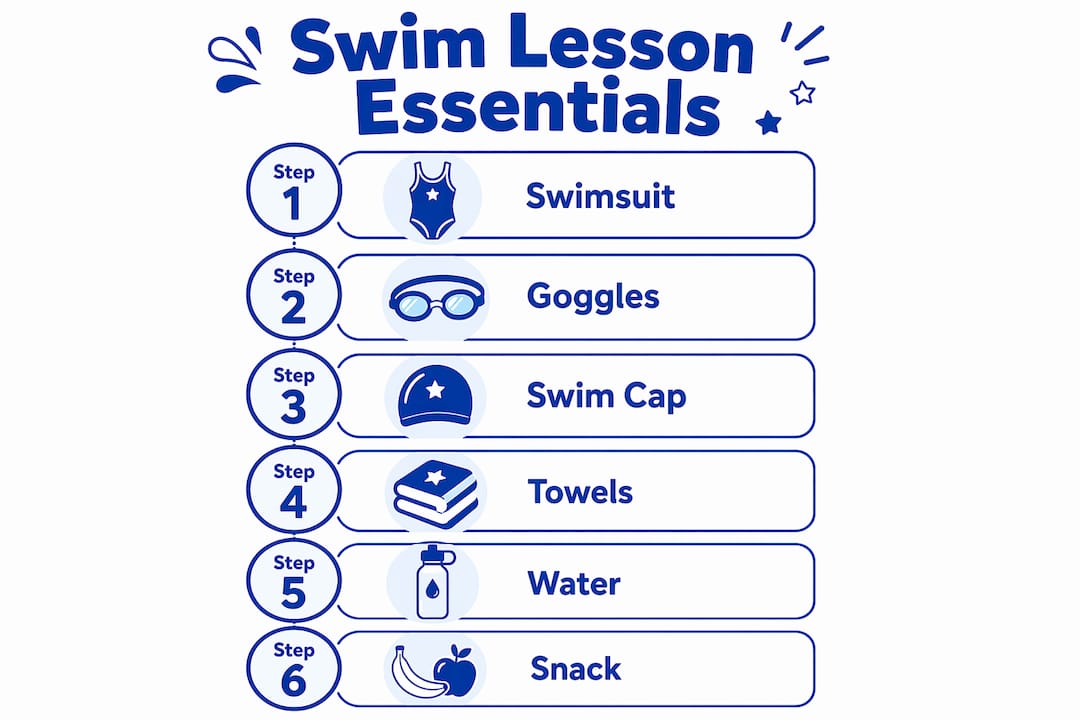
Here is a complete swimming lesson checklist:
Item | Why it matters |
Snug-fitting swimsuit | Loose suits create drag and discomfort during movement |
Swim diaper (for toddlers) | Required at most pools to maintain water hygiene |
Towel (bring two) | One for poolside warmth, one for after the shower |
Goggles | Reduces eye irritation and builds underwater confidence |
Swim cap | Protects hair and reduces chlorine exposure |
Nutritious snack and water bottle | Replenishes energy after physical activity |
Change of clothes | Prevents post-lesson chill and keeps the car dry |
Wet bag | Keeps soaked gear contained and odor-free |
Water temperature matters more than most parents realize. Pools heated between 87 and 94°F are recommended for young children to prevent hypothermia and keep them relaxed during lessons. If your child’s lesson pool runs cold, a rash guard or wetsuit top adds warmth without restricting movement.
Pack the swim bag the night before the lesson. Last-minute scrambling raises parental stress, and children pick up on that energy immediately. A calm, organized parent produces a calmer child at the pool.
Pro Tip: Let your child pick out their own goggles or swim cap at the store. Ownership of their gear builds genuine excitement about wearing it.
How to emotionally prepare your child before the first lesson
Building positive water associations before lesson day is one of the most underrated first swim lesson tips, and it costs nothing. Playful pre-lesson routines like bath time water games help build comfort and confidence over days or weeks before the first class. The goal is to make water feel familiar, not foreign.
Here is a practical sequence to follow in the week before lessons start:
Turn bath time into water play. Introduce cups, small toys, and gentle face splashing. Praise every moment of comfort around water without forcing anything.
Visit the pool beforehand. Walk your child through the facility without getting in. Let them see the pool, hear the sounds, and smell the chlorine in a low-pressure setting.
Roleplay the lesson at home. Sit on the floor and pretend to kick, blow bubbles, and float. Use simple, positive language: “Your teacher will hold you while you kick. It’s going to be fun.”
Read books or watch short videos about swimming. Stories featuring characters learning to swim normalize the experience and give children language for what they are about to do.
Let them wear their swim gear around the house. Goggles on the couch sounds silly, but it removes the novelty factor so gear does not become a distraction at the pool.
Calm and enthusiastic parental attitudes directly influence children’s positive water experiences. Your tone on the drive to the pool sets the emotional temperature for the entire lesson. Avoid phrases like “Don’t be scared” or “It won’t hurt.” Instead, say “You are going to love this” and mean it.
Pro Tip: Avoid scheduling the first lesson when your child is tired or hungry. A well-rested, fed child is a completely different student than one running on empty.
What to expect during the first swim lesson
A typical first lesson at a quality program follows a predictable structure: a brief warm-up or greeting, water acclimation, basic skill introduction such as blowing bubbles or back floating, and a cool-down. Understanding this flow helps you set realistic expectations and respond supportively when your child hits a challenge.
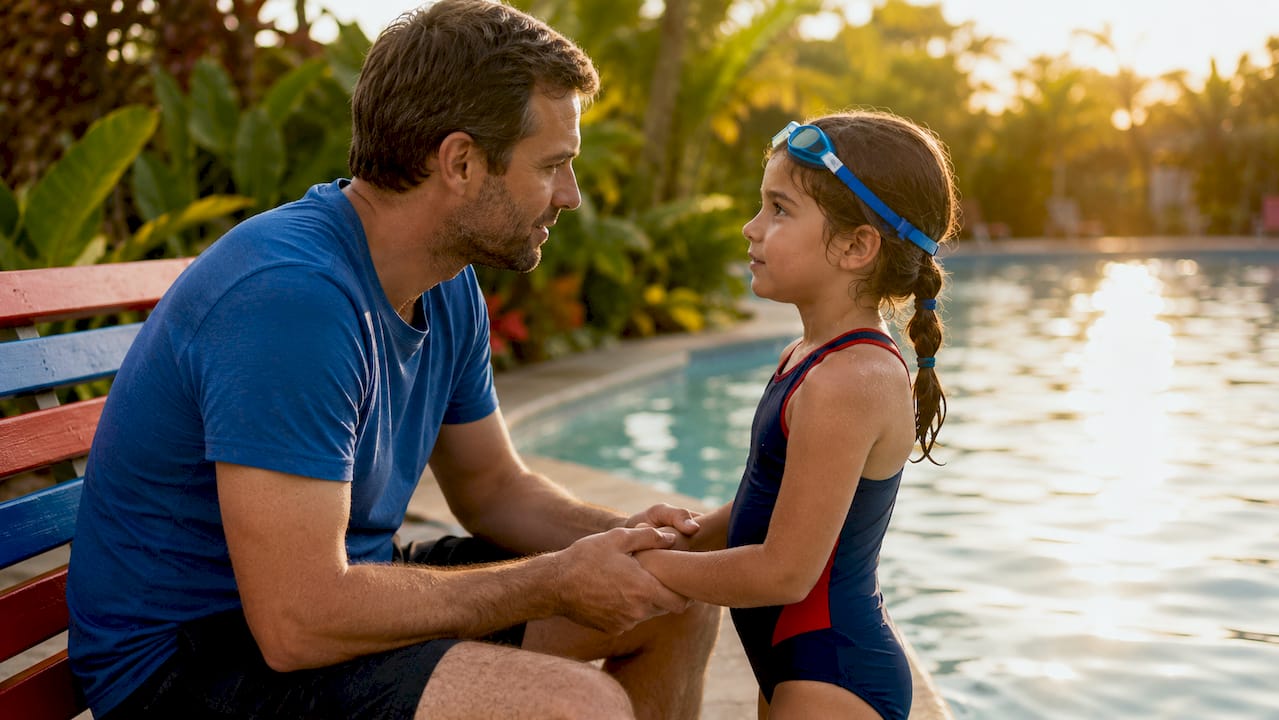
The most critical safety factor during any lesson is supervision quality. The AAP defines “touch supervision” as being in the water within arm’s reach of infants and toddlers at all times. This applies to parents in parent-child classes and to instructors in independent lessons. If an instructor is managing more than a few children at once and cannot maintain this proximity, that is a red flag worth addressing.
What to watch for as a parent on the sidelines:
Active swim time vs. waiting time. Quality programs prioritize sufficient active swim time rather than long inactive periods where children stand in line.
Instructor attention. Each child should receive direct feedback and encouragement, not just group instruction.
Your child’s body language. Hesitation is normal. Sustained distress that the instructor does not address is not.
Your own behavior. Put the phone down. Distraction-free supervision is critical even when lifeguards are present. Your focused attention is part of the safety plan.
Programs that allow parents to watch help you judge whether the program is the right fit based on activity level and instructor attention. If you cannot observe, ask for a trial class before committing to a full session. Guidance on choosing effective swim lessons can help you evaluate programs before you enroll.
Post-lesson habits that build lasting water confidence
The lesson ends, but the learning does not. What happens in the hours and days after the first class shapes whether your child walks back into the pool with confidence or dread.
Positive reinforcement works best when it is specific. “You blew bubbles all by yourself” lands harder than “Good job.” Specific praise tells your child exactly what behavior to repeat. Keep the conversation about swimming light and forward-looking. Ask “What was your favorite part?” rather than “Were you scared?”
At home, continue building water familiarity through bath play and backyard water activities. Children who practice water movement between lessons progress faster and arrive at each class with less anxiety. The goal is to make water a normal, joyful part of their week.
Children should learn basic water competency skills including surfacing after submersion, propelling themselves 25 yards, and exiting the water independently. These are not skills learned in a single lesson. Ongoing enrollment until these benchmarks are met is the standard recommendation, not a sign that your child is behind.
“Swim lessons are one layer of drowning prevention. Multiple safety layers including supervision, fencing, and pool alarms are needed.” — HealthyChildren.org
Reinforce water safety habits at home by teaching your child to always ask permission before entering any body of water and to never swim alone. These rules, practiced consistently, become instinct.
Key takeaways
Effective preparation for a child’s first swim lesson combines readiness assessment, proper gear, emotional familiarization, and active parental supervision to produce a safe and confident water experience.
Point | Details |
Assess readiness before enrolling | Consider emotional maturity and water comfort, not just age, before starting lessons. |
Pack gear the night before | A prepared bag reduces parental stress and keeps your child calm on lesson day. |
Build water familiarity at home | Bath time water play and pool visits before the first lesson reduce first-day anxiety significantly. |
Stay focused during lessons | Distraction-free supervision from parents is part of the safety plan, even with an instructor present. |
Continue lessons until competency is reached | Basic water competency skills like surfacing and self-exit require ongoing enrollment, not a single session. |
What I’ve learned from watching 2,500+ children take their first swim lesson
Parents almost always underestimate how much their own energy shapes the lesson. I have watched children walk into the pool relaxed because their parent was relaxed, and I have watched children freeze at the water’s edge because their parent’s anxiety arrived five minutes before they did. The preparation that matters most happens in the car on the way there.
The other thing I see consistently: parents who treat swim lessons as a one-time event rather than a process. Water competency is a skill built over weeks and months, not a checkbox. The families who see the fastest progress are the ones who reinforce what was learned between sessions, keep the energy positive at home, and stay enrolled through the inevitable setbacks.
One more thing worth saying directly: swim lessons do not make a child drown-proof. They are one critical layer of protection. In-home water safety practices, pool fencing, and constant adult supervision are the other layers. No program, regardless of quality, replaces a present and focused parent.
Choose a program that prioritizes water survival skills, maintains small instructor-to-child ratios, and welcomes parental observation. If a program discourages you from watching, ask why. Transparency is a feature, not a courtesy.
— SUPERHERO
Start your child’s swim journey with Superheroswimacademy
Superheroswimacademy specializes in survival swim lessons for infants, toddlers, and young children across Palm Beach and Broward counties. Every instructor holds CPR and First Aid certification and is trained in the academy’s proven survival swim curriculum. Parents receive regular progress updates and clear skill goals so you always know exactly where your child stands. With over 2,500 children taught, the results speak for themselves: safer, more confident swimmers in a shorter time than most parents expect. Visit Superhero Swim Academy to explore beginner classes and find a location near you to get started.
FAQ
When can my child start swim lessons?
The AAP notes that swim lessons can begin for many children starting at age 1, though readiness depends on emotional maturity and physical ability rather than age alone. Consult your pediatrician if you are unsure whether your child is ready.
What should I bring to my child’s first swim lesson?
Pack a snug-fitting swimsuit, swim diaper if needed, two towels, goggles, a swim cap, a water bottle, a nutritious snack, and a change of clothes. A wet bag keeps soaked gear contained and makes the post-lesson cleanup much easier.
How do I reduce my child’s anxiety before swim lessons?
Playful pre-lesson routines like bath time water games and a pre-visit to the pool help build familiarity and reduce fear. Your own calm, enthusiastic attitude is the single most effective anxiety reducer available.
What is touch supervision during swim lessons?
Touch supervision means an adult stays in the water within arm’s reach of infants and toddlers at all times during lessons. This allows an immediate response if a child slips under the water unexpectedly.
How long does it take for a child to learn to swim?
Basic water competency, defined as surfacing, propelling 25 yards, and exiting the water independently, requires ongoing lessons over weeks or months. Progress varies by child, but consistent enrollment and at-home water play between sessions produce the fastest results.
Recommended
Comments