
How to Improve Your Child's Swim Technique at Home
- superheroswim
- 1 day ago
- 7 min read

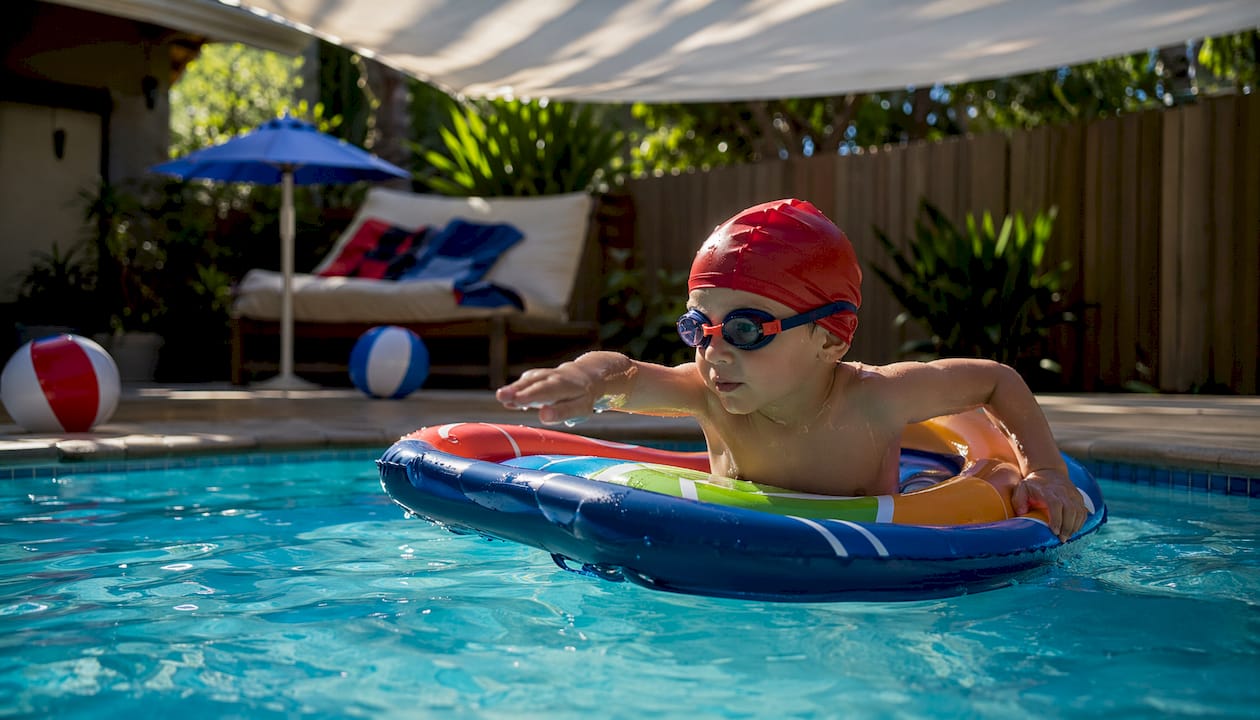
You don’t need a pool every day to build real swimming skills. The most effective home swim training for kids combines short, focused water sessions with dry land exercises that train the same muscles and movement patterns your child uses in the water. Core skills like arm pulls, front glide with kicks, roll overs, and breath control can all be reinforced at home, and the progress adds up faster than most parents expect.
Here’s what works, broken down by skill:
Arm pulls: Practice the scooping motion in a bathtub or on land, keeping fingers together and pulling through to the hip.
Front glide with kicks: In shallow water, have your child push off the wall, stretch arms forward, and flutter kick from the hips with pointed toes.
Roll over technique: Teach your child to rotate their body to one side while kicking, lifting their mouth to breathe, then returning face down.
Breath control: Blowing bubbles in the bathtub, counting exhales, and practicing rhythmic breathing on land all build the muscle memory needed in the water.
Mirrors and toys: A mirror at pool level gives your child instant visual feedback. Floating toys give them a target to kick toward, which naturally improves body position.
Supervision: Stay within arm’s reach during any water practice, even in a bathtub. Gradual progression matters more than speed.
Progress tracking: Keep a simple checklist of skills. Celebrate each milestone, no matter how small, to keep motivation high.
How to teach swimming at home: stroke-by-stroke technique exercises
Swimming drills improve children’s motor skills, confidence, and performance, strengthening physical and mental abilities together. The key is breaking each stroke into pieces your child can actually practice at home.
1. Arm pull technique
Have your child stand in front of a mirror with arms at their sides. Ask them to reach one arm forward, scoop down and back as if pulling through water, and finish with the hand at their hip. Fingers stay together. The motion should feel smooth, not choppy. Practice both arms alternating, then try it lying face down on a bed or exercise mat to simulate the freestyle position.
2. Front glide with flutter kicks
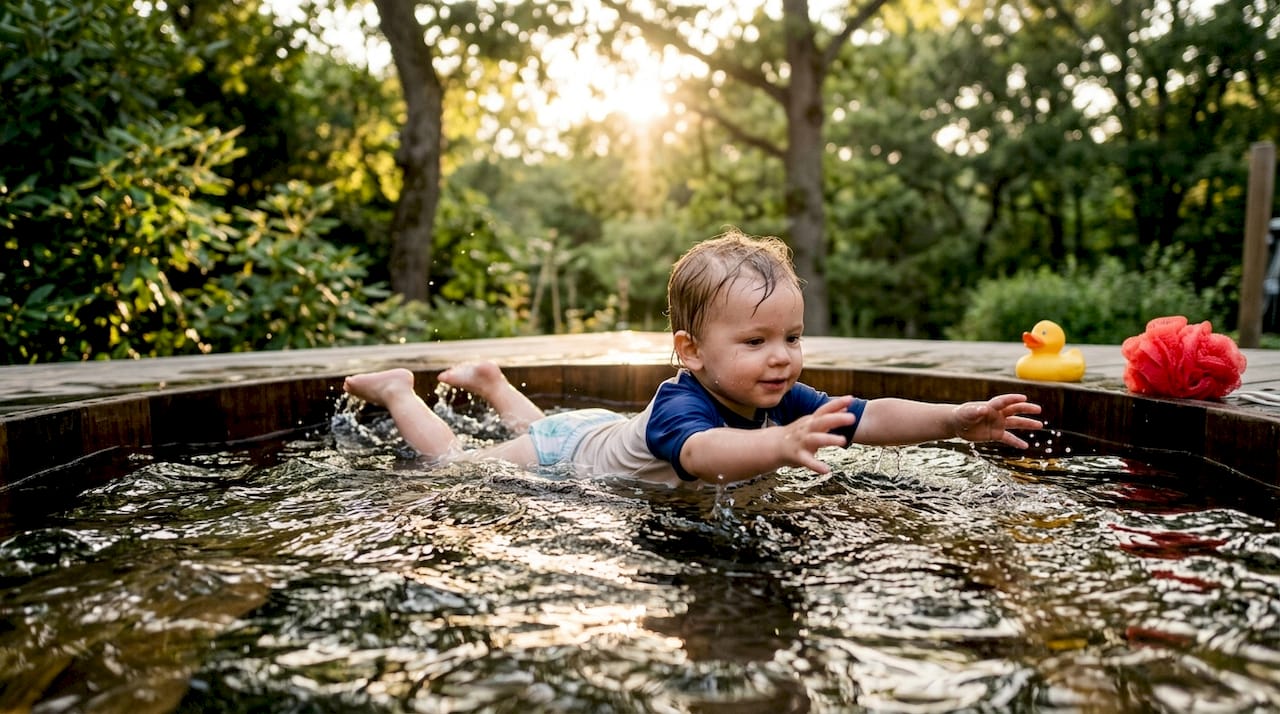
In a bathtub or shallow pool, your child pushes off the wall with arms stretched forward, face in the water, and kicks from the hips with feet just below the surface. Toes should be pointed, not flexed. Bent knees kill propulsion. If your child’s knees keep bending, place your hand lightly under their thighs as a reminder to keep legs long.
3. Roll over technique for breathing
This one takes patience. Start on land: have your child lie face down, then rotate their head and one shoulder to the side as if taking a breath, then return face down. Once that feels natural, try it in the water during a front glide. The rotation should come from the hips and core, not just the neck.
4. Breath control exercises
Bathtub drills effectively develop breath control, floating skills, and basic stroke motions in young swimmers. Have your child blow bubbles with their face in the water, counting to three before lifting to inhale. Progress to a rhythmic pattern: blow out for three counts, turn to breathe in for one count, repeat.
5. Watching and imitating pro swimmers
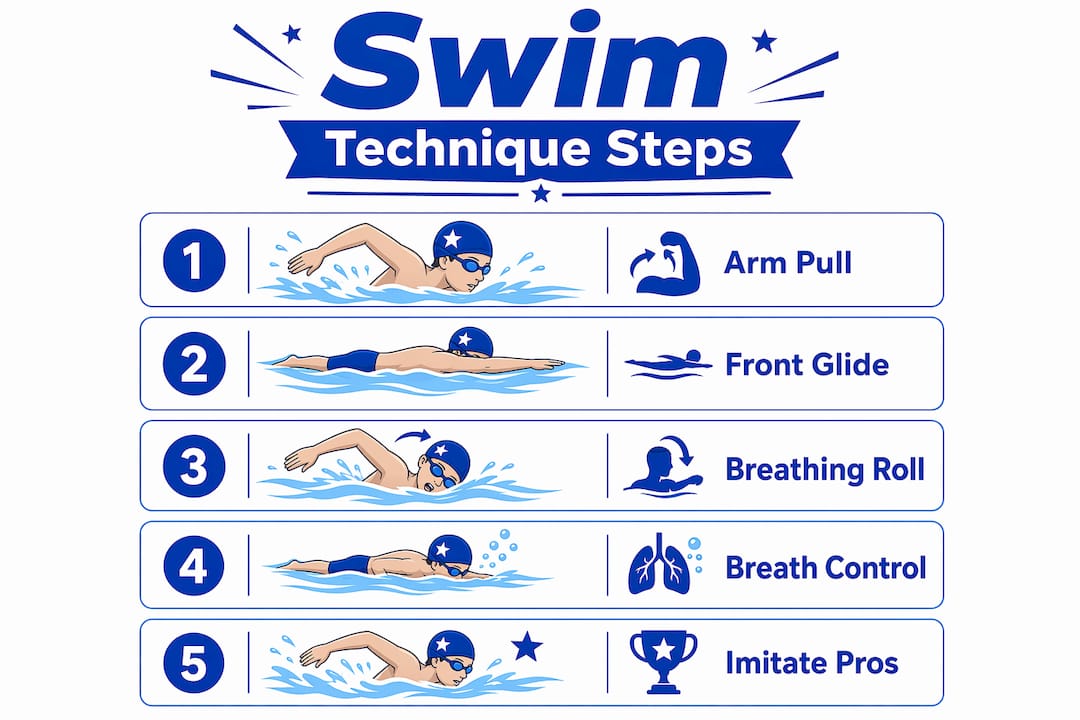
Pull up slow-motion freestyle videos on YouTube and watch them together. Visual learning through observing professional swimmers is an effective support tool for children learning complex movements. Pause on the arm entry, the hip rotation, the kick. Then have your child try to copy what they saw on land before getting in the water.
6. Mirror and slow-motion practice
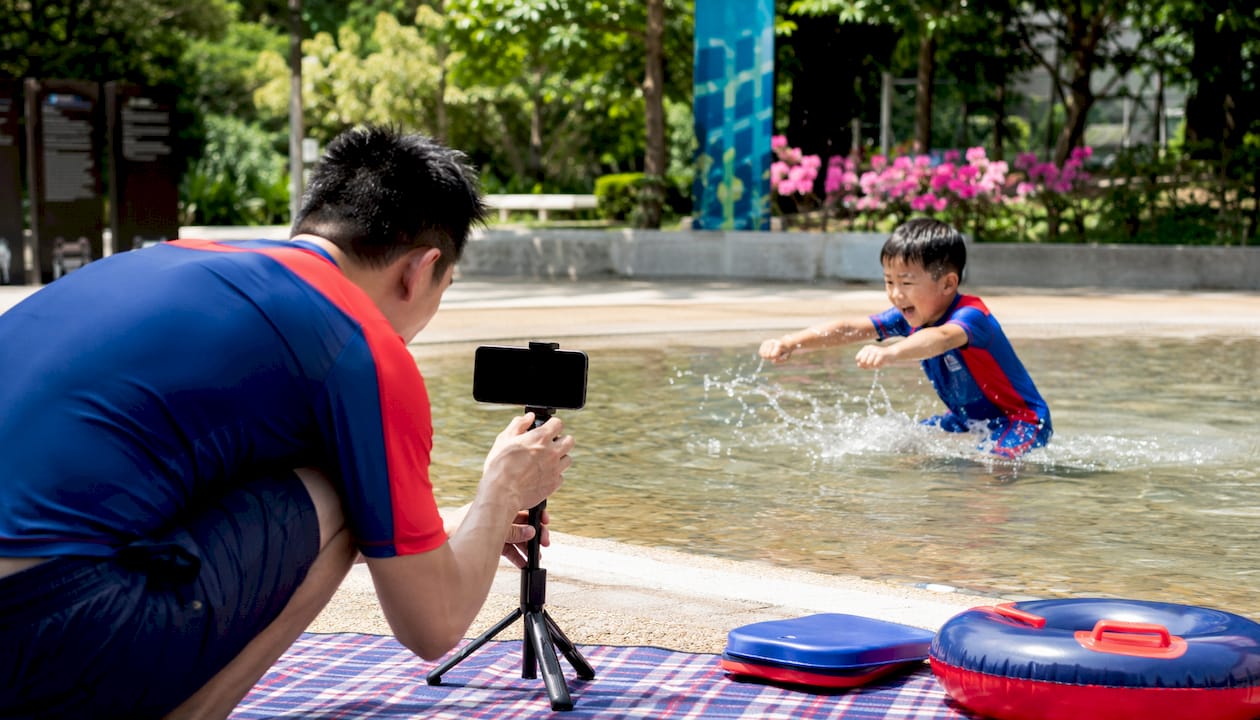
Set up a phone to record your child’s arm pulls or kicks from the side. Watching themselves in slow motion gives children feedback that verbal correction rarely achieves. A mirror at water level works the same way during pool practice.
Pro Tip: Keep each drill to 3–5 repetitions before switching. Young children lose focus and form quickly. Short, sharp repetitions beat long, sloppy ones every time.
Skill | At-home method | What to watch for |
Arm pull | Mirror or mat practice | Fingers together, full pull to hip |
Flutter kick | Bathtub or pool wall push-off | Kicks from hips, pointed toes |
Roll over breathing | Land rotation drill, then water | Hip-driven rotation, not neck only |
Breath control | Bubble blowing, rhythmic counting | Exhale fully before inhaling |
Stroke imitation | Pro swimmer videos | Entry angle, hip rotation, kick depth |
Dry land exercises that build real swim coordination
Dry land swim drills significantly improve foundational motor skills relevant for swimming progression. The best part: you need almost no equipment.
Windmill arms: Your child stands with feet shoulder-width apart and rotates one arm forward in a full circle, then the other, alternating like freestyle. This builds shoulder mobility and trains the catch-and-pull rhythm. Start slow, then speed up.
Straight leg kicks: Your child lies face down on a mat or firm surface and kicks from the hips with legs straight and toes pointed. Place a small stuffed animal on their feet. If the toy falls off, their knees bent too much. This visual cue corrects form faster than any verbal instruction.
Breathing rhythm drills: Sitting upright, your child breathes in for one count and out for three, matching the exhale-to-inhale ratio used in freestyle. Repeat for 10 cycles. Rhythmic breathing on land builds muscle memory that carries directly into the water.
Dog paddle motions: On hands and knees, your child mimics the alternating arm and leg movements of a dog paddle. This trains cross-body coordination and core stability at the same time.
Safety on land: Keep sessions to 5–10 minutes. Stop if your child complains of shoulder or knee pain. Dry land drills should feel like play, not a workout.
Pro Tip: Do windmill arms in front of a mirror so your child can see whether their arm is entering at the right angle. A wide, splashy entry on land usually means the same problem in the water.
These exercises ease the transition into water-based practice because your child’s body already knows the movement pattern before they get wet.
How to build a swim practice routine your child will actually stick to
Consistency beats intensity for young swimmers. A structured home routine with positive reinforcement and milestone celebrations significantly boosts a child’s confidence and motivation. Sessions of 5–10 minutes work better than long, unfocused ones for children under eight.
Keep sessions short: 5–10 minutes for toddlers and preschoolers, up to 15 minutes for school-age kids.
Balance the week: two dry land sessions, one or two water sessions, and at least two full rest days.
Add fun: play “copy the fish” where your child imitates a stroke you demonstrate, or race a floating toy across the tub.
Increase difficulty gradually: once a skill looks clean, add one challenge, like extending the glide distance or adding a breath during the kick.
Track progress: use a simple chart with stickers or checkboxes. Seeing a row of completed skills is motivating for kids and useful for you.
Celebrate small wins: finishing five clean flutter kicks without bent knees is worth a high five. These moments build the confidence that carries into formal lessons.
Day | Activity | Duration |
Monday | Windmill arms + breathing drills | 5–10 minutes |
Wednesday | Bathtub kick practice + bubble blowing | 10 minutes |
Friday | Stroke video + land imitation | 5–10 minutes |
Weekend | Pool or bathtub full drill session | 10–15 minutes |
Tracking attendance and practice habits over time also helps you spot which skills need more focus. Tools that track swim coaching attendance show how consistent practice correlates with faster skill acquisition, a pattern that holds at home too.
Safety guidelines and when to get a professional swim instructor involved
At-home practice reinforces lessons, but it does not replace them. Formal swim instruction is critical when parental swim ability is insufficient to keep a child safe, and for teaching complex skills that require trained eyes and water rescue capability.
Supervision: Stay within arm’s reach during every water session, including the bathtub. Never leave a child unattended near water, even for a moment.
Flotation devices: Use them as training tools, not substitutes for supervision. Misuse of armbands can hinder true buoyancy development and create poor head positioning habits. Gradually reduce reliance as skills improve.
Age-appropriate adaptations: Toddlers focus on water comfort and floating. Preschoolers add kicks and arm pulls. School-age children can work on breathing rhythm and stroke coordination.
Emergency preparedness: Every parent supervising water practice should hold a current CPR certification. The American Red Cross offers in-person and online CPR courses across the United States.
Know when to call a professional: If your child shows fear of putting their face in the water, struggles with breath control after consistent practice, or is ready to learn flip turns and competitive strokes, a certified instructor is the right next step.
“At-home practice can meaningfully reinforce swim lessons, but it should always complement, not replace, professional instruction for complex skills. A qualified instructor brings water rescue capability, trained observation, and a structured curriculum that no home session can fully replicate. Understanding why qualified instructors matter is the first step toward making smart decisions about your child’s safety in the water.”
Superheroswimacademy has taught over 2,500 children in Palm Beach and Broward counties, with every instructor trained in CPR, First Aid, and a proven survival swim curriculum. If your child is ready for the next level, or if you want professional eyes on their technique, explore swim lessons designed specifically for infants, toddlers, and young children. Superheroswimacademy also offers online swim courses that give parents structured guidance and at-home exercises to use between pool sessions.
Key Takeaways
Short, consistent home sessions focused on specific skills build swim technique faster than infrequent long practices.
Point | Details |
Core skills to practice | Arm pulls, flutter kicks, roll overs, and breath control are the four foundations to reinforce at home. |
Dry land drills work | Windmill arms, straight leg kicks, and breathing rhythm drills build muscle memory before your child enters the water. |
Keep sessions short | 5–10 minutes per session keeps young children focused and prevents sloppy form from fatigue. |
Flotation aids need limits | Gradual removal of armbands and floats develops true buoyancy and correct body positioning. |
Professional lessons are irreplaceable | At-home practice supplements formal instruction but cannot replace a certified instructor for complex or safety-critical skills. |
Recommended
Comments