
Swim Lesson Progress Milestones for Toddlers
- superheroswim
- 5 hours ago
- 6 min read

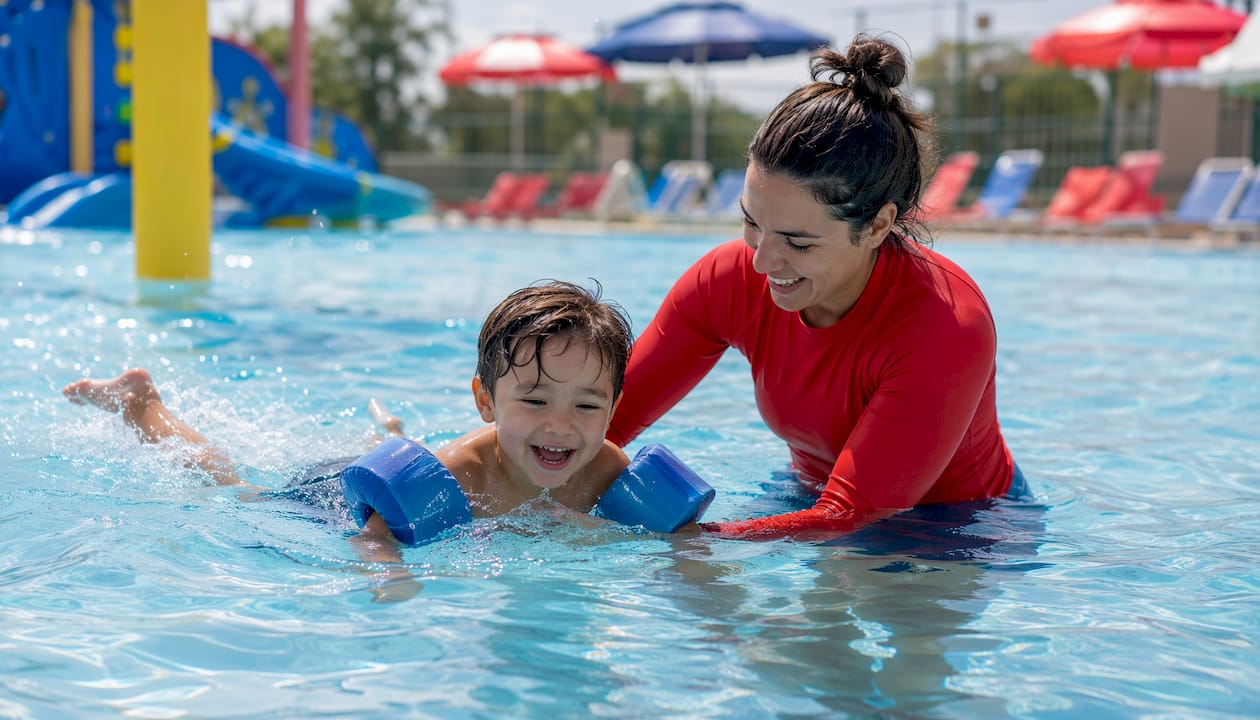
Most toddlers move through swim lesson progress milestones in a predictable sequence: water comfort first, then breath control, then assisted floating, then coordinated movement, and finally early safety skills like returning to the wall. Formal swim lessons reduce drowning risk in children aged 1–4 by 88%, according to the American Academy of Pediatrics. That single statistic is why understanding these milestones matters so much, and why rushing past them is counterproductive.
The foundational milestones parents should watch for include:
Water comfort: Entering the pool without distress, tolerating splashing, and relaxing in an instructor’s arms
Breath control: Blowing bubbles, closing the mouth before water contact, and brief face submersion
Assisted floating: Staying relaxed on the back or front with support, without stiffening or panicking
Coordinated movement: Kicking for propulsion, basic arm reaches, and short guided distances
Safety habits: Holding the pool edge independently, returning to the wall, and waiting before entry
Advancement depends on confidence and the ability to follow simple instructions, not on age alone. Most new students master foundational skills like swim-float-swim within a couple of months of consistent lessons. That timeline assumes regular attendance; long gaps tend to reset progress.
Pro Tip: Focus on your toddler’s emotional comfort before worrying about skill speed. A child who feels safe in the water learns faster and retains skills longer than one who is pushed before they are ready.
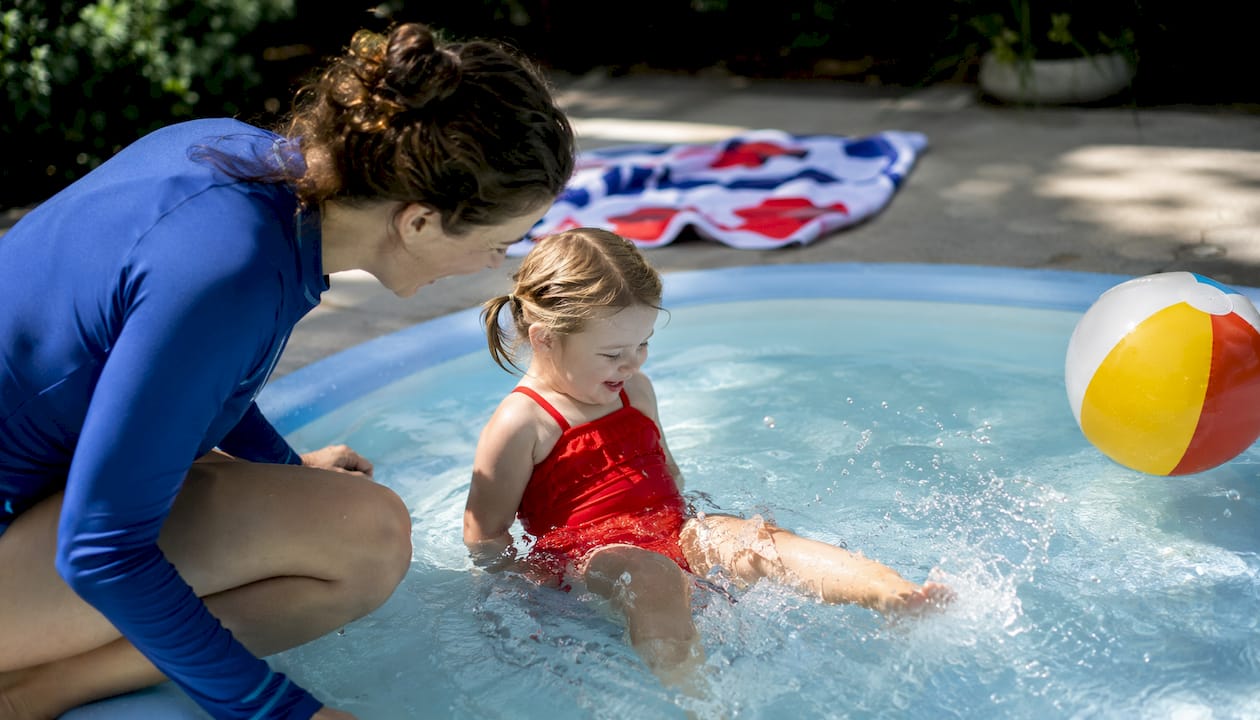
What do swim lesson progress milestones for toddlers look like by stage?
Toddler swimming development does not follow a strict calendar, but there are recognizable phases tied loosely to age and readiness. The table below maps typical milestones to developmental periods.
Age Range | Key Milestones |
12 months | Water comfort, tolerating face wetting, kicking with support, grasping the pool wall |
2–3 years | Blowing bubbles, brief self-submersion, assisted front and back floats, basic arm movements |
3 years | Independent floating, breath control, coordinated flutter kicks, forward momentum in water |
— | Swim-float-swim sequences, rolling from front to back, jumping in and returning to the wall |
Skills build on each other rather than appearing in isolation. A toddler who cannot yet blow bubbles consistently is not ready for independent submersion. A child who stiffens during back floating needs more trust-building before kicking drills make sense. Toddler swim milestones are best understood as signs of readiness, not deadlines.
Progress also varies widely. A bold 18-month-old may attempt submersion before a cautious 3-year-old does. Both can be developing well. What matters is whether the child is becoming calmer, more cooperative, and more willing in the water over time. Consistent lesson attendance is the single biggest driver of that trajectory.
What factors affect how quickly toddlers advance through swim levels?
Several factors shape the pace of toddler swim progression, and age is only one of them.
Temperament: Bold toddlers may try skills quickly but lack control. Cautious toddlers often progress more slowly at first, then become very consistent once trust is established.
Emotional readiness: A child who feels anxious in the pool will not absorb new skills, regardless of physical ability. Emotional comfort must come first.
Lesson frequency: Weekly lessons can work, but toddlers benefit most from regular, repeated exposure. Long breaks often mean rebuilding confidence before adding new skills.
Instructor assessment: Qualified instructors look beyond stroke mechanics. Cooperation and listening skills often define readiness to advance more than physical mastery does.
Developmental readiness: Personality and physical readiness often matter more than age alone in determining when a toddler is ready for the next phase.
Teaching environment: Warm, predictable, structured lessons produce better outcomes than high-pressure sessions. Toddlers read adult anxiety quickly.
Instructors trained in CPR, First Aid, and a structured survival swim curriculum are better positioned to assess real readiness, not just whether a child completed a checklist item on a given day. Qualified swim instructors use non-verbal cues, repeated practice, and individual observation to decide when a child is genuinely ready to advance. That kind of assessment protects toddlers from being pushed into skills they cannot yet apply safely.
Parent-instructor communication matters too. When parents share observations from home and instructors explain current goals clearly, progress tends to accelerate. Ask your child’s instructor what milestone they are working toward and what readiness signs they are watching for.
How are water confidence and swimming independence different?
These two terms get used interchangeably, but they describe different things at different stages of development.
Water confidence is about how your toddler feels in the pool:
They enter without distress and settle quickly
They tolerate small surprises like splashing without shutting down
They are willing to try something new, even if they hesitate first
They recover from a wobble or an unexpected dip without prolonged upset
Swimming independence builds on that foundation:
Your toddler initiates movement without being prompted
They begin linking skills together, such as moving forward, exhaling, then lifting to breathe
They reach for the wall on their own after entering the water
They start making simple, safer choices without constant physical guidance
Confidence is the foundation, and independence grows from there. A toddler who is not yet confident will not develop genuine independence, even if they can physically perform a skill when prompted. Real independence shows up when a child initiates a safety skill, like rolling onto their back to breathe, without any signal from the instructor.
Progress between these two stages is rarely linear. Toddlers may show strong independence one week and want to be held the next. That is normal developmental behavior, not regression. Patience and consistency from both instructors and parents are what move a child steadily from comfort to capability.
How you can support your toddler’s swim progress at home
Parents play a real role in how quickly toddlers progress, even outside the pool.
The most effective thing you can do is keep the emotional tone around swimming positive. Talk about lessons with enthusiasm, keep pre-class routines calm, and avoid showing anxiety near the water. Toddlers are remarkably good at reading adult body language, and a nervous parent can undo a confident lesson in minutes.
During family pool time, focus on familiarity rather than performance. Let your child splash, hold the wall, practice safe entry with your support, and enjoy short positive experiences. Consistent exposure and parental support improve toddler swim progress and reinforce safety habits between lessons. You do not need to replicate formal instruction at home. What helps is making water feel like a safe, familiar place.
Setbacks are part of the process. Toddlers may regress after an illness, a long break, or simply a bad week. Some prefer to watch a lesson from the sideline before rejoining. That is standard early childhood development, not a sign that something is wrong. Judge progress over months, not individual sessions.
Avoid pushing your child into advanced skills before they show readiness. Building emotional comfort and body control matters far more than collecting advanced techniques at this age. A toddler who trusts the water and responds to safety cues is already ahead of one who can kick across the pool but panics when surprised.
Pro Tip: Let your toddler lead during family swim time. When children choose to splash, reach, or kick on their own terms, they are building the exact self-initiated movement that instructors look for as a sign of readiness to advance.
Superheroswimacademy: safety-first swim lessons for toddlers in Palm Beach and Broward
Tracking your toddler’s swim milestones is much easier when the program is built around clear goals and consistent instructor feedback. Superheroswimacademy was designed exactly for that. Every instructor completes rigorous training in CPR, First Aid, and the academy’s own survival swim curriculum, so assessments are grounded in real safety outcomes, not just performance on lesson day.
With over 2,500 children taught, parents in Palm Beach and Broward counties have seen real improvements in their children’s water confidence and safety skills within a short period. The focus is on each child’s individual readiness, the same developmental approach this article describes, delivered by instructors who know how to read a toddler’s emotional and physical cues. Enroll your toddler today and get the structured, safety-led progression your child deserves.
Key Takeaways
Toddler swim progress follows a clear sequence from water comfort and breath control through assisted floating, coordinated movement, and early safety skills, with most foundational skills achievable within 6–8 weeks of consistent lessons.
Point | Details |
Safety lessons cut drowning risk | Formal swim lessons reduce drowning risk in children aged 1–4 by 88%, according to the American Academy of Pediatrics. |
Milestones build sequentially | Breath control must precede submersion; floating confidence must precede independent kicking. |
Readiness beats rigid timelines | Instructors assess cooperation and emotional readiness, not just stroke mechanics, before advancing a toddler. |
Confidence precedes independence | Water confidence is the foundation; swimming independence grows from it, not alongside it. |
Superheroswimacademy | Offers survival-focused toddler lessons in Palm Beach and Broward, with CPR-trained instructors and clear progress goals. |
Recommended
Comments