
How Your Home Pool Transforms Your Training Routine
- superheroswim
- 2 days ago
- 7 min read

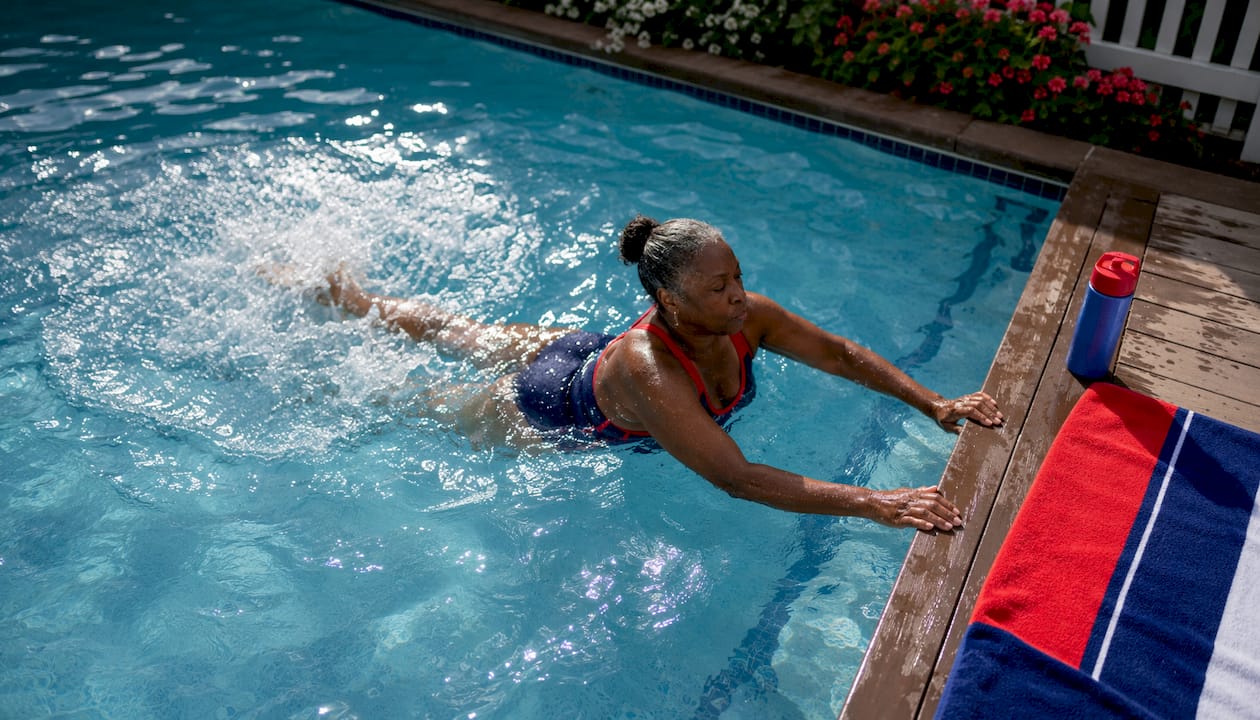
A home pool is one of the most effective tools for maintaining swim fitness year-round, and the role of home pool training goes well beyond casual laps. Water provides roughly 12 times the resistance of air, which means even short, focused sessions build real muscle and cardiovascular capacity. The key insight: you do not need a 25-yard competition pool to stay in shape. You need the right methods.
Water resistance protects joints while building swim-specific strength that dryland workouts cannot replicate
A pool depth of 4–5 feet supports comfortable push-offs, proper stroke mechanics, and lets most adults stand safely between sets
Interval and resistance techniques compensate for limited pool length far better than simply logging yardage
Missing even one week of competition pool training can require several weeks of reconditioning if home pool sessions do not fill the gap
Consistent use, multiple times per week, preserves conditioning and prevents the regression that follows extended breaks
What workouts actually work in a home pool?
The biggest mistake backyard swimmers make is treating a short pool like a miniature version of a full-length one. It is not. The workouts that work best are built around intensity and targeted muscle engagement, not distance.
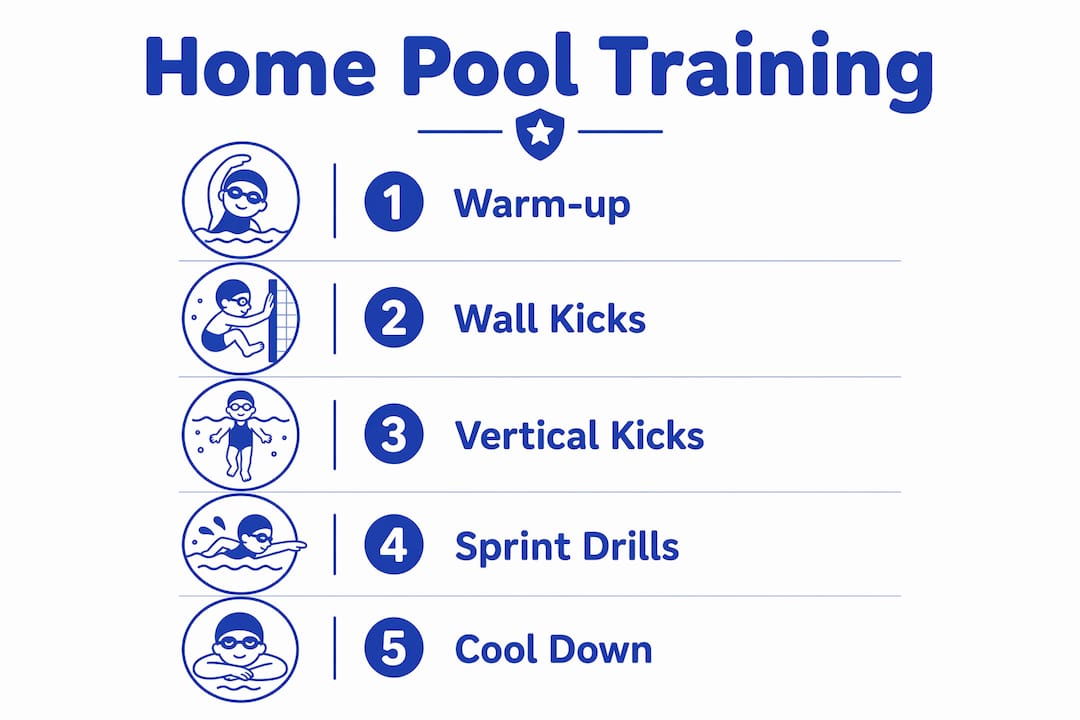
Wall kicking is the foundation. Hold the wall and kick hard for a set interval, say 1:20, then rest for 10 seconds and repeat. U.S. Masters Swimming recommends mimicking a set like 10 x 100s on 1:30, with the kicking substituting for full swimming. You can vary the kick style, practice bilateral breathing patterns, and even simulate race finishes by keeping your face in the water for the last five seconds of each interval.
Sprint intervals with surface open turns solve the flip-turn problem. Traditional flip turns followed by long underwater glides consume most of the available pool length in a backyard setup, leaving almost no room for actual swimming. Surface open turns keep you at the surface after each wall, so you start working your muscles immediately rather than gliding through half the pool.
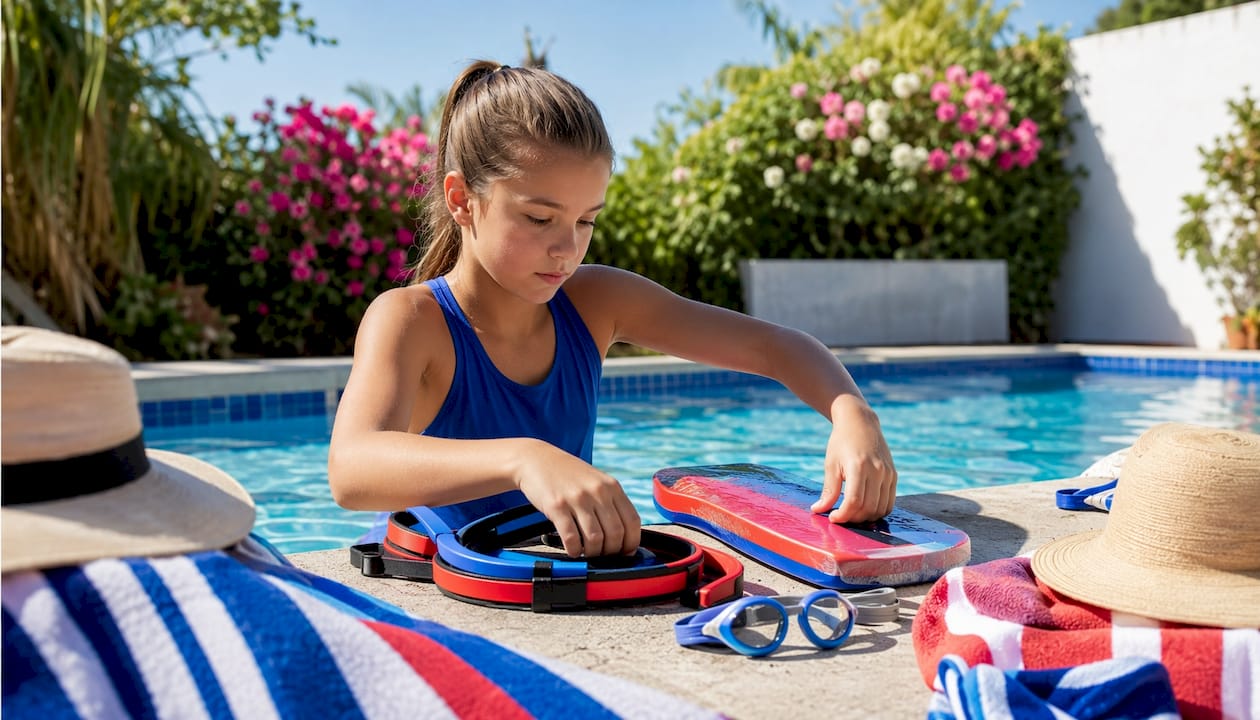
Shoulder and upper body conditioning works surprisingly well with a kickboard. Position the board face-parallel to your chest and row back and forth in a seated position. The deeper you submerge the board, the harder the resistance. Add paddles or a small pull buoy for extra load.
Warm up with low-impact internal and external shoulder rotation drills performed just below the surface, the same movements you would do with resistance bands on land
Cool down with slow, controlled flutter kicking to flush lactic acid from the legs and ease the shoulders back to resting tension
Keep warm-up and cool-down sets to 5–10 minutes each; aquatic prehab exercises promote shoulder stability and reduce injury risk for swimmers who train frequently at home
Pro Tip: Add a flip-and-breakout sprint drill with a training partner. One person kicks on the wall for 10 seconds, then a partner signals and the swimmer flips and sprints to a breakout. Rotate roles. With enough repeats and short rest, this drill builds speed for both sprinters and distance swimmers.
How do you adapt training to a smaller backyard pool?
Short pools demand a different mindset. Forget yardage. Think intensity, resistance, and targeted muscle work.
The first adjustment is understanding what your pool can and cannot do. Most backyard pools run under 37 feet, which is less than half the length of a standard 25-yard competition pool. A well-conditioned swimmer breaks out past the halfway point and has only a handful of strokes before the next wall. That reality shapes every decision you make about how to train.
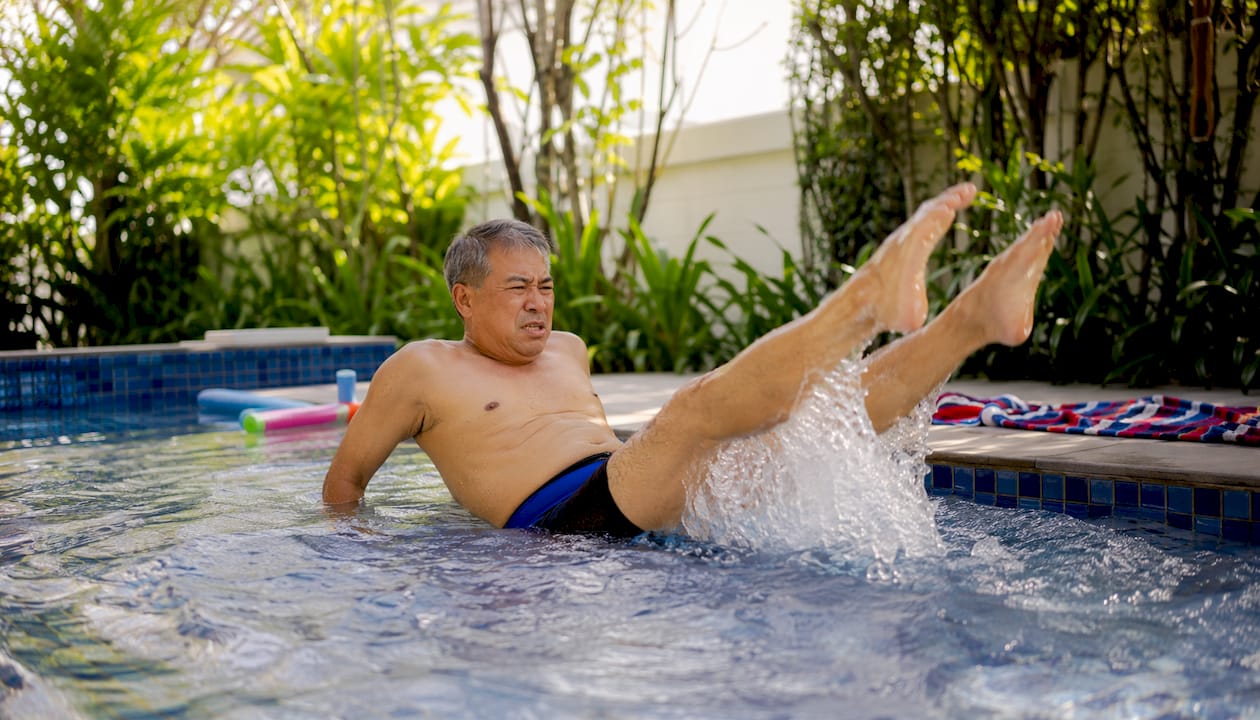
Pool depth matters more than most owners realize. The standard 4–5 foot depth works for most stroke drills and wall kicking, but exercises like vertical kicking and tuck jumps require deeper water. Adequate clearance is necessary for jumping jacks and vertical kicking so knees do not hit the bottom. Check your pool’s depth chart before adding any jumping or deep-water drill to your routine.
Use resistance bands, drag socks, and power bags to artificially lengthen the effective difficulty of each length
Resistance gloves add load to every pull without changing stroke mechanics
Wave management in small pools matters: turbulence from your own stroke can disrupt resistance training consistency, so pace your sets to let the water settle slightly between high-intensity efforts
Avoid long underwater glides off every wall; they eat pool length without building muscle
The mental shift from “swimming laps” to “training specific muscles at high intensity” is what separates swimmers who maintain fitness in a backyard pool from those who tread water for an hour and wonder why they are getting slower.
How do you keep swim-specific muscles from fading at home?
Swim-specific muscles are not the same as general fitness muscles. The recovery kick muscles, the ones that lift your legs without bending your knees, are barely touched by any dryland exercise. Lie flat on your stomach and lift your legs straight without bending at the knee. Hold for five seconds. Those are the muscles that drive your kick in all four strokes and your underwater undulation. Full-stroke swimming in a short pool does not target them efficiently because knee bend during the kick cycle reduces the load on those specific fibers.
Resistance tools fix this. Power bags worn as socks on the feet, over the calves, or around the ankles isolate the kick recovery chain directly. A power chute adds constant drag without altering body position or stroke mechanics, effectively making a 30-foot pool feel longer for every drill.
Stationary bungee cords provide minimal actual exertion for skilled swimmers; a trained athlete can swim on a bungee for hours with little muscular gain, so equipment variety and intensity are what drive real adaptation
Upper body work in short pools benefits from ascending paddle progressions: start with mesh resistance gloves, move to a power paddle like Touch paddles, and finish with a displacement paddle like Brute paddles to produce genuine muscle fatigue across the full catch-to-outsweep sequence
Interval training at maximum effort, short rest, is the only reliable way to build conditioning in a pool too short for traditional yardage sets; swim coaches tracking session frequency consistently find that effort consistency across sessions matters more than total distance logged
Aim to match your normal training volume in time, not yards; if you typically train 90 minutes five days a week, anything less in a home pool will cause regression
Pro Tip: Vertical kicking is one of the highest-value exercises for a home pool, but only if your pool is deep enough that your feet do not touch the bottom. Form degrades quickly without a training partner to give feedback on posture and core engagement. If you train alone, record yourself from the side to catch slouching before it becomes a habit.
Can a swim spa serve as both a training and recovery tool?
Yes, and it does both better than most people expect. Swim spas with adjustable water jets let you dial resistance from a gentle recovery stroke up to a high-intensity current that challenges even competitive swimmers. That range in a single installation is genuinely useful for periodized training.
The recovery side is equally practical. Hydromassage jets positioned at the back, neck, and legs promote muscle relaxation and circulation after hard sessions. The transition from training mode to recovery mode happens in the same water, which removes the friction of driving to a separate facility after a workout.
Heated water allows year-round training regardless of weather, which is the single biggest consistency advantage a swim spa offers over an unheated backyard pool
Warm water aquatic training enables athletes with chronic pain or joint issues to maintain fitness with less stress on connective tissue than land-based exercise
Aquafitness accessories like aquabikes and rowing attachments expand the workout variety beyond swimming, targeting cardiovascular fitness and muscle tone across all major groups
The combination of training and immediate hydromassage in one session supports faster muscle relaxation and reduces next-day soreness
For families with young swimmers, the controlled temperature and enclosed space also reduce the barriers to getting in the water consistently, which is ultimately what drives long-term fitness gains.
Why does expert instruction matter for home pool training?
Technique errors that a coach catches in a competition pool setting go unnoticed for months in a backyard pool. Without external feedback, bad habits compound. A swimmer who trains alone on wall kicking with poor hip position will reinforce that flaw with every rep.
Qualified instructors do more than correct form. They build progressive training plans that account for pool size, available equipment, and the swimmer’s current conditioning level. That structure prevents the two most common home pool training failures: doing the same easy session every day, or going so hard in the first week that injury forces a longer break than the one you were trying to avoid.
Safety precautions for home pool training include knowing pool depth before every session, never swimming alone, and understanding how equipment like resistance chutes affects body position and breathing
Swim equipment used safely enhances training; used incorrectly, paddles and resistance tools can overload the shoulder joint and cause rotator cuff strain
Parents preparing backyard pool swim lessons for children benefit from the same principle: structured guidance from a credentialed instructor produces faster, safer progress than unstructured water time
Training frequency matters as much as technique; scheduling private sessions with a qualified coach helps swimmers build a consistent weekly plan that actually maintains conditioning rather than just keeping them wet
Superheroswimacademy instructors are trained in CPR, First Aid, and a proven survival swim curriculum, which means every session in your home pool is backed by real expertise, not guesswork. That combination of safety knowledge and structured progression is what separates productive home pool training from time spent splashing around.
Superheroswimacademy has helped over 2,500 children build real water confidence in Palm Beach and Broward counties. Whether you are maintaining your own fitness or helping a young swimmer develop skills in your backyard pool, expert guidance makes every session count. Start with Superheroswimacademy and bring structured, safe swim training to your home pool today. You can also explore online swim courses to complement your in-water sessions with technique instruction you can apply immediately.
Key Takeaways
A home pool sustains swim fitness best when training combines high-intensity intervals, targeted resistance tools, and consistent weekly sessions guided by qualified instruction.
Point | Details |
Consistency prevents regression | Missing a week of competition pool training can require several weeks of reconditioning without compensating home pool sessions. |
Pool depth shapes exercise choice | A depth of 4–5 feet supports most stroke drills; vertical kicking and jumping exercises require deeper water to avoid knee impact. |
Intensity beats yardage | Surface open turns and max-effort intervals build more muscle than logging laps in a short pool with long underwater glides. |
Resistance tools target specific muscles | Power bags, drag socks, and ascending paddle progressions isolate swim-specific muscle chains that full-stroke swimming in short pools cannot reach. |
Expert instruction prevents injury | Qualified coaches catch technique errors, build progressive plans, and apply safety protocols that solo home pool training routinely misses. |
Recommended
Comments