
Infant Swim Instructor Certification: Your Complete Career Guide
- superheroswim
- 7 days ago
- 11 min read

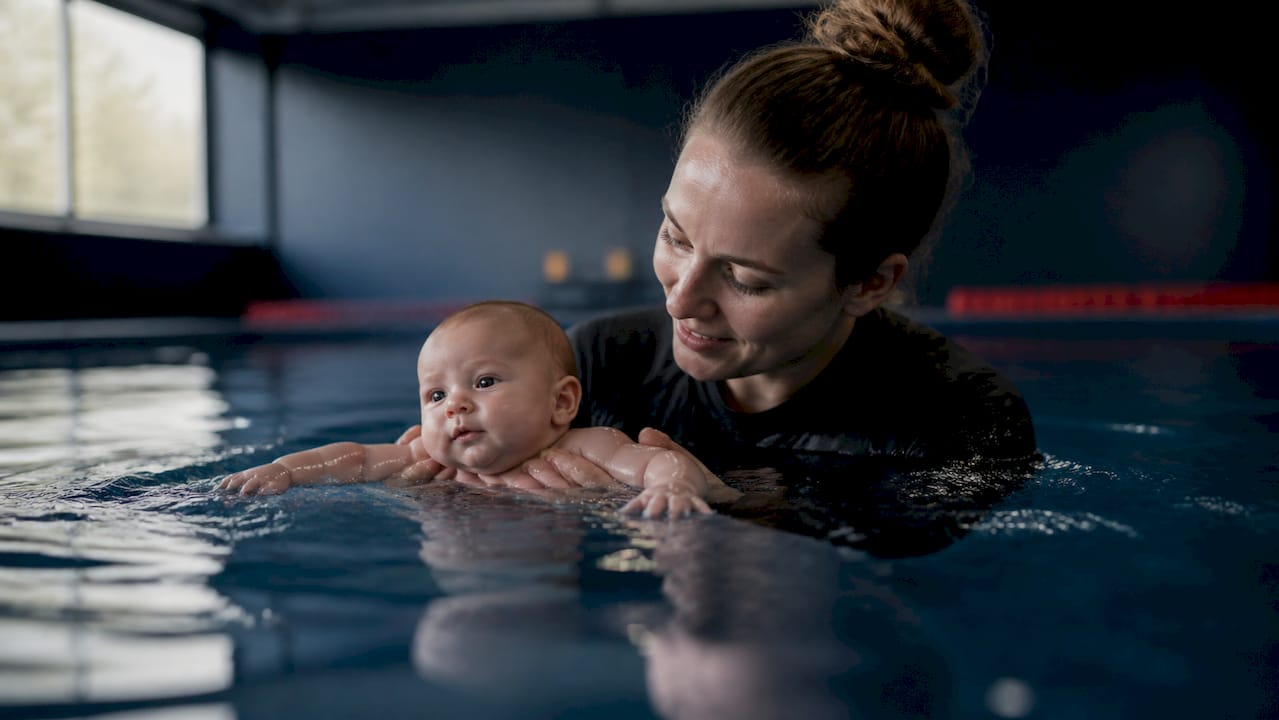
You can become a certified infant swim instructor by applying to an accredited training program, completing hands-on in-water and classroom training, passing a practical assessment, and meeting CPR and First Aid prerequisites before your first paid lesson. The path is straightforward, and Superheroswimacademy is one of the most direct U.S.-focused routes to get there, combining survival swim curriculum, supervised teaching hours, and mentorship in a single program. Ready to start? Explore the online courses and certification options now.
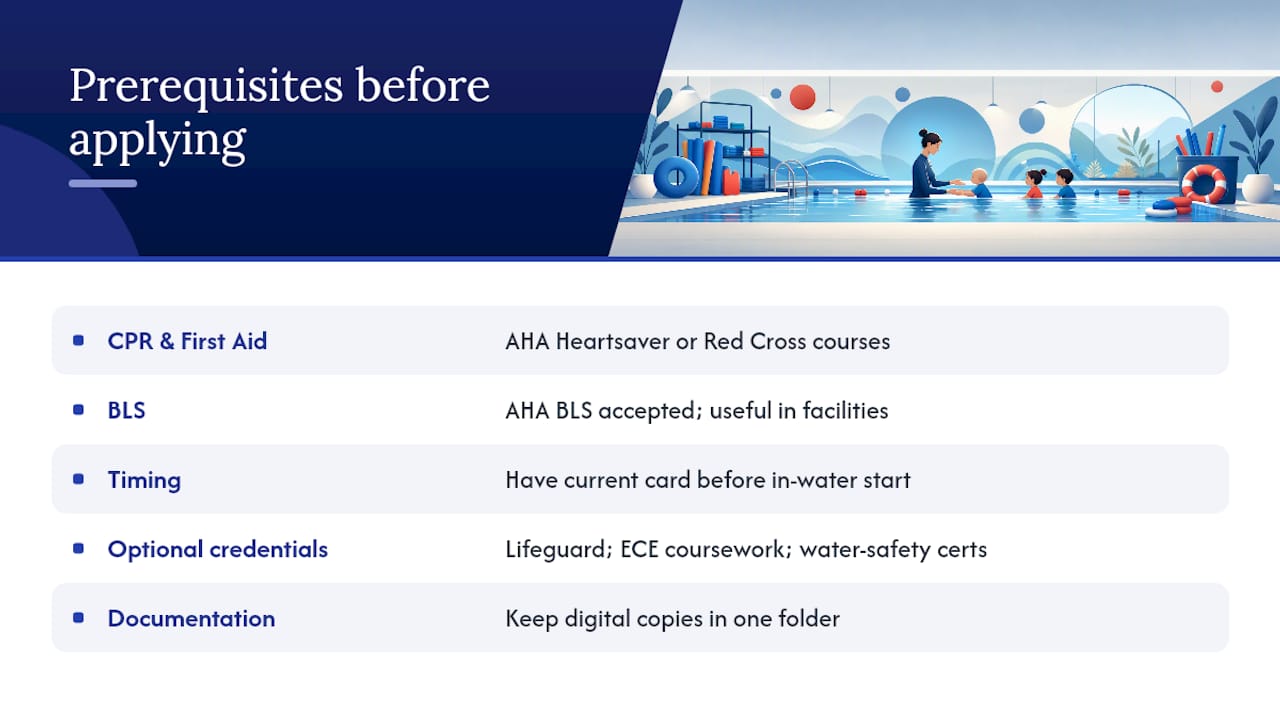
Before you apply, confirm you have these four prerequisites in place:
Current Infant/Child CPR and First Aid certification (AHA or Red Cross accepted)
Minimum age and basic swim competency (requirements vary by program)
Cleared background check and right-to-work documentation
Availability for in-water training sessions
Key Takeaways
Becoming a certified infant swim instructor requires CPR/First Aid prerequisites, hands-on in-water training, supervised teaching hours, and a passed practical assessment before you teach independently.
Point | Details |
Core prerequisites | Current Infant/Child CPR and First Aid (AHA or Red Cross) are required before in-water training begins. |
Training timeline | Intensive programs certify in a few weeks; blended formats typically run several weeks to a few months total. |
Cost range | U.S. program costs vary widely depending on format, mentorship, and included services. |
Recertification | Instructor credentials renew every 1–2 years; CPR/First Aid renews every 2 years. |
Superheroswimacademy | Offers survival swim instructor training with mentorship, 2,500+ children taught, and online continuing education resources. |
Table of Contents
What does the infant swim instructor certification path look like?
The fastest way to see the full sequence is as a timeline, not a checklist. Here is how the milestones stack up from application to your first paid lesson:
Intensive in-person programs can take you from application to certified status in roughly three to four weeks when prerequisites are already in place. Blended formats that combine online coursework with weekend in-water sessions typically run eight to twelve weeks. Neither is strictly better; the right choice depends on your schedule and how quickly you need to start earning.
The paperwork step is the one most new instructors underestimate. Before teaching independently, you need general liability insurance specific to aquatic instruction and signed student intake forms that include health history and waiver language. Get both sorted during your supervised hours, not after.
What does instructor training actually cover?
Infant swim instructor training splits into two tracks that run in parallel: technical water skills and classroom knowledge. Both are assessed before you certify.
Technical in-water skills
The core of any reputable survival swim instructor training is teaching infants and toddlers to self-rescue. That means you learn to guide a child through roll-to-float sequences, supported flotation holds, and the swim-float-swim progression that gives a child a fighting chance if they enter the water unexpectedly. You practice safe entries and exits, proper head and neck support for infants, and how to read a child’s body language when they are approaching distress.
Keeping infants calm during lessons is a skill in itself. Programs teach specific handling techniques that reduce startle responses and build a child’s water confidence session by session. Trainees also practice timed drills, because assessors want to see that your responses are automatic, not deliberate.
Classroom and theory topics
Expect coursework in infant and toddler development, basic anatomy as it relates to aquatic safety, lesson planning for different age bands, and risk assessment. Parent communication gets significant attention in quality programs because a parent who understands what their child is working toward is a parent who reinforces progress at home. Superheroswimacademy’s approach to parent engagement and progress tracking is built directly into its instructor training.
Assessment format
The practical assessment requires you to demonstrate in-water techniques with a trainee or evaluator acting as the student, deliver an observed lesson, and pass a written or oral safety knowledge check. Assessors watch for calm handling under simulated stress, correct technique on back float recovery, and clear verbal communication with a parent observer.
Pro Tip: Before your practical assessment, ask your mentor to watch you run a full mock lesson and give feedback on your verbal cues. Most trainees lose points on communication, not technique.
Must-pass competencies in most programs include:
Back float recovery with correct head support
Roll-to-float initiation from a face-down position
Safe water entry and exit for infants under 12 months
Calm handling during a simulated distress response
Accurate lesson documentation and parent debrief
What prerequisites do you need before you apply?
Most U.S. infant swim instructor programs require the same core set of prerequisites, though exact standards vary by organization.
The benefits of CPR-certified swim instructors go beyond legal compliance. Parents actively ask whether their child’s instructor holds current CPR credentials, and programs that require it as a hard prerequisite signal a higher safety standard to prospective clients.
For CPR and First Aid, the American Heart Association’s Heartsaver Pediatric First Aid CPR AED course and the Red Cross’s Infant and Child CPR course are the most widely accepted. BLS (Basic Life Support) certification from AHA is also accepted by most programs and is worth holding if you plan to work in a facility setting. Complete or renew these before your training start date; most programs will not allow you to begin in-water sessions without a current card in hand.
Optional credentials that improve your employability and earning potential include a current lifeguard certification, early childhood education coursework, and any water safety instructor designation from a recognized national body. None of these are required to start, but they matter when you are competing for facility contracts or higher-rate private clients.
Keep digital copies of every certificate in a dedicated folder. Programs, insurance carriers, and parents may all ask to see them.
How long does training take, and what does it cost?
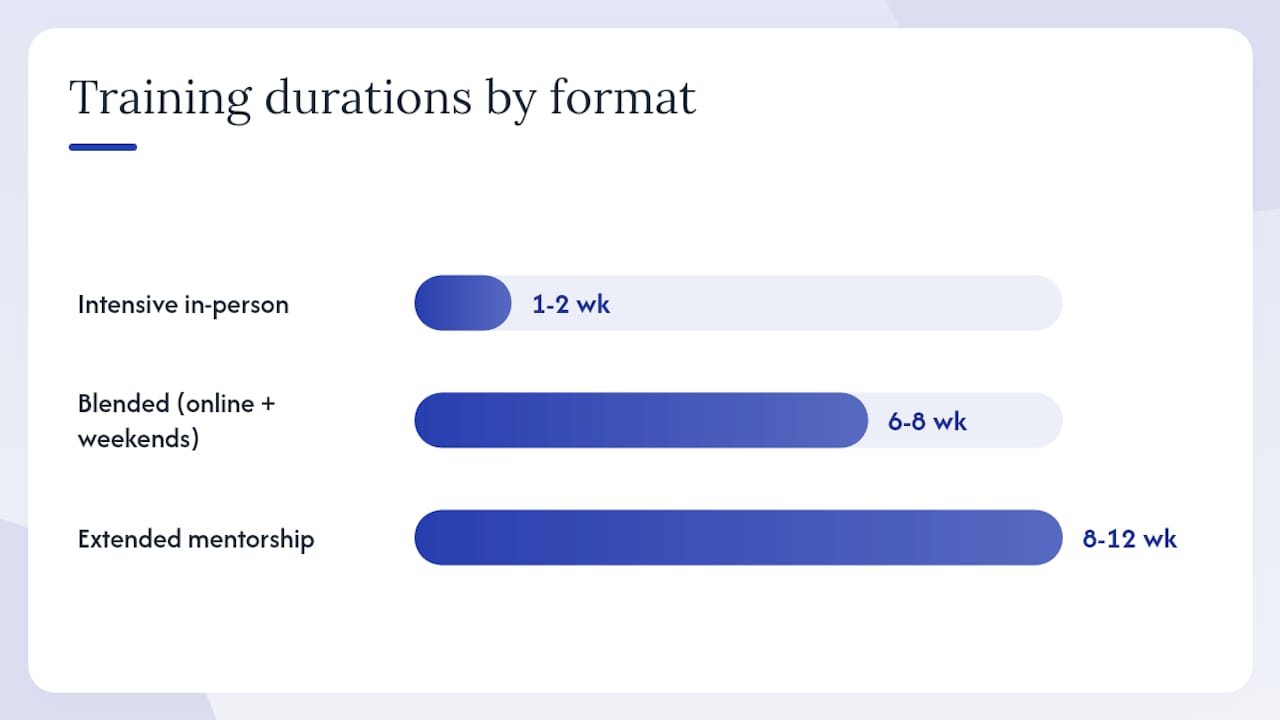
Training length and cost in the U.S. vary more than most guides admit. Here is a realistic breakdown:
Format | Duration | Typical U.S. cost range | What’s usually included |
Intensive in-person | 1–2 weeks | Training costs vary | In-water hours, curriculum, assessment |
Blended (online + in-water weekends) | 6–8 weeks | $900–$2,500 | Online modules, weekend sessions, assessment |
Extended mentorship programs | 8–12 weeks | Training costs vary | All above plus supervised teaching hours, mentorship |
Lodging and travel are almost never included in the listed price for intensive programs, which matters if you are traveling to a training site. Materials, testing fees, and post-cert mentorship hours may also be billed separately, so ask for an itemized breakdown before you pay a deposit.
Scholarships and fee-reduction programs exist, though they are not widely advertised. Ask the program directly whether they offer a pay-it-forward arrangement, a payment plan, or a scholarship for candidates from underserved communities. Some academies reduce fees for candidates who commit to teaching in a specific geographic area or demographic. The USSSA certification pathway is a useful reference point for nationally recognized program standards and can help you benchmark whether a program’s pricing is reasonable for what it delivers.
The fastest path to certified status, assuming prerequisites are already in place, is a one-to-two-week intensive followed by two to three weeks of supervised teaching hours. Realistically, plan for six to eight weeks from application to your first independent paid lesson.
How do you start teaching after you certify?
Certification is the starting line, not the finish. The first decision is whether to work for an established academy, subcontract through a swim school, or build an independent business.
Working for an academy or swim school gives you immediate access to clients, a pool, and scheduling infrastructure. You trade some income per lesson for the operational support. Subcontracting sits in the middle: you get client referrals and sometimes pool access, but you handle your own scheduling and parent communication. An independent business gives you full control over pricing and scheduling, but you carry the full marketing and operational burden from day one.
Pro Tip: Start as an employee or subcontractor for your first six months. You will learn faster with an established client base and a mentor nearby than you will trying to build a roster from scratch while also refining your technique.
Operational checklist for new instructors
Before you teach your first paid lesson independently, have these in place:
General liability insurance specific to aquatic instruction (minimum $1 million per occurrence is standard)
Signed student intake forms with health history and liability waiver language
A scheduling system (even a shared Google Calendar works at first)
Parent communication templates for lesson updates and progress notes
Pool access agreement or facility contract if you are not working at a home pool
Basic equipment: flotation aids, pool toys for engagement, a waterproof first aid kit
Pricing for private infant swim lessons in the U.S. typically runs $50–$120 per 30-minute session depending on market and experience level. Group classes run lower per student but require more logistical coordination. A part-time instructor running eight to ten private lessons per week can generate meaningful supplemental income within the first 90 days. Full-time instructors who build a roster of 20-plus weekly lessons and add group classes or concierge services can reach a sustainable annual income within the first year.
Your first 90 days after certification should focus on three things: logging any remaining mentorship hours, booking your first ten clients through personal referrals and local parent groups, and building a simple online presence with your credentials and a booking link.
What does recertification require?
Credentials do not stay valid indefinitely. Most infant swim instructor programs require recertification on a defined cycle, and CPR/First Aid renewals run on their own separate schedule.
Credential | Typical renewal interval | What renewal requires |
Infant/Child CPR and First Aid | Every 2 years | Hands-on skills check and written test |
Instructor certification | Every 1–2 years (varies by program) | In-water refresher assessment, continuing education hours |
Lifeguard certification (if held) | Every 2 years | Skills test and written exam |
Letting a credential lapse has real consequences. Insurance carriers often require current CPR and instructor certification as a condition of coverage. Parents increasingly ask to see current credentials before enrolling, and infant swim certification matters directly for parent trust and child safety. An expired card is a liability, not a technicality.
Continuing education between renewals keeps your skills current and your insurance premiums stable. Recommended annual topics include pediatric emergency response updates, new teaching progressions for specific age bands, and behavioral management techniques for infants with sensory sensitivities. Log every course you complete with the date, provider, and hours, and store those records alongside your certification copies.
How do you evaluate and compare training programs?
Not all programs are equal, and the differences matter more in infant instruction than in almost any other aquatic specialty. Here is what to ask before you pay.
Questions to put to any program before enrolling:
What is the trainer-to-trainee ratio during in-water sessions?
How many supervised in-water teaching hours are required before assessment?
What does the assessment look like, and what happens if you do not pass on the first attempt?
What post-certification mentorship or support is available?
Can you see a sample curriculum or syllabus before committing?
What is the refund or transfer policy if your schedule changes?
Does the program provide guidance on liability insurance and business setup?
Pro Tip: Ask to speak with a recent graduate before enrolling. A program confident in its outcomes will connect you without hesitation. One that deflects is telling you something.
Red flags that should make you walk away:
Certification that is entirely online with no supervised in-water component
No clear assessment criteria or pass/fail standards published
No mention of insurance requirements or business setup guidance
Hidden recurring fees after the initial certification
Trainer qualifications that are not verifiable or publicly listed
Documents to request before paying a deposit: a full syllabus, a sample certificate showing the issuing organization, the trainer’s own credentials, and the program’s refund policy in writing.
When comparing programs, weigh these dimensions: total duration, cost and what it includes, delivery format, prerequisites required, mentorship hours included, and how long the certification remains valid. A program that costs more but includes supervised teaching hours and post-cert mentorship often delivers better value than a cheaper option that leaves you to figure out the business side alone.
Why Superheroswimacademy stands out as a training path
Superheroswimacademy’s instructor training is built around the same standards it applies to its own lessons: CPR and First Aid are required prerequisites, not optional add-ons, and the curriculum is grounded in qualified instruction linked to measurable child safety outcomes.
The program’s internal track record speaks directly to training quality. With over 2,500 children taught under its curriculum, the academy has a documented base of real-world outcomes that most newer programs cannot match. Trainees learn the same survival swim progressions that produced those results, not a theoretical approximation of them.
Trust signal | Detail |
Children taught | 2,500+ under the academy’s curriculum |
CPR/First Aid | Required prerequisite for all instructors |
Curriculum type | Proprietary survival swim progressions |
Mentorship | Supervised teaching hours with experienced instructors |
Continuing education | Online courses available for post-cert development |
Service area | Palm Beach and Broward counties, Florida |
Trainees receive supervised teaching hours, mentorship from working instructors, marketing templates for launching a client base, and access to online continuing education resources. The combination of in-person depth and digital support is what makes the blended model practical for candidates who cannot relocate for a multi-week intensive.
What actually matters in training, and what most guides miss
Most articles about infant swim instructor certification focus on the credential itself. The credential matters, but it is not what makes a good instructor.
The hardest skill to master is not a technique. It is reading a three-month-old’s body language accurately enough to know whether a moment of resistance is normal adjustment or genuine distress. No written curriculum fully prepares you for that. Mentorship does. The instructors who improve fastest in their first year are almost always the ones who logged the most observed hours alongside an experienced teacher, not the ones who completed the most coursework.
Parent communication is the second underrated skill. A parent who understands what their child is working toward and why a particular technique is used will support the process at home. A parent who feels left out of the loop will pull their child from the program. The best training programs treat parent communication as a core competency, not an afterthought.
The practical advice that new instructors find most useful on day one: slow down. Every instinct pushes you to move quickly through a lesson plan. The children who make the fastest progress are the ones whose instructors gave them time to process each new sensation before introducing the next one.
Superheroswimacademy’s certification program gets you teaching faster
Superheroswimacademy offers something most training programs do not: a direct line from certification to a working instructor career, backed by a curriculum proven across 2,500+ children in Palm Beach and Broward counties. You get in-water training built around real survival swim progressions, supervised teaching hours with working mentors, CPR and First Aid as a built-in prerequisite, and marketing templates so your first client outreach does not start from a blank page.
The online courses cover the theoretical and continuing education components, while the in-person track handles the hands-on assessment and mentorship. Local pool partnerships in Palm Beach and Broward mean you are not hunting for a facility on your own. If you are ready to move from interested to enrolled, visit Superheroswimacademy to check current program dates and take the first step.
Useful sources and where to go next
USSSA Certification Pathway — the national swim school association’s official route to Fundamental Swim Instructor certification; start here to benchmark any program you are considering.
Why Qualified Swim Instructors Matter for Child Safety — Superheroswimacademy’s overview of instructor training standards and the safety case for CPR/First Aid prerequisites.
How Instructors Keep Infants Safe in Water: 2026 Guide — detailed safety practices and parent engagement protocols used in Superheroswimacademy’s curriculum.
How Swim Curriculum Works for Children: A Parent’s Guide — explains the age-appropriate progressions trainees learn to teach, with internal outcome data.
Recommended
Comments