
How Many Toddler Swim Lessons Does Your Child Need?
- superheroswim
- 1 minute ago
- 9 min read

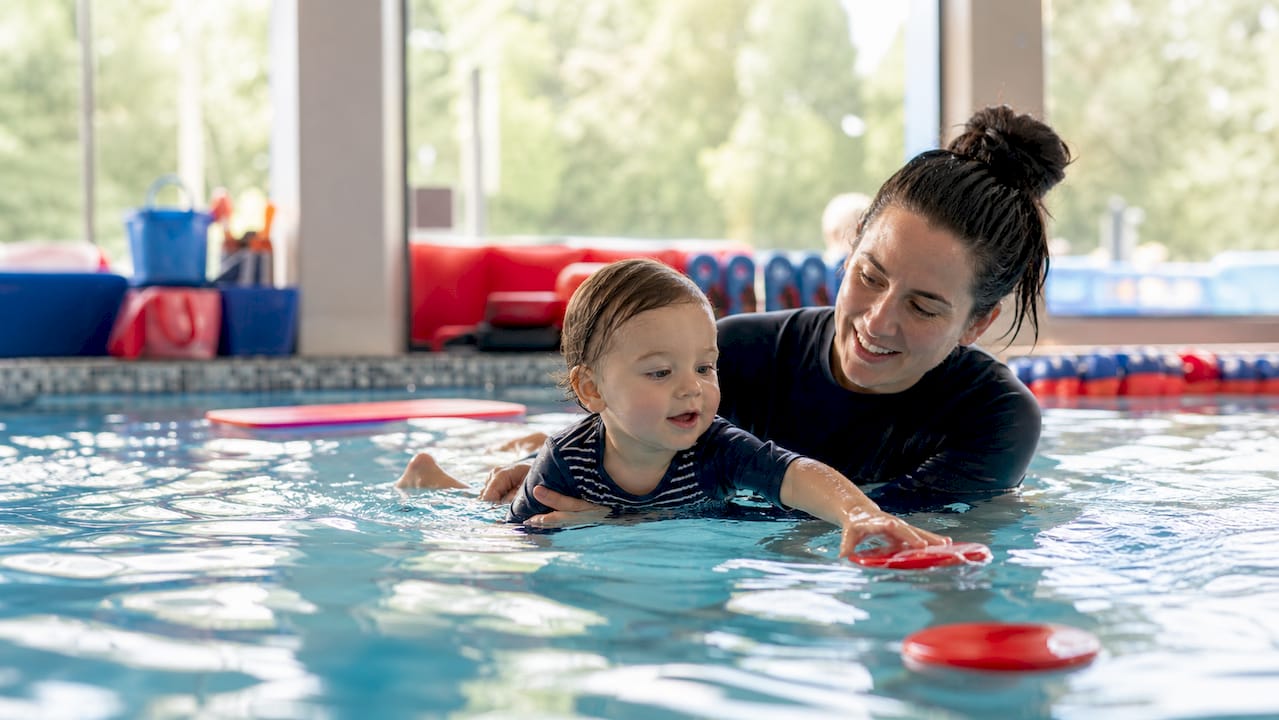
Most toddlers reach basic water-safety and beginner swim skills after 20–40 lessons, though that range shifts considerably depending on age, lesson frequency, and your child’s individual temperament. The American Academy of Pediatrics reports that formal swimming lessons for children aged 1–4 are associated with a strong reduction in drowning risk — a striking effect, but one that comes with a critical caveat: lessons reduce risk; they do not eliminate it. No child is drown-proof.
Stat to know: The AAP links formal swim lessons for ages 1–4 to an ~88% reduction in drowning risk — yet the same guidance stresses that lessons are one protective layer, not a guarantee of safety.
Pro Tip: Even after your toddler completes a full lesson series, constant adult supervision within arm’s reach and physical pool barriers (fences, alarms, door locks) remain non-negotiable. Lessons and supervision work together — neither replaces the other.
Key Takeaways
Most toddlers need 20–40 consistent lessons to reach basic water-safety skills, but frequency, instructor quality, and at-home reinforcement determine whether that takes three months or twelve.
Point | Details |
Typical lesson count | Most toddlers reach early safety milestones in 20–40 lessons, varying by age and frequency. |
Frequency matters most | Twice-weekly lessons typically cut the timeline from 6–12 months to 3–6 months versus once-weekly. |
Lessons don’t replace supervision | The AAP links lessons to ~88% reduced drowning risk, but barriers and adult supervision remain essential. |
Track skills, not sessions | Progress milestones (roll-to-float, breath control, safe entry/exit) matter more than lesson count alone. |
Superheroswimacademy | Offers survival-focused toddler lessons in Palm Beach and Broward with CPR-certified instructors and clear progress checkpoints. |
Table of Contents
How many toddler swim lessons does each age group need?
Age shapes everything: attention span, physical coordination, and fear response all change fast between 6 months and 4 years. Here is what realistic progress looks like at each stage.
Infants (6–12 months) — Parent-and-child format
Typical lesson count to reach basic comfort: 10–20 sessions
Goals at this stage are narrow: water tolerance, face-splash acceptance, and supported back float
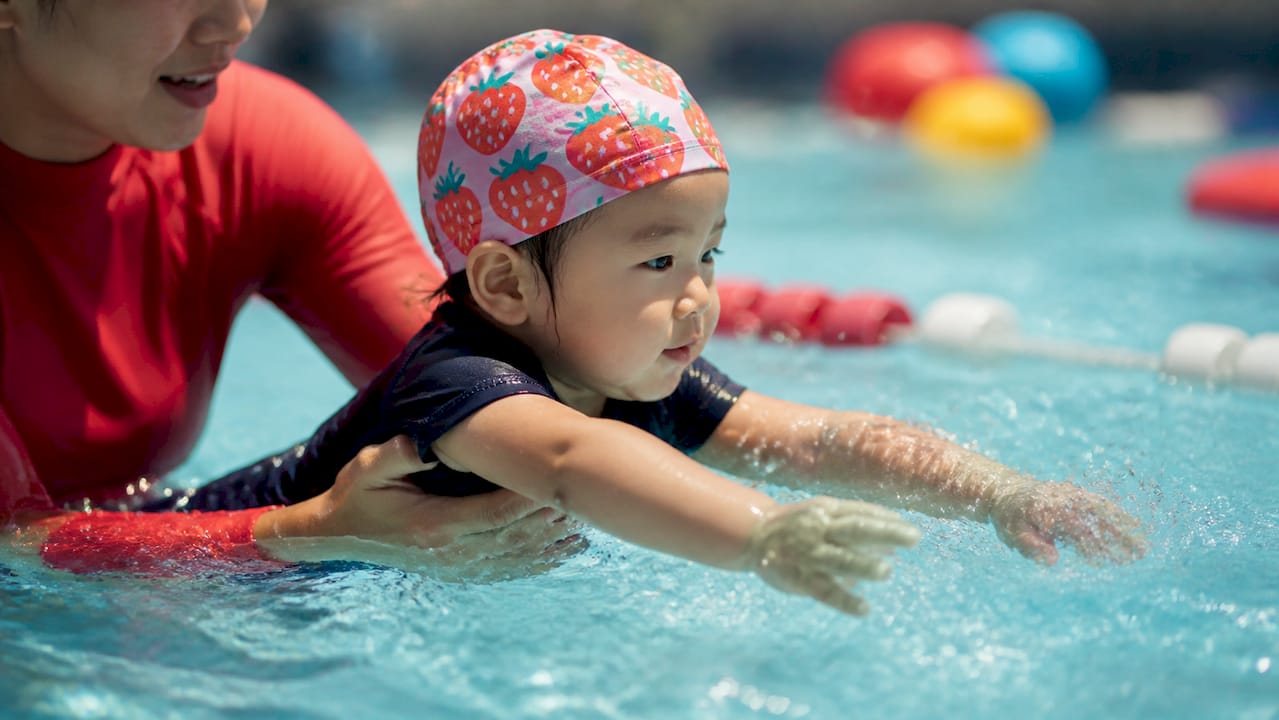
Parent-and-child classes run roughly 30 minutes and focus on exploration, not independent swimming
Parent involvement at this age directly builds the child’s confidence and transfers safety habits to caregivers
12–24 months — Transitional toddler stage
Typical range: a moderate number of lessons for comfort with submersion and assisted floating
Most programs keep a parent in the water; independent movement is minimal but kicking and reaching begin
Attention spans are short (often under 10 minutes of focused activity), so short infant lesson formats are deliberate, not a limitation
Community infant/parent programs, such as those listed by Princeton Community Education, typically offer seasonal blocks at accessible price points (around $65 per block)
24–36 months — Core toddler window
Typical range: 20–40 lessons to reach early water-safety milestones (roll-to-float, assisted breath, basic kick-and-glide)
This is the age bracket most parents ask about, and where structured toddler swim lessons make the biggest developmental difference
Some children in this range transition to small independent classes; others still benefit from parent-assisted formats
36+ months — Pre-school and early independent swimmers
Typical range: a moderate number of lessons to reach beginner independent swimming (short distances, safe entry/exit, breath control)
Children at this age can follow verbal instructions, which accelerates skill acquisition noticeably
Progress milestones become more visible and trackable week to week
What actually changes how fast a toddler learns?
Two children the same age can be at completely different places after 20 lessons. These are the factors that drive that gap.
Age and developmental stage. A 36-month-old can process a verbal cue like “kick your feet” in a way a 14-month-old simply cannot. Older toddlers tend to move faster through early milestones.
Prior water exposure. A child who has splashed in a bathtub, waded in a shallow pool, or attended even a few parent-and-me sessions arrives with a head start on comfort and breath control.
Lesson frequency. Twice-weekly lessons reduce regression between sessions and speed skill acquisition compared with once-weekly classes. This is one of the most controllable variables a parent has.
Instructor credentials and teaching style. A certified instructor with CPR/First Aid training and a child-focused curriculum moves toddlers through milestones more efficiently than a generalist. Small class ratios (ideally 1:3 or better for toddlers) allow more corrective feedback per child.
Class size. Group classes with 6+ toddlers per instructor slow individual progress. Private or semi-private lessons can cut the timeline by weeks.
Pool temperature. Water that is too cold triggers stress responses in young children and shortens effective learning time. Programs that maintain pools at roughly 87–94°F (30–34°C) see better engagement and retention.
Temperament. Some toddlers are cautious by nature. A child who needs 10 sessions just to tolerate face splashing is not behind — they are wired differently, and a skilled instructor adjusts accordingly.
Pro Tip: The factors you control matter most. Choosing twice-weekly lessons over once-weekly, selecting a warm pool, and doing short bath-time water games at home can shave months off the timeline without adding stress.
What skills should your toddler actually gain from lessons?
Counting lessons is useful, but tracking skills is more useful. Here is what a well-structured toddler program works toward, roughly in order of progression.
Safe entry and exit with assistance — stepping in from the wall, reaching for the edge
Comfort with water on the face — tolerating splashes, then brief submersions
Supported back float — relaxing in the water with an instructor’s hand under the back
Assisted roll — moving from a face-down position to a back float (a foundational survival skill)
Breath control — learning to hold breath on cue before going under
Kick-and-glide with support — propulsion with an instructor or flotation aid
Basic pool rules — no running, no jumping without permission, always wait for the instructor
Within the 20–40 lesson range, most toddlers reach the first four or five skills on this list. Independent kick-and-glide and consistent breath control typically require more time, especially for children under 30 months. You can track your child’s progress against detailed swim lesson milestones to know when they are ready to advance.
How lesson frequency changes your timeline
Frequency is the single biggest lever parents can pull. Here is how the math works out in practice.
Frequency | Typical lessons to early milestones | Approximate timeline | Key tradeoff |
Once per week | 20–40 lessons | 6–12 months | Steady progress; more regression between sessions |
Twice per week | 20–40 lessons | 3–6 months | Faster retention; higher weekly cost |
Intensive block (daily or near-daily) | 10–20 lessons | 2–6 weeks | Fastest short-term gains; fatigue risk, follow-up needed |
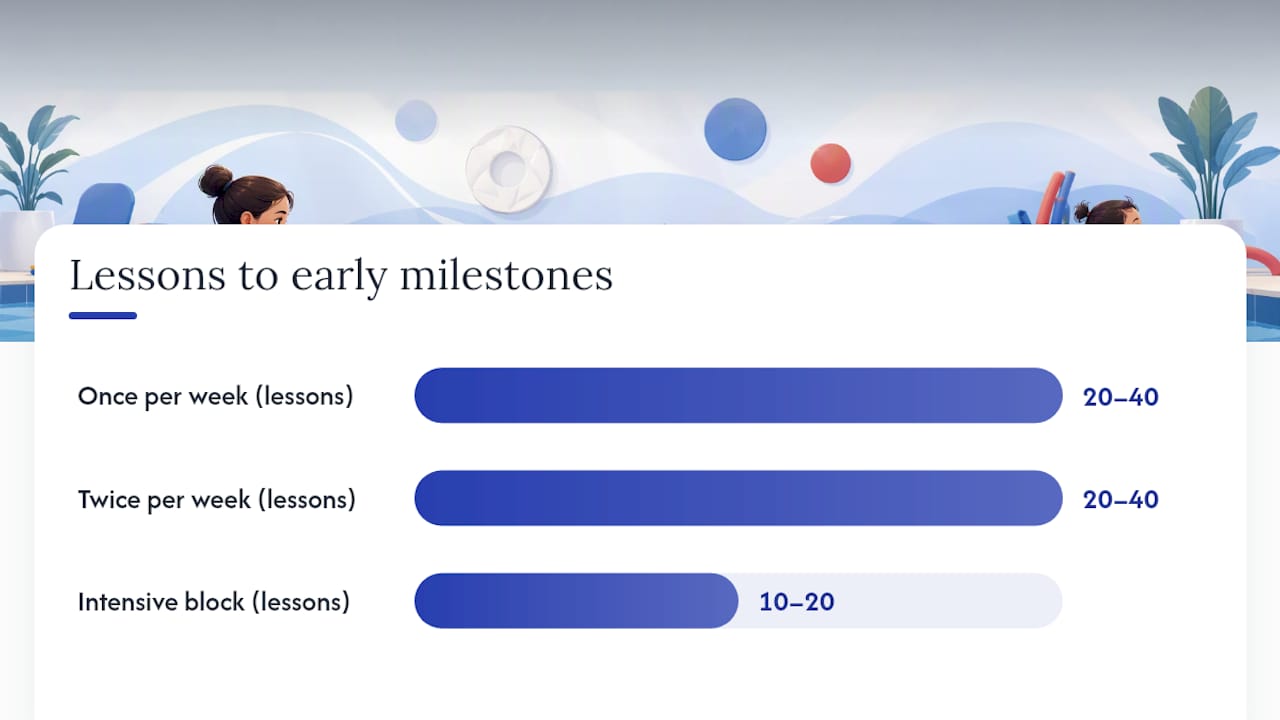
Swim-school guidance consistently shows that once-weekly classes give steady progress over 6–12 months, while twice-weekly lessons typically halve that timeline. Intensive blocks can accelerate learning but often require follow-up sessions to consolidate skills once the block ends.
For lesson length, 20–30 minutes is appropriate for infants and young toddlers (under 24 months); 30 minutes works well for toddlers 24–48 months. Beyond 30 minutes, attention and physical stamina drop off sharply for this age group. For more detail on scheduling decisions, the swim lesson frequency guide covers retention patterns by age.
What the evidence says about swim lessons and drowning risk
The research on swim lessons and drowning prevention is clear on two things: lessons work, and they are not enough on their own.
The AAP’s guidance links formal lessons for ages 1–4 to an estimated 88% reduction in drowning risk. A peer-reviewed review on NCBI confirms that swim lessons reduce drowning risk but notes clear limits to what lessons alone can achieve — supervision and physical barriers remain essential.
The National Drowning Prevention Alliance frames this as a multi-layer strategy: lessons, barriers, and supervision together, not any one of them alone. A child who has completed 40 lessons still needs a fence around the pool and an adult within arm’s reach.
What to look for in an instructor:
Current CPR and First Aid certification
Experience with survival swim curricula (not just recreational swim)
Small class ratios (1:3 or better for toddlers)
Clear progress checkpoints communicated to parents
Child-focused pacing that accounts for temperament and fear response
Knowing why qualified swim instructors matter is as important as knowing how many lessons to book.
How to reinforce swim skills between lessons
The pool is where skills are introduced. Between lessons is where they stick.
Bath-time breath games. Have your child blow bubbles in the bath, count to three before dipping their chin, or practice holding their breath for a moment. Five minutes, two or three times a week, builds the breath-control habit without any pool required.
Shallow-step practice. If you have access to a pool’s shallow steps, practice safe entry and exit, sitting on the step and splashing, and reaching for the wall. Keep sessions to 10 minutes max.
Countdown submersion games. “One, two, three, under!” said in the same tone every time trains the breath-hold reflex. Consistency matters more than duration.
Backyard paddling pools. Even a small inflatable pool lets toddlers practice kicking, reaching, and water comfort in a low-stakes environment. See how to prepare backyard pool sessions safely.
Reading and watching swim content. Books and short videos about swimming normalize the activity and reduce anxiety before lessons.
Keep at-home practice playful. A toddler who dreads bath time will dread the pool. Progress check-ins (“Can you blow bubbles today?”) work far better than drill sessions.
Pro Tip: Share a simple water-safety checklist with any babysitter or caregiver who might be near a pool with your child. A babysitter information sheet that includes pool rules and emergency contacts takes five minutes to prepare and could matter enormously.
When to keep going, pause, or switch to private lessons
Not every child moves through group lessons on the same track. Here is how to read the signals.
Plateauing progress after 8–10 sessions: Consider switching to private or semi-private lessons. A 1:1 ratio lets an instructor identify and address the specific block — whether it is breath timing, fear of submersion, or motor coordination.
Persistent water fear: Group classes can make fear worse if a child feels exposed. Private lessons with a patient, child-focused instructor in a calm environment often break through where group settings cannot.
Fast progress: If your toddler is consistently ahead of the group, they may be ready for the next level. Ask the instructor directly — good programs have clear advancement criteria.
Inconsistent attendance: Missing more than one lesson per month significantly increases regression, especially for children under 24 months. If scheduling is the issue, an intensive block or private home sessions may fit better than a weekly group class.
Upcoming travel or extended pool access: A short intensive block before a beach vacation or summer pool season makes sense. Plan for follow-up sessions afterward to consolidate what was learned.
Special needs or sensory sensitivities: Private lessons with an instructor experienced in adaptive aquatics are almost always the right call. The sensory environment of a pool (noise, water temperature, physical contact) can be overwhelming, and a 1:1 ratio allows the pacing to match the child.
When evaluating a switch to private instruction, look for guidance on choosing the right swim academy — specifically instructor credentials, class size, and whether the curriculum includes survival skills alongside recreational swimming.
A perspective on lesson counts and real progress
Parents often come to Superheroswimacademy asking for a number. “How many lessons until my child can swim?” The honest answer is that the number matters less than the consistency and the quality of instruction behind it.
What Superheroswimacademy sees repeatedly across the more than 2,500 children taught in Palm Beach and Broward counties is this: children who attend twice weekly and whose parents reinforce comfort at home reach early safety milestones in roughly half the time of children who attend once a week and treat the pool as a once-a-week event. The lesson count ends up similar — 20–40 — but the timeline compresses dramatically.
The other pattern worth naming: parents who focus only on counting lessons sometimes miss the more important signal, which is whether their child is comfortable in the water. A toddler who has completed 30 lessons but still panics at submersion has not reached the goal, regardless of the number. Track skills, not sessions.
Pro Tip: Ask your instructor for a specific skill checkpoint at the end of every third or fourth lesson. “What can my child do now that they couldn’t do four sessions ago?” keeps progress concrete and catches plateaus early.
Superheroswimacademy: survival swim lessons built for toddlers
For parents in Palm Beach and Broward counties who want more than a recreational splash class, Superheroswimacademy offers survival-focused instruction from the first lesson. Every instructor holds current CPR and First Aid certification and teaches from a proven survival swim curriculum with clear progress checkpoints shared with parents after each session.
The academy’s options match where your child is right now: parent-and-child sessions for infants and young toddlers, small group classes in heated pools, and private lessons at home for children who need 1:1 pacing or families who prefer the convenience. Over 2,500 children taught means the instructors have seen every temperament, every fear response, and every breakthrough.
If your toddler is ready to start, or if group lessons have stalled their progress, book a lesson at Superheroswimacademy and get a clear plan from the first session.
Sources
This article is general information, not a substitute for advice from a qualified doctor. Consult a qualified healthcare professional about your own circumstances before acting on anything here.
Recommended
Comments