
Dry Drowning Myths Debunked: What Parents Need to Know
- superheroswim
- 1 day ago
- 9 min read

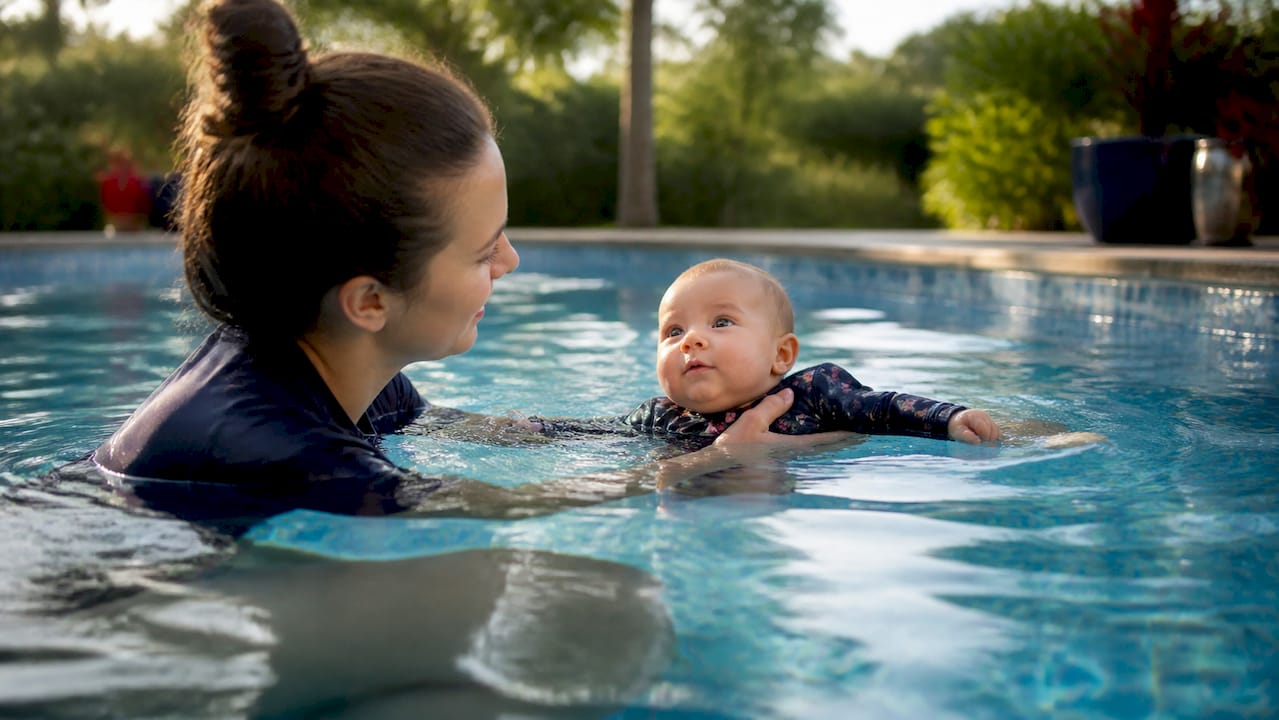
“Dry drowning” is not a recognized medical diagnosis. The American Red Cross, the World Health Organization, and the CDC all discourage the term, along with related phrases like “secondary drowning” and “near-drowning.” These labels are medically obsolete. What matters is whether your child is showing respiratory symptoms after a water incident, and if so, how quickly you act.
If your child is struggling to breathe, is unresponsive, or has lost consciousness after any water exposure, call 911 immediately. If they are coughing persistently, seem unusually tired, or are breathing harder than normal, get them evaluated within the hour. Do not wait to see if symptoms resolve on their own.
Here is what the evidence actually shows about dry drowning myths and facts:
“Dry drowning” and “secondary drowning” are not clinical terms. Modern medicine uses one definition: drowning is respiratory impairment from submersion or immersion in liquid.
When respiratory complications follow water exposure, they almost always appear within hours, not days. Clinical reviews find no solid evidence for silent, symptom-free deterioration followed by sudden death days later.
Nonfatal drowning incidents outnumber fatal ones by multiple times in U.S. data, which means most water incidents are survivable when parents respond to symptoms promptly.
Prevention works. Layered strategies, including active supervision, pool barriers, life jackets, and survival swim lessons, are what the WHO and CDC recommend.
The sections below cover the clinical definitions, the real physiology behind the myth, a symptom checklist, and concrete prevention steps.
Key Takeaways
“Dry drowning” is not a medical diagnosis — watch for respiratory symptoms after any water incident and act within hours, not days.
Point | Details |
“Dry drowning” is obsolete | WHO, CDC, and the American Red Cross all discourage the term; modern medicine uses one drowning definition. |
Symptoms appear within hours | Respiratory complications from water aspiration typically present within 4–8 hours, not days later. |
Know the red flags | Persistent coughing, labored breathing, lethargy, or confusion after a water incident require prompt medical evaluation. |
Prevention is layered | Supervision, pool barriers, life jackets, CPR training, and survival swim lessons each reduce risk independently. |
Superheroswimacademy | Offers survival swim lessons for infants and toddlers in Palm Beach and Broward counties as one evidence-informed prevention layer. |
Table of Contents
What clinicians actually mean by “drowning” and why older labels mislead
Where the “dry drowning” idea came from and what the physiology actually shows
Signs to watch for after a water incident and when to seek care
What the evidence shows about how often delayed complications actually occur
Proven prevention strategies that actually reduce drowning risk
What working with children in the water has taught us about fear and facts
Survival swim lessons as one layer of a real prevention plan
What clinicians actually mean by “drowning” and why older labels mislead
The modern clinical definition, endorsed by the WHO and reflected in peer-reviewed literature, is straightforward: drowning is respiratory impairment resulting from submersion or immersion in a liquid. That is it. No qualifier about how much water entered the lungs, no distinction between “wet” and “dry,” no separate category for events that happen hours later.
Terms like “dry drowning,” “wet drowning,” “secondary drowning,” and “near-drowning” were common in older medical literature and autopsy reports. Pathologists used them to describe whether water was found in the lungs at autopsy, or whether a patient survived an initial incident only to deteriorate later. The problem is that these labels were never standardized, they meant different things to different clinicians, and they have since been shown to create more confusion than clarity, especially for parents reading parenting blogs.
Major bodies including the WHO, the CDC, and the American Red Cross now actively discourage these terms. The practical implication is direct: the triage and management approach is the same regardless of which outdated label a social media post uses. Watch for symptoms. Seek care when they appear.
Where the “dry drowning” idea came from and what the physiology actually shows
The phrase has roots in mid-20th century forensic pathology. When autopsies showed little or no water in the lungs of drowning victims, pathologists labeled those cases “dry drowning” and theorized that a reflex airway closure, called laryngospasm, had sealed the airway before water could enter. The term stuck in popular culture long after clinicians moved on.
Three mechanisms get discussed in the context of what people call “dry drowning”:
Laryngospasm is a sudden, involuntary closure of the vocal cords triggered by water contacting the airway. It can cause immediate, severe breathing difficulty. The critical word is immediate. According to the Cleveland Clinic Journal of Medicine, laryngospasm accounts for fewer than 2% of drowning cases in clinical series, and when it occurs, it produces respiratory compromise right away, not hours or days later.
Aspiration of water is more common and more relevant. When water enters the lungs, it can disrupt the surfactant layer that keeps the air sacs open. This leads to inflammation and, in significant cases, pulmonary edema, where fluid accumulates in the lung tissue. This process takes time to develop, which is why a child who seemed fine immediately after a pool incident might show worsening symptoms over the next few hours.
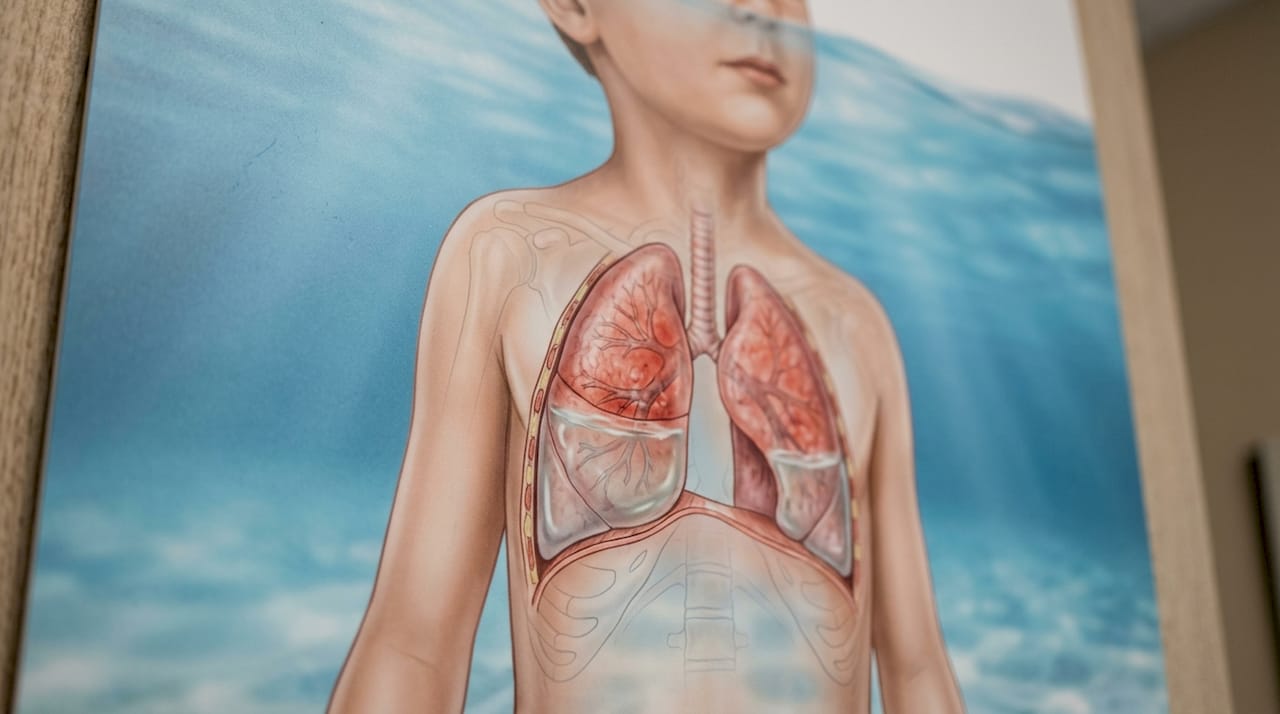
Pulmonary edema and chemical pneumonitis are the plausible delayed complications. They are real, they can be serious, and they do require medical attention. But “delayed” here means hours, not days. The scenario that circulates on parenting forums, a child playing happily for two or three days after a water incident and then dying without any warning signs, is not supported by clinical evidence.
Pro Tip: If your child swallowed a mouthful of pool water and is acting completely normal, that is not a medical emergency. The concern is sustained or worsening respiratory symptoms, not the fact that water contact happened.
The CU Anschutz emergency medicine team notes that media coverage of “dry drowning” resurfaces every summer and consistently overstates the risk of delayed, symptom-free deterioration. That coverage pulls parental attention toward a rare and mischaracterized scenario rather than toward the prevention strategies that actually save lives.
Signs to watch for after a water incident and when to seek care
Not every water incident requires a trip to the ER. But knowing which symptoms demand immediate action versus which warrant close monitoring can make a real difference.
Call 911 immediately if your child shows any of these:
Loss of consciousness or unresponsiveness
Severe difficulty breathing or gasping
Blue or gray color around the lips or fingertips
Seizures following water exposure
Persistent chest pain that does not resolve within minutes
Seek prompt medical evaluation (within the hour) for:
Persistent coughing that does not stop after a few minutes
Increased work of breathing: nostrils flaring, ribs visible with each breath, belly breathing
Unusual lethargy or difficulty staying awake
Vomiting that follows a water incident
Confusion, slurred speech, or behavioral changes after submersion
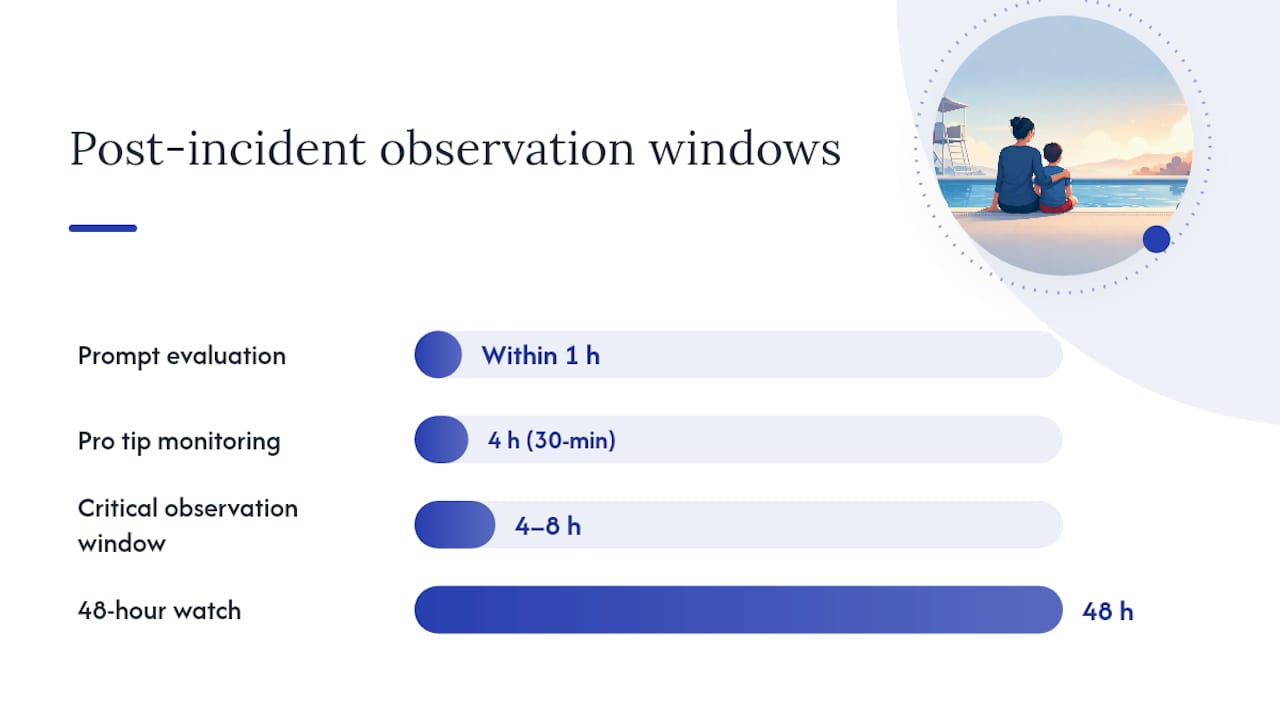
The Cleveland Clinic advises that aspiration-related complications typically present within hours of the incident. The first 4–8 hours are the most critical observation window. New or worsening symptoms during that window warrant immediate evaluation, not a wait-and-see approach.
If symptoms appear and you call EMS or go to an emergency room, tell them: the exact time of the incident, how long your child was submerged or struggling, what symptoms you observed and when they started, and what first aid was given. That information helps clinicians triage quickly.
A note on symptoms that appear days later: if your child was completely symptom-free for 48 hours and then develops a cough or fever, that is more likely a respiratory infection than a drowning complication. Still worth a doctor’s visit, but a different clinical picture entirely.
Pro Tip: Set a phone timer for 4 hours after any significant water incident where your child coughed, gagged, or struggled. Check in on them every 30 minutes during that window. If anything changes, act immediately.
What the evidence shows about how often delayed complications actually occur
The fear around “dry drowning” is disproportionate to the actual risk profile. That is not dismissiveness — it is what the data show.
According to Emergency Medicine News, nonfatal drowning incidents outnumber fatal drowning deaths in the U.S. by an estimated 2 to 8 incidents per death. Most of those nonfatal events involve children who received prompt attention when symptoms appeared.
The same clinical reviews find no high-quality evidence supporting the idea that a child can be completely asymptomatic for a prolonged period and then deteriorate fatally from drowning alone. When delayed complications do occur, they are almost always preceded by early symptoms, or they turn out to have another cause, such as a secondary infection or an underlying condition discovered during evaluation.
What this means practically: the risk of a child dying from a water incident after a completely symptom-free interval is not supported by the clinical literature. The risk of a child dying because a caregiver dismissed early symptoms as minor is well-documented. Watch for symptoms. Act on them.
Proven prevention strategies that actually reduce drowning risk
Fear-driven myths about “dry drowning” can paradoxically make children less safe by directing parental energy toward a poorly defined scenario rather than the prevention steps that have real evidence behind them. The WHO and the CDC both emphasize layered protection, because no single strategy is sufficient on its own.
The core prevention layers:
Active supervision within arm’s reach. A designated water watcher, not a distracted adult glancing up from a phone, should be within reach of any child near water. Drowning is fast and silent. Michigan Medicine practitioners consistently identify supervision lapses as the primary factor in pediatric drowning incidents.
Four-sided pool fencing with a self-latching gate. Barriers reduce pool drowning risk substantially for young children. The fence needs to isolate the pool from the house, not just the yard perimeter.
Life jackets near open water. U.S. Coast Guard-approved life jackets for every child near lakes, rivers, or boats. Floaties and swim rings are not safety devices.
Survival swim lessons starting in infancy. The American Academy of Pediatrics supports swim lessons for children as young as 1 year old. Survival swim curricula teach children to roll to their back and float if they fall in, buying critical time. Lessons reduce risk but do not replace supervision.
CPR training for caregivers. Bystander CPR is one of the most effective interventions in a drowning emergency. Every adult who supervises children near water should be trained.
Bath time rules. Young children can drown in inches of water. Never leave a child alone in the bath, even briefly.
Boating safety. Life jackets on, always, for every child on any watercraft.
For families thinking about infant drowning prevention at home, the combination of physical barriers and constant supervision is the foundation. Swim lessons build on that foundation; they do not replace it.
Pairing water safety habits with broader infant safety routines, including safe sleep practices and consistent supervision protocols, gives caregivers a more complete picture of how to keep young children safe across different environments.
What working with children in the water has taught us about fear and facts
The anxiety parents feel after reading a “dry drowning” story online is completely understandable. The headlines are alarming, the scenarios described are terrifying, and the instinct to protect your child is exactly right. But that anxiety is most useful when it is pointed at the right targets.
In the work of teaching survival swim skills to infants and toddlers, the most consistent observation is this: the parents who are most prepared are not the ones who have memorized every worst-case scenario. They are the ones who know what to watch for, what to do when they see it, and how to build real skills in their children rather than relying on luck or myth.
The clinical consensus on dry drowning myths is actually reassuring, once you understand it. Your child is not going to die silently two days after a pool visit with no warning signs. But they could be in serious danger if you dismiss persistent coughing or unusual fatigue after a water incident as “probably nothing.” The difference between panic and preparedness is knowing which symptoms matter and acting on them without hesitation.
Instructors who work with young children in the water, and who hold current CPR and First Aid certifications, are trained to recognize early respiratory distress and to communicate clearly with parents about what to watch for after a lesson or a water incident. That coordination between instructors and caregivers is part of what makes structured swim programs a meaningful safety layer, not just a skill-building exercise.
Survival swim lessons as one layer of a real prevention plan
Survival swim lessons are not a cure for drowning risk, and no honest swim program will tell you they are. What they do is give young children a fighting chance if they fall into water unexpectedly, and they give parents one more layer of protection in a stack that also includes supervision, barriers, and CPR readiness.
Superheroswimacademy offers survival swim instruction for infants, toddlers, and young children in Palm Beach and Broward counties, including private lessons at home, small group classes in heated pools, and parent-and-child sessions. Every instructor completes rigorous training in CPR, First Aid, and the academy’s own survival swim curriculum. With over 2,500 children taught, the program is built around one goal: safer, more confident swimmers who know how to help themselves if something goes wrong. If you are ready to add structured swim skills to your family’s water safety plan, book a lesson at Superheroswimacademy or explore the instructor training retreat if you work with children in aquatic settings.
Sources
These sources form the clinical and institutional basis for the information in this article:
This article is general information, not a substitute for advice from a qualified doctor. Consult a qualified healthcare professional about your own circumstances before acting on anything here.
Recommended
Comments