
Infant Water Acclimation: A Safe, Step-by-Step Guide
- superheroswim
- 17 minutes ago
- 12 min read

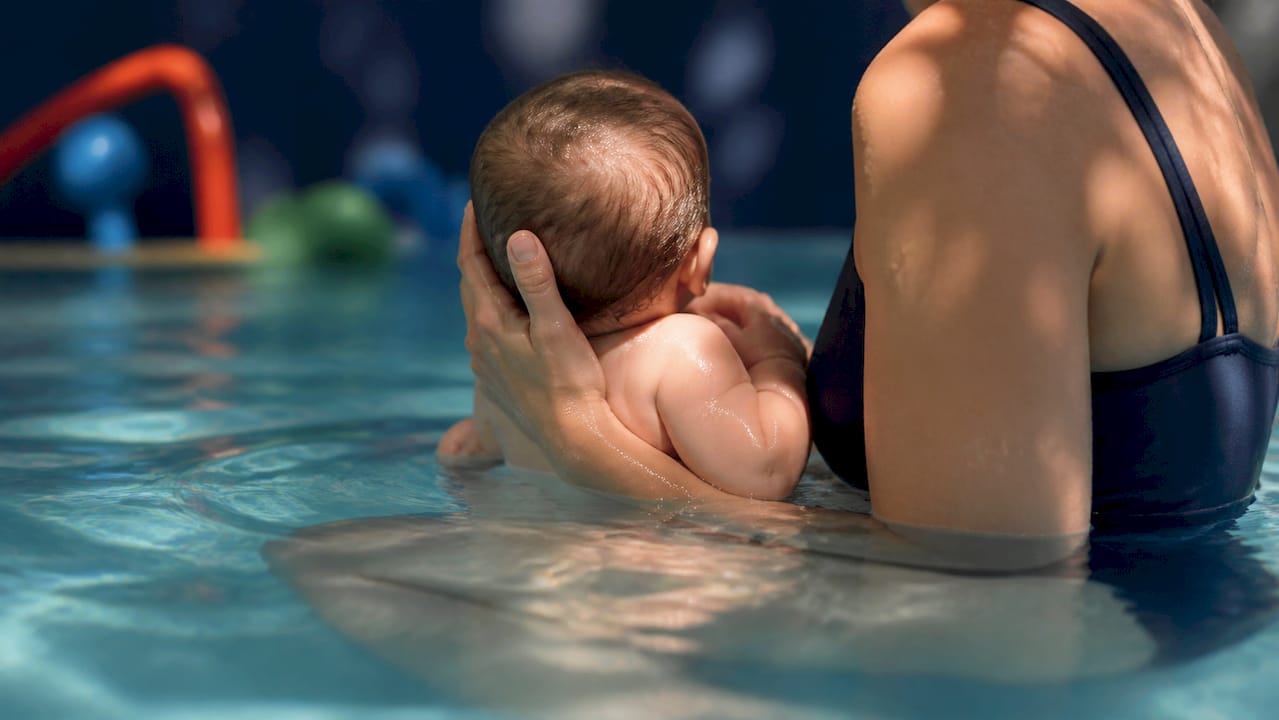
Most babies can start gentle infant water acclimation as early as two to six months old, and the one rule that never changes is constant touch supervision: a caregiver’s hands stay on the baby, within arm’s reach, the entire time. This applies to a kitchen sink bath just as much as it applies to a heated pool. Nothing else in this guide matters if that single rule slips.
Here’s the age breakdown in short form:
0 to 6 months: Bath-based water play only, warm water, short sessions, no formal pool lessons required.
Around 6 months: Many families begin supervised, warm-water pool exposure once head control is solid.
Around 1 year: The American Academy of Pediatrics notes swim lessons can be appropriate for many one-year-olds, though readiness varies by child.
If you want to start today, check that your bathwater sits around 90 to 100°F, keep the session under ten minutes, and never let go of your baby with either hand. If your infant was premature, has a heart or lung condition, or you’re just unsure, call your pediatrician before you do anything in a pool.
Key Takeaways
Infant water acclimation succeeds when parents pair short, warm, positive sessions with unbroken touch supervision and realistic expectations about what swimming skills can and cannot do for safety.
Point | Details |
Start age varies by activity | Bath play can begin immediately; pool sessions usually start around 6 months once head control is steady. |
Touch supervision is non-negotiable | Keep a hand on your baby in or near any water, since drowning in shallow water is often silent. |
Progress in small steps | Move from chest-to-chest holds to face-to-face glides to supported back floats only once each stage feels calm. |
Lessons build skill, not drown-proofing | Formal swim programs support motor development but do not replace fencing, supervision, or CPR readiness. |
Get trained help when ready | Superheroswimacademy’s certified instructors in Palm Beach and Broward counties guide submersion and progression steps parents shouldn’t attempt alone. |
Table of Contents
What Age Is Right for Infant Water Acclimation?
Readiness for water isn’t a single milestone. It’s a moving target that shifts with head control, temperature regulation, and alertness, and it looks different at three months than it does at ten months.
Zero to six months: bath is the whole world
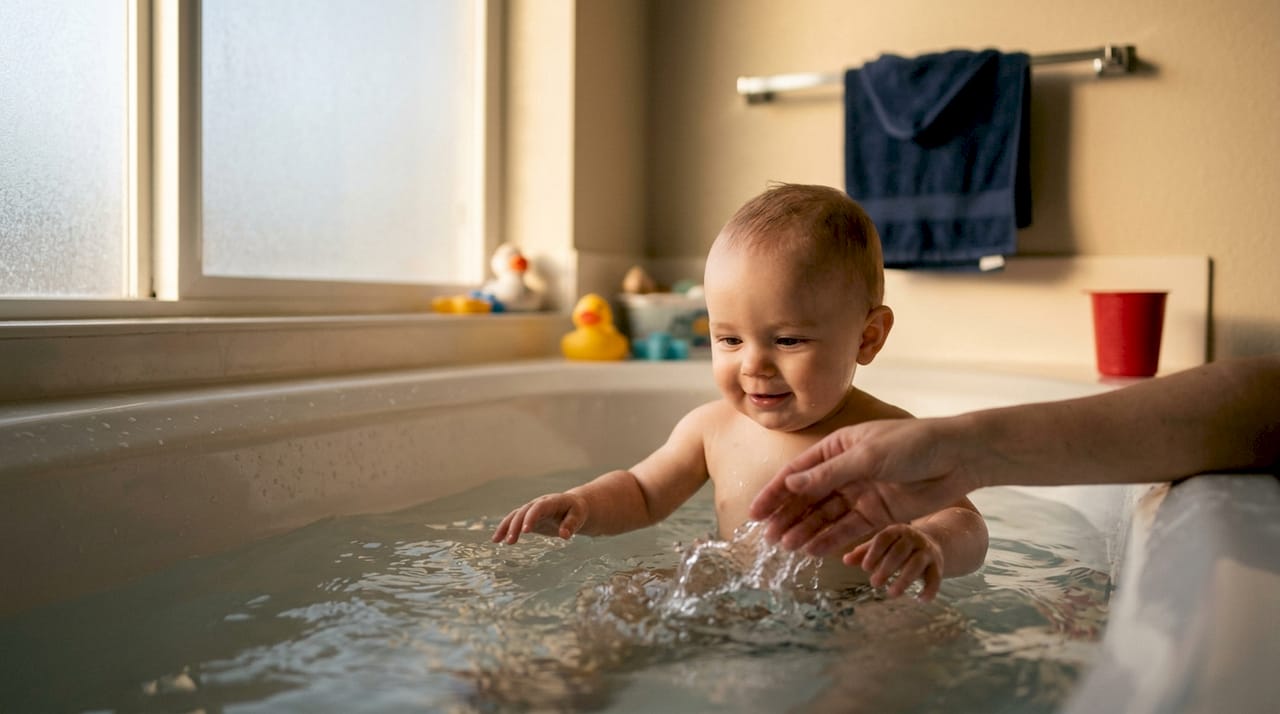
At this stage, the bathtub or a warm baby bath basin is the entire water-acclimation program, and that’s genuinely enough. Babies this young lose body heat fast because they haven’t built up insulating fat or developed reliable shivering responses, so anything beyond a warm bath introduces chilling risk without adding benefit. Gentle face-washing, splashing near the chest, and a few seconds of back-and-forth motion in the tub are appropriate. Formal pool visits aren’t recommended yet, and most pediatricians will tell you there’s no rush.
Six to twelve months: the pool door opens, carefully
Head and neck control typically firms up around four to six months, which is the physical prerequisite for holding a baby upright or supported in a pool without strain. Many parent-and-child swim programs, including Superheroswimacademy’s own parent-and-me sessions, start accepting babies in this window. Pool temperature matters more here than anywhere else in the process. Warmer water, in the roughly 87 to 94°F range often recommended for first pool visits, keeps a baby from chilling during a 10 to 15 minute session.
Around one year: AAP guidance and skill building
The AAP guidance on infant water safety acknowledges that formal swim lessons can be appropriate for many children around age one, though it stops well short of recommending lessons as a universal drowning-prevention tool for every toddler regardless of readiness. This is also the age where sessions can stretch to 20 to 30 minutes and where basic skills like front floats and directed kicking start to make sense developmentally.
Premature infants, babies with cardiac or respiratory conditions, and any infant with a history of illness affecting temperature regulation need pediatric clearance before any pool exposure, not just a green light for the bathtub.
Watch for these readiness cues before moving to the next stage:
Steady head control without support for at least a few seconds
Comfortable body temperature maintained through a full session, no shivering or blue-tinged lips
Alert, engaged behavior rather than persistent crying or arching away from water
Consistent stop signal: if your baby goes rigid, cries hard, or turns bright red, the session ends now, not in five minutes
Age Stage | Setting | Session Length | Water Temperature |
0 to 6 months | Home bathtub | 5 to 10 minutes | 90 to 100°F |
6 to 11 months | Warm pool, parent-and-child class | 10 to 15 minutes | 87 to 94°F |
Around 1 year | Pool, semi-private or private lesson | 20 to 30 minutes | 87 to 94°F |
How Do You Introduce a Baby to Water Safely?
Water acclimation techniques work best as a sequence, not a single event. You’re building a stack of small, positive associations, and each one prepares the baby for the next.
Start in the bath. Wash your baby’s face with a warm, wet washcloth every bath, letting water run near the eyes and mouth without dripping into them directly. This single habit does more to prevent face-splash panic later than almost anything else you can do. Add gentle splashing near the chest and simple songs or counting, always paired with a calm voice.
Move to chest-to-chest holds in warm water. Once you’re in a pool, hold your baby upright against your chest, supporting the head and neck, and let the water rise to shoulder height. This position keeps your baby’s airway well above the surface while letting them feel weightlessness for the first time.
Introduce short, timed exposures. Ten minutes is a reasonable ceiling for a first pool session. Watch for fatigue and cold before the clock tells you to stop.
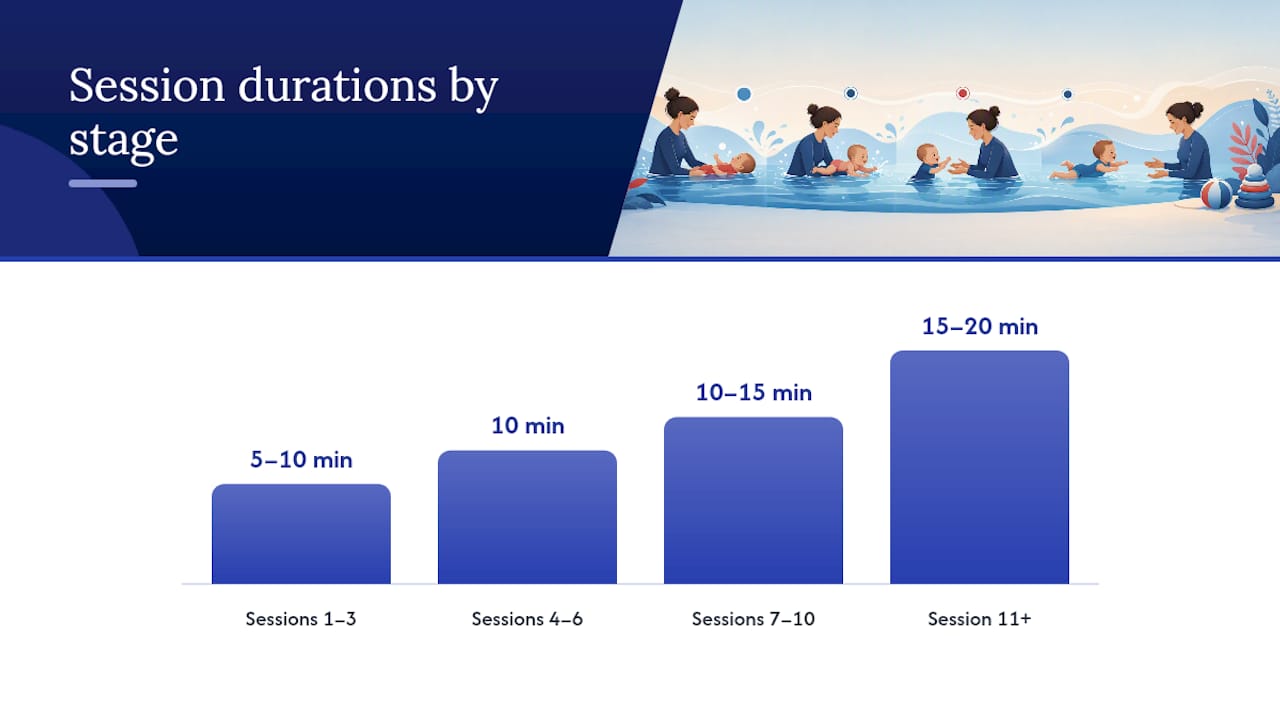
Here’s a numbered progression to follow across the first several weeks:
Session 1 to 3: Chest-to-chest holds, gentle bobbing, face-washing familiarity, five to ten minutes total.
Session 4 to 6: Face-to-face holds at arm’s length, slow horizontal glides with full support under the belly and chin, ten minutes.
Session 7 to 10: Supported back-float introductions, one hand under the head and one under the hips, brief kicking encouragement, 10 to 15 minutes.
Session 11 and beyond: Gradual reduction of support during back floats, short assisted glides toward a wall or parent, 15 to 20 minutes.
Move to the next step only when your baby tolerates the current one without distress across two or three consecutive sessions. If a session goes badly, step back one level next time rather than pushing forward out of momentum.
Pro Tip: Keep the first three to five sessions almost boringly simple. Parents who try to pack in floating, kicking, and submersion practice in the first week usually end up with a baby who associates the pool with stress. Slow is the fast way here.
Watch for overexposure signs during any drill: persistent shivering, lips turning pale or blue, or a baby who goes from fussy to unusually quiet and limp. Any of those means out of the water immediately, dry off, and warm up.
When Is It Safe to Submerge an Infant?
Full submersion is the piece parents ask about most, and it’s also the piece most likely to go wrong if attempted without guidance. The direct answer: controlled, brief submersion is something trained instructors introduce, typically once a baby has months of positive water exposure behind them, and it should not be attempted at home as a first-time experiment.
Infants have a reflex, sometimes called the mammalian dive reflex, that can close the airway briefly when water hits the face. It’s real, but it’s inconsistent, weakens with age, and is not a guarantee against water entering the lungs. Instructors who work with this reflex in program settings tightly control water temperature, timing, health screening, and emergency readiness before ever attempting a brief submersion. That level of control is very hard to replicate in a backyard pool.
If a qualified instructor is guiding limited submersion practice, the protocol generally looks like this:
Confirm the baby is warm, alert, and calm, not tired or hungry.
Position the baby facing the instructor, at the surface, with full head and body support.
Give a consistent verbal or physical cue every single time, so the baby learns to associate the cue with what’s coming.
Submerge for one to two seconds only, no deeper than chin level, then lift immediately.
Bring the baby to your chest, speak calmly, and check breathing and color before considering another attempt.
Do not do the following, ever, regardless of what you’ve seen online:
Do not drop or toss a baby into water, even from a low height.
Do not force face-first submersion if the baby is crying or fighting it.
Do not submerge a newborn or any baby who hasn’t built basic temperature tolerance in warm water first.
Do not leave a baby unattended for even a few seconds during or immediately after submersion practice.
Why Is Bath and Home Water Safety So Critical?
Babies can drown in as little as one to two inches of standing water, and it usually happens silently. There’s no splashing, no gasping, no cry for help. A baby who slips below the surface of a few inches of bathwater can lose consciousness within seconds and show no outward sign of distress before that happens.
This is why touch supervision, meaning a hand physically on the baby at all times in or near water, isn’t a suggestion. It’s the entire safety system. Bath seats and support rings have been documented to tip over in real incidents, and they should never be treated as a substitute for your hands. The same logic applies to any inflatable pool float or “swim aid”: useful for building comfort, useless as protection.
A practical bath and home checklist:
Never step away from the tub, even to grab a towel. Bring everything you need into the bathroom before the bath starts.
Check water temperature with your wrist or a thermometer before placing the baby in.
Remove electrical devices, sharp edges, and anything that could tip into the tub.
Install toilet lid locks; toddlers can drown in a toilet bowl.
Empty buckets, kiddie pools, and any standing water containers immediately after use.
For pool areas at home or at a relative’s house, add layers beyond supervision: four-sided isolation fencing with a self-closing, self-latching gate, and a pool cover when the pool isn’t in use. Seattle Children’s water-safety guidance is direct on this point: swim lessons and water acclimation build comfort and skill, but they do not replace supervision, fencing, or any other physical barrier. Every layer matters because any single layer can fail.
Caregiver preparation matters just as much as the physical barriers. The Consumer Product Safety Commission specifically recommends that anyone supervising a baby around water take infant-and-child CPR and First Aid training, and that flotation devices never substitute for a caregiver’s direct attention. Our guide to infant drowning prevention strategies walks through how these layers work together in more detail.
What Should You Do if a Baby Swallows or Inhales Water?
Move fast, but move in order. Panicking wastes seconds you don’t have.
Remove the baby from the water immediately and lay them on a firm, flat surface.
Check for visible obstruction in the mouth. Clear it gently with a finger only if you can see it; don’t blindly sweep the mouth.
Check for breathing. Look for chest movement, listen for breath sounds, and check color for 5 to 10 seconds.
If the baby isn’t breathing, start infant CPR immediately and have someone call 911, or call 911 yourself on speaker if you’re alone.
If the baby is breathing but coughing or spitting up water, turn them on their side in a recovery position and continue watching breathing and color closely.
Call 911 if the baby shows any of the following: persistent coughing, unusual sleepiness or difficulty waking, bluish lips or skin, vomiting, or any period of unresponsiveness, even brief.
When you call 911, be ready to give your location, the baby’s age, roughly how long they were in or under the water, and their current breathing status. Dispatchers will often walk you through CPR steps in real time if you haven’t been trained, but training beforehand changes outcomes.
This is the single best argument for taking an infant-and-child CPR and First Aid course before you ever start water acclimation, not after. Every Superheroswimacademy instructor holds current CPR and First Aid certification as a baseline requirement, not an extra credential, and we’d encourage every parent to hold the same.
What Does Research Actually Say About Baby Swim Programs?
Here’s the honest summary: formal aquatic activities for infants appear to be generally safe and are associated with improvements in gross and fine motor development when water temperature and other physiological conditions are properly maintained. That’s a real, useful finding. It is not, however, evidence that swim lessons prevent drowning.
The systematic review behind this finding is explicit that its studies measured motor and cognitive outcomes, not drowning-prevention outcomes. No controlled study has shown that infant swim lessons make a baby drown-proof, and the CDC’s drowning data consistently lists drowning among the leading causes of unintentional injury death in young children regardless of swim training.
What this means in practice:
Swim lessons build genuine comfort, breath control awareness, and body positioning skills.
Lessons do not replace fencing, supervision, or CPR readiness, a point Seattle Children’s makes just as firmly as the AAP does.
Benefits depend heavily on program quality: proper water temperature, trained instructors, and appropriate session length.
No study claims a specific age at which a child becomes “safe” around water without supervision.
If you’re evaluating a program, ask directly how instructors are trained and what happens if a baby shows signs of distress. Our post on how instructors keep infants safe in the water covers what that training should actually include.
What Do Swim Instructors Wish Parents Knew?
Parents almost always ask two questions in the first session: is my baby too young, and is my baby actually enjoying this or just tolerating it? Both questions matter more than most of the technical stuff.
Instructors watch body language more than they watch skill. A baby who relaxes into a hold, makes eye contact, and kicks without being asked is progressing. A baby who goes stiff, arches away, or cries the moment they touch the water needs a slower approach, not a firmer one. Session structure at Superheroswimacademy reflects that: short blocks, warm water, and constant reading of the baby’s state rather than a fixed script every family has to follow at the same pace.
The realistic timeline surprises a lot of parents. Comfort in water typically builds over weeks, not a single class. A baby who cries through the first two sessions and then relaxes by the fourth is completely normal, not a sign something’s wrong. What matters more than speed is consistency: showing up regularly, keeping sessions positive, and never forcing a skill the baby isn’t ready for.
Pediatric clearance comes up more than people expect, too, especially for babies born early or with any history of ear infections, respiratory issues, or heart conditions. Instructors should always ask about medical history before a first session, and any responsible program will tell you to check with your pediatrician first if there’s any doubt. Our team requires that conversation before enrolling babies with known medical complexity, and we’d rather lose a booking than skip that step. You can read more about what that screening and instructor training looks like in our piece on why infant swim certification matters.
Ready to Start Lessons With a Trained Instructor?
Reading about water acclimation gets you comfortable with the plan. Getting a certified instructor’s hands in the pool with your baby is what actually builds the skill and the safety net around it. That’s the gap Superheroswimacademy fills for families in Palm Beach and Broward counties: every instructor completes CPR, First Aid, and the academy’s own survival swim curriculum before ever working with a child, so you’re not guessing whether the person holding your baby knows what to do if something goes wrong.
Families choose the format that fits their comfort level. Parent-and-child classes work well for babies still building basic water tolerance, private in-home lessons suit families who want one-on-one pacing, and concierge instruction is available for households that want a fully managed experience. If you’d rather guide the process yourself first, the online courses walk parents through the same acclimation principles covered here, step by step, at your own speed.
If your baby has hit the readiness signs described above, the next move is simple: visit the Superheroswimacademy homepage, check current class availability, and book a first session or consultation. There’s no reason to wait once your baby is showing the signs, and starting with a trained instructor from day one avoids the trial-and-error that home practice alone can’t fully cover.
Where Can Parents Read More on Water Safety?
Infant water safety guidance from the American Academy of Pediatrics
Systematic review on formal aquatic activities for infants
National Drowning Prevention Alliance resources
If your baby was born premature, has a cardiac or respiratory condition, or you’re simply unsure about readiness, talk to your pediatrician before starting pool-based acclimation, and look for an infant-and-child CPR course through a local hospital or the American Heart Association before your first water session.
This article is general information, not a substitute for advice from a qualified doctor. Consult a qualified healthcare professional about your own circumstances before acting on anything here.
Sources
Recommended
Comments