
Swim Lesson Booking Best Practices for Parents in 2026
- superheroswim
- Jun 19
- 8 min read


Swim lesson booking best practices are defined as early, skill-assessed, and family-centered scheduling strategies that secure the right class at the right time for your child. Summer sessions at programs like SwimKids and Big Blue Swim School fill within minutes of registration opening, so waiting until you see a public announcement is already too late. The strategies in this guide cover everything from skill placement and family portals to package comparisons and first-day logistics, giving you a clear plan before spots disappear.
1. Why early registration is the single most important booking move
Summer swim sessions are the most competitive registration window of the year, with spots filling within minutes of opening. That speed is not an exaggeration. Registration windows at many programs start as early as late May, and tiered access systems give current members or residents first pick before the general public ever sees the calendar.
The practical fix is simple: join the mailing list of every program you are considering. Mailing lists provide early access links and pre-release schedules before public registration opens. Most parents skip this step and then wonder why every preferred time slot is gone by the time they log in.
Sign up for program newsletters in january or february, well before summer planning begins
Set a calendar reminder for the exact registration open date and time
Have your payment method and child’s information ready before the window opens
Pro Tip: Enroll your child in an off-season weekly session to maintain “current family” status. Off-season enrollment at many programs unlocks priority registration for the following summer, which is the single best insider move available to parents.
2. Complete a skill assessment before you book any class
Booking the wrong skill level is one of the most common and costly mistakes parents make. Skipping a skill assessment increases the risk of late cancellations, and rebooking during peak periods is difficult and time-consuming. A free 10–15 minute assessment is standard at most reputable programs and takes less time than a single lesson.
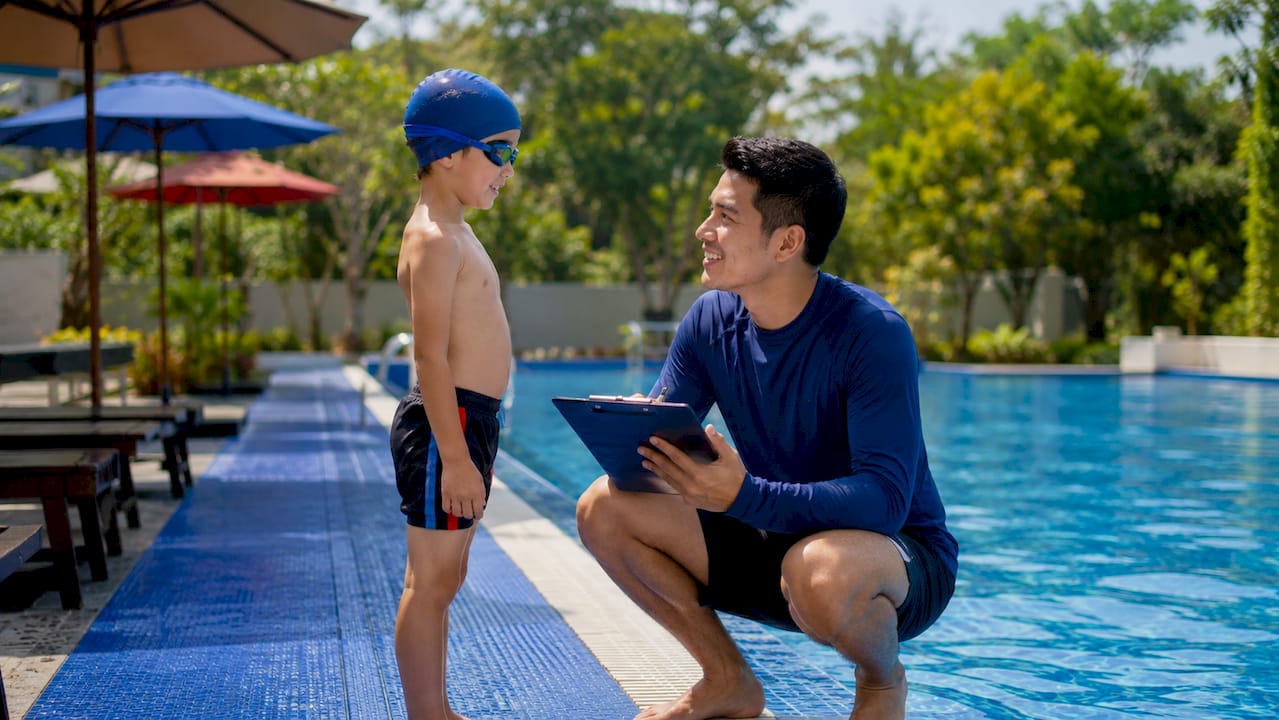
The assessment protects your child’s safety and your schedule. A child placed in a class that is too advanced becomes frustrated and disengaged. A child placed too low gets bored and loses motivation. Programs like SwimKids use structured level progressions to match children to the correct class from day one.
Correct class placement prevents mid-session transfers that disrupt your child’s progress and your family’s schedule. Treat the assessment as a required first step, not an optional add-on.
3. Use family portals to simplify multi-child swim lesson booking
Managing swim lessons for two or three children across different skill levels and time slots creates real scheduling complexity. Family portals like LessonBuddy™ from Big Blue Swim School consolidate all children’s schedules, billing, and make-up lessons into one account. That single-screen view eliminates the back-and-forth of managing separate logins and paper schedules.
When evaluating programs for multi-child swim lesson booking, look for these features:
A unified dashboard showing all children’s upcoming lessons and progress
Automated billing that handles multiple enrollments without manual invoicing
Self-service make-up lesson booking that does not require a phone call to staff
Clear communication tools that send updates per child, not just per account
Pro Tip: Before enrolling multiple children, call the program directly. Direct contact with swim schools often reveals availability for specialized classes that do not appear on the online portal, including adaptive lessons and sibling-paired sessions.
4. Swim lesson booking options comparison: group, private, and packages
Understanding the cost and engagement differences across lesson types is central to effective swim lesson scheduling. Group lessons at programs like SwimKids run approximately $30–$38 per class. Private lessons can reach $180 per class. The right choice depends on your child’s personality, current skill level, and your family’s budget.
Lesson Type | Typical Cost Per Class | Best For | Key Tradeoff |
Group (4–6 kids) | $30–$38 | Social learners, beginners | Less individual attention |
Semi-private (2–3 kids) | $60–$90 | Siblings or friends at same level | Requires coordinated scheduling |
Private (1-on-1) | $100–$180 | Fearful children, fast progressors | Higher cost per session |
Package plans | Varies by program | Families committing long-term | Upfront payment required |
Private lesson packages offer the fastest skill progression for children who are anxious around water or need focused correction. Group lessons build social confidence and normalize the pool environment, which matters for toddlers experiencing water for the first time. For a detailed breakdown of what drives these price differences, the guide on swim lesson cost factors explains the variables clearly.
Common discounts worth asking about include sibling enrollment savings, multi-class bundles, and weekday session pricing. Sibling and multi-class discounts can save 5–10% per child, which adds up significantly across a full season.
5. Timing strategies that align lessons with your family’s real schedule
The best swim lesson time slot is the one your family can actually keep every week. Consistency matters more than the ideal day or time. A Wednesday afternoon slot your child attends every week beats a Saturday morning slot you cancel half the time.
Weekday sessions typically have more availability and lower competition than weekend slots. Weekend swim classes fill fast because they suit the majority of working families, which means less flexibility and fewer make-up options. If your schedule allows a weekday slot, take it.
Sync lesson days with school pickup routes to reduce extra driving
Avoid scheduling lessons immediately before or after high-energy activities that leave children too tired or wound up
Use waitlists strategically by joining multiple programs simultaneously, then confirming the best fit once a spot opens
For families managing school schedules alongside swim commitments, the guide on balancing swim lessons with school offers practical frameworks for avoiding conflicts during the academic year.
Pro Tip: Year-round enrollment beats seasonal enrollment for skill retention. Children who swim only in summer lose significant progress by the following spring. The comparison of year-round vs. seasonal lessons shows the safety and developmental case for consistent enrollment.
6. Understand make-up lesson policies before you commit
Make-up lesson policies vary widely across programs, and a poor policy can cost you real money. Programs that offer 12–15 automated make-up tokens via self-service apps are significantly more convenient than those requiring a phone call to reschedule. Self-service tokens let you rebook at 10 p.m. on a Sunday without waiting for office hours.
Ask these questions before signing any enrollment agreement:
How many make-up lessons are allowed per session?
Can make-ups be booked through an app or online portal?
Do unused make-up tokens roll over, or do they expire at session end?
Is there a fee for late cancellations, and how much notice is required?
Programs with rigid make-up policies create friction that discourages consistent attendance. Consistent attendance is the single biggest driver of skill progression for young swimmers.
7. First-day logistics that set your child up for success
The first lesson sets the emotional tone for every lesson that follows. A child who arrives rushed, confused, or unprepared is more likely to resist the water and less likely to engage with the instructor. Arriving 20 minutes early on the first day gives your child time to acclimate to the pool environment before the lesson begins.
Follow this first-day checklist to avoid common friction points:
Submit all registration paperwork, waivers, and health forms before the first day, not at the front desk
Pack the swim bag the night before: suit, goggles, towel, dry change of clothes, and a small snack for after
Arrive 20 minutes early to allow check-in, changing, and a few minutes of pool-side observation
Use calm, positive language about the lesson during the drive over, avoiding phrases like “don’t be scared”
Confirm the instructor’s name and introduce your child by name before the lesson starts
Small preparation steps remove the logistical stress that makes first days harder than they need to be. When your child sees you calm and organized, they mirror that energy into the water.
Key takeaways
Effective swim lesson booking combines early action, accurate skill placement, and flexible scheduling tools to give your child consistent, safe, and engaging lessons throughout the year.
Point | Details |
Register early and strategically | Join mailing lists and enroll off-season to secure priority access before summer spots open. |
Complete a skill assessment first | Correct placement prevents costly cancellations and keeps your child safe and engaged. |
Use family portals for multiple kids | Platforms like LessonBuddy™ consolidate schedules, billing, and make-ups in one place. |
Compare lesson types by need | Private lessons accelerate fearful learners; group lessons build social confidence at lower cost. |
Prioritize make-up flexibility | Programs with self-service make-up tokens protect your investment and support consistent attendance. |
What I’ve learned after watching hundreds of families book swim lessons
The most common mistake I see is parents treating swim lesson registration like a casual errand. They plan to “get around to it” in June, then discover every Saturday morning slot has been gone since April. The families who secure the best spots treat registration like a competitive event, because it is.
The second pattern I notice is parents choosing lesson types based on price alone. A group lesson is not always the better value for a child who is genuinely afraid of water. That child needs one-on-one attention to build trust with an instructor before group dynamics help rather than hinder. Spending more on a short private package often shortens the total time and total cost to reach the same milestone.
For families with two or more children, the administrative burden of managing separate schedules, separate billing, and separate make-up lessons is real. I have seen parents drop out of programs entirely because the logistics felt unmanageable. A program with a solid family management portal is not a luxury feature. For multi-child families, it is a requirement worth filtering for before you compare anything else.
The families who get the most out of swim lessons are not the ones who find the cheapest class. They are the ones who show up consistently, place their child correctly, and choose a program that makes staying enrolled easy.
— SUPERHERO
Book swim lessons at Superheroswimacademy with confidence
Superheroswimacademy serves families across Palm Beach and Broward counties with survival swim lessons built specifically for infants, toddlers, and young children. Every instructor holds CPR and First Aid certification and is trained in the academy’s own proven survival swim curriculum.
Registration is straightforward and available online, with program options including private lessons, group classes, and online swim courses for flexible family schedules. Parents receive regular progress updates so you always know exactly where your child stands. With over 2,500 children taught and a track record of measurable improvement in a short time, Superheroswimacademy is the trusted next step for families ready to prioritize water safety. Explore availability and register today.
FAQ
When should I register my child for swim lessons?
Register as early as possible, ideally months before the session you want. Summer sessions are the most competitive and fill within minutes of opening, so joining a program’s mailing list for early access is the most reliable strategy.
Does my child need a skill assessment before the first lesson?
Yes. A free 10–15 minute skill assessment places your child in the correct level and prevents mid-session transfers or cancellations that are difficult to resolve during peak enrollment periods.
How do I manage swim lessons for multiple children?
Choose a program that offers a family portal consolidating all children’s schedules, billing, and make-up lessons in one account. Big Blue Swim School’s LessonBuddy™ is one example of this type of platform.
Are private swim lessons worth the higher cost?
Private lessons are worth the cost for children who are fearful of water or need accelerated progress. Group lessons at $30–$38 per class suit social learners and beginners who benefit from peer interaction.
What should I bring on my child’s first day of swim lessons?
Pack a swimsuit, goggles, towel, and a dry change of clothes. Arrive 20 minutes early to allow check-in and pool-side acclimation, and submit all waivers and registration forms before the first day to avoid front-desk delays.
Recommended
Comments