
Transition Home Lessons to Swim Team: A Parent's Guide
- superheroswim
- May 30
- 9 min read

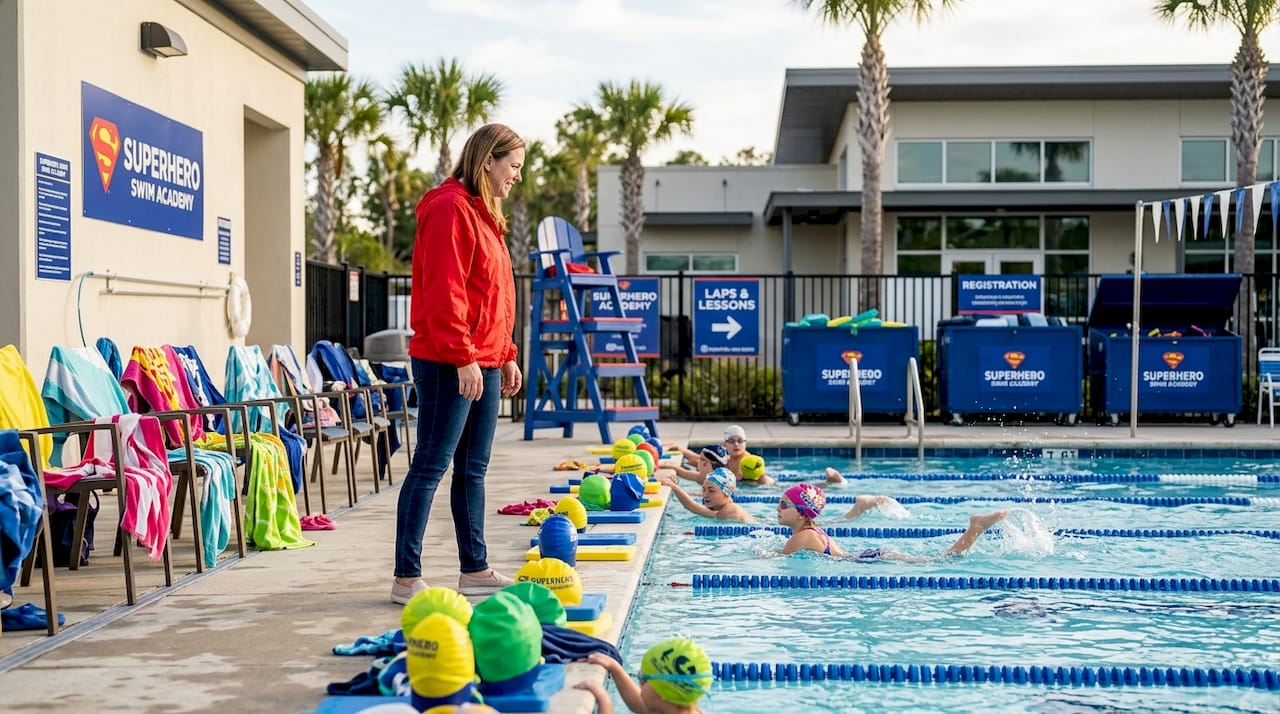
Your child has mastered floating, can swim a lap without stopping, and loves the water. So what comes next? For many families, the answer is a swim team, and the decision to transition home lessons swim team is where parents start second-guessing everything. Is my child ready? Will they keep up? What if they struggle? These are the right questions to ask. The move from private or home swim lessons to a competitive team environment involves more than swimming ability. It takes confidence, independence, and a whole new set of behaviors that most kids need time to build.
Table of Contents
Key takeaways
Point | Details |
Readiness goes beyond swimming | Teams assess technical skills, confidence, and independence, not just the ability to do laps. |
Water safety first | Self-rescue skills and calmness in the water are the foundation before any team environment. |
Group behaviors matter | Teaching your child to follow coaching instructions during home lessons speeds up team integration. |
Stay consistent through change | Even 1 to 2 pool sessions weekly during disruptions preserves skill and confidence. |
Communication with coaches is key | Regular check-ins with coaches help you set realistic goals and track your child’s growth. |
How the transition from home lessons to swim team actually works
Most parents assume swim team tryouts are about how fast a child can swim. They are not. Swim teams assess overall proficiency, placement readiness, and whether a child can function in a group training environment. That is a different bar than what home swim lessons typically target.
Swim team onboarding focuses on assessment and readiness rather than teaching basics from scratch. Coaches are looking for a swimmer who already knows the strokes and can receive feedback without a parent in the water beside them. At many programs across the country, assessments cover all four competitive strokes: freestyle, backstroke, breaststroke, and butterfly.
The commitment level is another factor parents underestimate. Competitive youth swim team practice schedules often require five days per week, monthly meets, and USA Swimming registration for competition eligibility. That is a significant lifestyle shift from a weekly home lesson.
Here is what teams typically look for during placement assessments:
Ability to swim at least 25 meters in freestyle and backstroke without stopping
Basic breaststroke and butterfly kick technique, even if not yet competition-ready
Comfort in a pool without a parent present
Ability to follow verbal instructions from a coach
Age-appropriate stamina for repeated short-distance efforts
Pro Tip: Call the team coordinator before the assessment and ask exactly what strokes and distances will be tested. Some teams offer a trial practice so your child can experience the environment before committing.
Skill | Home lessons standard | Swim team standard |
Freestyle | Basic arm and kick coordination | 25m+ with rhythmic breathing |
Backstroke | Floating and arm movement | Consistent rotation and kick |
Breaststroke | Introduction only | Legal kick pattern required |
Butterfly | Not always covered | Basic kick and timing expected |
Independence | Parent nearby | Fully independent in the water |
Building the skills that actually prepare kids for team swimming
Foundational water safety is the non-negotiable starting point. Before preparing for swim team competitions and group training, your child needs to be genuinely calm and confident when things go wrong in the water. That means rolling to a float, recovering from a surprise splash, and not panicking when they get fatigued.
One of the biggest benefits of home swim lessons is that they allow you to focus on exactly these survival-based foundations in a low-pressure setting. Instructors at Superheroswimacademy build this water safety foundation into every lesson, specifically because it carries over to team environments where coaches cannot provide the same one-on-one attention.
Beyond survival skills, there are behavioral and social skills your child needs before entering a group coaching setting. Swim club readiness criteria include stable strokes, consistent training habits, and swimmer independence. Teaching coaching responsiveness during the home lesson phase makes the team transition dramatically smoother.
Here is how to build those behaviors before the first practice:
Practice listening to instructions without repeating them back or asking for clarification every time
Work on transitioning quickly between drills without prompting
Encourage your child to ask a coach directly if they do not understand something
Have your child pack their own swim bag and take responsibility for their gear
Use swim coordination drills during lessons to develop stroke efficiency, not just endurance
Pro Tip: During the last few home lessons before a team tryout, run a mini simulation. Give your child three instructions in a row without repeating yourself, then ask them to complete a drill sequence. This trains the listening and transitioning skills that coaches notice immediately.
Practical steps for integrating your child into a team environment
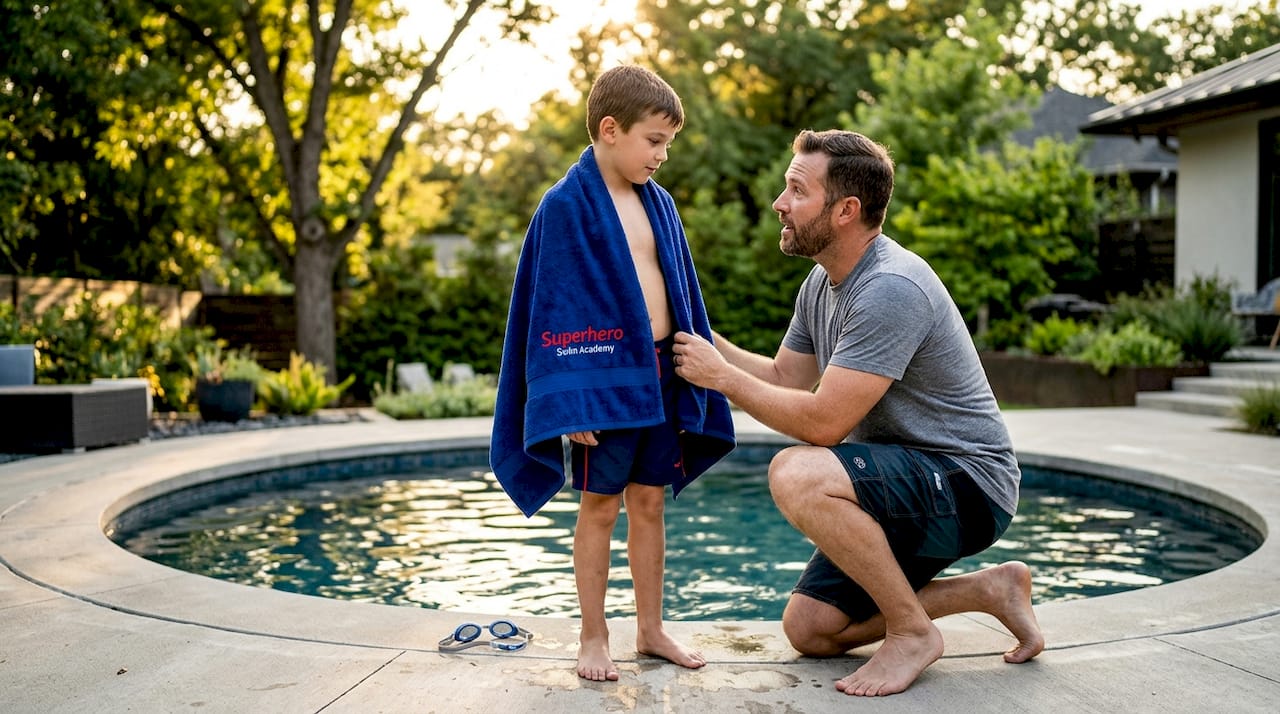
Getting your child through the assessment is only the beginning. The first few weeks of youth swim team practice can feel overwhelming for kids who are used to individualized attention. Your job shifts from learning facilitator to logistics coordinator and emotional support.
Here is a practical sequence to follow when your child joins a team:
Map the weekly schedule. Know which days are practice days, what time warmups begin, and how long each session runs. Build the rest of the week’s activities around the swim schedule, not the other way around.
Prepare gear the night before. Goggles, cap, towel, and a snack should be ready the night before every practice. This removes morning chaos and helps your child arrive focused.
Step back at the pool deck. Resist the urge to coach from the stands or give your child feedback immediately after getting out of the water. Let the coach lead, and let your child process independently.
Establish a consistent bedtime. Early morning practices require real rest. Sleep affects performance, mood, and motivation more than any technical drill.
Talk about what happened, not how they did. Ask “What did you work on today?” instead of “Was it hard?” This keeps the conversation positive and helps you learn about team dynamics.
“Readiness for squad progression is not just about what a swimmer can do in the water. It is about training habits, independence, and the ability to take coaching.” — Understanding Readiness for Squad Progression
Parental involvement in supporting routines matters most in the first few months. After that, pulling back and letting your child own their swim identity is just as important.
Common challenges and how to work through them
Even kids who love swimming hit rough patches during the team transition. Knowing what to expect keeps you from overreacting or, worse, pulling them out at the exact moment a breakthrough is coming.
Fatigue and motivation dips are almost universal in the first month. Five practices a week is a genuine physical load for a young body that has only been doing one or two lessons weekly. The tiredness is real, and it takes three to four weeks for stamina to catch up.
Setbacks in squad progression can sting. A child who excelled in home lessons may be placed in a lower training group than they expected. This is not a failure. Swim team placement is about matching a swimmer to an environment where they can grow, not just swim.
When life gets busy, families often make the all-or-nothing mistake. They either push through exhaustion or skip all practice for two weeks and lose momentum. The research-backed alternative is simpler: maintain 1 to 2 pool sessions weekly during disruptions. This preserves water skills and keeps the swimmer connected to their identity in the sport.
Here is how to address the most common transition obstacles:
For fatigue: reduce other activities temporarily instead of skipping swim practice
For motivation dips: focus on one small improvement per session, not performance outcomes
For social anxiety: arrive early to warmups so your child can connect with teammates before the chaos of practice begins
For schedule conflicts: use a phased approach to training during crunch periods rather than stopping entirely
Pro Tip: If your child is dealing with multiple life changes at once, such as a school transition or a family move, talk to the coach. Most coaches will accommodate a temporary reduced schedule rather than lose a developing swimmer.
Monitoring progress and supporting long-term growth
The hardest part of watching a child on a swim team is knowing what you are actually looking at. Lap times are one measure, but they are a lagging indicator. By the time you see faster times, months of technical improvement have already happened below the surface.
What to track | What it tells you |
Stroke efficiency | Whether technique is improving, not just speed |
Response to coaching | Whether your child is integrating feedback independently |
Attendance consistency | Whether motivation and commitment are stable |
Peer relationships | Whether social integration is supporting confidence |
Willingness to try new events | Whether your child is building competitive courage |
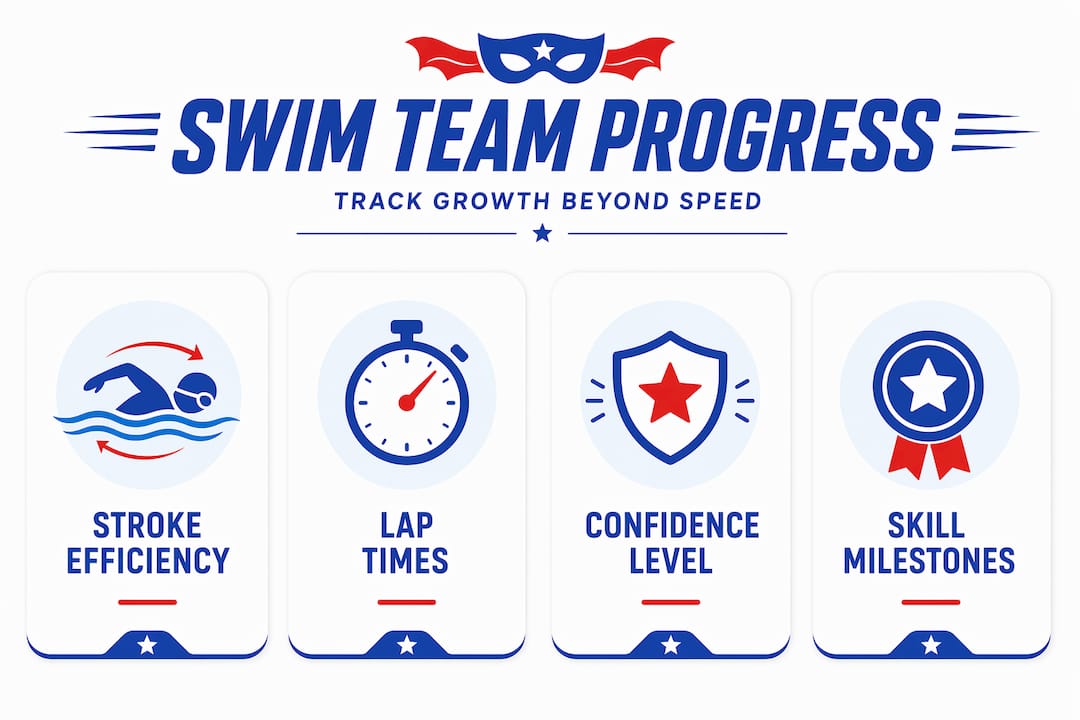
Communicate with coaches at least once a month. Not to advocate for faster squad progression, but to understand what they see and what they are working on. A coach who knows you are engaged will give you better information.
Celebrate small milestones without attaching them to rankings. A child who swims a legal breaststroke for the first time, makes it through a full practice without stopping, or simply chooses to go to practice on a hard day has achieved something real.
What I have learned from watching hundreds of kids make this transition
I have worked with families through this exact moment more times than I can count, and the pattern is always the same. Parents focus on whether their child can swim fast enough. The children who thrive on swim teams are almost never the fastest ones at the start. They are the ones who learned to stay calm under pressure, listen without prompting, and show up even when it is hard.
In my experience, the biggest predictor of success in this transition is not stroke technique. It is whether the child learned to be comfortable in the water without reassurance. That is why I believe introducing group-coaching behaviors during home lessons is one of the most valuable things any instructor can do. Teaching a child to take an instruction, execute it, and wait for feedback is the difference between a child who fits into a team immediately and one who struggles for months.
I have also seen parents derail perfectly good transitions by setting expectations that belong in a different timeline. Your child does not need to be in the top training group by the end of the first season. They need to build the habits, relationships, and confidence that make a long swim career possible. Progression is gradual, and the swimmers who stay in the sport are the ones whose families figured that out early.
— SUPERHERO
Ready to prepare your child for swim team?
At Superheroswimacademy, every lesson is built around more than stroke technique. From the beginning, the focus is on water safety, confidence, and the independent thinking that makes team swimming possible. Instructors work directly with parents to track progress toward real readiness benchmarks, not just whether a child can make it across the pool.
If your child is approaching the point where swim team preparation feels like the next step, Superheroswimacademy offers structured swim training plans and multiple convenient locations across Palm Beach and Broward counties. Explore lesson locations near you and find out how the academy’s approach builds the exact skills that swim teams look for on day one.
FAQ
What skills does a child need before joining a swim team?
Most teams require competency in all four strokes, the ability to swim at least 25 meters without stopping, and the confidence to follow a coach’s instructions independently. Technical ability and behavioral readiness are both assessed during placement.
How long does the transition from home lessons to swim team take?
Most children take four to eight weeks to feel comfortable with team practice routines. Building foundational behaviors like listening to group instructions during home lessons significantly shortens this adjustment period.
What if my child gets placed in a lower squad than expected?
Squad placement reflects where a swimmer can develop most effectively, not a ceiling on their potential. Consistent attendance and coachability move swimmers up faster than raw speed.
How do I maintain my child’s swimming skills during busy periods?
Keeping at least one to two pool sessions per week during schedule disruptions preserves both water skills and a child’s sense of identity as a swimmer, even when full team participation is temporarily not possible.
When should parents talk to a swim team coach about their child’s progress?
Monthly check-ins with the coach give parents a realistic view of technical development and squad readiness. Focus these conversations on what your child is working on, not when they will advance to the next group.
Recommended
Comments