
What In-Home Swim Safety Involves for Parents
- superheroswim
- May 26
- 9 min read

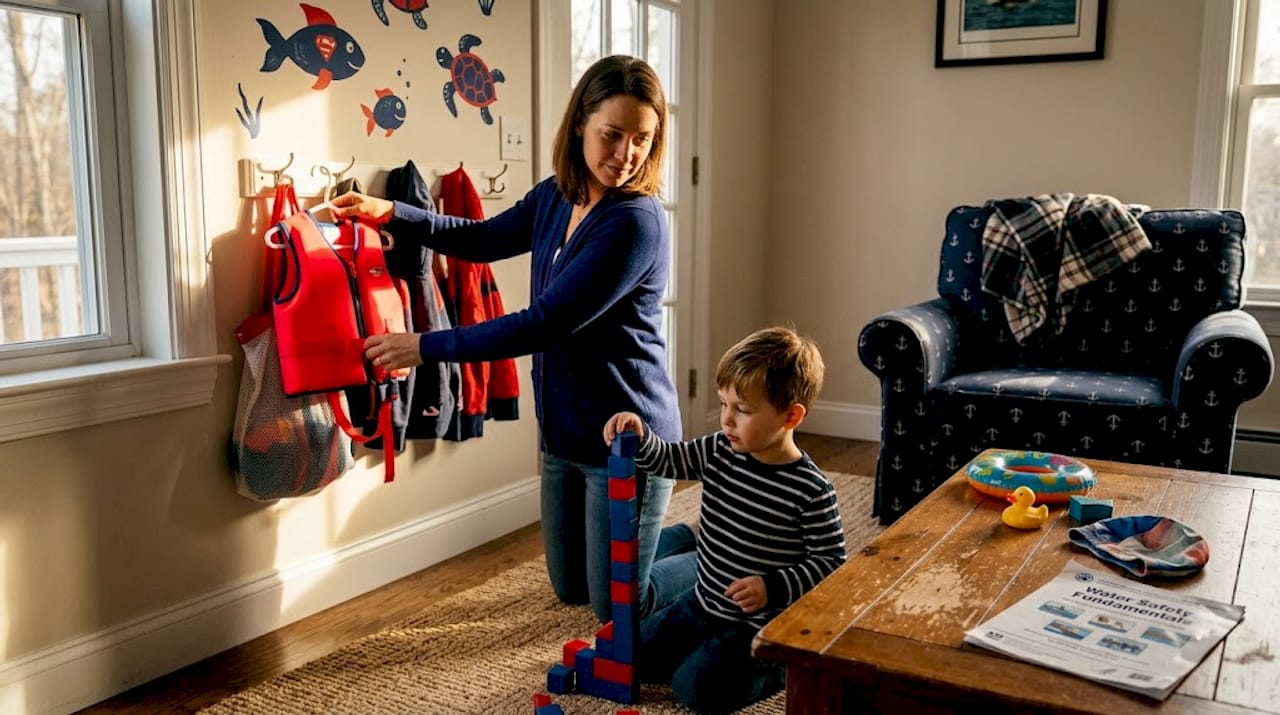
Most parents assume that watching their child near the pool is enough. It is not. Understanding what does in home swim safety involve goes far deeper than keeping an eye on things. Drowning is often silent and rapid, occurring in seconds even when an adult is present. It does not look like the movies. There is no splashing, no screaming. That gap between assumption and reality is exactly where tragedy lives, and this guide is designed to close it with specific, layered strategies every parent can put in place today.
Table of Contents
Key takeaways
Point | Details |
Supervision is not enough alone | Touch supervision and designated water watchers are required to prevent silent drowning incidents. |
Four-sided fencing cuts risk dramatically | A proper isolation fence reduces drowning risk by 83% and is one of the most impactful physical barriers. |
Swim lessons work early | Starting lessons as young as four months builds water familiarity and survival skills before danger arises. |
Layered protection is the standard | Combining fencing, alarms, supervision, and swim education provides far better protection than any single measure. |
Know your local laws | Many jurisdictions mandate specific pool safety features, and exceeding those minimums is always the safer choice. |
What does in home swim safety involve: the layered approach
Think of in-home swim safety as a series of overlapping nets rather than a single wall. If one layer fails, the next one catches. The physical environment is your first line of defense.
Four-sided fencing: the most critical barrier
A proper pool fence is not just any fence around your yard. It must be four-sided, meaning it fully isolates the pool from the rest of your property, including the house. Four-sided isolation fencing reduces drowning risk by 83%. That statistic should stop you cold. The fence should be at least four feet tall, with no footholds for climbing, and self-latching gates that open outward, away from the pool.
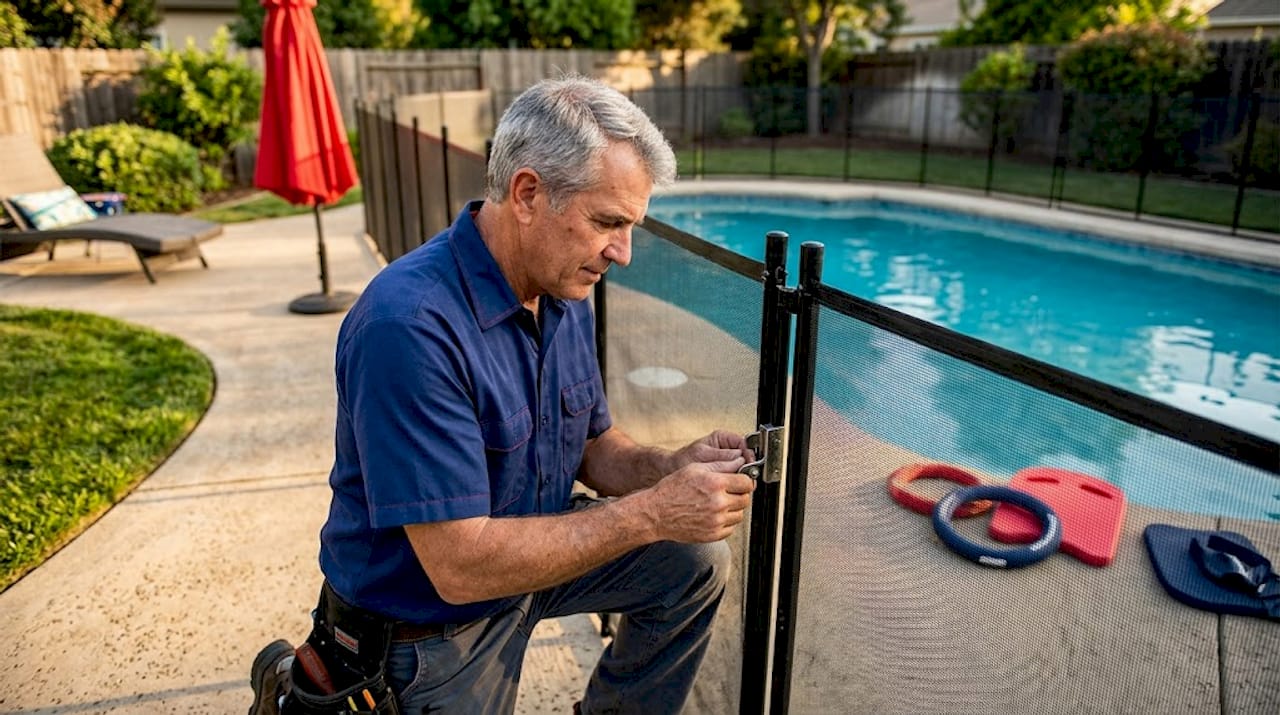
Here is what most parents miss: the fence itself can be defeated by what you place near it. Objects near pool fences such as chairs, planters, coolers, or storage bins create climbable surfaces that a determined toddler will find in under two minutes. Maintain a clear zone of at least three feet on all sides of the fence.
Additional safety equipment worth having
Beyond fencing, home swimming safety tips consistently point to a second layer of equipment:
Pool alarms: Surface wave sensors detect movement in the water and alert you immediately. Door alarms on any home entry that opens to the pool area add another alert layer.
Window guards or alarms: Windows overlooking or accessing the pool zone should have sensors or locks that signal when opened by a child.
Certified safety covers: A power safety cover rated to hold weight is a genuine barrier. Floating solar covers and winter covers are not. Floating pool covers create a false surface impression and can trap a child underneath.
Here is a quick comparison of cover types to help you choose correctly:
Cover type | Protects against drowning? | Notes |
Power safety cover (ASTM certified) | Yes | Holds significant weight; anchored to pool deck |
Mesh safety cover | Partially | Allows some water through; better than nothing |
Floating solar cover | No | Creates dangerous false surface; avoid as a safety device |
Winter floating cover | No | Same risk as solar; purely for pool maintenance |
Pool toy storage: Remove all floats, noodles, and toys from the pool area immediately after swimming. Toys left out invite unsupervised exploration from young children who want to retrieve them.
Pro Tip: Dress young children in bright neon swimwear. High-visibility clothing improves child visibility in the water and helps you spot your child faster during supervision.
Supervision methods that actually work
Physical barriers buy you time. They do not replace the adult watching your child. The American Academy of Pediatrics is direct on this point. They recommend “touch supervision,” which means staying within arm’s reach of any child who cannot swim independently. Not watching from a lounge chair. Not glancing up from your phone every few minutes. Arm’s reach.
For slightly older children who can swim but are not yet strong, reliable swimmers, the Life Time 25:10 Rule is a practical framework: if your child cannot swim 25 meters unaided, you must stay within 10 feet at all times. That distance closes fast if something goes wrong.
Here are the behavioral practices that keep supervision effective:
Designate a water watcher. In group settings, like family gatherings or playdates, no one person is actually watching the pool. Designate one adult per rotation to serve as the sole, undistracted water watcher. Pass the role deliberately, not passively.
Put the phone down. A 30-second distraction scrolling social media is enough time for a young child to slip under the water silently. Phone calls, texts, and conversations are among the most common supervision lapses observed near home pools.
Manage transitions carefully. Drownings frequently happen during the moments when parents assume someone else is watching. Right after a swim ends, when guests are leaving, or when you step inside for “just a second.” These transition windows are high-risk. Always close and latch the gate before you leave the pool area, every single time.
Never leave older children in charge. Older siblings are not substitutes for adult supervision. They lack the judgment and physical ability to respond in an emergency.
Pro Tip: Set a physical reminder, like wearing a designated lanyard or wristband, when you are the assigned water watcher. It keeps the responsibility visible and prevents the mental drift that leads to supervision gaps.
How swim lessons reduce drowning risk at home
If you have a pool at home or regularly take your child to pools, formal swim instruction is not optional. It is one of the most measurable things you can do. Formal swim lessons reduce drowning risk by approximately 88% for children ages one to four. That number represents real lives.
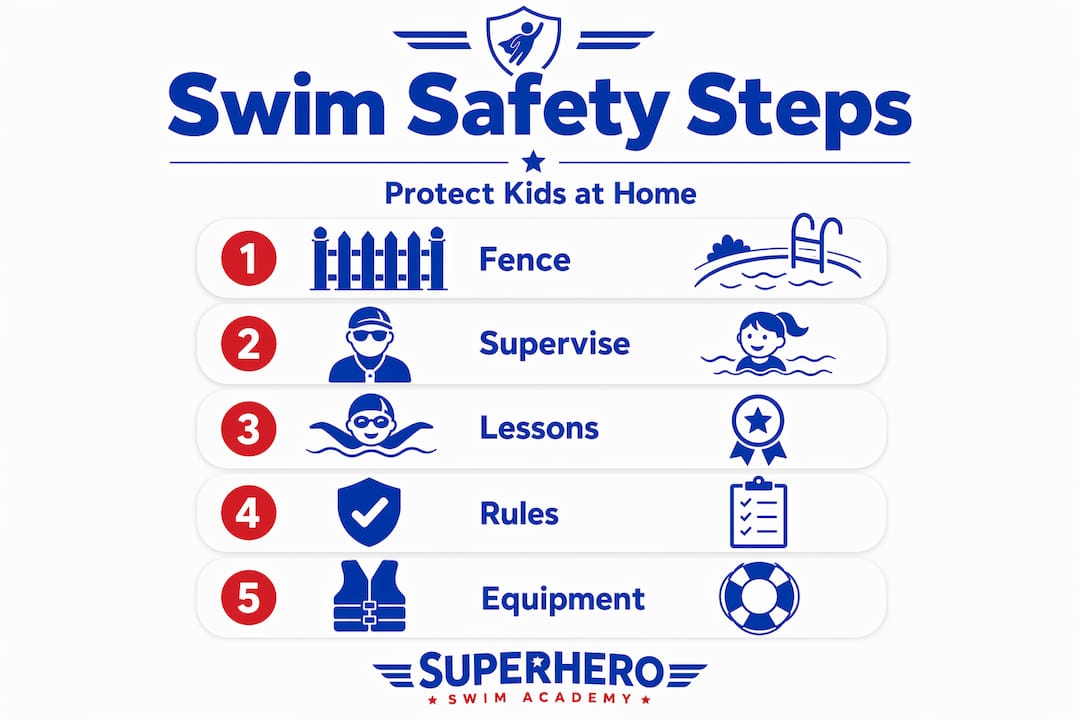
The question parents ask most often is: when do you start? Earlier than most expect. Swim lessons starting at four months help children become comfortable in the water and begin learning basic survival responses well before the most statistically dangerous developmental window. You are not teaching a four-month-old to do laps. You are building water familiarity and a foundation of safety responses.
Here is how age-appropriate swim instruction maps to risk reduction:
Age group | Appropriate lesson type | Key outcomes |
4 to 12 months | Parent-child water introduction | Water comfort, breath control basics, positive association |
1 to 3 years | ISR (Infant Swimming Resource) or survival swim | Floating, self-rescue techniques, distress response |
3 to 5 years | Structured swim lessons | Freestyle basics, floating, wall return skills |
5 and older | Progressive stroke development | Independent swimming, endurance, deeper water skills |
A few important points on how to keep kids safe swimming through education:
Swim lessons teach survival behaviors, not just strokes. A child who can float on their back and calmly return to the wall is far safer than one who can swim two laps but panics in deep water.
Lessons work best when combined with the physical barriers described above. No single safety measure is sufficient on its own. Swim education is one critical layer, not a replacement for fencing or supervision.
Look for instructors trained in CPR, First Aid, and a proven survival swim curriculum. The benefits of home swim instruction in Florida can be significant, especially for families where travel to a facility creates barriers to consistency.
Avoid over-relying on floaties and inflatable devices. Inflatable swim aids promote an unsafe vertical posture in the water and create false confidence in both the child and the parent. They are not life-saving devices.
Legal requirements and pool safety standards
Home swimming safety is not just a personal choice. In many states, it carries legal obligations. California’s Swimming Pool Safety Act mandates that residential pools include multiple safety features as a legal minimum, including four-sided fencing, self-closing and self-latching gates, door alarms on direct home access points, and safety covers.
Your local swimming pool safety guidelines may differ, and that matters. What is required in Florida may not be identical to what is required in Texas or Arizona. Checking your local ordinances is not optional if you own a pool. Call your local building authority or visit your municipality’s website to confirm current standards.
Beyond legal minimums, consider these recommended additions:
Install additional door alarms even if your local code does not require them.
Place CPR instructions in a waterproof holder near the pool in a visible location.
Keep a phone within reach of the pool area at all times, but resist using it recreationally while supervising.
Review your homeowner’s insurance policy. Many insurers have specific pool liability provisions, and meeting or exceeding safety standards can directly affect your coverage terms.
Pro Tip: When you are vetting a swim instructor for your child, choosing a qualified instructor involves checking CPR and First Aid certification, their specific curriculum, and their experience with your child’s age group. Do not accept vague credentials.
Teaching children to respect the water
Physical barriers and vigilant supervision work best when your child also understands the rules. This does not mean scaring children away from the water. It means building clear, consistent behavioral expectations from an early age.
Start with these home swim safety rules and repeat them consistently:
Always ask first. No child enters the pool or hot tub without an adult’s permission, even if they are strong swimmers. Make this non-negotiable.
No running on the pool deck. Slips near the pool edge are a leading cause of head injuries and accidental falls into the water.
No pushing near the water. Playful roughhousing is fine in the yard. At the pool edge, it becomes a safety violation.
Stay away from drains. Pool drain suction is strong enough to trap hair or limbs. Teach children to avoid drains and to tell an adult immediately if they feel stuck.
Floaties are not permission to swim alone. Reinforce this early and often. Even children who feel confident in floaties are not safe without adult supervision.
For children with special needs or neurodivergent traits, communication around water safety requires more intentional repetition and visual reinforcement. Use picture cards, practice dry runs of the rules, and consult with their therapists on how to frame boundaries in ways that will stick.
My honest take on what actually protects kids
I have worked with over 2,500 children at Superhero Swim Academy, and one pattern repeats itself constantly: parents feel safer than they are. Not because they are careless. Because they believe the pool fence is enough, or that their child’s few swim lessons mean the risk is covered.
What I’ve seen time and again is that safety around water is not a single decision. It is a habit system. The fence that has a chair leaning against it, the pool alarm with dead batteries, the distracted parent who was “right there” but looking down. None of those things are dramatic failures. They are the exact conditions under which drownings happen.
My experience with families has taught me that the parents who build the safest environments are the ones who treat every layer as non-negotiable. The fence gets checked. The water watcher is designated out loud. The swim lessons happen consistently. And when one layer slips, another one holds.
What surprises most people I talk to is that silent drowning does not look like distress. Children do not have the ability to shout for help while trying to stay afloat. By the time a nearby adult realizes something is wrong, precious seconds have already passed. Touch supervision is not overprotective. It is the only appropriate response to that biological reality.
I also want to say this directly: early swim lessons are not about producing competitive swimmers. They are about giving your child the physical memory to float, turn, and return to a wall if they fall in. That skill set changes what a “near miss” looks like. It changes outcomes.
— SUPERHERO
Take the next step with professional swim instruction
You have the framework now. Barriers, supervision, education, rules. The next step is making sure the swim instruction piece is handled by someone who genuinely knows what they are doing with young children.
Superheroswimacademy offers specialized survival swim lessons for infants, toddlers, and young children across Palm Beach and Broward counties. Every instructor is trained in CPR, First Aid, and the academy’s own proven survival swim curriculum. Parents get clear goals and regular progress updates throughout the process. Whether you are looking for lessons close to home or want to understand your options, explore swim lessons at Superheroswimacademy to find the right program for your child’s age and ability. You can also check available locations to find a program near you.
FAQ
What does in home swim safety involve?
In-home swim safety involves a layered system of physical barriers like four-sided fencing, certified pool covers, and pool alarms, combined with constant supervision, formal swim lessons, and clearly communicated pool rules for children.
At what age should children start swim lessons?
Children can begin water familiarization as early as four months old, and formal survival swim instruction is recommended starting at age one. Early lessons have been shown to reduce drowning risk by up to 88% for children ages one to four.
Are floaties and inflatable swim aids safe for young children?
No. Inflatable swim aids are not life-saving devices and promote an unsafe vertical posture in the water. They create false confidence and should never replace adult supervision or formal swim instruction.
What is the safest type of pool cover for a home pool?
A power safety cover with ASTM certification is the only cover type that functions as a genuine safety barrier. Floating solar covers and winter covers are not safety devices and can actually increase drowning risk by creating a false surface impression.
What is touch supervision and why does it matter?
Touch supervision means staying within arm’s reach of a young child who cannot swim independently. Because drowning is silent and occurs in seconds, touch supervision is the most direct way to respond fast enough to prevent a fatality.
Recommended
Comments