
Why Swim Lesson Waitlists Form: A 2026 Parent's Guide
- superheroswim
- Jul 16
- 8 min read


Swim lesson waitlists form when the number of families seeking classes exceeds the number of available spots, instructors, and pool hours combined. The post-pandemic period accelerated this gap sharply. Over 1 in 3 English primary school students cannot swim a basic 25 meters, reflecting a generation of children who missed early water-safety opportunities. That backlog drives enrollment demand far beyond what most swim programs can absorb quickly. Certified instructor shortages and rigid scheduling systems make the problem worse, turning what should be a simple sign-up into a months-long wait for many families.
Why swim lesson waitlists form: the core causes
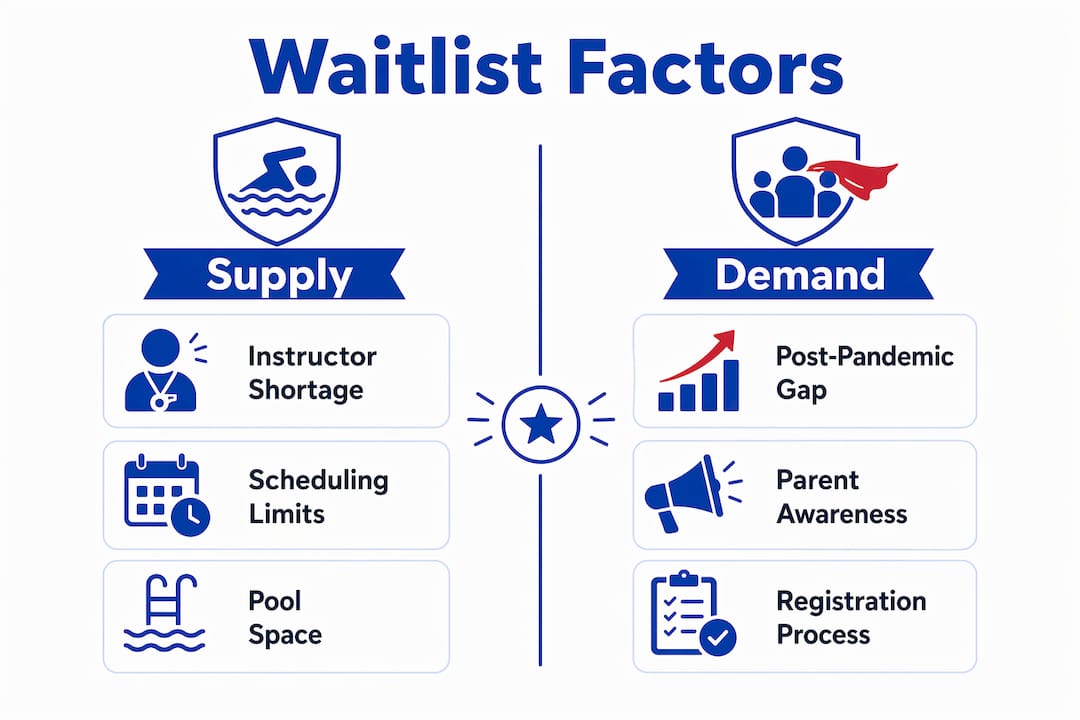
Swim lesson waitlists are a supply-and-demand problem with several compounding layers. Demand has risen sharply since 2020, while the supply of qualified instructors and pool time has not kept pace.
On the demand side, the pandemic created a generation-wide skill gap. Families who delayed lessons during lockdowns are now enrolling children all at once, flooding programs that were already operating near capacity. Water safety awareness campaigns have also increased the number of parents who treat swimming as a non-negotiable life skill rather than an optional activity.
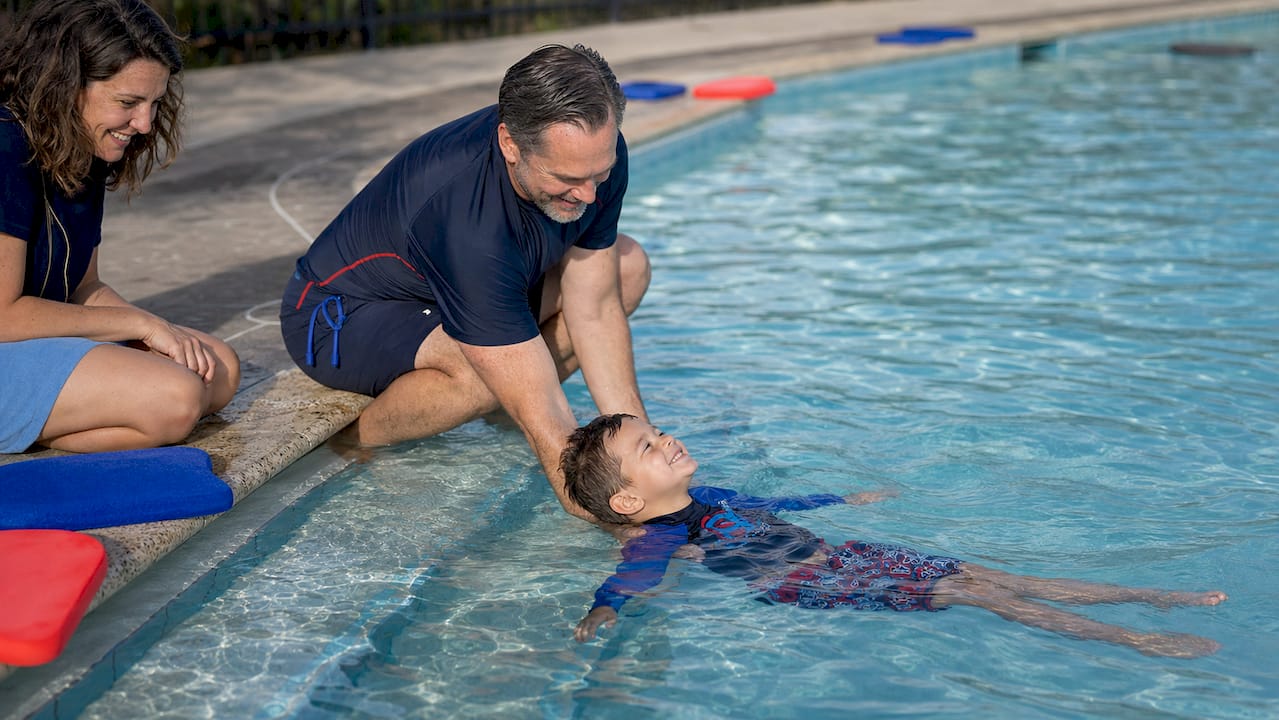
On the supply side, the bottleneck is rarely the pool itself. Certified staff availability is the primary constraint, because training and certification take months. A swim school cannot simply hire more instructors the week demand spikes. Programs grow slowly, and waitlists grow fast.
The main factors driving swim class waitlists include:
Post-pandemic skill gaps: Children who missed lessons between 2020 and 2022 are now competing for the same limited spots.
Instructor shortages: Urban swim sessions book out within hours due to a global shortage of certified instructors.
Limited pool time: Public and private pools allocate lane hours across lap swimming, competitive teams, and recreational use, leaving fewer slots for lessons.
Increased adult learner interest: More adults seeking lessons for themselves or their children adds to total demand.
Seasonal surges: Registration spikes in late winter and early spring as families prepare for summer, overwhelming systems built for steady enrollment.
Pro Tip: Understanding that waitlists are a supply problem, not just a popularity contest, helps you plan realistically. Register as early as possible, and treat the waitlist as one option among several rather than a guaranteed path to enrollment.
How do program structures and registration systems impact waitlists?
The way swim schools organize their programs directly shapes how long waitlists grow. Rigid term-based scheduling prevents natural spot turnover mid-session, meaning a family that drops out in week three does not free up a spot for a waiting family until the entire term ends. That structural lock-in artificially extends waitlists beyond what actual demand would create.
Registration systems add another layer of friction. Manual and cumbersome sign-up processes create artificial scarcity because families delay registering until they hear spots are nearly gone. By then, the waitlist has already grown. Schools using automated, online registration systems see faster turnover and more accurate waitlist numbers because families act earlier and cancellations are processed in real time.
The table below shows how registration approach affects waitlist outcomes.
Factor | Manual registration | Automated registration |
Sign-up speed | Slow; families delay until near capacity | Fast; families register weeks in advance |
Waitlist accuracy | Often inflated by delayed cancellations | More accurate; cancellations update in real time |
Spot turnover | Slow; admin processes take days | Fast; spots reopen within hours |
Parent frustration | High; lack of visibility into queue position | Lower; automated updates keep parents informed |
Poor waitlist management also inflates perceived demand. A school with 20 families on a waitlist may actually have 8 who are still actively seeking a spot. The rest may have already enrolled elsewhere but never removed themselves from the list. Parents who understand this dynamic are less likely to assume a long waitlist means an impossible wait.
Pro Tip: Register at multiple swim schools simultaneously. Check whether each school uses online registration with real-time updates, which signals faster spot turnover. For more on timing your registration, booking best practices can help you plan your approach for 2026.
What socioeconomic and logistical barriers contribute to swim lesson waitlists?
Cost and logistics do not just affect whether families can afford lessons. They shape who ends up on a waitlist in the first place. Lesson costs have risen 20–40% over the past three years, and 45% of parents cite cost or scheduling inconvenience as a barrier to enrollment. That figure means nearly half of all interested families face a structural obstacle before they even reach the registration page.
Working families with limited transportation options face compounding barriers. A swim school located 30 minutes from home, with classes only available on weekday mornings, effectively excludes parents who work standard hours. Those families may join a waitlist at a more convenient location and stay on it for months, inflating that school’s numbers while spots sit open elsewhere.
Waitlists act as a gatekeeper shaped by socioeconomic factors, creating inequity where families with less financial flexibility or fewer transportation options face more barriers. This means the families who most need affordable, accessible swim lessons are often the ones waiting longest.
Common barriers families face include:
High lesson costs: Group lessons in urban markets can exceed $25–$35 per session, and private lessons cost significantly more.
Inconvenient scheduling: Classes offered only on weekday mornings or evenings conflict with work and school schedules.
Transportation gaps: Families without reliable transportation cannot access schools outside their immediate neighborhood.
Limited financial aid awareness: Many programs offer subsidized spots or vouchers, but families do not know to ask.
Language and communication barriers: Non-English-speaking families may miss registration windows due to language gaps in school communications.
Parents navigating these barriers should ask swim schools directly about financial assistance programs, community vouchers, or sliding-scale pricing. Some municipal recreation departments and nonprofit organizations offer subsidized swim lessons specifically for underserved families. The cost factors behind lessons vary widely by location and program type, and knowing what drives pricing helps you find better options.
How can parents effectively manage and navigate swim lesson waitlists?
A waitlist represents conditional interest, not a guaranteed spot. Waitlists frequently fail to convert to enrollments because families lose interest, find alternatives, or simply forget to follow up. That reality works in your favor if you stay active and monitor multiple options simultaneously.
The instructor-to-pool-space ratio often limits capacity more than physical pool lanes, so adding your child to a waitlist at a school with a known instructor shortage may mean a very long wait. Schools actively recruiting and training new instructors are more likely to open spots within a reasonable timeframe.
Technology-enabled registration systems give parents a real advantage. Schools using automated platforms send notifications the moment a spot opens, and families who respond within minutes secure the enrollment. Parents relying on phone calls or email-based systems often miss openings entirely.
Here are the steps that give you the best chance of securing a spot:
Register early, before the term starts. Most schools open registration 6–8 weeks before a new term. Set a calendar reminder and register on the first available day.
Join waitlists at two or three schools simultaneously. Do not treat one waitlist as your only option. Spread your registrations across schools with different scheduling windows.
Confirm your waitlist position regularly. Contact the school every two to three weeks to confirm your child is still on the list and to signal active interest.
Ask about private lessons as a bridge. Private instruction is often available sooner than group classes and builds skills faster while you wait.
Check for weekend and early morning slots. Weekend swim classes fill fast, but less popular time slots like 7:00 AM or Sunday evenings often have shorter waits.
Enable notifications on online registration portals. Schools using automated systems release spots in real time. Families with notifications turned on respond faster and secure spots before others see the opening.
Key Takeaways
Swim lesson waitlists form because instructor shortages, post-pandemic demand surges, and rigid scheduling systems all limit capacity at the same time, and parents who register early across multiple schools navigate these barriers most effectively.
Point | Details |
Instructor shortage is the core bottleneck | Certification takes months, so programs cannot expand quickly when demand spikes. |
Term-based scheduling inflates waitlists | Rigid session structures prevent spot turnover mid-term, extending waits artificially. |
Cost and logistics create inequity | Rising lesson prices and inconvenient schedules block access for nearly half of interested families. |
Waitlists show conditional interest | Many families on a waitlist have already enrolled elsewhere; active monitoring beats passive waiting. |
Early, multi-venue registration works best | Registering at several schools simultaneously and confirming your position regularly improves your odds. |
What I’ve learned after teaching over 2,500 children to swim
Parents often ask me why the waitlist is so long when the pool looks half empty on a Tuesday morning. The answer is almost never the pool. It is the instructor standing at the edge of it.
Training a qualified swim instructor takes months of certification work, CPR and First Aid credentials, and hands-on supervised practice. At Superheroswimacademy, every instructor completes our own survival swim curriculum on top of standard certifications. That process cannot be rushed, and it is the reason responsible programs grow carefully rather than quickly.
What frustrates me is watching families treat a waitlist as a passive queue. They sign up at one school, wait six months, and then call us in a panic the week before summer. The families who get their children into lessons fastest are the ones who treat enrollment like a project. They register early, they follow up, and they keep multiple options open at once.
The deeper issue is that swimming is not a recreational skill. It is a survival skill. Drowning is one of the leading causes of accidental death in children under five in the United States. Every month a child spends on a waitlist is a month without that protection. That urgency should drive how aggressively parents pursue enrollment, not how patiently they wait.
The good news is that awareness of these structural causes gives you real leverage. You now know that waitlists are often inflated, that instructor availability matters more than pool space, and that early registration at multiple venues is the single most effective strategy. Use that knowledge.
— SUPERHERO
How Superheroswimacademy helps families move past the waitlist
Superheroswimacademy serves families across Palm Beach and Broward counties with survival-focused swim lessons for infants, toddlers, and young children. Every instructor holds CPR and First Aid certification and completes the academy’s own proven survival swim curriculum before teaching a single class.
For families currently waiting on a list elsewhere, online swim courses offer a way to build water-safety knowledge and foundational skills while you wait for in-person availability. When you are ready to book directly, Superheroswimacademy’s lesson programs are designed with flexible scheduling to fit working families. Over 2,500 children have completed the program, and parents consistently report measurable improvements in confidence and safety within a short period.
FAQ
What does a swim class waitlist mean?
A swim class waitlist is a queue of families who want to enroll but cannot because all available spots are currently filled. It represents conditional interest, not a guaranteed enrollment.
Why are swim classes so full right now?
Post-pandemic demand surges, a global shortage of certified instructors, and rigid term-based scheduling have all combined to push enrollment demand well beyond available capacity in most markets.
How do I get off a swim lesson waitlist faster?
Register at multiple schools simultaneously, confirm your position every two to three weeks, and ask about private lessons or less popular time slots that may open sooner than group classes.
Does a long waitlist mean I will wait a long time?
Not necessarily. Waitlists frequently fail to convert because many families on the list have already enrolled elsewhere. Active follow-up and multi-venue registration significantly reduce your actual wait time.
Why is finding a certified swim instructor so difficult?
Instructor certification requires multiple steps taking several months, which limits how fast programs can grow even when pool space is available. This makes certified staff the primary bottleneck in expanding swim lesson capacity.
Recommended

Comments