
6-Month-Old Swimming Lessons: What Parents Need to Know
- superheroswim
- Aug 4
- 11 min read

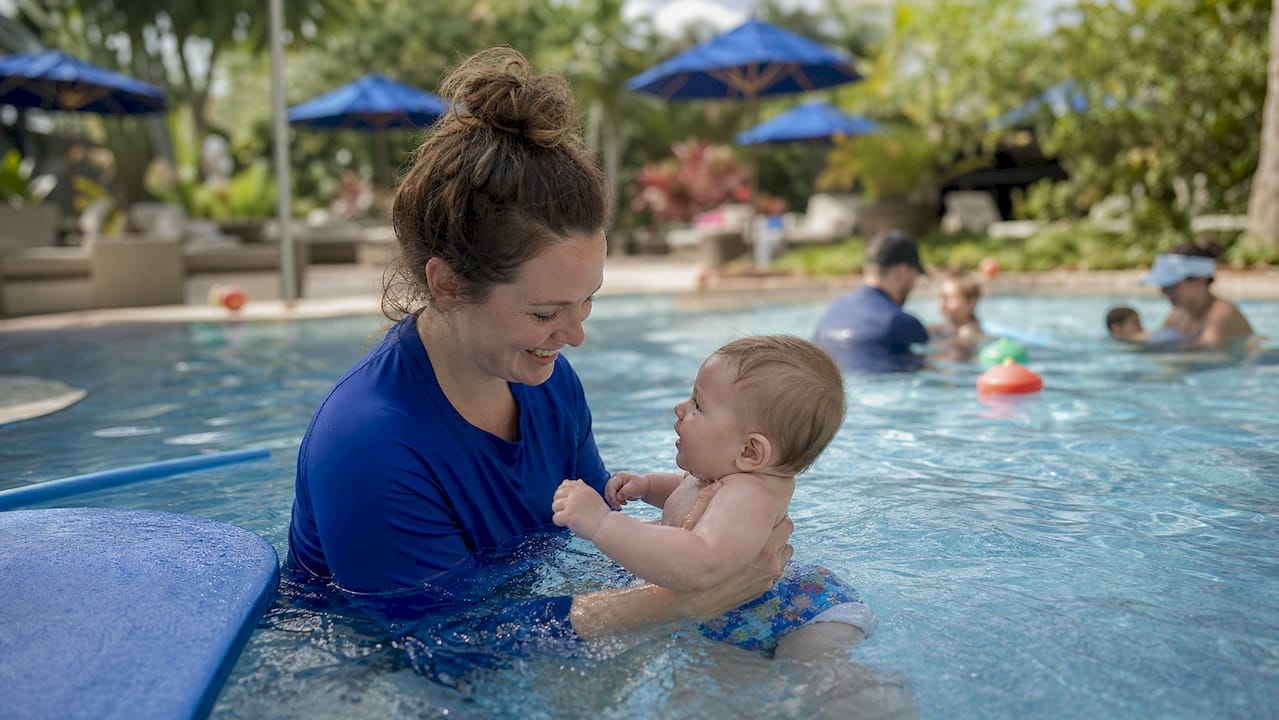
Yes, a healthy 6-month-old can absolutely attend swim lessons. The key condition is that a parent or caregiver must be in the water with the baby throughout every session, and the pool must be warm enough for an infant’s physiology. This is not a class where you drop your baby off and watch from the bleachers. It is a guided, hands-on experience for both of you.
Here is what to do next:
Call two or three local programs and ask specifically about pool temperature, instructor CPR certification, and class size.
Confirm that the program requires a parent in the water (not just poolside).
Ask whether they offer a trial class before committing to a full session block.
Pro Tip: Before booking, ask the facility what their pool temperature is for infant classes. If they cannot answer immediately, that tells you something.
The American Academy of Pediatrics supports swim lessons starting at 12 months for most children but notes that parent-and-child water play programs can begin as early as 6 months for healthy infants. Boys Town National Research Hospital recommends waiting until at least 6 months before public pool visits, with gradual exposure and in-water parent supervision throughout.
Table of Contents
What do 6-month-old swimming lessons actually look like?
The format is consistent across reputable programs: one parent or caregiver in the water per child, sessions running 20–30 minutes, and small class sizes. The YMCA’s parent-and-child swim program accepts infants from 6 months through age 3, with 30-minute sessions and a required adult in the water for every child. Some programs, like those at the EDCJCC in Washington, D.C., start as early as 4 months.
A typical session flows like this:
Warm greeting and parent briefing (3–5 minutes): The instructor explains the day’s activities and any new techniques before everyone enters the water.
Guided water play and skill work (15–20 minutes): Parents hold the baby through supported floats, gentle submersions, and kicking movements while the instructor coaches positioning and reads infant cues.
Calming close (3–5 minutes): Slow, gentle movements in the water to signal the end of class, followed by the drying and dressing routine.
Class detail | Typical range |
Session length | about 20 to 30 minutes |
Class size | small groups, approximately 6 parent-baby pairs per instructor |
Age range | a few months to toddler age (6 months is a common entry point) |
Parent role | In the water, holding the baby throughout |
Enrollment model | Rolling or 4–8 week session blocks |
Six months is a common entry point because babies at this age have better head and neck control than newborns, tolerate brief water exposure more easily, and are alert enough to respond to sensory input. Programs like Big Blue Swim School’s Baby Blue accept infants from 3 months, though 6 months is where most families find the experience genuinely productive.
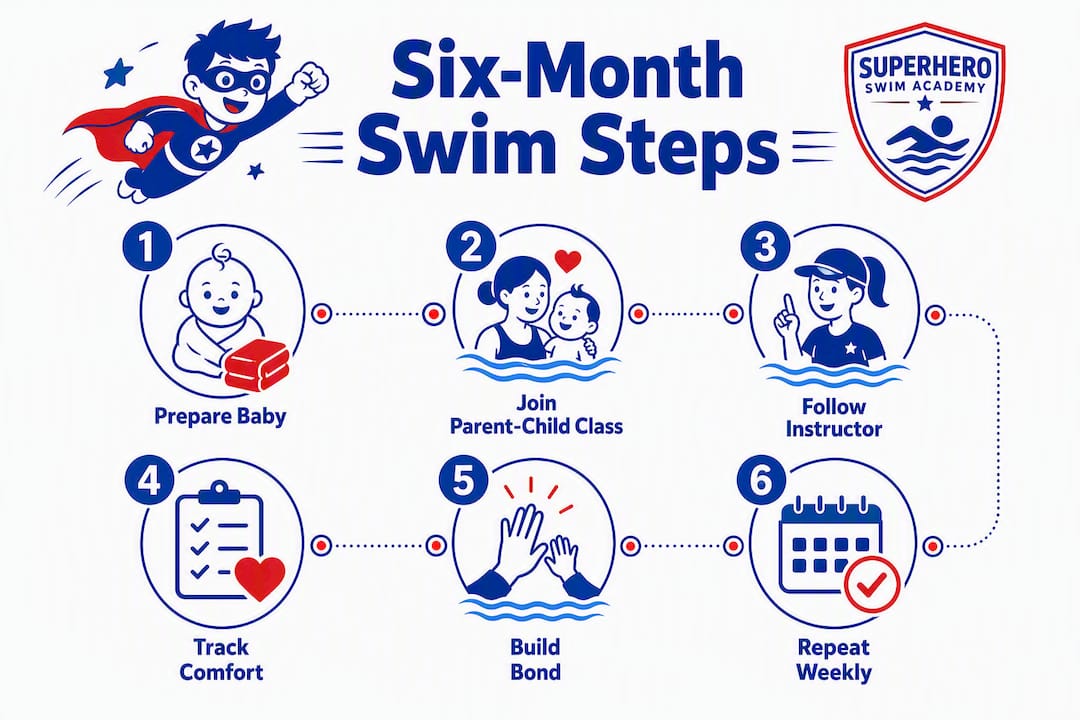
Pro Tip: Ask whether enrollment is rolling or block-based. Rolling enrollment lets you start any week; block programs mean you wait for the next session to begin. For a first-time family, rolling is usually easier.
What are the real benefits of starting swim lessons at 6 months?
The primary benefit is not swimming ability. A 6-month-old will not swim independently after a term of lessons. What they gain is something more durable: a positive, calm association with water that makes every future lesson easier.
Water comfort and confidence: Repeated, gentle exposure in a warm pool builds familiarity. Babies who start early tend to be less fearful when they encounter water later.
Motor and sensory development: Moving through water engages muscle groups differently than land-based play. Kicking, floating, and being held in various positions stimulate coordination and body awareness.
Parent-child bonding: The physical closeness and shared focus of an in-water class create a distinct bonding context. You are not just watching your baby play; you are the one making it happen.
Safety foundations: Supported floats and breath awareness introduced at 6 months are not survival skills yet, but they are the earliest layer of a safety foundation that builds over years. Early water exposure builds motor skills, confidence, and a foundation for later swimming ability.
Parent education: Good programs teach you how to hold your baby safely in the water, how to read discomfort cues, and how to practice water familiarity at home during bath time.
The bonding dimension is underrated. Parent involvement in early childhood group activities, whether swim lessons or infant music classes, consistently shows that the parent’s calm, engaged presence is the single biggest factor in how a baby responds to a new environment.
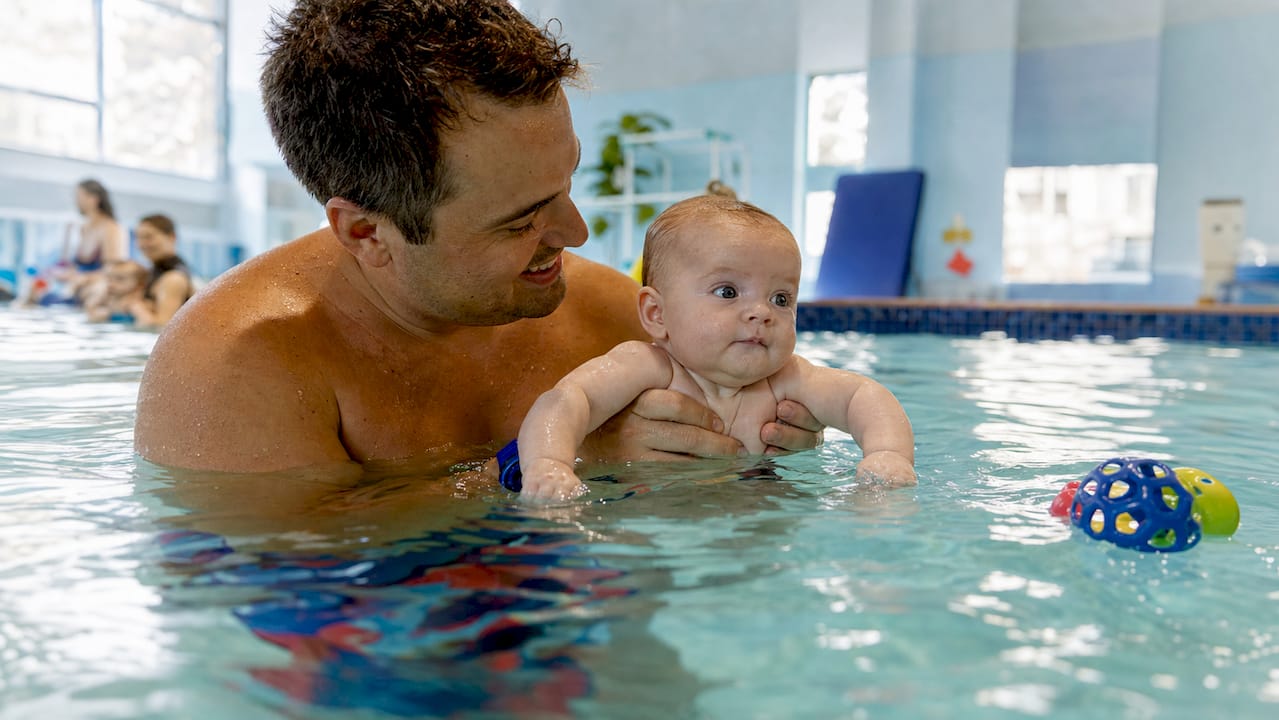
What skills does a 6-month-old actually learn?
Realistic expectations matter here. The goal is acclimation, not technique. Here is what age-appropriate infant instruction actually covers:
Water acclimation: Getting comfortable being held in the water, having water poured over the head, and tolerating the sensory environment of a pool.
Supported back floats: With the parent supporting the baby’s head and back, infants begin to experience the sensation of floating. This is a foundational skill for later independent floating.
Breath awareness: Brief, controlled water contact with the face, introduced gradually, begins building the reflex awareness that supports submersion tolerance later.
Assisted submersion familiarity: In programs that introduce this early, short, gentle submersions are done with a clear cue system so the baby learns to expect and tolerate them.
Parent handling techniques: You learn how to position your baby safely, transition between holds, and move through the water in ways that feel secure to the infant.
Instructors track progress through comfort cues rather than performance metrics. Signs of genuine progress at this age include reduced fussing during water contact, relaxed body posture during supported floats, and the baby’s willingness to engage with the instructor. For a deeper look at how age-appropriate swim instruction maps to developmental milestones, the progression becomes clearer when you see how each stage builds on the last.
Some programs introduce reflexive or trained survival floats for very young infants. These are distinct from independent swimming and require specialized instructor training. They are not standard in all parent-and-child group programs.
Safety and health considerations every parent should check
Pool temperature is the most important facility variable for infant classes. For infants under six months, water temperatures of 34–35°C (93–95°F) are recommended because colder water triggers physiological stress responses that interfere with learning and comfort. At 6 months, babies tolerate slightly cooler water, but a warm pool, generally above 32°C (90°F), remains the standard for infant classes.
On chlorine: Cleveland Clinic guidance confirms that chlorine levels in most pools are safe for babies older than 6 months, provided the facility maintains proper disinfection balance. A strong chlorine smell is not a sign of a clean pool; it often signals chloramines, a byproduct of inadequate water management. Well-maintained facilities smell faintly of chlorine at most.
A note on session length: Young infants are neurologically taxed by the rich sensory environment of a pool. Sessions of 20–30 minutes are optimal to avoid overstimulation and support learning. Longer is not better.
Illness and exclusion rules to follow:
Skip the lesson if your baby has a fever, active diarrhea, a contagious skin condition, or a respiratory infection.
Most facilities require 24–48 hours symptom-free before returning after a GI illness.
Ask the program for their written exclusion policy before the first class.
Swim diapers: Disposable swim diapers are required at virtually every infant program. They do not prevent leaks entirely but contain solid waste. Some facilities also require a neoprene cover over the swim diaper. Confirm the facility’s specific requirement before you arrive.
Pro Tip: Pack two swim diapers. Blowouts happen, and you do not want to cut the class short on the first day.
How do you choose the right infant swim program?
The questions you ask before enrolling matter more than the program’s marketing. Here is a prioritized checklist for a phone call or facility tour:
What is the pool temperature during infant classes?
Are instructors CPR and First Aid certified, and do they have infant-specific aquatic training?
What is the maximum class size for infant sessions?
Is a parent or caregiver required to be in the water?
What are your emergency procedures if a child needs medical attention?
What is your illness exclusion policy?
Do you offer make-up classes or rolling enrollment?
Red flags to watch for:
Classes with more than 6 parent-baby pairs and one instructor.
No clear answer on pool temperature.
Instructors without documented infant aquatic training (CPR alone is not enough).
A strong chlorine smell with poor ventilation.
No written emergency protocol available on request.
When comparing program formats, the choice between private lessons, small-group classes, and parent-and-child group sessions usually comes down to three factors: budget, your baby’s temperament, and your own comfort level in the water.
Format | Best for | Typical ratio |
Parent-and-child group | Social babies, budget-conscious families | about 6 parent-child pairs per instructor |
Private lesson | Anxious babies, parents wanting focused coaching | 1:1 with instructor |
Concierge/at-home | Families preferring home pools, maximum flexibility | 1:1 or small group |
Small-group swim instruction offers a middle ground: more personalized attention than a large group class, at a lower cost than private lessons. For most families starting at 6 months, a small group of about 6 pairs is the right starting point.
What should you bring to the first lesson?
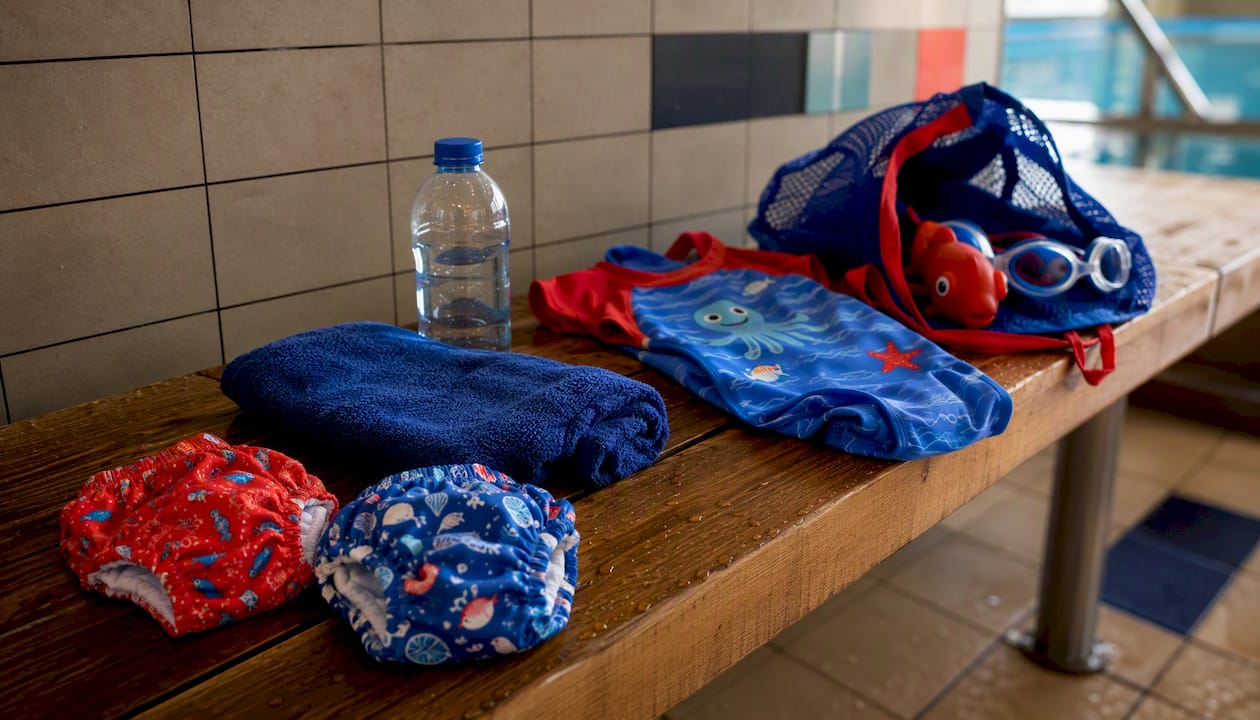
Preparation reduces stress for both of you. Pack the night before.
Swim diaper (bring a spare)
Neoprene swim diaper cover if required by the facility
Towel and warm change of clothes for the baby
Dry clothes and a towel for yourself
Plastic bag for wet items
A bottle or age-appropriate snack for after class
Goggles for yourself if you prefer them
Timing matters: Feed your baby at least 30–45 minutes before the lesson, not immediately before. A full stomach and vigorous water movement are a poor combination. Dress the baby warmly on the way to the pool so they arrive comfortable, not already cold.
Arrive 10 minutes early on the first day. Use that time to let the instructor know about any recent illnesses, ask for a quick demonstration of the in-water holds you will be using, and let your baby look at the pool before getting in. That brief visual preview can make the entry much calmer.
Pro Tip: Wear your swimsuit under your clothes to the first class. Changing rooms with a baby in tow are harder than they look.
What do swim lessons cost, and how are they scheduled?
Most infant classes run 20–30 minutes, once a week. Pricing varies by format and location, but the structure is consistent: per-class rates, session bundles, or private lesson premiums.
As a reference point, North Canyon Swim’s Parent & Tot program lists an 8-class block at $65, with 25-minute sessions in a 4-week program. Private lessons and concierge instruction carry a meaningful premium over group rates, reflecting the 1:1 ratio and scheduling flexibility.
Format | Typical session length | Pricing model |
Group parent-and-child | 25–30 minutes | Session bundle (4–8 classes) |
Private lesson | 20–30 minutes | Per class or small bundle |
Concierge/at-home | 30 minutes | Per class, premium rate |
Ask about make-up class policies before you commit. Life with a 6-month-old is unpredictable, and a program that offers no flexibility on missed classes will cost you more in the long run. Rolling enrollment programs let you start any week and are generally more forgiving.
When should you delay or skip lessons?
Some circumstances call for waiting, and recognizing them protects your baby.
Medical reasons to delay:
Active fever, diarrhea, vomiting, or respiratory infection.
Contagious skin conditions such as impetigo or active eczema flares with open skin.
Recent ear infection (check with your pediatrician on timing).
Behavioral signals to watch:
Persistent, inconsolable crying that does not settle within the first few minutes of warm-up.
Signs of extreme overstimulation: rigid body, turning away from stimuli, inability to be soothed by the parent in the water.
If your baby consistently shows these responses after two or three sessions, pause and try again in 4–6 weeks. Some babies are simply not ready at 6 months, and that is fine. The goal is a positive association with water, not a forced milestone.
Situational reasons to skip:
The pool is noticeably cold (ask the temperature before getting in).
The facility is unusually crowded or loud that day.
You are unwell and cannot safely support your baby in the water.
How Superheroswimacademy approaches infant swim lessons
Superheroswimacademy serves families in Palm Beach and Broward counties with a curriculum built specifically around infant and toddler safety. Every instructor completes CPR, First Aid, and Superheroswimacademy’s own infant aquatic survival swim curriculum before teaching a class. That internal training standard goes beyond standard certification because it covers the specific handling techniques, cue-reading skills, and emergency responses that infant instruction requires. Instructor safety credentials are not just a checkbox here; they are the foundation of every session.
The academy offers several class models:
Online courses: — For parents who want to coach their own children at home or for swim instructors seeking certification.
Class type | Ratio | Session length | Best for |
Parent-and-child group | Up to 6 pairs | 20–30 minutes | First-time families, social babies |
Private lesson | 1:1 | 20–30 minutes | Anxious babies, focused skill work |
Concierge/at-home | 1:1 or small group | 30 minutes | Home pool families, scheduling flexibility |
Online course | Self-paced | Varies | Parent coaching, instructor training |
“With many children taught, parents have reported significant improvements in their kids’ swimming abilities within a short period, resulting in safer, more confident swimmers.” — Superheroswimacademy
Pool temperature, class size limits, hygiene protocols, and emergency procedures are all part of the academy’s standard operating practice, not optional add-ons. Parents receive clear progress updates throughout the program so they always know where their child stands.
Key Takeaways
Six-month-olds can safely attend parent-and-child swim lessons when the pool is warm, the class is small, and a certified instructor leads every session.
Point | Details |
6 months is a valid start age | Healthy infants can join parent-and-child classes at 6 months with a caregiver in the water. |
Session length matters | Stick to 20–30 minute sessions; longer classes overstimulate young infants and reduce learning. |
Pool temperature is non-negotiable | Warm water (ideally above 32°C/90°F for infants) prevents physiological stress and supports comfort. |
Ask five questions before enrolling | Confirm pool temp, instructor infant training, class size, emergency procedures, and illness exclusion policy. |
Superheroswimacademy | Serves Palm Beach and Broward families with CPR-certified instructors, small classes, private, group, and concierge options. |
What working with 6-month-olds actually teaches you
The thing parents rarely expect is how much of the first lesson is about them, not the baby. A 6-month-old cannot follow instructions. They respond to your body tension, your voice, and how confidently you hold them in the water. When a baby fusses in the first few minutes, it is almost never because the water is wrong. It is because the parent is nervous and the baby feels it.
Reading infant cues is a skill, and it takes a few sessions to develop. A baby who turns their head away, stiffens their body, or goes quiet in a flat, disengaged way is telling you something. That is not a signal to push through. It is a signal to slow down, return to a hold the baby found comfortable, and let them re-engage on their own terms. Programs that are child-led in this way produce the most durable water confidence over time.
What I would tell any parent starting at 6 months: your job in that first class is not to teach your baby to swim. It is to be calm, present, and responsive. The swimming comes later. The relationship with water starts now, and you are the one building it.
Superheroswimacademy has a class ready for your baby
Families in Palm Beach and Broward counties who want certified, small-class infant instruction with a real safety curriculum have a direct option: Superheroswimacademy. Every instructor is CPR and First Aid certified and trained in the academy’s infant aquatic curriculum. Classes stay small so your baby gets genuine attention, not just a spot in a crowded pool.
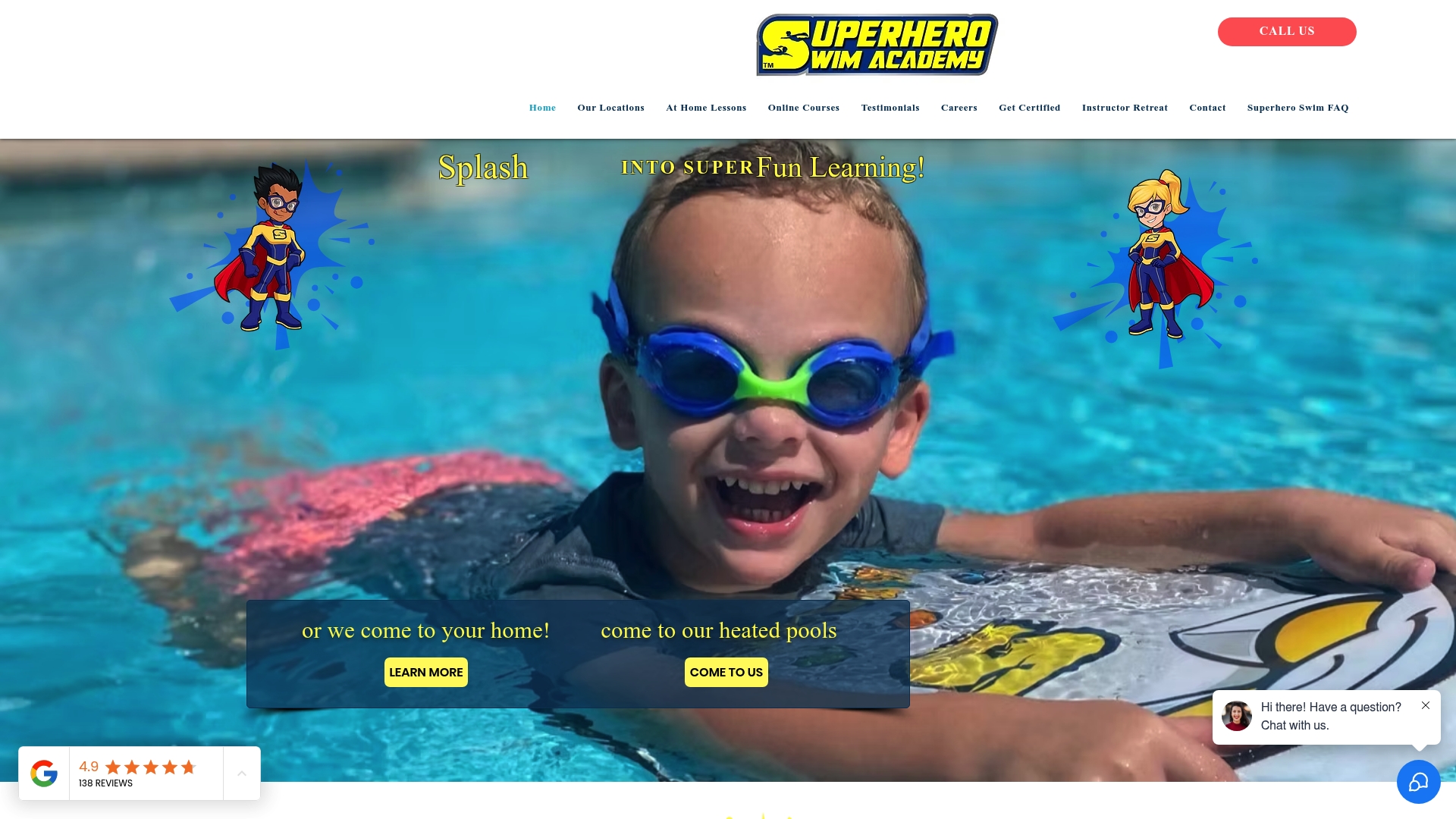
Whether you want a parent-and-child group class, a private lesson, or concierge instruction at your home pool, the academy has a format that fits. Over 2,500 children have learned through this program, and parents consistently report faster progress than they expected. Check locations in Palm Beach and Broward counties and book a trial class to see the difference a properly structured infant program makes.
Useful sources and further reading
American Academy of Pediatrics: Swim Lessons for Children — Clinical guidance on when to start swim lessons and what to look for in a program.
Cleveland Clinic: When Can Babies Go in the Pool? — Pediatric guidance on chlorine safety and pool readiness for infants.
Boys Town National Research Hospital: Swimming with Your Baby — Practical advice on gradual water exposure and parent supervision for infants.
USA Swimming Foundation: Every Child a Swimmer — National water safety initiative with resources for families starting swim education early.
This article provides general information for parents considering infant swim lessons and is not a substitute for advice from your pediatrician. Confirm any health-related decisions, including readiness for pool exposure, with your child’s doctor.
Recommended
Comments