
One-on-One Swim Coaching: Advantages That Actually Matter
- superheroswim
- Aug 7
- 9 min read

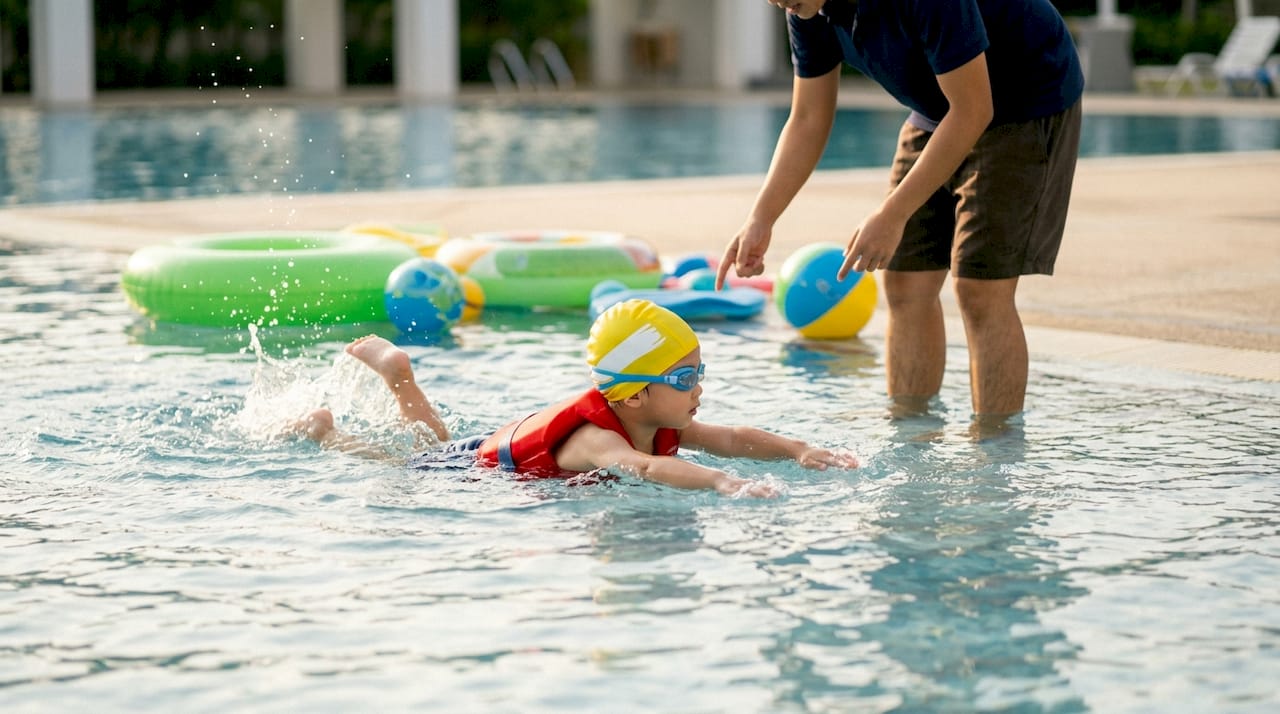
Private swim coaching delivers faster technique gains, better safety supervision, and stronger water confidence than group lessons for most learners. From the very first session, instruction is built around one swimmer’s specific needs, not averaged across a class of eight. Superheroswimacademy has taught many children in Palm Beach and Broward counties using a proven survival-swim curriculum, with every instructor certified in CPR and First Aid. Here is what one-on-one coaching actually gives you:
Individualized attention: every correction targets your swimmer, not the group’s average
Immediate feedback: technique errors get fixed in the moment, not after they’ve been repeated 50 times
Faster technique improvement: focused drills on a single swimmer’s weak points compress the learning curve
Safer supervision: one instructor watching one swimmer, especially critical for infants and toddlers
Flexible scheduling: lessons fit your calendar, not a fixed class roster
Tailored goal plans: progress benchmarks are set around your swimmer’s age, ability, and objectives
Motivation and accountability: a coach who knows your swimmer personally can read frustration, adjust pace, and keep momentum going
Table of Contents
1. What the advantages of one-on-one swim coaching look like in practice
Each benefit above has a concrete mechanism behind it. Understanding how they work helps you set realistic expectations and get more from every session.
Individualized feedback is the biggest structural difference between private and group instruction. In a group class, a coach might spot a dropped elbow on your child’s freestyle catch but have no time to address it before moving to the next swimmer. In a private lesson, that same coach stops, demonstrates the correction, and watches your swimmer repeat the drill until the new pattern sticks. Fewer errors get reinforced, which means less time spent unlearning bad habits later.
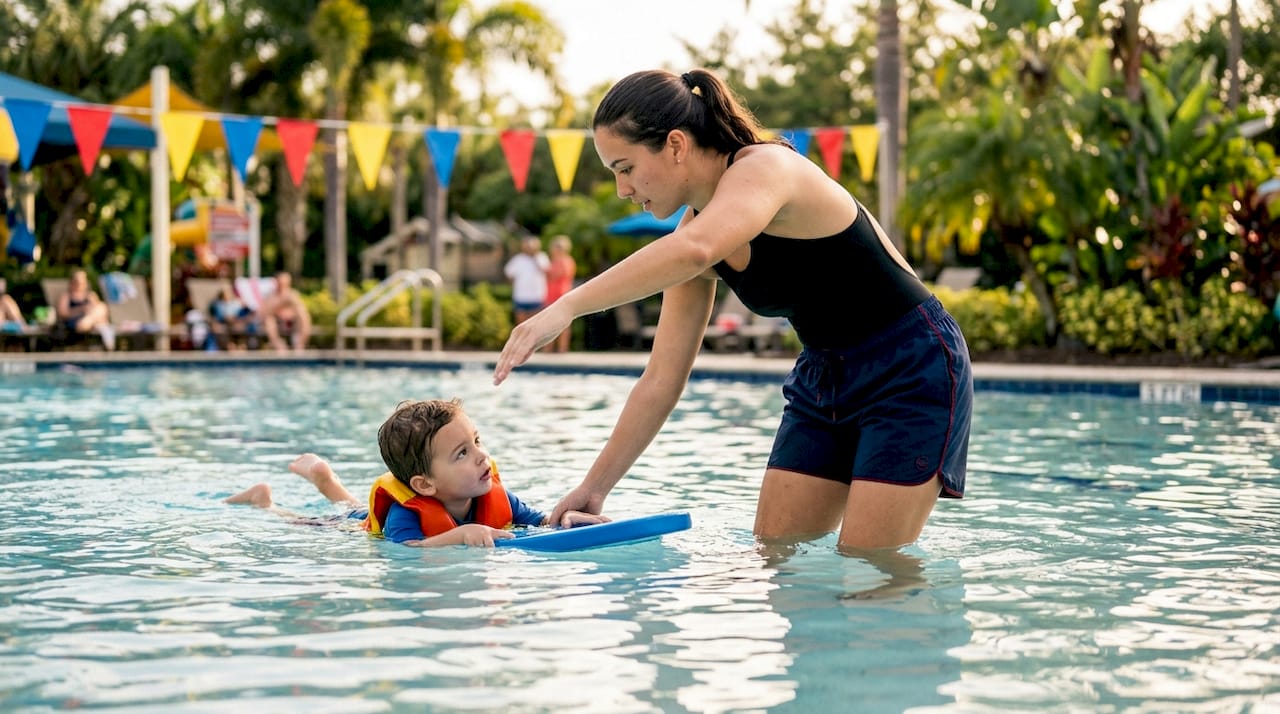
Technique refinement is the primary driver of performance gains, according to personalized coaching practitioners. A skilled coach interprets what they see in real time, adjusts the cue to match how a particular swimmer learns, and sequences drills in an order that makes sense for that body. Technology tools like SwimUp’s training hub can sync workouts to wearables and log stroke counts between sessions, but they work best as a complement to a human coach who can read emotion, fatigue, and learning style.
Anxiety-friendly teaching matters more than most parents expect. A nervous child in a group class can freeze while the lesson moves on. In a private session, the coach controls the pace entirely, backing off when anxiety spikes and building trust at whatever speed the swimmer needs. This is especially valuable for toddlers and young children working on survival skills.
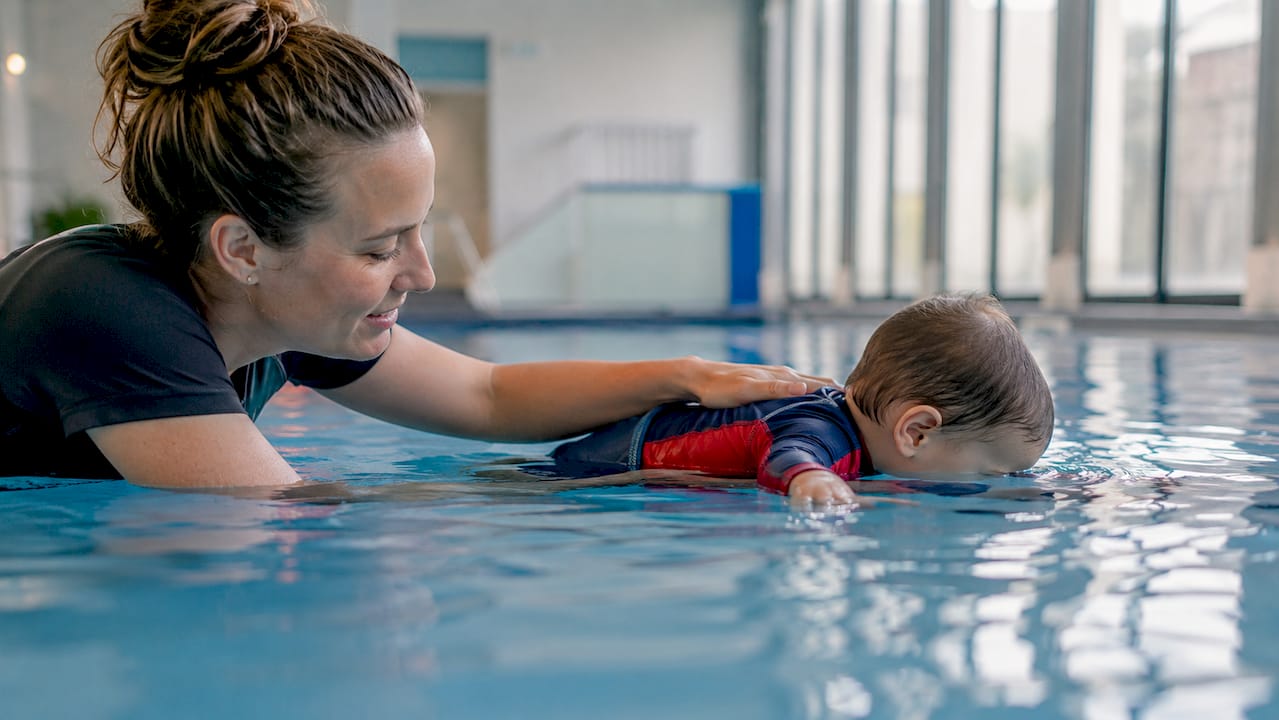
Adaptive plans during growth spurts are a detail coaches rarely advertise but consistently use. When a child grows several inches in a few months, stroke mechanics shift. A private coach catches this early and re-prioritizes technique before bad habits take hold.
Pro Tip: Before each session, give your coach a 30-second phone video of your swimmer in the water. It takes seconds to shoot and gives the coach a reference point for tracking change over time. Set one technical priority per lesson, not five.
2. Who gains the most from private swim lessons
Private coaching advantages are real across age groups, but the return on investment varies by swimmer type. Here is where the gap between private and group instruction is widest:
Families needing scheduling flexibility: busy families with multiple activities often cannot commit to a fixed weekly class time, making structured learning and scheduling strategies like those at WonPrep - Test Prep, College Strategy, Strong Foundations helpful to coordinate lessons with school responsibilities. Private lessons can move around school, travel, and sports seasons.
The role of personalized coaching for kids is particularly well-documented for young children, where safety outcomes are the clearest measure of success.
3. Why private coaching produces measurable, safe progress
The evidence base for one-on-one instruction comes from both practitioner experience and basic learning science. Focused, immediate correction prevents the reinforcement of bad technique. In group lessons, a swimmer can repeat a flawed catch or kick pattern dozens of times while the coach is occupied elsewhere. Those repetitions build motor memory around the wrong movement. Private coaching interrupts that cycle at the source.
Safety is the other side of the same coin. For very young learners, constant supervision is not a luxury. One instructor watching one child in the water means no moment goes unobserved. Instructors certified in CPR and First Aid are equipped to respond if something goes wrong, and a structured survival-swim curriculum gives young swimmers the specific skills they need to self-rescue.
“Technology helps coaches track data, but it cannot replace the human ability to read a swimmer’s emotional state, adjust a cue mid-drill, or decide that today is the day to back off and rebuild trust. The coach is the interpreter. The data is just input.” — Peak Performance Swim Camp
Apps like the Swim Coach workout app offer personalized workouts, device sync, and structured plans that help swimmers stay consistent between private sessions. They are genuinely useful for that purpose. But a swimmer who relies on an app alone to fix a crossover entry or a two-beat kick is going to wait a long time for results.
4. What a private session looks like, realistic timelines, and U.S. pricing
A standard private lesson runs 30–60 minutes. A typical structure looks like this: a short warm-up (5–10 minutes), two or three drill blocks targeting the session’s technical priority, applied practice under mild fatigue, and a brief parent debrief at the end. That debrief is where parents learn what to reinforce at home between sessions.
Realistic progress timelines depend on age, starting point, and session frequency. A young child working on water comfort and basic survival skills typically shows meaningful progress within 4–8 lessons. A swimmer building consistent technique under fatigue usually needs 8–12 weeks of weekly sessions. Individual variability is real, and any coach who promises a specific outcome in a fixed number of lessons is overstating their certainty.
Typical U.S. pricing varies by region, instructor experience, and session format. One benchmark from a U.S. school-district aquatics program shows a standard 30-minute private lesson priced at $58, with package discounts available for multiple bookings. Urban markets and concierge in-home instruction typically run higher. For a deeper breakdown of what drives per-lesson cost, the personalized swim lesson pricing guide covers the main variables.
Session format | Typical U.S. price range | Notes |
30-min private (pool facility) | $58 | District/municipal programs offer this benchmark rate; package discounts are available |
60-min private (pool facility) | $— | Pricing varies; most common among competitive or adult swimmers |
In-home concierge lesson | — | Reflects travel, setup, and exclusivity |
Package (5–10 lessons) | package discounts reduce the per-lesson cost | Varies by provider |
Pro Tip: Combining one private lesson per week with two sessions of supervised group practice or structured app-based drills (using a tool like SwimUp) keeps costs manageable while preserving the correction benefit that only a live coach provides.
A free personalized swim plan generator can give you a week-by-week baseline program to work from between private sessions. It is a useful starting point, not a substitute for in-water coaching. For families weighing in-home versus pool options, the in-home lesson vs. public pool comparison lays out the trade-offs clearly.
5. How to pick a private swim coach or program
The quality gap between a strong private coach and a weak one is larger than most parents expect. Here is a practical checklist and the questions worth asking before you commit.
Checklist before booking:
CPR and First Aid certification (current, not expired)
Background check on file
Documented curriculum or lesson progression, not just “we go at the child’s pace”
Willingness to share a sample lesson plan or demonstrate teaching in water
References or verifiable testimonials from families with similar-age swimmers
Clear cancellation and rescheduling policy
Instructor-to-swimmer ratio for in-home lessons (one-to-one is the standard)
Liability insurance for in-home or private pool instruction
Questions to ask on a trial call:
How do you track progress between sessions?
What does a typical 30-minute lesson look like for a child this age?
How do you handle a swimmer who is scared or refuses to enter the water?
What is your experience with [specific age group or need]?
Do you provide written progress updates to parents?
What happens if my child plateaus?
How do you adjust when a swimmer has a bad day?
What is your cancellation policy if we need to reschedule?
Red flags: no verifiable credentials, refusal to allow a trial lesson, a rigid group-style plan applied to a private session, or vague answers about how progress is tracked.
Pro Tip: Run a single trial lesson with one measurable objective: for example, “reduce elbow drop on the freestyle catch.” If the coach cannot name the correction, demonstrate it, and give your swimmer a cue to try, that tells you everything you need to know about their teaching specificity.
For booking workflows and what to expect from a first session, the swim lesson booking best practices guide is worth reading before you call.
6. Common misconceptions about private swim coaching
“Private lessons are only for wealthy families.” Not accurate. A $58 per-session benchmark from a municipal aquatics program shows that private instruction exists at accessible price points. Package discounts reduce the per-lesson cost further, and combining occasional private sessions with group practice stretches the budget without sacrificing coaching quality.
“You need daily lessons to improve.” Frequency matters less than consistency and quality. Most swimmers see clear progress with one or two private sessions per week, provided they practice the assigned drills between lessons. Daily lessons without deliberate practice in between produce diminishing returns quickly.
“Apps and video can replace a live coach.” Apps like SwimUp and the Swim Coach app are genuinely useful for tracking metrics and maintaining consistency between sessions. They cannot watch your swimmer’s underwater catch, read frustration building before a meltdown, or adjust a cue on the spot. They are training tools, not coaching replacements.
“Private lessons are risky because coaches skip curriculum.” The opposite is true when you choose a program with a documented lesson progression. A structured survival-swim curriculum, like the one Superheroswimacademy uses, provides a clear sequence of skills with measurable checkpoints. Private instruction delivers that curriculum faster because there is no group to wait for.
Key Takeaways
One-on-one swim coaching produces faster, safer, and more reliable progress than group instruction because every correction, plan, and pace decision is built around a single swimmer.
Point | Details |
Immediate correction matters most | Private coaching stops bad technique from repeating, which is the fastest route to lasting improvement. |
Safety is the top priority for young swimmers | Constant one-on-one supervision and CPR/First Aid-certified instructors reduce risk for infants and toddlers. |
Cost is manageable with packages | A 30-minute private lesson is typically $58 at municipal facilities; package discounts lower the per-session cost. |
Trial lesson is your best evaluation tool | Set one measurable objective and judge the coach on their ability to name, demonstrate, and cue that correction. |
Superheroswimacademy | Offers private, in-home concierge, and parent-and-child survival lessons in Palm Beach and Broward counties, with over 2,500 children taught. |
The case for private instruction is stronger than most parents realize
Most families come to private coaching after a group class stalls. A child who has been in a beginner class for two sessions and still won’t put their face in the water, or a competitive swimmer who has been told to “work on their catch” for six months without a single specific drill. Group instruction is not bad. It just cannot do what a private coach does, because the math does not work. One instructor, eight swimmers, 45 minutes. The corrections get spread thin.
What surprises parents most is how quickly a private session reveals what the real problem is. It is rarely what they thought. A child who “hates swimming” often hates the unpredictability of a group class. A swimmer whose times have plateaued often has one fixable mechanical issue that nobody has had time to address. Private coaching finds those things fast because the coach is watching one person the entire time.
The survival-swim emphasis at Superheroswimacademy reflects a specific philosophy: water safety is not a nice bonus, it is the foundation. Every other benefit of private coaching, the confidence, the technique, the love of the water, builds on a child who knows they can handle themselves in the water. That sequence matters.
Superhero Swim Academy offers private lessons built around your child’s safety
Superheroswimacademy gives families in Palm Beach and Broward counties direct access to private survival-swim instruction with no group-class compromise. Every instructor is CPR and First Aid certified and trained in the academy’s own survival-swim curriculum. Lesson formats include in-person private sessions, in-home concierge instruction at your own pool, and parent-and-child sessions designed for infants and toddlers.
Parents receive regular progress updates with clear goals so you always know where your child stands. With over 2,500 children taught, the results speak through the families who’ve watched their kids go from fearful to confident in a matter of weeks. For families who want step-by-step guidance on setting up in-home private lessons, the 2026 parent guide to scheduling private swim sessions at home covers everything from pool setup to what to expect in the first lesson.
Ready to book? Visit Superheroswimacademy to check availability and to reserve your child’s first private session.
Useful sources and further reading
Private Swim Lessons & Individual Training Sessions
Training Hub | SwimUp
Personalized swim coaching: boost skills with tailored training — Peak Performance Swim Camp
Free Personalised Swim Training Plan Generator
Private Swim Coaching to Enhance Your Skills
Recommended
Comments