
Age-Appropriate Swim Instruction: A Parent's Guide
- superheroswim
- Jun 16
- 8 min read

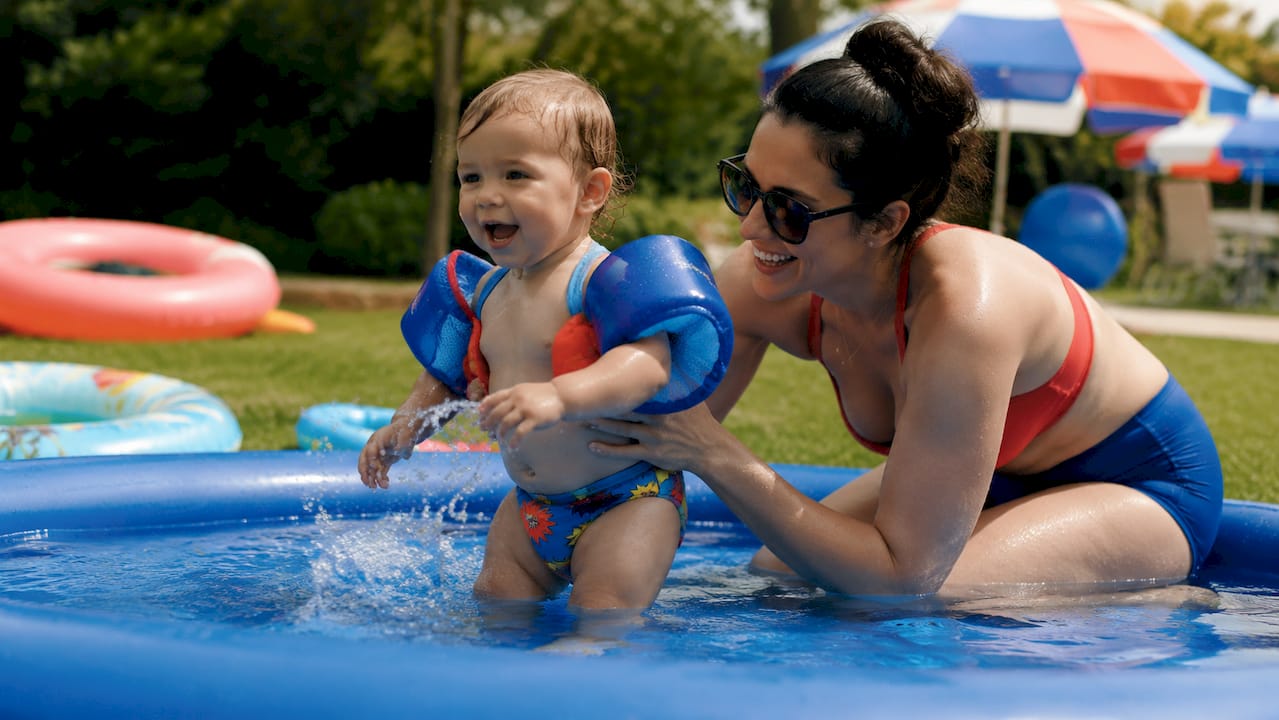
Age-appropriate swim instruction is defined as swim lessons matched to a child’s developmental stage, starting with water safety and survival skills around age 1 and progressing to formal stroke techniques by age 4 and beyond. The American Academy of Pediatrics recommends swim lessons starting at age 1 for children who show readiness, and formal lessons for most children by age 4. The stakes are real. Children aged 1–4 who participate in formal lessons show an 88% reduction in drowning risk. This guide breaks down what age-appropriate swim instruction looks like at each stage, what safety standards matter most, and how to choose the right program for your child.
What is age-appropriate swim instruction, really?
Age-appropriate swim instruction means matching lessons to developmental readiness and abilities rather than simply chronological age. A 2-year-old and a 4-year-old may both be “toddlers” in casual conversation, but their motor skills, emotional regulation, and physical stamina are worlds apart. The right program recognizes that gap and teaches accordingly.
Developmental readiness covers three areas: physical ability, emotional comfort, and cognitive understanding. A child who can hold their breath briefly, follow simple one-step directions, and tolerate water on their face is ready for structured lessons. A child who panics at water contact needs a gentler familiarization phase first.
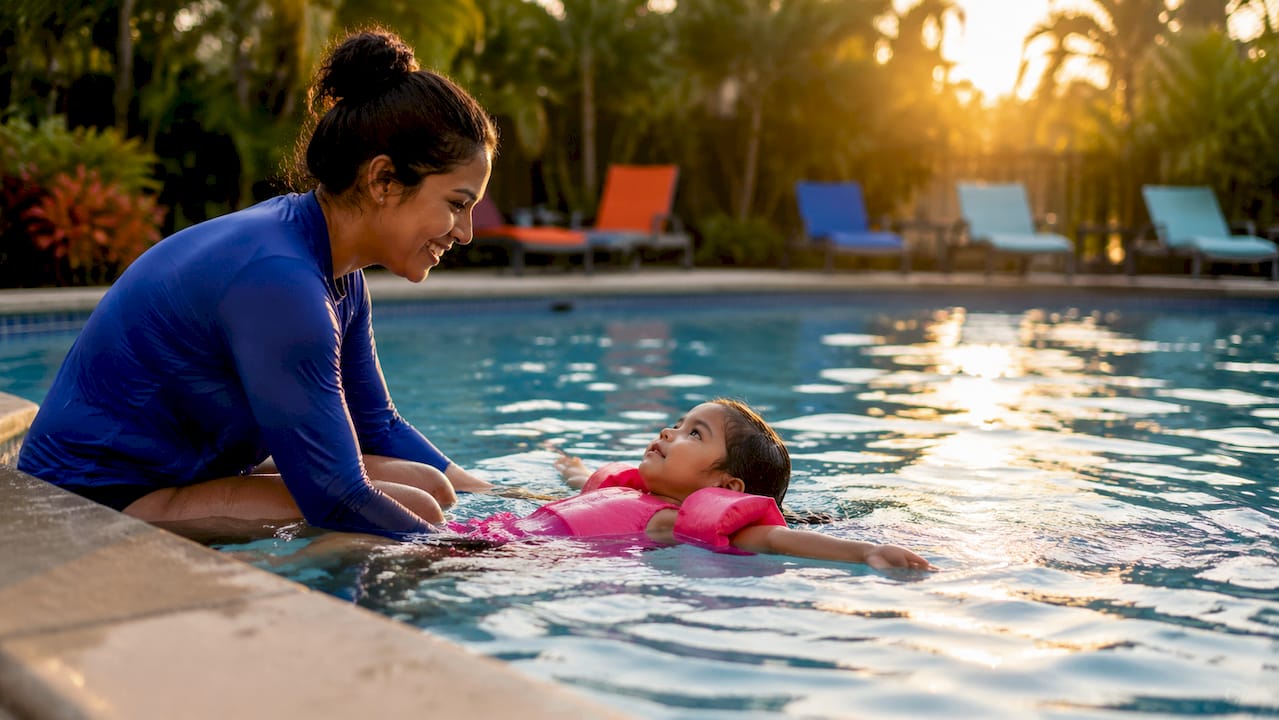
Pediatricians play a direct role here. The AAP advises parents to consult their child’s doctor before enrolling in lessons, especially for children under 1 year. Factors like ear infections, skin conditions, and immune health all affect whether a child is ready to begin.
Physical and emotional readiness markers
The following readiness markers help parents assess whether their child is prepared for structured swim instruction:
Motor control: Can the child kick their legs independently and move their arms with some coordination?
Breath awareness: Does the child understand the concept of holding their breath, even briefly?
Water comfort: Does the child tolerate water on their face without extreme distress?
Direction following: Can the child respond to simple verbal cues like “kick” or “hold on”?
Stamina: Can the child stay engaged in a structured activity for 15–30 minutes?
No child needs to check every box before starting. But the more markers present, the more productive early lessons will be.
Pro Tip: Before the first lesson, take your child to a pool for a casual water play session. Watch how they react to splashing, submersion, and being held in the water. That reaction tells you more than any age chart.
How does swim instruction differ by age group?
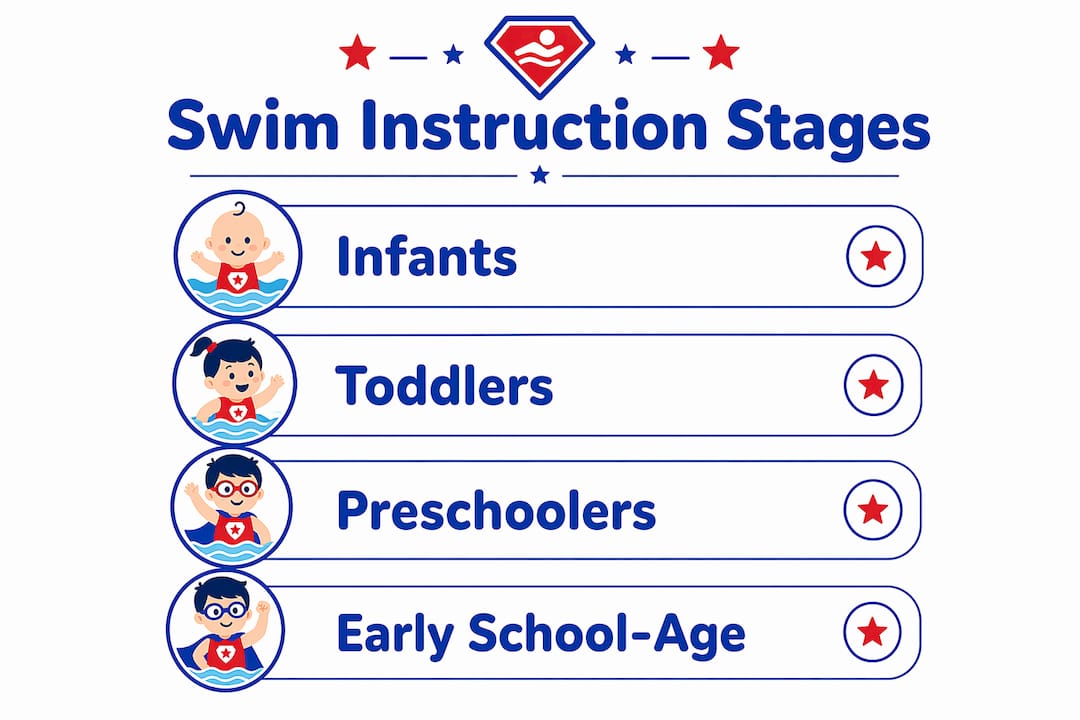
The age range for swim classes spans from infancy through early school age, and the goals shift significantly at each stage. Here is how instruction priorities break down across the four main groups.
Infants (6 months to 1 year)
At this stage, the focus is entirely on water familiarization and early survival behaviors. Formal stroke teaching is not the goal. Instead, swimming lessons for infants target self-rescue behaviors like rolling onto their backs to float, which buys critical time in an emergency. A parent or caregiver must be in the water at all times. These sessions are as much about building parental confidence and water safety habits as they are about the infant’s skills.
Toddlers (1 to 3 years)
Toddler instruction shifts toward basic survival skills. Children in this group learn supported back floating, safe water entry, and how to move toward a wall or exit point. Lessons for children under 4 should promote respect for water and a safe, age-appropriate atmosphere that supports development. Emotional readiness matters enormously here. A toddler who feels safe with their instructor learns faster and retains skills longer.
Preschoolers (3 to 5 years)
Preschoolers are developmentally ready to begin combining survival skills with early stroke mechanics. By age 4, most children can learn to tread water, recognize exit points, and perform basic freestyle arm movements. The AAP notes that by age 4, children are generally ready for skills like treading water and exit point recognition. This is the age range where structured group lessons become genuinely productive.
Early school-age children (5 to 7 years)
Children in this group can focus on formal stroke mastery. Freestyle, backstroke, and basic breathing technique are all achievable. A 2025 systematic review published in Frontiers in Public Health found that shallow water settings and motor awareness approaches improve skill acquisition in early childhood swim training. This confirms that even at this older stage, the how of instruction matters as much as the what.
Age Group | Primary Goal | Key Skills | Supervision Level |
6 months to 1 year | Water familiarization | Back float, breath awareness | Parent in water |
1 to 3 years | Survival readiness | Safe entry, wall reach, floating | Touch supervision |
3 to 5 years | Survival plus early strokes | Treading water, exit recognition | Poolside supervision |
5 to 7 years | Formal stroke development | Freestyle, backstroke, breathing | Active poolside supervision |
Pro Tip: If your preschooler seems stuck on a skill, ask the instructor whether the pool temperature is warm enough. Cold water tightens muscles and shortens attention spans fast.
What safety practices define quality swim instruction?
Safety in swim instruction is not just about what happens in the water. It covers supervision standards, environmental controls, and the honest acknowledgment that lessons have limits.
The single most critical safety standard for children under 4 is touch supervision. Touch supervision means an adult stays within arm’s reach of the child at all times when in or near water. This applies during lessons, not just recreational swimming. If a parent cannot provide touch supervision during a lesson, private one-on-one instruction is the recommended alternative.
Water temperature is a non-negotiable factor for infants and toddlers. Pool water for children under 3 should be kept between 87°F and 94°F. Cold water increases hypothermia risk and reduces a young child’s tolerance for the lesson itself. A child who is shivering cannot learn.
The most important safety message for any parent is this: swim lessons do not provide drown-proofing. The AAP is explicit that lessons are one layer of drowning prevention, not a complete solution. Undistracted adult supervision remains non-negotiable regardless of a child’s skill level.
Additional safety standards to look for in any program include:
Certified instructors trained in CPR and first aid
Clean, well-maintained pool facilities with proper disinfection
Clear instructor-to-child ratios appropriate for the age group
Written emergency response protocols posted at the facility
Parent involvement policies that keep caregivers informed and engaged
Parent involvement during lessons also helps families practice skills between sessions and reinforces safety habits at home. Programs that actively include caregivers produce better outcomes than those that treat parents as spectators.
How do you choose the best swim program for your child?
Choosing the right program means evaluating instructors, curriculum structure, class size, and how well the program aligns with your child’s current developmental stage. The best age for swim lessons is only useful information if the program you choose is built to serve that age well.
Start with instructor credentials. Every instructor should hold current CPR and first aid certification. Programs that train instructors in a specific survival swim curriculum, rather than relying on general swimming knowledge, deliver more consistent results. Ask directly: what certification does each instructor hold, and how often is it renewed?
Class size matters more than most parents realize. For infants and toddlers, a ratio of one instructor to two or three children is the standard for effective teaching. Larger groups dilute attention and reduce the number of practice repetitions each child gets per session. For school-age children, groups of four to six are generally workable.
Questions worth asking any swim school before enrolling:
What is your instructor-to-child ratio for my child’s age group?
What is the pool water temperature maintained at during lessons?
How do you communicate progress to parents?
What survival skills does your curriculum prioritize for children under 4?
Do you offer private lessons if my child struggles in a group setting?
The choice between private and group lessons depends on the child. Children with water anxiety, sensory sensitivities, or previous negative water experiences often benefit from small group swim instruction or one-on-one sessions before transitioning to a group format. A good program will tell you honestly which setting fits your child rather than defaulting to whatever is most convenient for them.
Pro Tip: Ask to observe a class before enrolling. Watch how the instructor responds when a child cries or resists. That moment reveals more about the program’s philosophy than any brochure.
Key takeaways
Age-appropriate swim instruction works because it matches lesson content, supervision, and environment to a child’s developmental stage rather than treating all young swimmers the same.
Point | Details |
Start early with readiness in mind | The AAP recommends lessons from age 1 for ready children, and for most children by age 4. |
Survival skills come before strokes | Children under 4 should learn water entry, floating, and exit recognition before formal stroke work. |
Touch supervision is non-negotiable | Adults must stay within arm’s reach of children under 4 during and after every lesson. |
Water temperature affects learning | Pool water for infants and toddlers must stay between 87°F and 94°F to prevent hypothermia and maintain focus. |
Lessons reduce but do not eliminate risk | Formal swim lessons cut drowning risk by 88% for ages 1–4, but active adult supervision remains required at all times. |
What i’ve learned teaching over 2,500 young swimmers
The most common mistake I see parents make is treating swim lessons as a milestone to check off rather than a skill to build over time. A child who completes a beginner course at age 3 has not “learned to swim.” They have started a process that takes years of consistent practice and appropriate progression to complete.
The second mistake is trusting age charts over the child in front of you. I have worked with 4-year-olds who were not ready for group lessons and 18-month-olds who took to water survival skills faster than most 3-year-olds. Developmental readiness is the real guide. Age is just a starting point.
What actually moves children forward is a combination of warm water, calm instructors, parent engagement, and a curriculum that prioritizes survival skills before aesthetics. A child who can roll to their back and float independently has a real safety skill. A child who can do a pretty freestyle kick but panics when they fall in unexpectedly does not.
The research from Frontiers in Public Health confirms what we see in practice: the method of delivery matters as much as the content. Shallow water, motor awareness techniques, and caregiver coaching all improve outcomes. That is exactly why we build those elements into every lesson at Superheroswimacademy.
Start water familiarization early. Stay in the water with your child. Ask hard questions of any program you consider. And never, ever assume a lesson replaces your eyes on your child near water.
— SUPERHERO
Start your child’s swim journey with Superheroswimacademy
Superheroswimacademy designs every lesson around the developmental stage of the child, not a one-size-fits-all curriculum. Programs cover infants through early school-age children, with instructors certified in CPR, first aid, and the academy’s own survival swim curriculum. Over 2,500 children in Palm Beach and Broward counties have built real water safety skills through this approach.
Parents receive regular progress updates and clear skill goals at every stage, so you always know where your child stands. Whether your child is ready for their first water familiarization session or is moving toward formal stroke development, Superheroswimacademy has a program built for that exact stage. Explore swim lessons for your child today, or find a location near you in Palm Beach or Broward County to get started.
FAQ
What age should a child start swim lessons?
The American Academy of Pediatrics recommends swim lessons as early as age 1 for children who show developmental readiness, and for most children by age 4. Starting earlier builds water safety habits and reduces drowning risk significantly.
Are swimming lessons safe for toddlers?
Yes, when conducted by certified instructors in warm water (87°F to 94°F) with touch supervision maintained throughout. Toddler lessons focus on survival skills like back floating and safe water exit rather than formal stroke technique.
Do swim lessons mean my child is safe in water?
No. Swim lessons reduce drowning risk by 88% for children aged 1–4, but they do not eliminate it. The AAP is clear that undistracted adult supervision remains required at all times, regardless of a child’s skill level.
What is the difference between infant and toddler swim instruction?
Infant lessons (6 months to 1 year) focus on water familiarization and early self-rescue behaviors like rolling to a back float. Toddler lessons (1 to 3 years) build on those skills with safe water entry, wall reaching, and basic survival readiness.
How do i know if a swim program is age-appropriate?
Look for certified instructors, low instructor-to-child ratios, water temperatures maintained at 87°F to 94°F for young children, a curriculum that prioritizes survival skills for under-4 swimmers, and a clear parent communication policy.
Recommended
Comments