
How Swim Academies Accommodate Busy Families
- superheroswim
- Jun 20
- 8 min read


Swim academies accommodate busy families by building flexible scheduling, short lesson formats, and digital self-service tools directly into their program design. The result is a system where working parents in Palm Beach, Broward County, and across the country can keep their children in consistent, safety-focused swim instruction without rearranging their entire week. Superheroswimacademy has seen this firsthand: when programs align with how real families actually live, participation rises and children reach water safety milestones faster. The strategies below cover every major accommodation model in use today, from continuous enrollment to 10-minute infant sessions.
How swim academies accommodate busy families through flexible scheduling
The most direct answer to how swim academies accommodate busy families is enrollment flexibility. Two primary models exist: continuous enrollment and session-based enrollment. Each serves a different type of family schedule, and understanding the difference helps you pick the right fit before you sign up.
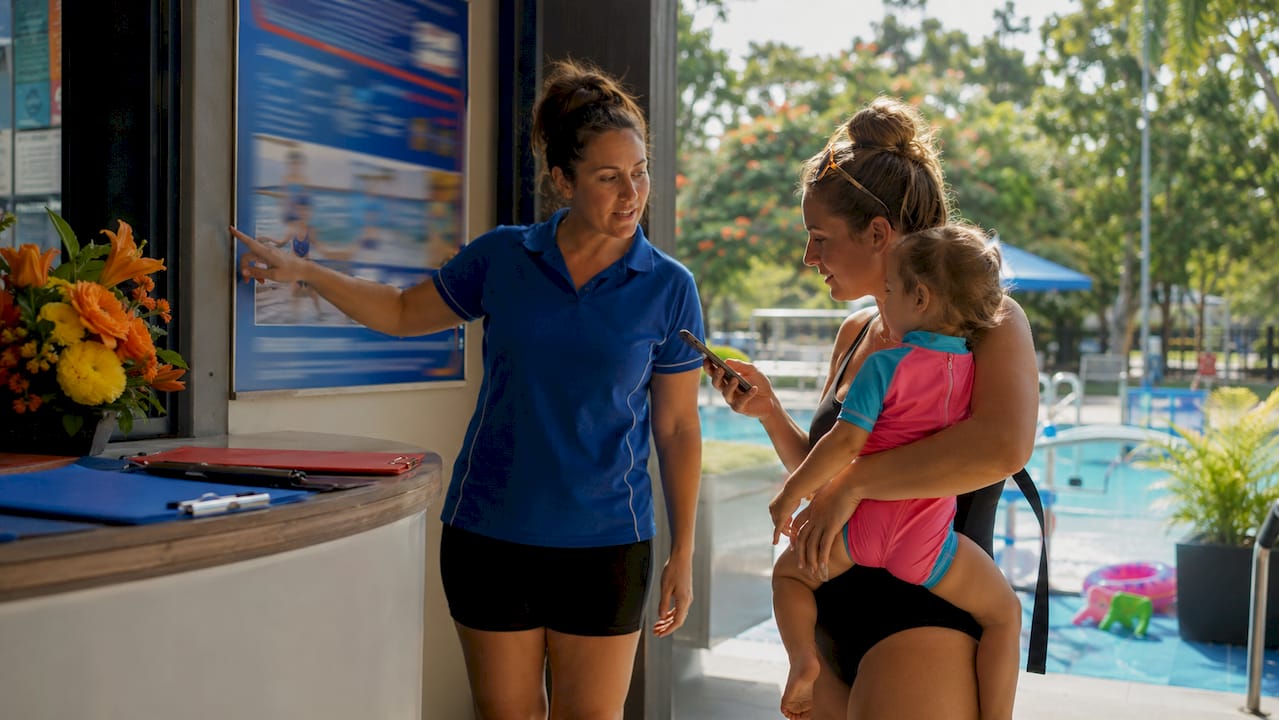
Continuous enrollment means you register once and hold your spot month to month. The YMCA of the Jersey Shore transitioned to this model as of September 2025. That shift matters because it removes the pressure of seasonal registration windows, which often conflict with school calendars, work travel, and summer plans.
Session-based enrollment runs in fixed blocks, typically five weeks at a time. Carmel Swim Academy offers prorated tuition for families who join mid-session. That policy eliminates the financial penalty that used to discourage late starters, making it practical to enroll whenever your schedule opens up rather than waiting for the next cycle.
Here is how the two models compare for busy parents:
Enrollment model | Best for | Key benefit |
Continuous enrollment | Families with unpredictable schedules | No re-registration; hold your spot year-round |
Session-based with proration | Families with structured but shifting calendars | Join mid-session without paying for missed weeks |
Evening and weekend classes | Dual-income households | Lessons fit around the workday |
Make-up lesson policies | Families with frequent conflicts | Missed lessons are not lost lessons |
Beyond enrollment type, timing matters. Evening swim classes for families and weekend slots are now standard at most quality academies. These options exist specifically because the majority of parents cannot leave work at 2 p.m. on a Tuesday. When you evaluate a program, ask directly whether make-up lessons are available and what the notice requirement is. That single policy detail determines how much scheduling flexibility you actually get in practice.
What lesson formats work best for infants and toddlers in busy households?
Short, frequent lessons are the standard format for infant and toddler swim instruction, and that structure is a direct benefit for busy parents. The Infant Swimming Resource (ISR) method uses 10-minute sessions held several days per week. Ten minutes is a realistic commitment even on a packed day, and the frequency builds muscle memory and water safety skills faster than one long weekly session ever could.
ISR fees typically run $40–$105 per session, with weekly rates of $175–$285. Those numbers reflect one-on-one instruction, which is the other major advantage of this format. Your child gets the instructor’s full attention for every minute of every lesson. There is no waiting for a turn, no distraction from other kids, and no wasted time.
Aquatic program leads at Lakeland Hills YMCA emphasize that brief, manageable lesson routines deliver measurable water safety skills more reliably than longer, less frequent sessions. The reason is simple: young children’s attention spans and physical stamina are short. A 10-minute lesson hits the learning window precisely. A 45-minute lesson pushes past it.
Key advantages of the short-lesson format for family scheduling:
Predictable time blocks. Ten minutes of pool time plus transition time is easy to slot between daycare pickup and dinner.
Daily attendance builds habit. Frequent sessions make swim lessons a routine rather than an event, which reduces the mental load of scheduling.
One-on-one instruction means no group conflicts. You are not coordinating with four other families to find a shared time slot.
Faster progress reduces total lesson weeks. Efficient skill development means your child reaches safety benchmarks sooner.
Pro Tip: If your academy offers ISR or a similar short-session format, schedule lessons at the same time each day. Consistency removes the decision-making burden and makes attendance automatic.
For a deeper look at why this format is designed the way it is, Superheroswimacademy’s guide on short infant swim lessons explains the developmental reasoning behind the structure.
What digital tools help parents manage swim lesson scheduling?
Parent portals and mobile apps are now the primary interface between swim academies and working parents. These tools let you view your schedule, mark absences, and book make-up lessons without calling the front desk during business hours. That self-service capability is not a convenience feature. It is a structural accommodation for parents who cannot make phone calls at 10 a.m. on a weekday.
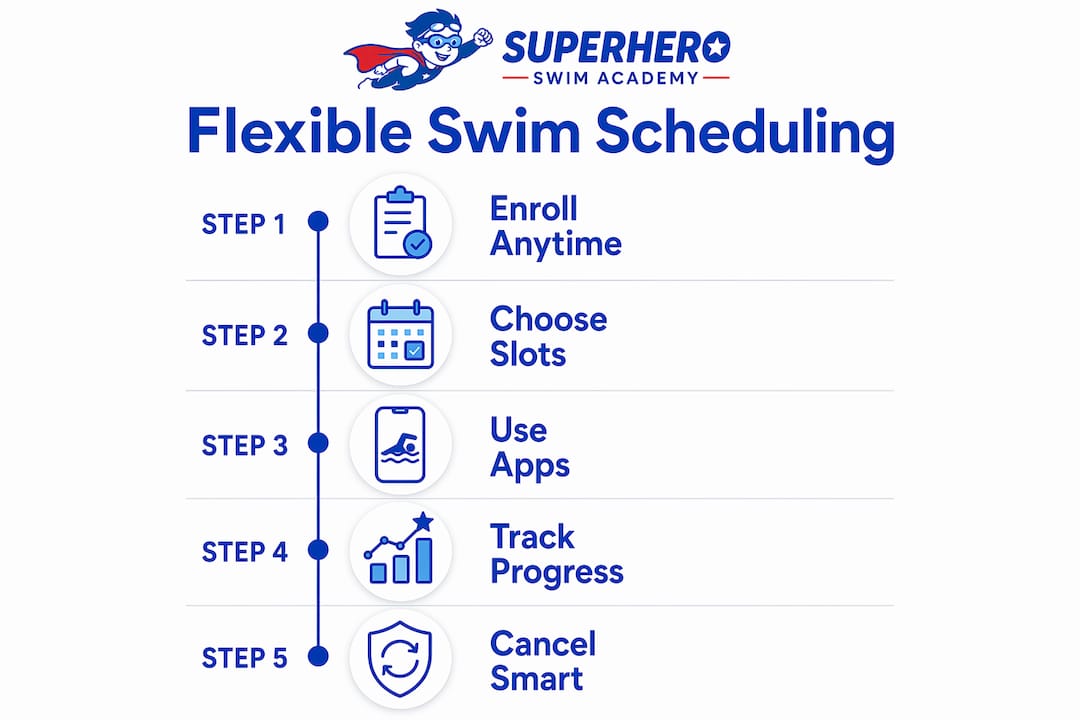
Nashville Swim Academy requires at least 6 hours’ notice to book a make-up lesson without a penalty. That 6-hour window is the operational constraint every parent needs to know. Miss it and you lose the paid session. Know it and you protect your investment.
Here is how to use digital tools effectively as a busy parent:
Set a recurring calendar alert. Place a reminder 8 hours before each lesson. If a conflict arises, you still have time to cancel within the penalty-free window.
Book make-up lessons immediately after canceling. Most portals show available slots in real time. Waiting increases the chance that convenient times fill up.
Check the portal weekly, not daily. A weekly review of your upcoming schedule catches conflicts before they become last-minute cancellations.
Enable push notifications. Academies often send schedule changes or instructor updates through their app. Staying notified prevents surprises.
Save the cancellation policy in your phone. A screenshot of the notice requirement means you never have to search for it when time is short.
Pro Tip: Treat the 6-hour cancellation deadline the same way you treat a work meeting cutoff. Put it in your calendar as a hard boundary, not a guideline.
Digital transparency also helps parents track progress. Portals that show skill milestones and instructor notes keep you informed without requiring a conversation at the pool deck after every lesson. That communication efficiency matters when you are rushing from swim class to the next item on your schedule.
How do class size and instructor quality affect families with tight schedules?
Small class sizes are not just a quality marker. They are a scheduling advantage. Noonan Family Swim School caps its blue-level classes at two children per instructor. At that ratio, lessons run on time, instructors can address individual needs without delays, and the session ends when it is supposed to. For a parent with a 30-minute window between pickup and the next commitment, a lesson that runs 10 minutes over is a real problem.
SwimKids Utah uses a proven curriculum that delivers measurable skill gains in weeks rather than years. That pace matters to busy families because it means fewer total lessons to reach a safety milestone. A program that takes three years to teach a child to float independently costs more time and money than one that reaches the same outcome in eight weeks.
Quality instruction also reduces parental anxiety, which is an underrated scheduling factor. When you trust that your child is genuinely learning water safety skills, you stop second-guessing whether the lessons are worth the logistical effort. That confidence makes it easier to balance swim lessons with school activities and other commitments.
Programs that align with developmental goals also reduce dropout. Lakeland Hills YMCA notes that matching lesson structure to developmental milestones helps parents overcome the fear that swim lessons will become an unmanageable commitment. When progress is visible and the schedule is predictable, families stay enrolled. Consistency is what produces safe swimmers, and quality programs are designed to make consistency achievable.
Key Takeaways
Swim academies that accommodate busy families combine flexible enrollment, short lesson formats, and digital scheduling tools to make consistent attendance realistic for working parents.
Point | Details |
Continuous enrollment removes re-registration pressure | Year-round models like the YMCA of the Jersey Shore’s let families hold their spot without seasonal deadlines. |
Short ISR sessions fit into packed days | Ten-minute daily lessons deliver faster safety outcomes than one long weekly session. |
The 6-hour cancellation rule is the key constraint | Set calendar alerts 8 hours before each lesson to protect your paid make-up session eligibility. |
Small class sizes keep lessons on schedule | Ratios like two children per instructor at Noonan Family Swim School mean sessions start and end on time. |
Proven curricula reduce total lesson time | Programs like SwimKids Utah deliver measurable skill gains in weeks, lowering the long-term scheduling burden. |
What I’ve learned after teaching over 2,500 children
Most parents come to us worried about two things: whether their child will actually learn, and whether they can realistically keep showing up. Those fears are connected. When a program is hard to fit into your week, you start skipping. When you skip, your child’s progress stalls. When progress stalls, you question whether it is worth continuing. That cycle is the real enemy of water safety.
What I have found is that the scheduling structure of a swim program is as important as the curriculum itself. A technically excellent lesson that requires you to show up at 10 a.m. on a Wednesday is useless to a dual-income household. The families who see the fastest results are the ones who found a program that fits their actual life, not the life they wish they had.
Short, frequent lessons changed how I think about instruction entirely. Ten minutes of focused, one-on-one work with an infant produces better outcomes than 45 minutes in a group class. The child is engaged, the parent is present, and the lesson ends before anyone loses focus. That is not a compromise on quality. It is better teaching.
The digital tools matter more than most parents expect. The ability to cancel a lesson at 11 p.m. from your phone, without guilt or a phone call, removes a major source of scheduling stress. When parents feel in control of the logistics, they stay enrolled longer. Longer enrollment means more consistent practice. More consistent practice means safer children.
If I could give one piece of advice to any parent evaluating a swim program, it is this: ask about the make-up lesson policy before you ask about anything else. That policy tells you everything about how the academy views your time.
— SUPERHERO
Swim lessons that actually fit your family’s schedule
Superheroswimacademy builds every program around the reality that busy parents need flexibility without sacrificing safety. From continuous enrollment options to one-on-one survival swim lessons for infants and toddlers, the structure is designed to work with your schedule, not against it.
With over 2,500 children taught across Palm Beach and Broward counties, Superheroswimacademy offers family-friendly swim lessons with digital scheduling tools, make-up lesson policies, and CPR-certified instructors at every session. Parents receive regular progress updates so you always know where your child stands. If you are ready to find a location that works for your family, explore Superheroswimacademy’s locations to see available class times near you.
FAQ
How do swim academies support working parents?
Swim academies support working parents through continuous enrollment, evening and weekend class times, and digital parent portals that allow self-service scheduling and make-up booking. These features remove the need to coordinate with the academy during business hours.
What is the ISR method and why does it fit busy schedules?
The Infant Swimming Resource (ISR) method uses 10-minute one-on-one sessions held several days per week. The short duration fits easily into a working parent’s daily routine while delivering faster water safety outcomes than longer, less frequent group lessons.
How much notice do I need to cancel a swim lesson without penalty?
Most swim academies require at least 6 hours’ notice to cancel a lesson and remain eligible for a make-up session. Setting a calendar alert 8 hours before each lesson is the most reliable way to stay within that window.
Are year-round swim lessons better for busy families than seasonal programs?
Year-round continuous enrollment is generally better for busy families because it eliminates seasonal registration deadlines and keeps children in consistent practice. The YMCA of the Jersey Shore adopted this model in September 2025 specifically to reduce scheduling disruptions for working parents.
What class size should I look for in a family-friendly swim program?
Look for programs that cap classes at two to four children per instructor. Noonan Family Swim School limits certain classes to two children per instructor, which keeps lessons on schedule and gives each child focused attention, both of which matter when your pickup window is tight.
Recommended
Comments