
How to Balance Swim Lessons with School Activities
- superheroswim
- Jun 4
- 8 min read

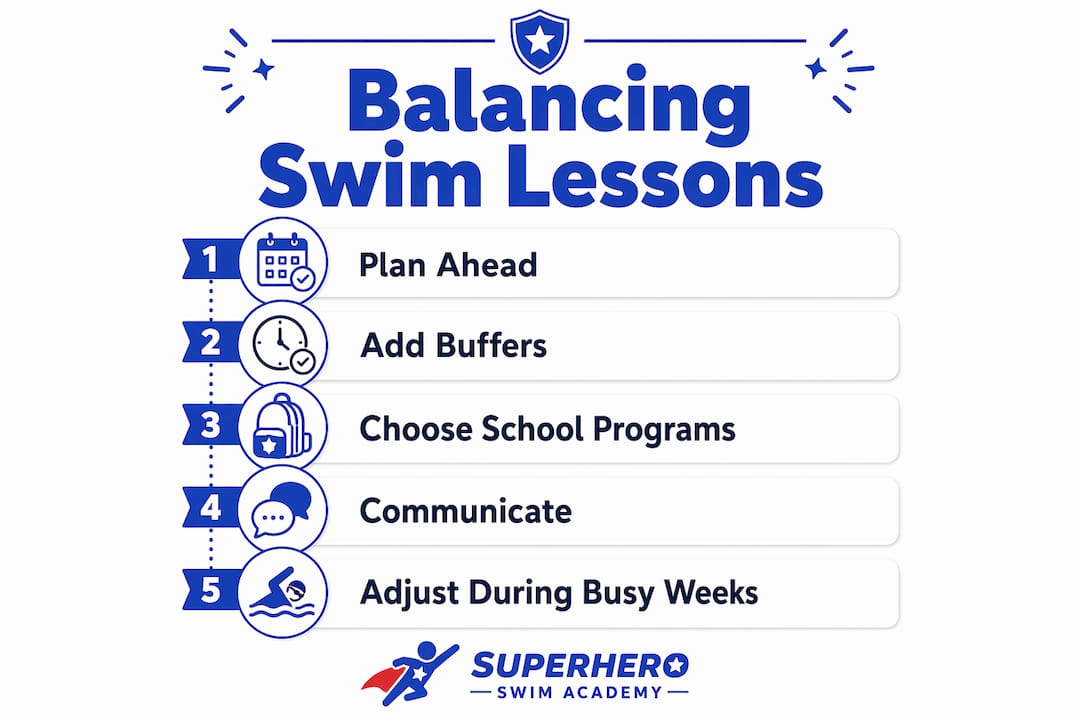
Balancing swim lessons with school activities means integrating water safety training into a child’s weekly schedule without creating conflict, overload, or family stress. The American Academy of Pediatrics recommends swim lessons as a protective layer against drowning starting around age 1, which means swim instruction is not optional enrichment. It is a safety priority that belongs on the same level as any academic commitment. The good news is that with the right scheduling approach, school-based swim programs, and a few logistics habits, busy families in Palm Beach, Broward, and communities across the country are making it work every week.
How to balance swim lessons with school activities: the core challenge
The scheduling tension most parents feel is real, not imagined. Swim lessons, soccer practice, homework blocks, and dinner routines all compete for the same narrow window between school dismissal and bedtime. Understanding where the friction actually comes from is the first step toward fixing it.
Where conflicts typically pile up
The most common pinch points are overlapping lesson times and activity windows, transportation gaps between school and the pool, and the ripple effect on homework and sleep. A 4:30 PM lesson sounds manageable until you factor in a 20-minute drive, 10 minutes of changing, and the fact that your child still has a reading assignment due tomorrow.
Overlapping schedules: Two activities booked within the same 90-minute window leave no margin for delays.
Transportation gaps: Driving from school to a pool and back adds 30 to 45 minutes that most families do not account for in advance.
Homework and rest: A child who arrives home at 6:30 PM after swim lessons and dinner has very little time for focused schoolwork before a reasonable bedtime.
Inconsistent lesson days: Lessons that shift week to week make it nearly impossible to build a reliable family routine around them.
Scheduling pickups 15 to 30 minutes after a lesson’s end time prevents cascading delays that push dinner and bedtime later. That single buffer habit stops one late pickup from derailing the rest of the evening.
Pro Tip: Add a 20-minute transition buffer after every swim lesson in your calendar app. Treat it as a non-negotiable block, not free time. This one habit prevents the most common scheduling pile-ups.
How can school-based swim programs help with scheduling?
School-integrated swim programs are the most underused solution for families struggling with after-school logistics. When swim lessons happen during school hours, parents eliminate the transportation problem entirely and gain back hours of weekly planning time.
Real examples from 2026 school programs
The Pinellas Park school partnership in Florida offers free swim lessons to kindergarten through second grade students during school hours, including transport to community pools. Students receive six lessons focused on water confidence and survival skills, and parents do not need to adjust their work schedules at all. In Nevada, Carson City’s third-grade program delivers no-cost swim instruction through a district and local recreation partnership, covering floating, kicking, breathing technique, and safe behavior around water.
These programs prove that school swim instruction is not a niche experiment. It is a scalable model that removes the biggest logistical barrier most families face.
Program | Grade level | Cost | Key benefit |
Pinellas Park, FL | K through 2nd grade | Free | Lessons during school hours with pool transport |
Carson City, NV | 3rd grade | Free | District-recreation partnership, fundamental skills |
Waukee Community School District, IA | Varies | Structured fee | SwimAmerica curriculum, 3:1 beginner ratio, 45-min sessions |
The Waukee Community School District in Iowa runs SwimAmerica lessons with a fixed 45-minute session length and a 3:1 student-to-instructor ratio for beginners. That predictability matters because parents can plan around a known time block rather than guessing. Fixed lesson durations and clear instructor ratios reduce scheduling uncertainty more than any app or calendar trick.
Pro Tip: Contact your child’s school district office and ask specifically whether any swim safety partnerships exist with local recreation centers. Many programs go unadvertised and are available simply by asking.
What strategies help parents coordinate swim lessons and other activities?
The families who manage multiple extracurriculars without burning out share one habit: they plan proactively instead of reacting week to week. Spontaneous problem-solving burns more time and energy than a 15-minute weekly planning session ever will.
Here is a practical framework that works for families juggling swim activities for kids alongside school sports, academic commitments, and family time:
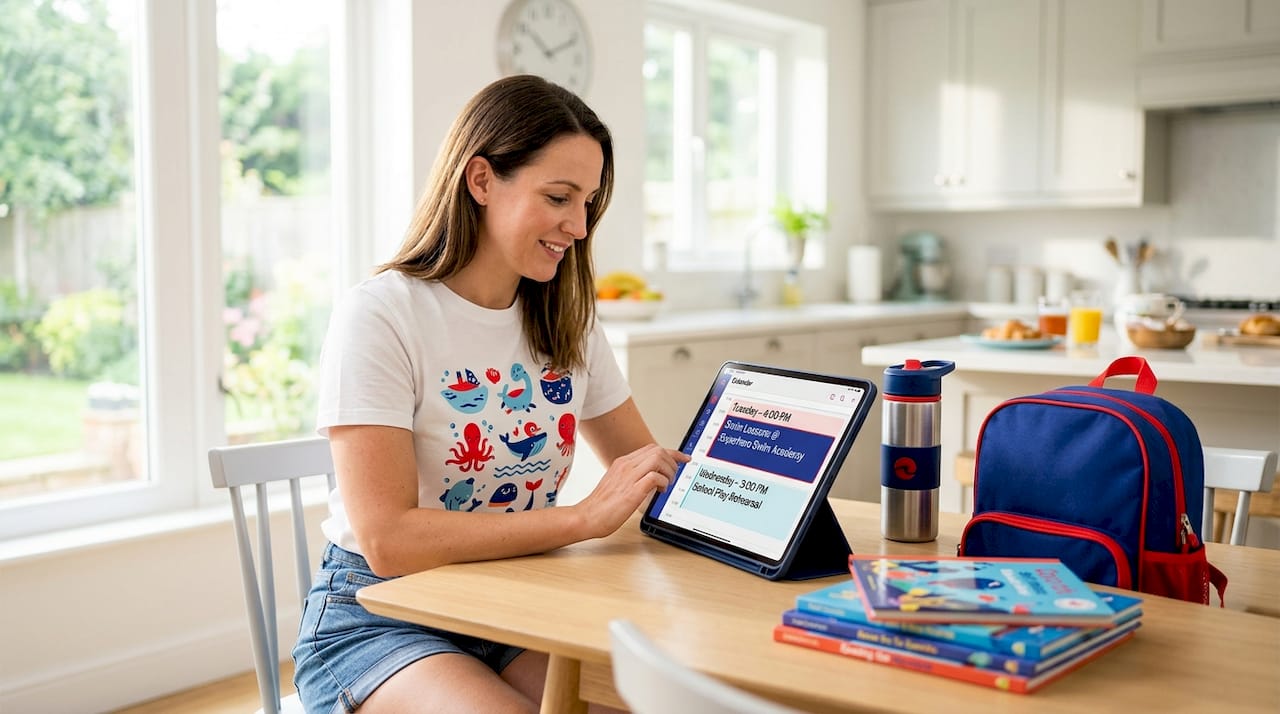
Build one master calendar. Every commitment, including swim lessons, school events, sports practices, and work obligations, goes into a single shared view. Google Calendar, Apple Calendar, or a shared family app like Orbits all work. The tool matters less than the habit of using one source of truth.
Identify your weekly pinch points. Recurring scheduling conflicts are almost always predictable. If Tuesday evenings always feel chaotic, that is a pinch point. Fix it structurally by moving one commitment rather than firefighting it every week.
Batch your planning. Spend 15 minutes every Sunday reviewing the week ahead. Flag any days where swim lessons land close to school events or homework-heavy nights. Adjust before the week starts, not during it.
Add transition buffers. Block time for parking, changing, snacks, and travel between every swim lesson and the next commitment. A lesson that ends at 5:00 PM should not have a dinner reservation at 5:30 PM.
Protect downtime deliberately. At least one or two evenings per week should stay free from structured activities. Unstructured time supports rest and family connection, and it is what makes the rest of the schedule sustainable.
Know when to trim. If your child is consistently exhausted or resistant, that is data. One fewer activity per season is not failure. It is good parenting.
For solo parents or families managing twins and multiple children, scheduling tactics for complex family logistics can offer additional frameworks that go beyond standard calendar advice.
Pro Tip: When choosing between two swim lesson time slots, always pick the one that requires the fewest transitions in the same day. Fewer handoffs means fewer delays.
How to adjust swim lessons during busy school weeks
Academic calendars are not uniform. Test weeks, project deadlines, and school events create predictable spikes in a child’s cognitive load. Treating every week identically is the fastest way to burn out both the child and the parent.
The most effective approach to maintaining swimming lesson balance during heavy school periods involves three habits:
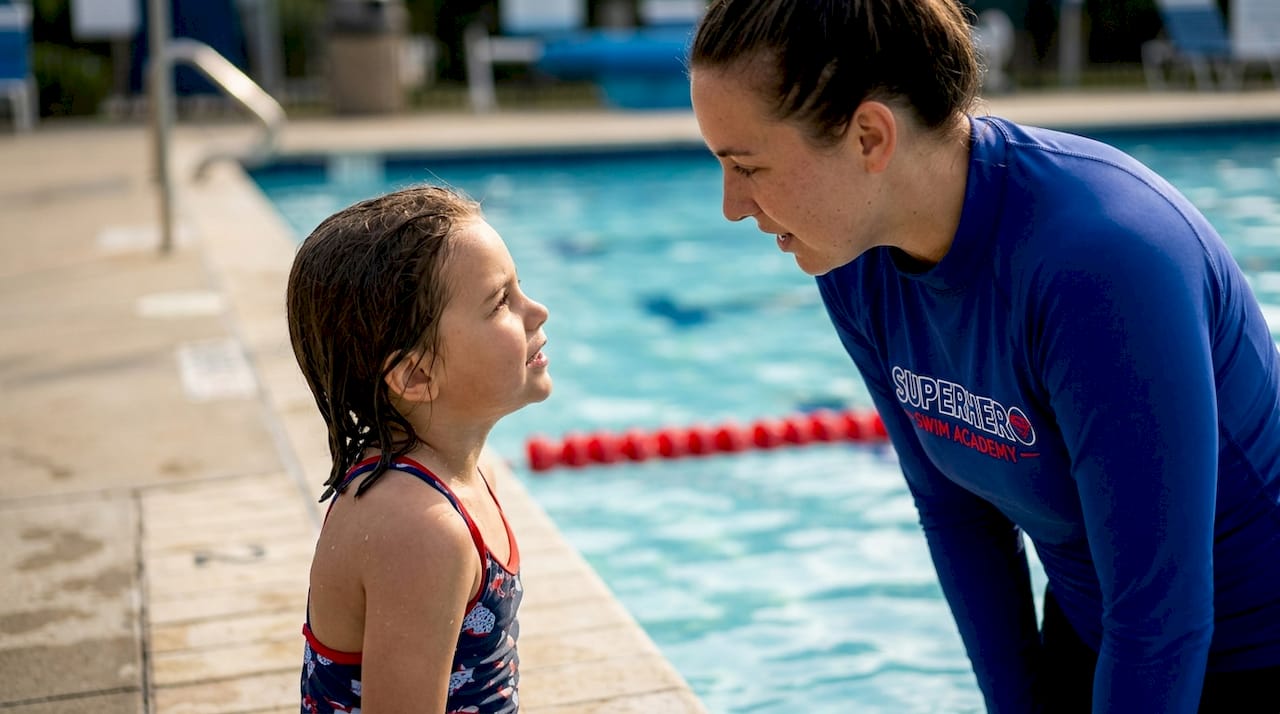
Communicate early with the instructor. Early communication about demanding school weeks allows instructors to shift toward lighter recovery sessions rather than introducing new skills. This preserves continuity without adding pressure.
Shift intensity, not attendance. Skipping a lesson entirely causes more skill regression than attending a lower-intensity session. A child who shows up tired can still benefit from water time focused on comfort and review rather than new technique.
Avoid abrupt cancellations. Frequent last-minute cancellations disrupt the instructor’s planning and the child’s progress. Most swim academies with structured programs can accommodate a modified session if given 48 hours of notice.
Anchor lessons to fixed days. When swim lessons happen on the same day and time every week, they become part of the family’s mental model rather than a variable to manage. Fixed scheduling reduces the cognitive load of coordination.
The benefits of swim lessons for students extend beyond water safety. Consistent physical activity during the school week supports focus, sleep quality, and stress regulation. Pulling lessons entirely during exam season removes a physical outlet that many children rely on more than parents realize.
Pro Tip: At the start of each school semester, share the academic calendar with your child’s swim instructor. Mark test weeks and project deadlines in advance so the instructor can plan lighter sessions proactively rather than reactively.
Key takeaways
Balancing swim lessons with school activities requires fixed scheduling, proactive planning, and open communication with instructors to maintain both safety progress and family wellbeing.
Point | Details |
Swim lessons are a safety priority | The AAP recommends lessons starting around age 1 as a drowning prevention layer, not optional enrichment. |
School-based programs remove logistics barriers | Programs like Pinellas Park and Carson City deliver free lessons during school hours, eliminating transportation conflicts. |
Pinch points need structural fixes | Identify recurring conflicts and solve them systematically with buffers and batched weekly planning. |
Communicate with instructors proactively | Share your child’s academic calendar so instructors can adjust session intensity during heavy school weeks. |
Protect downtime to sustain the schedule | Keeping one to two evenings free each week prevents burnout and makes the overall schedule maintainable. |
What I’ve learned from watching families get this right and wrong
After working with over 2,500 families at Superheroswimacademy, the pattern is consistent. The families who struggle most are not the busiest ones. They are the ones who treat swim lessons as flexible and everything else as fixed. Swim gets bumped when soccer runs late, when a birthday party comes up, or when a school project lands on lesson night. Then three weeks pass without water time, and the child regresses. The parent feels guilty. The cycle repeats.
The families who get it right do one thing differently: they treat the swim lesson slot as non-negotiable, the same way they treat school pickup. They build the rest of the week around it rather than fitting it in wherever space appears. That mental shift changes everything.
The other thing I have seen repeatedly is that parents underestimate how much a child’s water confidence compounds over consistent weeks. A child who attends lessons every week for two months builds a fundamentally different relationship with water than one who attends sporadically over six months. Consistency is not just logistically convenient. It is the mechanism through which real safety skills form.
One more thing worth saying directly: if your current schedule makes consistent swim lessons impossible, that is a scheduling problem worth solving, not accepting. Look at location convenience for swim lessons as a starting point. Sometimes the right pool is five minutes closer than the one you are currently using, and that five minutes is the difference between making it work and not.
— SUPERHERO
How Superheroswimacademy supports busy families
Superheroswimacademy was built around one reality: most families in Palm Beach and Broward counties do not have unlimited schedule flexibility. That is why the academy offers weekend lesson availability, structured programs with CPR and First Aid-certified instructors, and clear session goals so parents always know exactly what their child is working toward.
Every instructor at Superheroswimacademy follows the academy’s proven survival swim curriculum, which means lessons are consistent, progress is trackable, and parents are never guessing about what comes next. With over 2,500 children taught, the academy has refined exactly how to fit effective swim instruction into a busy family’s week. Explore swim lesson programs designed for families like yours, check available locations near you, or browse online course options for added scheduling flexibility.
FAQ
When should kids start swim lessons alongside school?
The AAP recommends swim lessons starting around age 1 based on developmental readiness. School-age children benefit from continuing structured lessons regardless of academic workload because water safety skills require consistent reinforcement.
How do school swim programs reduce scheduling conflicts?
School-based programs like Pinellas Park’s deliver lessons during school hours with pool transportation included, which removes the after-school logistics burden entirely. Parents gain back the time they would otherwise spend on driving and waiting.
How many evenings should stay free when balancing swim and school?
Protecting at least one to two evenings per week from structured activities prevents burnout and supports the rest and family time children need to sustain a busy schedule long-term.
What should I do when school gets too busy for regular swim lessons?
Communicate early with your instructor about demanding academic weeks so sessions can shift to lighter recovery work. Attending a modified lesson maintains continuity and prevents skill regression better than canceling outright.
How long should a transition buffer be after swim lessons?
Adding 15 to 30 minutes after a lesson’s scheduled end time accounts for changing, parking, and travel. This buffer prevents one delayed pickup from disrupting dinner, homework, and bedtime for the rest of the evening.
Recommended
Comments