
How to Keep Your Infant Calm During Swim Lessons
- superheroswim
- Jul 18
- 8 min read

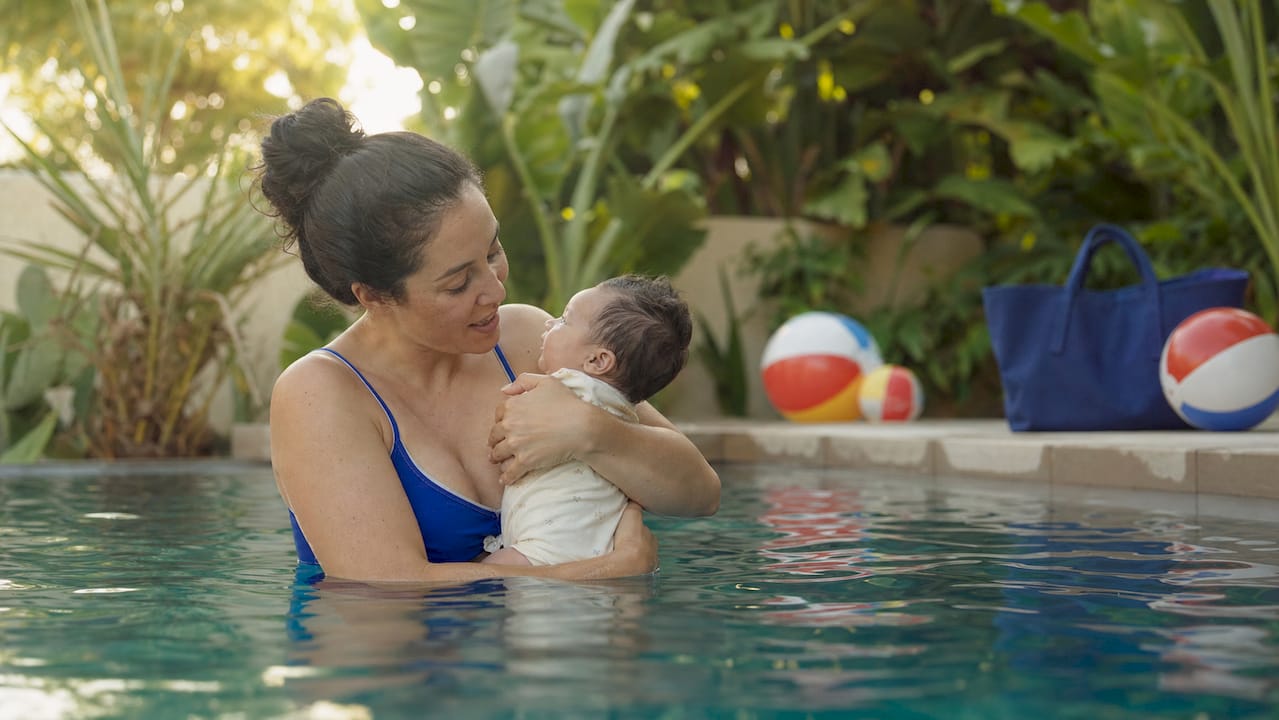
Keeping your infant calm during swim lessons is the single most important factor in building lasting water confidence and safety from the very first session. Infant swim comfort techniques work best when parents understand that most early distress comes from sensory overwhelm, not fear of water itself. Pools maintained at 30–35°C (86–95°F) and lessons kept to 10–30 minutes give babies the best chance of staying regulated and engaged. The strategies in this guide are grounded in classical conditioning, infant readiness assessment, and the “Teach the Parent” philosophy used by programs like Superheroswimacademy.
What factors affect how calm an infant stays in the water?
Water temperature is the first variable that determines whether a baby stays calm or becomes distressed. Pools maintained at 30–35°C give infants the warmth they need to stay relaxed. Anything cooler triggers a physiological stress response that no amount of singing or soothing will fully override.
Lesson length matters just as much as temperature. Infant swimmers tire neurologically and physically within 20–30 minutes in warm water. Ending the session while your baby is still happy preserves the positive association with the pool. Parents who push past that window often create the very anxiety they were trying to avoid.
Sensory inputs shape the entire experience. The smell of chlorine, the echo of a large indoor pool, the feeling of buoyancy, and water touching the face are all new and intense for a baby. Small class sizes reduce ambient noise and allow instructors to pace activities to each child’s tolerance. A calm pool environment is not a luxury. It is a clinical requirement for effective infant swim lessons.
Key sensory and environmental factors that affect infant calmness:
Water temperature: 30–35°C keeps muscles relaxed and reduces cold-triggered crying
Lesson duration: 10–30 minutes prevents neurological fatigue and fussiness
Class size: Smaller groups lower noise levels and allow personalized pacing
Buoyancy: The unfamiliar sensation of floating can startle babies who have never experienced it
Water on the face: Even a gentle splash is a major sensory event for a newborn
Ambient sound: Echoing pools amplify stress; quieter environments support regulation
How can you prepare your baby at home before swim class?
Home preparation is the most underused tool parents have. Gradually lowering bath water temperature from 37°C to around 34°C over several weeks helps your baby acclimate to the cooler pool water before the first lesson. The adjustment is small enough that most babies barely notice, but the cumulative effect is significant.
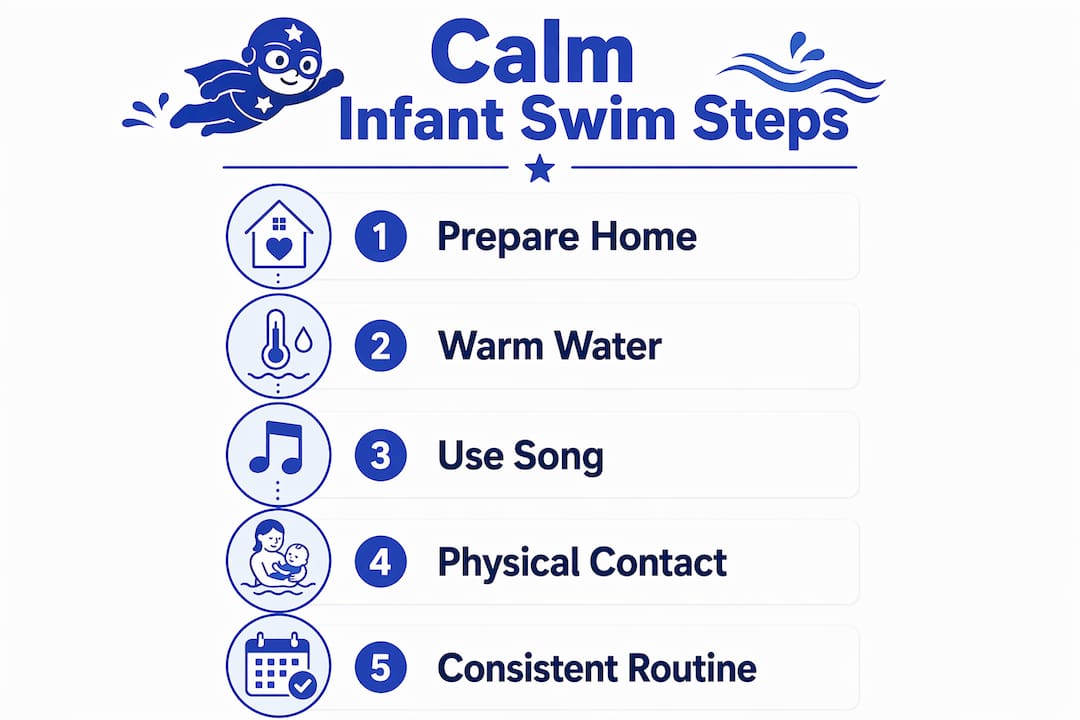
Verbal cues and songs are equally powerful. Using the same song and cue phrase consistently during bath time and swim lessons creates a conditioned safety response. Your baby learns that the song predicts water contact, which means the song itself becomes calming. Changing songs regularly dilutes this effect entirely.
Here is a step-by-step home conditioning routine to follow in the weeks before lessons begin:
Lower bath temperature gradually. Start at 37°C and reduce by 0.5°C every few days until you reach approximately 34°C.
Choose one song. Pick a simple, repetitive song you will use every bath and every swim lesson. Consistency is everything.
Add a verbal cue before water touches the face. Say the same short phrase, such as “ready, set, go,” every time before you pour water over your baby’s head.
Practice face-wetting calmly. Use a cup to pour water gently over the forehead during bath time. Keep your voice steady and your expression relaxed.
Repeat the routine daily. Classical conditioning requires repetition. The more consistent you are at home, the faster your baby builds a positive association with water.
Reinforce with physical contact. Hold your baby securely during every water activity so touch becomes part of the safety signal.
Pro Tip: Record yourself singing the chosen song so your partner or caregiver can use the exact same version. Even slight variations in tempo or pitch can reduce the conditioning effect for very young infants.
Learning to prepare your child for swim lessons at home cuts the adjustment period in the pool significantly.
Step-by-step techniques to soothe your baby during swim lessons
Physical contact is your most powerful calming tool in the water. Keep your hands on your baby at all times during early lessons. The pressure and warmth of your grip signal safety at a neurological level. Releasing contact too early is one of the most common mistakes parents make.
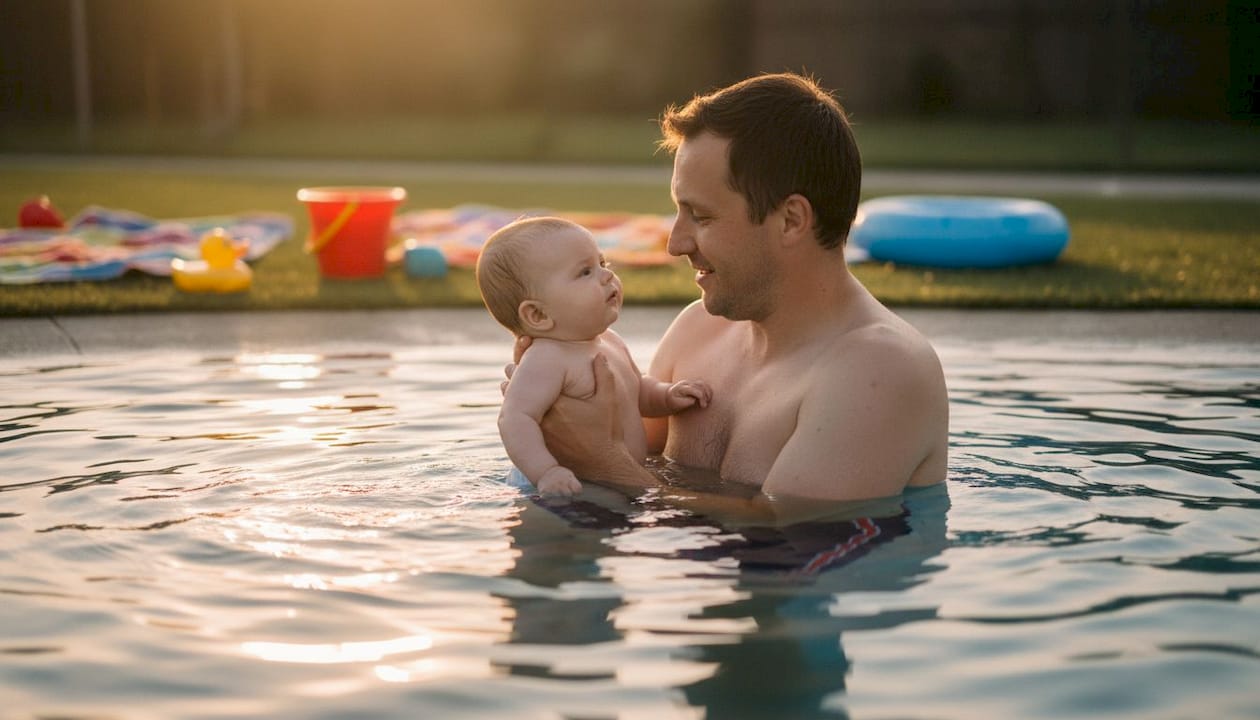
Your voice and face are the second signal your baby reads. Use a low, slow voice and maintain steady eye contact throughout the lesson. Avoid sudden loud sounds, even excited praise, because volume spikes register as alarm signals for infants. Smile deliberately and hold the expression. Babies read facial muscle tension before they process words.
Musical rhythm between 60 and 80 beats per minute mimics a calm adult heartbeat and measurably reduces infant cortisol and heart rate during swim lessons. This is not anecdotal. It is classical conditioning applied to physiology. Sing your chosen song at a slow, steady pace every time you introduce a new movement or skill.
Practical in-pool calming techniques that work:
Supported floating: Hold your baby horizontally at the water surface with both hands under the back. Maintain eye contact and sing.
Gentle splashing games: Let your baby splash with their own hands before you introduce instructor-led splashing. Agency reduces anxiety.
Reaching activities: Hold a toy just beyond arm’s reach to encourage forward movement without forcing it.
Cheek-to-cheek holds: Press your cheek gently against your baby’s cheek during transitions. Skin contact lowers cortisol.
Pacing to response: Watch your baby’s muscle tone. Relaxed limbs mean continue. Stiffening limbs mean slow down or pause.
Forcing submersions before your baby shows comfort creates stress and damages the emotional bond with water. The goal of early lessons is a positive emotional experience, not technical mastery. Skill follows comfort, not the other way around.
Pro Tip: Bring a waterproof toy your baby already loves from home. A familiar object in an unfamiliar environment acts as a transitional comfort item and gives your baby something to focus on during new activities.
A consistent swim lesson routine reinforces all of these techniques by making the pool environment predictable over time.
How do you read your baby’s cues and handle crying in the pool?
Recognizing the difference between overstimulation and healthy engagement is a skill that takes a few sessions to develop. A skilled instructor assesses infant readiness based on muscle tone, breath patterns, and facial expressions, not arbitrary milestones. You can learn to read the same signals.
Signs of healthy engagement include relaxed limbs, open eyes tracking movement, and occasional vocalizations. Signs of overstimulation include stiffening muscles, a fixed or glazed gaze, arching the back, and sustained crying that does not respond to your voice or touch. When you see overstimulation signals, reduce the pace immediately rather than waiting for full crying to begin.
Crying in the first two to four sessions is normal and expected. Most infant crying in early swim sessions is caused by sensory overwhelm, not fear. Consistent physical contact and calm, predictable routines reduce distress faster than removing the baby from the water.
“Removing a crying baby immediately often reinforces crying as an escape behavior. Staying calm and continuing gently, while reducing stimulation, builds long-term confidence more effectively than an early exit.”
Here is a practical sequence for handling a crying episode during a lesson:
Stay calm yourself. Your calmness is the greatest safety signal your baby has. Your stress transfers directly to them.
Reduce stimulation immediately. Move to a quieter corner of the pool. Stop new activities.
Increase physical contact. Pull your baby close to your chest. Skin-to-skin contact in the water is highly effective.
Begin your cue song. Sing slowly and steadily. The conditioned response from home practice will begin to activate.
Wait for a calm window. Once crying subsides, introduce one simple, familiar activity before ending the session.
End on a positive note. Finish with something your baby enjoys, even if it is just floating quietly. The last memory of the session shapes the next one.
Infant swim lessons are intentionally short for exactly this reason. Ending while the baby is still positive is a deliberate strategy, not a limitation.
Key Takeaways
Keeping babies calm in water requires consistent sensory management, classical conditioning through song and routine, and a parent who reads and responds to infant cues before distress escalates.
Point | Details |
Pool temperature matters | Maintain water at 30–35°C to prevent cold-triggered stress responses. |
Conditioning starts at home | Use the same song and verbal cue in bath time to build a safety response before the first lesson. |
Physical contact is primary | Keep hands on your baby throughout early lessons; touch is the strongest calming signal. |
Crying is not failure | Most early crying comes from sensory overwhelm and resolves with calm persistence, not early exit. |
End sessions positively | Stop before fatigue sets in (20–30 minutes) so the last memory of each session stays positive. |
What I have learned from watching hundreds of babies in the water
The parents who see the fastest progress are not the ones who push hardest. They are the ones who watch most carefully. After working with over 2,500 children at Superheroswimacademy, the pattern is clear. Babies who thrive in the water have parents who treat the first few lessons as observation sessions, not skill-building sessions.
The biggest mistake I see is parents measuring success by what their baby did in the water rather than how their baby felt in the water. A baby who floated for three seconds while crying has not had a successful lesson. A baby who never left your arms but stayed calm and curious for 15 minutes has had an excellent one.
The Teach the Parent philosophy exists because infants cannot form procedural motor memories the way older children can. You are the teacher. Your baby is learning to trust water through you. Every calm breath you take, every steady song you sing, every time you resist the urge to rush a new skill, you are doing the most important work in the pool.
Patience is not passive. It is the most active and skilled thing a parent can do in the water.
— SUPERHERO
Superheroswimacademy’s approach to infant swim comfort
Superheroswimacademy builds every infant program around the calming principles covered in this guide. Instructors are trained in CPR, First Aid, and the academy’s own survival swim curriculum, which means they know how to read infant cues and adjust pacing in real time.
Class sizes stay small so your baby gets a quiet, warm pool environment that matches the sensory needs of young swimmers. Water temperatures are maintained within the recommended range to keep infants relaxed from the first minute. Parents receive clear progress updates after every session, so you always know what your baby is working toward. Explore infant swim programs in Palm Beach and Broward counties, or check available locations to find the class nearest you.
FAQ
How long should an infant swim lesson last?
Infant swim lessons should last between 10 and 30 minutes. Beyond 30 minutes, babies tire neurologically and physically, which increases fussiness and reduces the chance of ending on a positive note.
What pool temperature is best for keeping babies calm?
A pool temperature of 30–35°C (86–95°F) is the recommended range for infant swim lessons. Cooler water triggers a physiological stress response that makes calming techniques far less effective.
Why does my baby cry during swim lessons?
Most crying in the first two to four sessions comes from sensory overwhelm, not fear of water. Consistent physical contact, a calm parent voice, and a familiar cue song reduce distress faster than removing the baby from the pool.
What is the best song to use during infant swim lessons?
Any simple, repetitive song works, but the key is using the same song every time, both at home during bath time and in the pool. Songs with a rhythm of 60–80 beats per minute are most effective because they mimic a calm adult heartbeat and lower infant stress hormones.
When should I end a swim lesson early?
End a session early when your baby shows yawning, sustained crying that does not respond to soothing, stiffening muscles, or a glazed gaze. These are signs of neurological fatigue, and pushing past them creates negative associations with the pool.
Recommended
Comments