
How to Prepare Backyard Pool Swim Lessons for Kids
- superheroswim
- Jun 8
- 9 min read

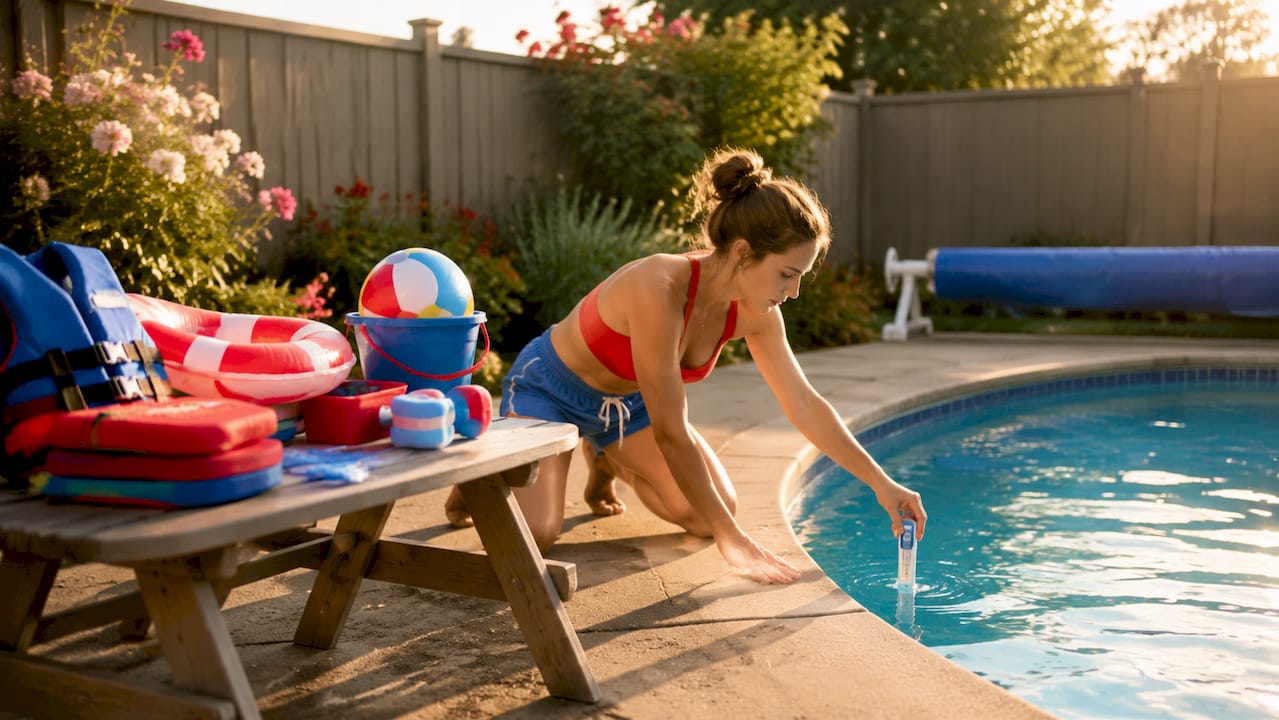
Preparing backyard pool swim lessons means organizing a safe environment, selecting the right teaching tools, and building a structured plan that develops your child’s water confidence and foundational swim skills. The American Academy of Pediatrics and Children’s Mercy both confirm that swim lessons starting at age 1 serve as a meaningful layer of drowning prevention alongside physical barriers and active supervision. Done right, backyard swim instruction gives your child a head start in water safety while fitting your family’s schedule. This guide walks you through every preparation step, from pool safety to lesson structure to progress tracking.
How to prepare backyard pool swim lessons: safety first
Safety is not a checklist you complete once before lessons begin. The most effective water safety approach combines swim instruction with layered prevention: physical barriers, constant supervision, and proper flotation gear working together at all times.
Physical barriers that actually prevent accidents
Four-sided pool fences at least 4 feet high, with self-closing and self-latching gates, are the single most effective barrier against unsupervised pool access. The fence must surround all four sides of the pool, not just the yard perimeter. Remove or lock ladders when the pool is not in use, and store pool toys away from the water so children are not tempted to reach in on their own.
Pool alarms add a second layer of protection. Surface wave alarms, gate alarms, and wearable wrist alarms each detect different types of unauthorized access. No single alarm replaces a fence, but combining them closes gaps that a fence alone cannot cover.
Supervision strategies that work
The American Academy of Pediatrics defines touch supervision as an adult staying within arm’s reach of a child in or near the water at all times. This standard applies during lessons, not just free swim. Designating a single water watcher who rotates every 15 to 20 minutes prevents fatigue and distraction that lead to lapses in attention.
The water watcher role is exclusive. That person does not check their phone, talk to guests, or step inside. When the rotation timer goes off, a second adult takes over before the first one steps away. This system works because it treats supervision as an active, shared responsibility rather than a passive assumption.
“Pool access control measures such as fencing and alarms are not just passive features but active parts of lesson readiness.” — Children’s Mercy
Pro Tip: Write the water watcher rotation schedule on a whiteboard near the pool before lessons begin. Seeing the schedule makes adults take the role more seriously and reduces the chance anyone assumes someone else is watching.
For non-swimmers and beginners, U.S. Coast Guard-approved life jackets are required during any lesson segment where the child is in water above their comfort level. Inflatable arm floaties are not a substitute. They give children a false sense of security and can deflate without warning.
What tools and equipment support effective backyard swim lessons?
The right gear makes lessons safer and more productive. Below is a breakdown of what you need and why each item matters.
Equipment | Purpose | Key Consideration |
Snug-fitting swimsuit | Reduces drag, stays secure in water | Avoid loose shorts that fill with water |
Swim goggles | Allows face-in-water practice without discomfort | Choose a leak-resistant seal for young children |
U.S. Coast Guard life jacket | Safety flotation for non-swimmers | Never substitute with inflatable floaties |
Kickboard | Isolates leg kick for skill practice | Foam boards are more durable than plastic |
Pool noodles | Supports body position during floating drills | Use as a teaching aid, not a safety device |
Swim cap | Keeps hair out of face, reduces drag | Silicone caps fit better than latex for toddlers |
Proper swim attire like snug-fitting swimsuits and Coast Guard-approved life jackets for weaker swimmers enhances both safety and hygiene during backyard lessons. Goggles matter more than most parents expect. Children who can open their eyes underwater practice face submersion far more willingly, which accelerates skill development significantly.
Water temperature directly affects how long and how well young children learn. For children under 5, pool water below 82°F causes shivering within minutes, which shortens attention spans and creates negative associations with the water. A pool thermometer costs under $15 and removes the guesswork entirely.
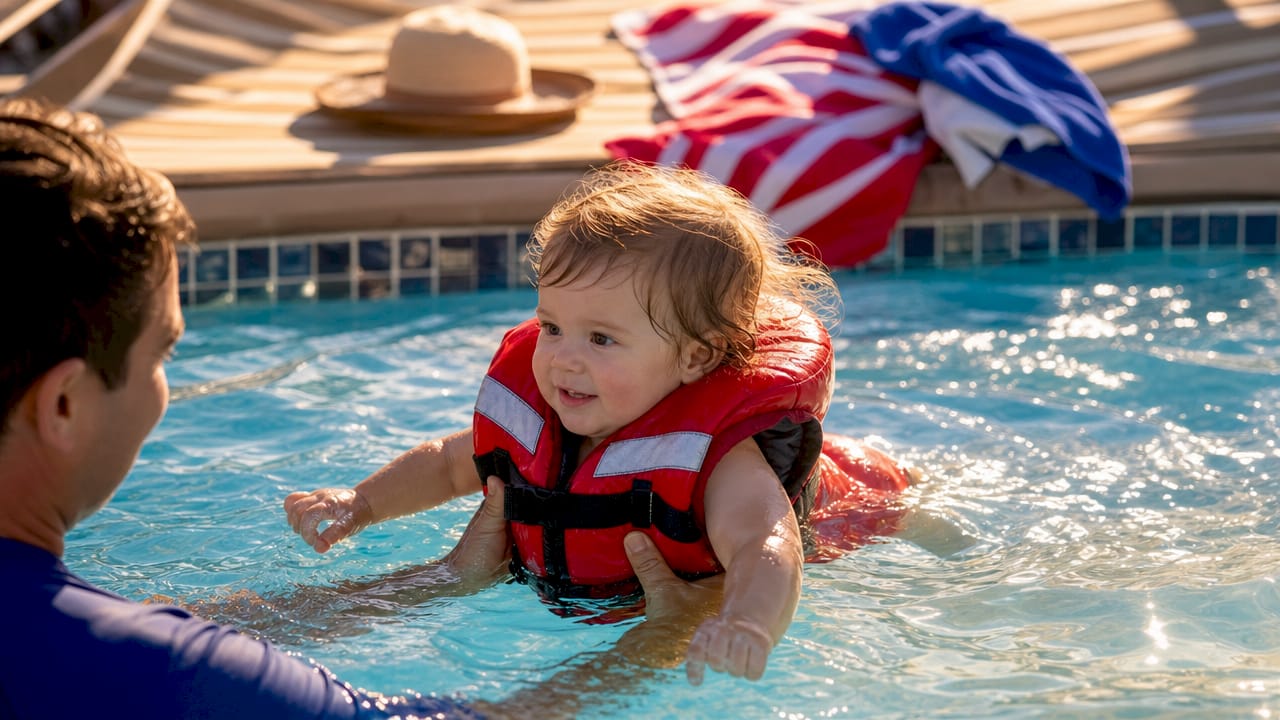
Pro Tip: Keep a small waterproof bag at poolside with a spare towel, extra goggles, and a progress checklist. Having everything within reach means you spend lesson time teaching, not searching.
Kickboards and noodles are teaching tools, not safety devices. Use them to isolate specific skills like kicking or floating, but never rely on them to keep a child afloat unsupervised. The distinction matters because children often transfer the confidence they feel with a noodle to situations where no noodle is present.
How to structure backyard swim lessons for children
Structured lesson plans that progress from water familiarization to basic stroke techniques consistently improve children’s water confidence and skill acquisition. The key is sequencing skills so each one builds on the last, and keeping sessions short enough to hold a young child’s attention.
For children ages 1 to 3, keep lessons to 15 to 20 minutes. Children ages 4 to 6 can handle 20 to 30 minutes. Longer sessions produce diminishing returns because fatigue and boredom undo the progress made in the first half of the lesson.
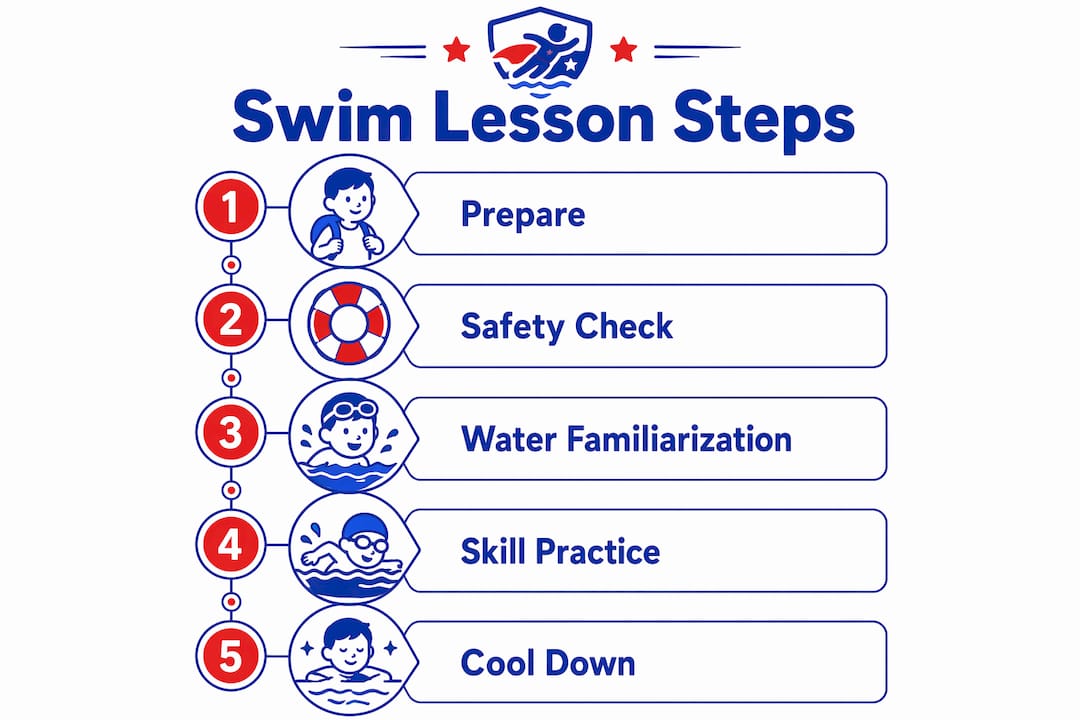
A proven skill progression for backyard swim instruction looks like this:
Water entry and comfort. Let the child sit on the pool steps, splash, and get used to the water temperature before any structured activity begins.
Face-in-water practice. Blow bubbles, count to three with face submerged, and progress to full face submersion with eyes open.
Floating on back. Support the child’s head and back while they practice relaxing into a back float. Reduce support gradually as confidence builds.
Kicking drills. Use a kickboard or the pool wall to isolate leg movement. Focus on flutter kick from the hip, not the knee.
Arm movement. Introduce freestyle arm pulls while the child holds a kickboard. Combine with kicking once each movement feels natural.
Short independent swims. Connect all movements into a short swim from one step to the next, gradually increasing distance.
Games accelerate every stage of this progression. “Red light, green light” in shallow water builds stop-and-start control. “Treasure hunt” with dive rings on the pool floor motivates face submersion. Play is not a reward at the end of the lesson. It is the teaching method itself.
Pro Tip: End every lesson on a success, not a struggle. If a child is frustrated with floating, switch to a game they enjoy and close on a confident moment. The emotional memory of the last five minutes shapes how eager they are to get back in the water next time.
What common mistakes should parents avoid when preparing backyard pool swim lessons?
Most preparation mistakes fall into three categories: supervision gaps, equipment errors, and rushing skill development. Knowing them in advance means you can build systems that prevent them before they happen.
Mixing distractions with supervision. Hosting a lesson while other adults are socializing nearby creates the illusion of supervision without the reality. One person watches the water. Everyone else steps back.
Relying on inflatable floaties. Arm floaties and inflatable rings are pool toys, not safety devices. Unsafe flotation devices are one of the most common mistakes parents make, and they create false confidence in both child and parent.
Ignoring pool water quality. Unbalanced pool chemistry causes eye and skin irritation that makes children reluctant to put their faces in the water. Test pH and chlorine levels before every lesson session.
Leaving pool access unsecured between lessons. The fence gate left unlatched after a lesson is the gap that causes accidents. Treat pool closure as a formal step at the end of every session, not an afterthought.
Pushing past emotional readiness. A child who is crying or clinging is not ready for the next skill. Forcing progression creates water fear that takes months to undo.
“Parents should avoid distractions and maintain pool water quality for safety.” — Macke Pool and Patio
The most overlooked mistake is treating safety setup as a one-time task. Pool fencing, gate latches, and alarm batteries all require regular checks. Build a monthly inspection into your calendar the same way you schedule the lessons themselves.
How do scheduling flexibility and progress tracking improve backyard lessons?
Flexible lesson scheduling and progress tracking help parents maintain consistent swim practice while adapting to family routines. Consistency matters more than frequency. Three 20-minute sessions per week produce better results than one 60-minute session, because repetition builds muscle memory and water comfort faster than marathon sessions.
Scheduling tips that work for busy families:
Schedule lessons at the same time each day to build routine. Children perform better when they know what to expect.
Build weather contingency into your plan. Have two or three indoor water-comfort activities ready for days when outdoor lessons are not possible.
Pair lessons with a family routine like a post-lesson snack or a favorite song to create positive associations.
Use swim lesson scheduling tools to coordinate professional instruction alongside home practice sessions.
A swim milestone checklist is the most practical progress tracking tool available. Track skills like “blows bubbles independently,” “floats on back for 5 seconds,” and “kicks across the step” rather than vague goals like “getting better.” Specific milestones show you exactly where your child is and what comes next.
Milestone | Typical Age Range |
Comfortable with water on face | 1 to 2 years |
Independent back float (5 seconds) | 2 to 3 years |
Kicks across pool step | 3 to 4 years |
Short independent swim (3 to 5 feet) | 4 to 5 years |
Freestyle stroke with breathing | 5 to 6 years |
Mixing parent-led practice with professional instruction produces the best outcomes. Parent participation during lessons strengthens skill reinforcement and builds parental confidence in water safety practices. A professional instructor can identify technique errors that a parent might miss, while the parent provides the daily repetition that turns a skill into a habit.
Key takeaways
Preparing backyard pool swim lessons requires layered safety measures, age-appropriate equipment, a structured skill progression, and consistent scheduling to produce confident, safe swimmers.
Point | Details |
Layer your safety measures | Combine four-sided fencing, active water watcher rotation, and Coast Guard life jackets for full protection. |
Choose equipment with purpose | Use kickboards and noodles as teaching tools, never as safety substitutes for approved life jackets. |
Follow a skill progression | Move from water comfort to floating to kicking to short swims, and never skip steps based on impatience. |
Track specific milestones | Replace vague goals with measurable checkpoints like “back float for 5 seconds” to monitor real progress. |
Combine home practice with professional instruction | Parent-led sessions build repetition; qualified instructors catch technique errors parents often miss. |
What I’ve learned from teaching hundreds of children to swim
After working with over 2,500 children at Superheroswimacademy, the single most consistent finding is this: parents who treat safety as a dynamic, ongoing process produce safer outcomes than parents who treat it as a setup task. The fence is not done once you install it. The gate latch needs checking every single time. The water watcher rotation needs to actually happen, not just be agreed upon in theory.
The second thing I have learned is that emotional readiness is a real variable, not an excuse. A child who is pushed past their comfort level does not just have a bad lesson. They develop a water aversion that requires weeks of patient rebuilding. The parents who celebrate a child blowing bubbles for the first time with the same enthusiasm they would celebrate a full lap are the parents whose children progress fastest.
I have also seen parents underestimate how much their own calm confidence affects their child in the water. Children read parental anxiety instantly. If you are nervous about your child’s face going underwater, they will be too. Practicing your own calm, steady presence at the pool edge is as important as any drill you run.
The tools matter less than the consistency. A kickboard and a pool noodle are enough to run excellent lessons. What you cannot substitute is showing up three times a week, keeping sessions positive, and knowing when to stop for the day.
— SUPERHERO
Ready to take your child’s swim lessons further?
Superheroswimacademy specializes in survival swim lessons for infants, toddlers, and young children in Palm Beach and Broward counties. Every instructor is trained in CPR, First Aid, and the academy’s own proven survival swim curriculum, so your child gets professional-grade instruction whether lessons happen in your backyard or at one of the academy’s locations.
Parents who combine home practice with Superheroswimacademy’s private instruction see measurable skill improvements in a short period. The academy provides progress updates and clear milestone goals so you always know where your child stands. Explore private swim lessons tailored to your child’s age and ability, or check out the online courses designed to support parents running their own backyard pool training sessions.
FAQ
What age should children start backyard swim lessons?
The American Academy of Pediatrics recommends that swim lessons can begin for many children starting at age 1 as one layer of drowning prevention. Early lessons focus on water comfort and basic safety skills rather than formal stroke technique.
How long should each backyard swim lesson be?
Children ages 1 to 3 do best with 15 to 20-minute sessions, while children ages 4 to 6 can handle up to 30 minutes. Shorter, more frequent sessions build water confidence faster than long, infrequent ones.
Are floaties safe to use during backyard swim lessons?
Inflatable arm floaties are not safe substitutes for U.S. Coast Guard-approved life jackets. They can deflate without warning and give children a false sense of security that does not transfer to real swimming ability.
How do I know if my child is ready for the next swim skill?
A child is ready to progress when they perform the current skill calmly and consistently, without signs of fear or reluctance. Pushing past emotional readiness creates water aversion that takes significantly longer to correct than waiting for genuine readiness.
Should I hire a professional instructor for backyard swim lessons?
Mixing parent-led practice with qualified swim instruction produces the best outcomes. Professional instructors identify technique errors and safety gaps that parents often miss, while home practice builds the repetition that turns skills into habits.
Recommended
Comments