
Role of Swim Equipment at Home for Kids' Safety
- superheroswim
- Jun 21
- 8 min read

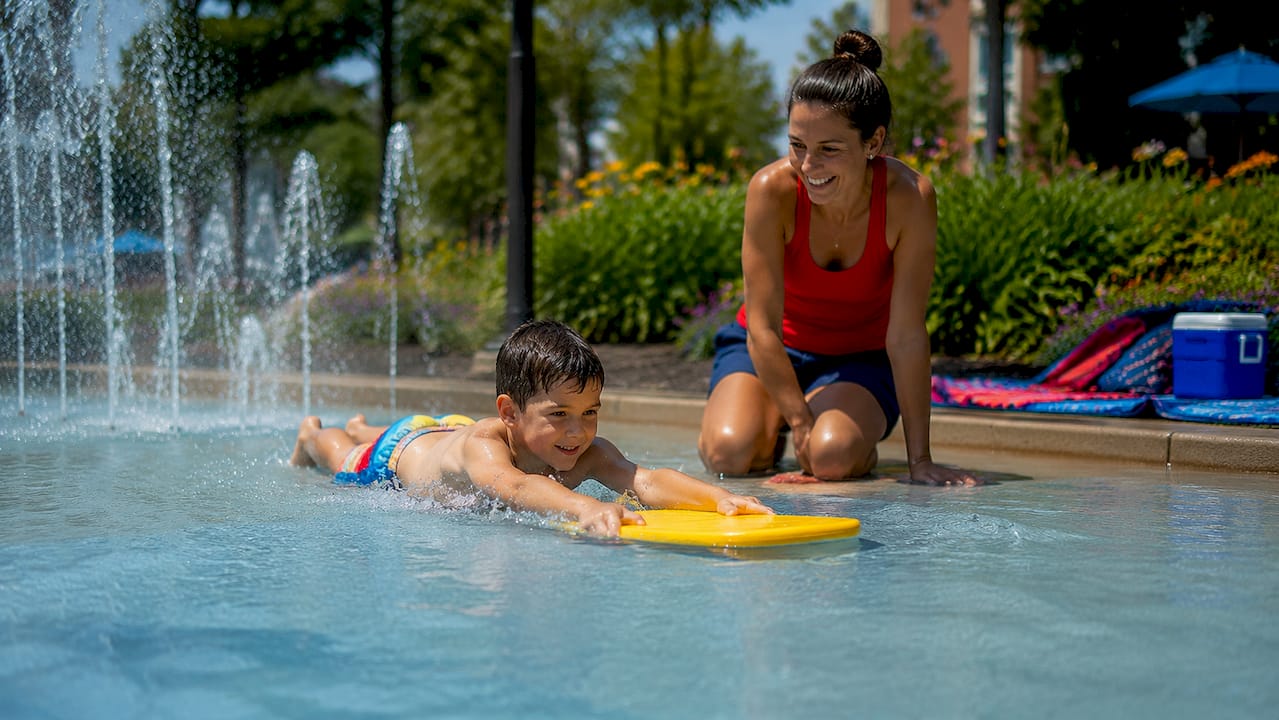
Swim equipment at home is defined as a set of purpose-built training tools, including kickboards, pull buoys, swim fins, goggles, and tether systems, that support focused skill development and water safety for children practicing in home pools. The role of swim equipment at home goes beyond convenience. Each piece of gear targets a specific skill, isolates a muscle group, or reinforces a safety habit that children cannot develop through free swimming alone. Parents in Palm Beach and Broward counties increasingly use these tools to extend learning between formal lessons, and understanding how to use them correctly makes the difference between progress and risk.
How swim equipment supports children’s skill development at home
Home swim training gear works because it isolates specific parts of the stroke, forcing the body to practice one skill at a time. Kickboards isolate leg strength, pull buoys isolate arm pull mechanics, fins increase propulsion awareness, and snorkels let children focus entirely on stroke technique without worrying about breathing timing. That separation of skills is exactly how coaches build competent swimmers systematically.
Here is what each core tool does in practice:
Kickboard: The child holds the board at arm’s length and kicks across the pool. This builds lower body endurance and teaches proper flutter or dolphin kick form without the distraction of arm movement.
Pull buoy: Placed between the thighs, it lifts the hips and legs so the child focuses only on arm pull and catch mechanics. Overuse creates imbalanced form, so limit sessions.
Swim fins: Short training fins increase ankle flexibility and teach the feeling of powerful propulsion. They also build leg strength faster than kicking without fins.
Goggles: Goggles let children open their eyes underwater without irritation. Clear underwater vision reduces fear and helps children self-correct their body position.
Aquatic dumbbells: Water provides 12 to 14 times the resistance of air. Aquatic dumbbells use that resistance to build upper body strength safely, with minimal joint stress, making them appropriate for older children under direct adult supervision.
Swim tether: A tether attaches the child to a fixed anchor point, enabling continuous lap swimming in pools as small as 10 feet long. This mirrors open-water swimming mechanics without requiring a full-size lap pool.
Pro Tip: Introduce one new piece of equipment per week. Giving your child time to adapt to each tool prevents confusion and builds genuine confidence with the gear.
Swim equipment is a training aid, not a shortcut. Gear supplements professional instruction and never replaces it. Children who use equipment before mastering basic water comfort often develop compensatory habits that are harder to correct later.
What safety rules parents must follow with home swim gear
The most dangerous misconception about swim gear is that it keeps children safe in the water. It does not. Most parents mistakenly view swim training tools as flotation aids rather than skill development equipment. A kickboard is not a life preserver. A pull buoy is not a floatie. Children must achieve independent buoyancy before any training gear enters the picture.
Follow these safety rules before and during every home swim equipment session:
Confirm independent swimming first. Your child must be able to float and move through the water without any support before using training gear. Equipment is for swimmers, not beginners.
Supervise without exception. Parents must supervise children closely when using swim equipment to prevent dangerous reliance on gear for buoyancy. Drowning can happen in seconds, even with a kickboard nearby.
Size equipment correctly. Oversized hand paddles create excessive strain on immature shoulder joints. Start with the smallest paddle size available and watch for signs of fatigue or poor form. This condition is known as swimmer’s shoulder and it is preventable.
Match gear to pool size. Swim tethers require a minimum pool length of 10 feet to function safely. Using a tether in a smaller space creates collision risk.
Remove gear if the child shows distress. Any sign of panic, exhaustion, or loss of control means the session stops immediately.
Pro Tip: Before each session, run a quick equipment check. Look for cracked kickboards, frayed tether cords, or ill-fitting goggles. Damaged gear fails at the worst moments.
Gear-related false security is a real hazard. A child who relies on a kickboard to stay afloat has not learned to swim. That child is at risk the moment the board slips away. Keep the focus on building real skills, and treat equipment as a tool for already-capable swimmers.
How to choose and use swim gear in your child’s home routine
Choosing the right gear starts with an honest assessment of your child’s current skill level, your pool’s size, and your training goals. A toddler working on basic water comfort needs goggles and nothing else. A six-year-old who swims independently can begin using a kickboard or fins to refine technique.
Training gear should occupy only 20–30% of total swim time. The rest of the session should be free swimming. That ratio protects against technique degradation caused by overreliance on equipment. A child who spends 80% of swim time with a pull buoy between their legs will struggle to maintain hip position without it.
Frequent, short swim sessions using equipment produce better skill retention than long, infrequent ones. A 20-minute focused session three times per week outperforms a 90-minute weekend session every time. Consistency is the actual driver of improvement.
Use this quick reference when selecting gear for your home setup:
Equipment | Best for | Pool size needed | Age range |
Kickboard | Leg kick isolation | Any size | 4 and up |
Pull buoy | Arm pull mechanics | Any size | 6 and up |
Swim fins | Propulsion and ankle flexibility | Medium or larger | 5 and up |
Aquatic dumbbells | Upper body resistance | Any size | 8 and up with supervision |
Swim tether | Continuous lap training | 10 feet minimum | 7 and up |
Goggles | Underwater vision and comfort | Any size | 2 and up |
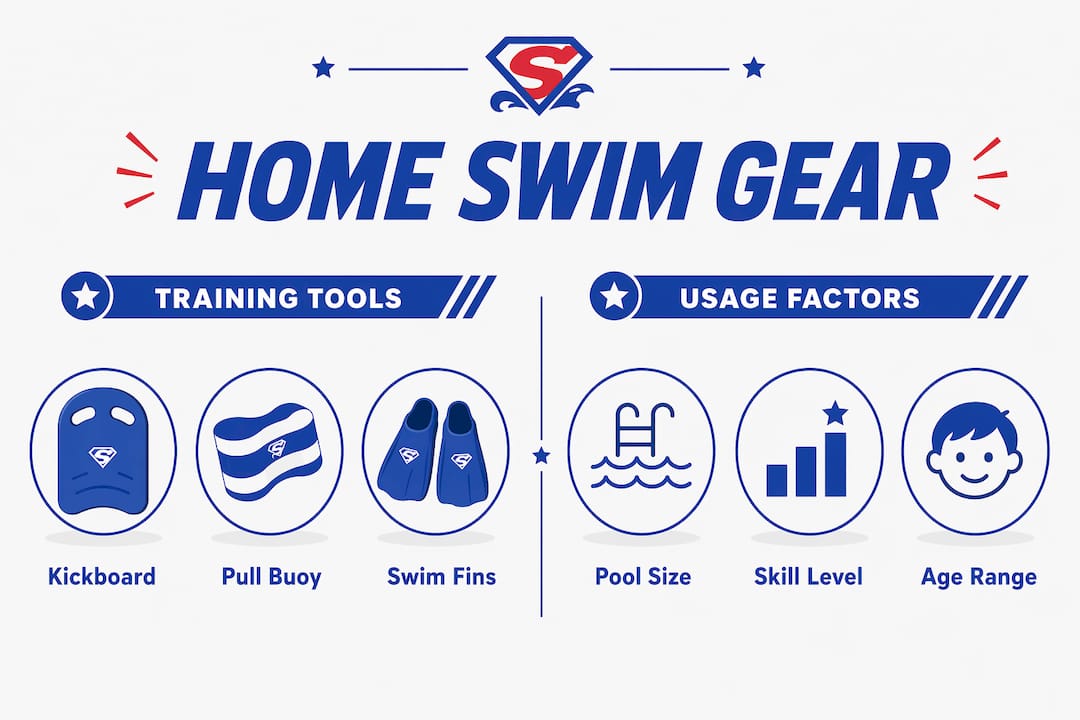
Correct use of swim equipment enhances confidence and skill retention when paired with consistent instruction and supervision. Gear alone does not build swimmers. Gear plus good coaching plus regular practice does.
Comparing popular home swim equipment setups
Not all home swim equipment serves the same purpose, and choosing the wrong setup wastes money and time.
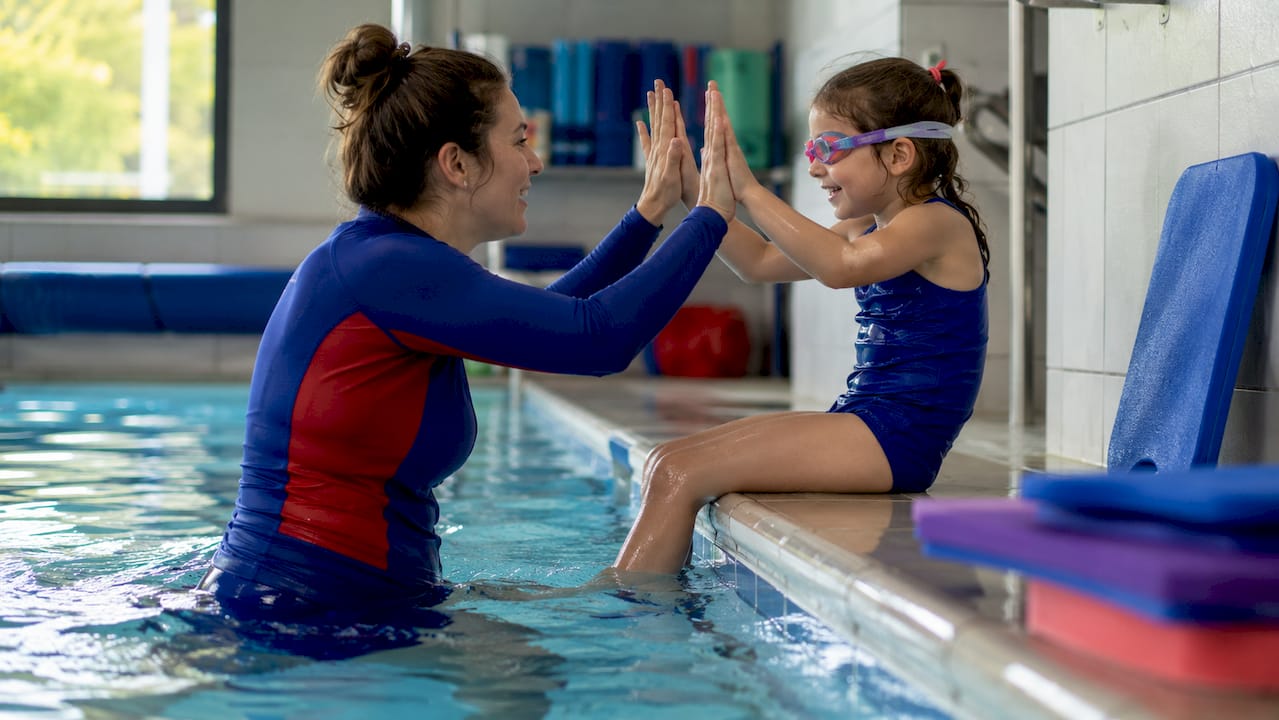
Tether systems come in two main designs. Flexible tethers provide a natural swimming feel suited for lap-style training, while rigid anchors work better for water aerobics and stationary resistance exercises. Families with compact pools benefit most from flexible tethers because they allow full stroke mechanics in a small space.
Kickboards and pull buoys are the most accessible and affordable entry points for home swim training. They require no installation, fit any pool, and work for multiple children at different skill levels. The tradeoff is that overuse creates isolated strength without whole-body coordination.
Aquatic dumbbells add a resistance training dimension that kickboards and pull buoys cannot provide. They are best suited for older children and adults sharing the home pool, making them a good multi-user investment for families.
Resistance pools and adjustable current systems represent the premium end of home swimming setups. Adjustable water resistance enables tailored workouts for diverse swim goals and allows continuous training without turns or tether attachment. These systems are expensive and require dedicated installation, but they deliver a gym-quality training environment at home.
For most families, a kickboard, pull buoy, goggles, and a flexible tether system cover the full range of skill development needs at a fraction of the cost of a resistance pool.
Key Takeaways
Swim equipment at home builds real swimming skills only when children can already swim independently and gear is used for targeted practice under direct adult supervision.
Point | Details |
Equipment is a training tool, not a safety device | Children must swim independently before using any gear; kickboards and pull buoys do not prevent drowning. |
Limit gear to 20–30% of swim time | Overuse causes technique degradation; free swimming must make up the majority of each session. |
Size gear correctly for children | Oversized paddles strain immature shoulder joints; always start with the smallest available size. |
Short, frequent sessions beat long ones | Three 20-minute sessions per week produce better skill retention than one long weekend session. |
Match equipment to pool size and skill level | Tethers need at least 10 feet of pool length; beginners need only goggles until they swim independently. |
What I have learned from watching families use gear at home
The most common mistake I see is parents buying a full kit of swim training tools before their child can float on their own. The gear sits on the pool deck, the child grabs the kickboard for support, and suddenly a training session becomes a false sense of security. That scenario is not a small problem. It is a drowning risk dressed up as swim practice.
The families who see real progress follow a simple rule: gear comes after skills, never before. When a child already moves confidently through the water, a kickboard becomes a precision tool for building kick power. When a child cannot yet float, that same kickboard becomes a crutch that delays real learning.
I have also watched parents burn out their kids with 45-minute equipment drills. Children lose focus fast. Short, purposeful sessions with one piece of gear, followed by free play in the water, produce far better results. The free play matters as much as the drill. It is where children apply what the gear just taught them.
The families who get this right treat equipment the way a good coach does: as a temporary scaffold, not a permanent fixture. They use it, then take it away, and watch their child swim better for it. That is the outcome every parent should be aiming for.
— SUPERHERO
How Superheroswimacademy helps you get home swim practice right
Home swim gear works best when it reinforces what a qualified instructor has already taught. Superheroswimacademy offers specialized swim lessons for infants, toddlers, and young children in Palm Beach and Broward counties, with every instructor trained in CPR, First Aid, and a proven survival swim curriculum. Parents receive clear progress updates so home practice stays aligned with lesson goals. Superheroswimacademy also provides online swim courses that guide families on safe gear integration and technique reinforcement between in-person sessions. With over 2,500 children taught, the results speak for themselves.
FAQ
What is the role of swim equipment at home?
Swim equipment at home provides targeted training tools that isolate specific swimming skills, build strength, and reinforce technique for children who already swim independently. Gear supplements professional instruction and should never replace it.
Is a kickboard a flotation device for children?
No. A kickboard is a training tool designed to isolate leg kick mechanics, not to keep a child afloat. Children must achieve independent buoyancy before using any swim training gear.
How much of a swim session should use training gear?
Training gear should occupy 20–30% of total swim time. The remaining time should be free swimming to prevent technique degradation from overreliance on equipment.
What swim equipment works best for small home pools?
A flexible swim tether system works in pools as short as 10 feet and allows continuous lap-style training. Kickboards, pull buoys, and goggles work in any pool size and are the best starting point for most families.
When should a child start using swim training gear?
A child should start using swim training gear only after achieving basic water comfort and the ability to swim without support. Introducing gear too early creates compensatory habits and, in some cases, a false sense of safety in the water.
Recommended
Comments