
Short Intensive Swim Lesson Benefits for Young Kids
- superheroswim
- Jul 13
- 9 min read

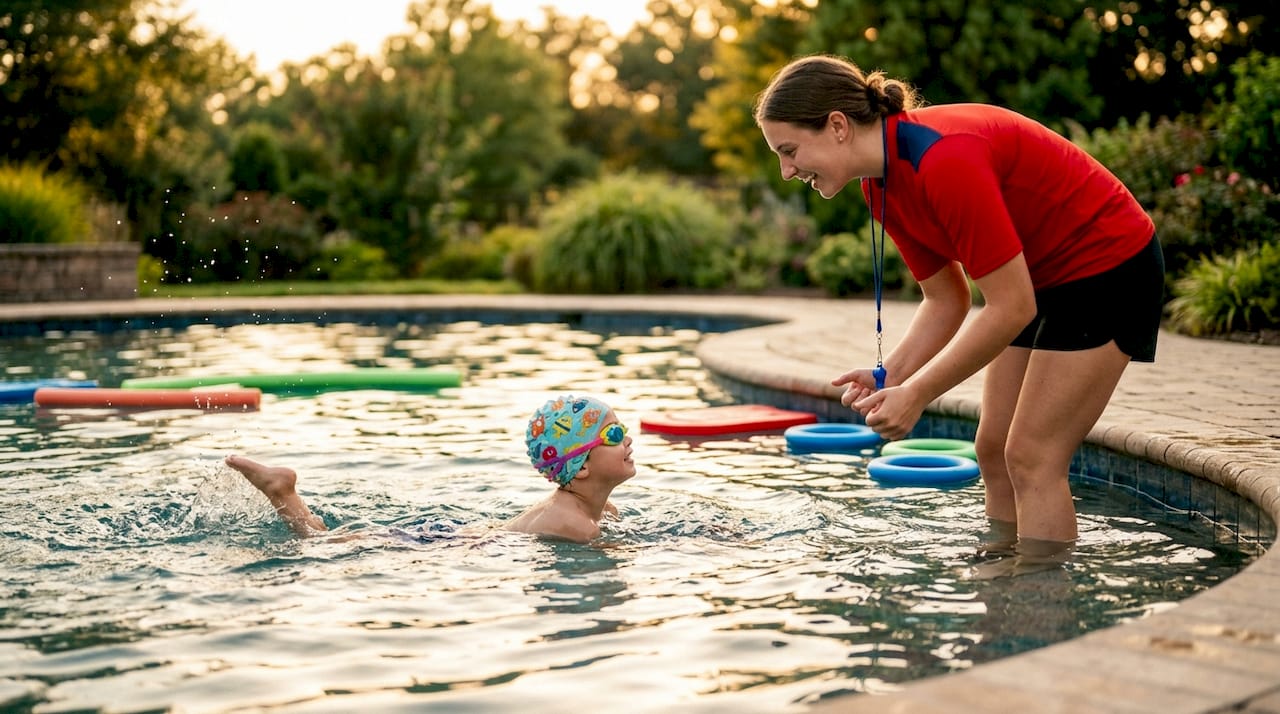
Short intensive swim lessons are focused, daily programs that build swimming skills and water safety awareness in children faster than any other format. Formal swim lessons reduce drowning risk by up to 88% in children ages 1–4. That single statistic explains why so many parents in Palm Beach and Broward counties are choosing compressed, one to two week programs over traditional weekly schedules. Short intensive swim lesson benefits go beyond speed. They build muscle memory, water confidence, and real safety skills during a tight window that fits school breaks and summer prep. Superheroswimacademy has taught over 2,500 children using exactly this kind of focused approach.
1. How short intensive swim lessons accelerate skill development
Massed practice is the learning science behind why intensive swim lessons work so well. When a child practices the same skill every day, the brain reinforces motor pathways faster than it does with once-a-week repetition. Intensive lessons deliver a 4–12 week acceleration in skill acquisition compared to the same number of lessons spaced out weekly. That means a child can reach a milestone in two weeks that might otherwise take three months.
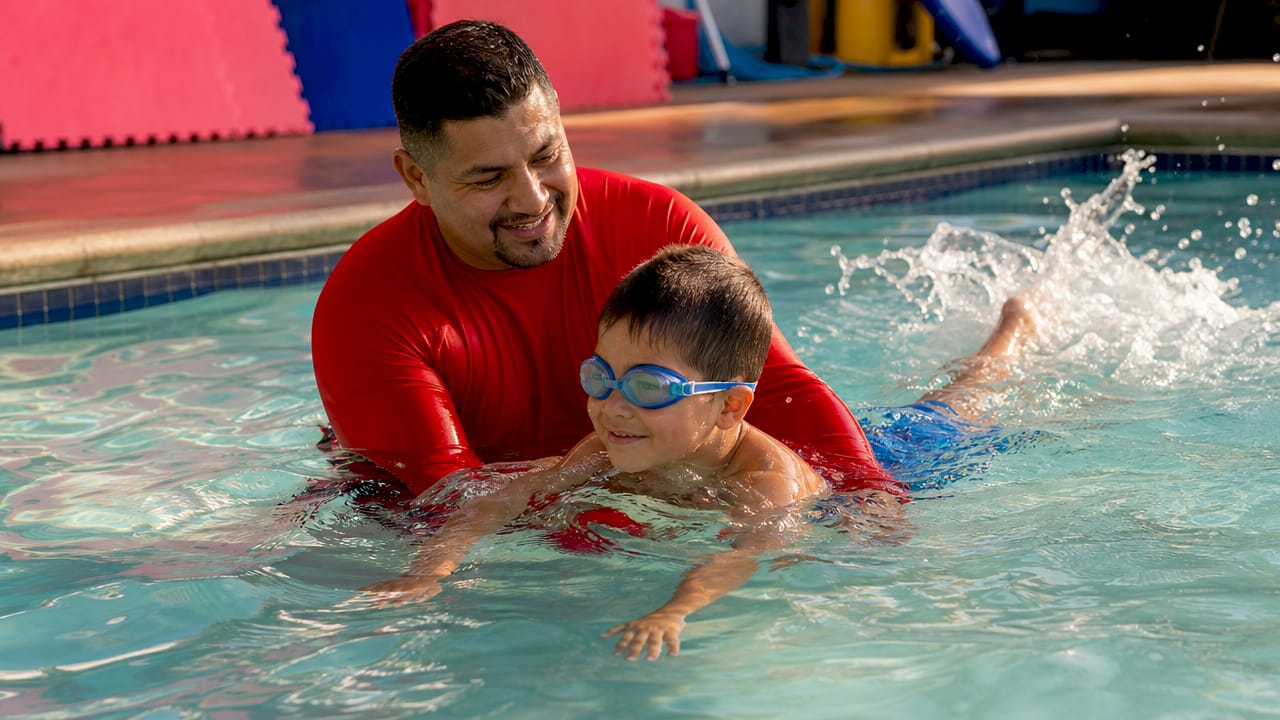
Daily repetition also builds automaticity. Automaticity means a skill becomes so practiced that the child performs it without thinking. In swimming, that translates to a child who kicks, breathes, and rotates without consciously managing each movement. That level of comfort is what makes a child genuinely safer in the water.
A typical intensive schedule runs 30–45 minutes per day for five to ten consecutive days. Within that window, children often progress from basic water entry to independent floating or assisted freestyle. The pace feels fast to parents watching from the pool deck, but the brain is doing exactly what it is designed to do under consistent, repeated exposure.
Daily lessons reinforce motor patterns before they fade
Short sessions prevent fatigue while maintaining focus
Consecutive days eliminate the “re-learning” time that weekly gaps create
Skill milestones arrive earlier, boosting the child’s confidence
Pro Tip: Ask your swim school to share specific skill milestones for each day of the intensive program. Knowing what to expect helps you reinforce progress at home between sessions.
2. Key benefits of short intensive swim lessons vs. weekly lessons
Massed practice leads to faster short-term breakthroughs, while distributed practice excels at long-term consolidation of complex motor skills. Neither format is universally better. Each serves a different purpose, and the smartest parents use both.
Here is how the two formats compare across the factors that matter most to families:
Feature | Intensive lessons | Weekly lessons |
Skill acquisition speed | Fast, visible progress within days | Gradual progress over months |
Long-term retention | Requires follow-up practice | Stronger natural retention |
Family scheduling | Fits school breaks and vacations | Requires year-round commitment |
Emotional pacing | Best for confident, adaptable children | Gentler for anxious or sensitive children |
Cost per session | Often lower per session | Can be higher over time |
The intensive format wins on speed and scheduling flexibility. A parent who needs their child water-safe before a beach vacation in three weeks has one real option: a compressed program. Weekly lessons simply cannot deliver that timeline.
Weekly lessons win on retention and emotional pacing. A child who processes new experiences slowly will absorb more from a lesson that comes with six days of rest before the next one. The brain consolidates motor skills during sleep and downtime, and weekly spacing gives that process room to work.
The best approach for most children is a hybrid. Start with an intensive program to build foundational skills quickly, then transition to weekly lessons to lock in those gains. Superheroswimacademy structures its programs with exactly this progression in mind, keeping parents updated on goals at every stage.
3. Who should consider short intensive swim lessons, and when?
Age is the first factor to evaluate. Children generally master basic aquatic locomotive skills after age 4, when cognitive and physical readiness align. Younger children still benefit enormously from water familiarization and early exposure, but the rapid skill gains that define intensive programs are most pronounced in children 4 and older.
Emotional readiness matters just as much as age. Intensive lessons can cause emotional overwhelm for anxious or sensory-sensitive children. A child who cries through the first three days of a five-day program is not failing. The child may simply need a semi-intensive schedule with rest days built in. Pushing through daily sessions when a child is emotionally overwhelmed does not accelerate learning. It slows it down.
Instructor quality and class size are the two variables parents most often overlook. Group size in intensive lessons is often larger, which reduces the hands-on time each child receives. A high student-to-instructor ratio during a compressed schedule directly limits skill acquisition speed. Before enrolling, ask for the exact ratio. At Superheroswimacademy, every instructor holds CPR and First Aid certification and follows a proven survival swim curriculum, which matters especially in a fast-paced intensive format.
Children ages 4 and up gain the most from intensive skill-building formats
Infants and toddlers benefit from water familiarization programs before intensive training
Confident, adaptable children thrive in daily lesson formats
Anxious or sensory-sensitive children may need a modified schedule with rest days
Always verify student-to-instructor ratios before enrolling in any intensive program
Pro Tip: Visit the pool before the first session. Letting your child splash around in the same environment reduces first-day anxiety and helps the brain associate that space with fun rather than stress.
4. How to maximize skill retention after short intensive lessons
Skills decline within two weeks without reinforcement after an intensive program ends. That is the single most important fact parents need to understand about fast-track swim training. The intensive course is a jumpstart, not a finish line.
Here is how to protect and extend what your child learned:
Schedule weekly lessons immediately after the intensive ends. The transition from daily to weekly practice should happen within days, not weeks. A gap of more than two weeks allows motor skills to regress significantly.
Add family water time at least once a week. Supervised practice in a pool, lake, or ocean reinforces the same movements the child practiced in lessons. Even 20 minutes of free play in shallow water counts.
Expose your child to different water environments gradually. A child who learned in a calm indoor pool needs supervised experience in open water, moving water, and deeper pools before those environments feel safe.
Watch for readiness signals before advancing. A child who floats independently and kicks without prompting is ready for the next skill level. Pushing to the next stage before those foundations are solid creates gaps that show up later.
Keep a simple progress log. Note what your child can do confidently after each session. Patterns in that log tell you when skills are consolidating and when they need more repetition.
The consistent swim lesson routine that follows an intensive program is what turns a quick win into a lasting skill. Parents who treat the intensive as step one and weekly lessons as step two see the best long-term outcomes.
5. Situations where short intensive swim lessons are the best choice
Intensive swim lessons fit naturally into school holidays, provide quick boosts before summer, and help children re-enter swimming after absences. Those three scenarios cover the majority of reasons parents search for fast-track swim training.
Before summer or a beach vacation. A child who has never swum independently needs foundational water safety skills before spending time near open water. A one to two week intensive in may or june delivers those skills on a timeline that weekly lessons cannot match.
After a long break from swimming. Children who learned to swim two or three years ago and have not practiced since often regress. An intensive refresher rebuilds confidence and motor patterns faster than starting a new weekly series.
Before a summer camp with water activities. Many camps require children to pass a basic swim test. An intensive program in the weeks before camp gives children the specific skills they need to pass and participate safely.
When family schedules make weekly commitments difficult. A parent who travels for work or manages an unpredictable schedule may not be able to commit to the same time every week for months. A concentrated two-week block is easier to protect on a calendar.
When a child needs a confidence reset. A child who had a frightening water experience sometimes needs rapid positive exposure to rebuild trust. Daily sessions with a skilled instructor can shift that association faster than weekly lessons spread over months.
The short format swim lessons that work best in these situations share one quality: they are taught by instructors who understand both the pace and the emotional demands of compressed learning.
Key takeaways
Short intensive swim lessons deliver the fastest path to foundational water safety for young children, but they require immediate follow-up practice to hold those gains.
Point | Details |
Speed of skill acquisition | Intensive lessons accelerate progress by 4–12 weeks compared to spaced weekly formats. |
Drowning risk reduction | Formal swim lessons reduce drowning risk by up to 88% in children ages 1–4. |
Age and readiness | Children 4 and older gain the most from intensive formats; younger children benefit from water familiarization first. |
Retention requires follow-up | Skills drop within two weeks without reinforcement; transition to weekly lessons immediately after an intensive. |
Instructor quality matters | Low student-to-instructor ratios and certified instructors are non-negotiable in compressed programs. |
What I’ve learned from watching hundreds of kids go through intensive programs
The parents who get the most out of intensive swim lessons are the ones who treat the program as a beginning, not an ending. I have watched children go from terrified of the water to floating independently in five days. That progress is real. What is also real is what happens when those same children do not get back in the pool for a month.
The intensive course does something that weekly lessons take much longer to do. It breaks the fear barrier fast. A child who spends five consecutive days with a skilled instructor in a safe, fun environment builds a relationship with the water that changes their whole body language around pools. That shift in confidence is worth the investment on its own, separate from any specific skill.
The mistake I see most often is parents treating the intensive as a checkbox. “My child took swim lessons” becomes the story, when the real story is “my child started learning to swim.” Aquatic literacy is a lifelong skill. The intensive is the ignition, not the engine.
My honest advice: choose a program where the instructor knows your child’s name by day two, where the class is small enough for hands-on correction, and where you receive a clear update after every session. Those three things predict outcomes better than any marketing claim. The qualified swim instructor your child works with during an intensive has more influence on their water safety than the format itself.
— SUPERHERO
Superheroswimacademy’s approach to intensive swim education
Superheroswimacademy serves families across Palm Beach and Broward counties with survival swim lessons built around exactly the principles this article describes: focused instruction, certified instructors, and clear progress tracking for parents.
Every Superheroswimacademy instructor holds CPR and First Aid certification and follows the academy’s own survival swim curriculum. Parents receive regular updates on their child’s goals and progress, so the intensive experience connects directly to what comes next. For families who want to extend learning beyond the pool, online swim courses complement in-person programs with safety knowledge and skill reinforcement. With over 2,500 children taught, Superheroswimacademy has the track record to back up its approach. Visit Superheroswimacademy to find the right program for your child’s age, readiness, and schedule.
FAQ
What are short intensive swim lessons?
Short intensive swim lessons are daily programs, typically lasting one to two weeks, designed to build foundational swimming skills and water safety awareness quickly. They use massed practice to accelerate skill acquisition faster than weekly lesson formats.
How fast do children progress in an intensive swim program?
Intensive swim lessons can deliver a 4–12 week acceleration in skill milestones compared to the same number of lessons spread out weekly. Most children show visible progress within the first three to five days.
Are intensive swim lessons safe for toddlers?
Children under 4 benefit most from water familiarization rather than skill-intensive formats. Formal swim lessons reduce drowning risk by up to 88% in children ages 1–4, making early exposure valuable, but true skill mastery typically develops after age 4.
How do I prevent my child from losing skills after an intensive course?
Transition to weekly lessons within days of finishing the intensive program. Skills decline within two weeks without reinforcement, so consistent follow-up practice is the most important step after any compressed course.
What should I look for in a quality intensive swim program?
Verify the student-to-instructor ratio, confirm that instructors hold CPR and First Aid certification, and ask for a clear skill progression plan. Small class sizes and certified instructors have the greatest impact on outcomes in compressed formats.
Recommended
Comments