
Signs Your Child Is Ready for Swim Lessons: A Parent's Checklist
- superheroswim
- Jul 31
- 8 min read

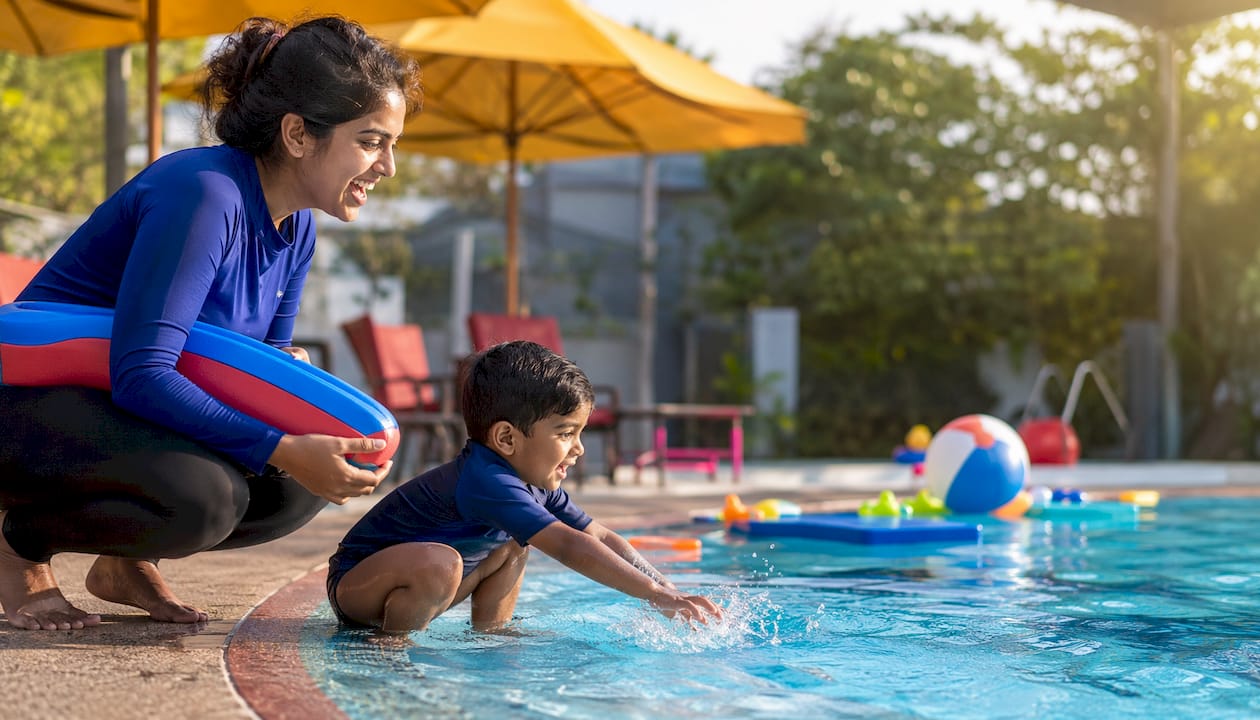
Your child is probably ready to start swim lessons if they show curiosity around water, tolerate getting their face wet, can follow one or two simple instructions, and accept brief separation from you without prolonged distress. Those four signs, taken together, are more predictive of a smooth first lesson than age alone. If your child checks most of them, the next step is simple: book a parent-and-me assessment or bring it up at your next pediatrician visit.
Quick readiness checklist:
Reaches toward water, watches splashes, or gets excited at bath time
Tolerates water poured over their head or face without panicking
Follows a simple two-step direction (“kick your feet, then hold on”)
Shows basic motor control: walking steadily or kicking legs in the tub
Can separate from you briefly without extended crying
Stays engaged with an activity for at least a few minutes at a time
Pro Tip: Don’t wait for your child to be fearless. Trained survival instructors are specifically equipped to work through water anxiety, and starting earlier almost always produces faster results than waiting for a child to “grow out of it.”
Table of Contents
What does the AAP say about when to start swim lessons?
The American Academy of Pediatrics recommends that swim lessons can begin around age 1 for many children, and that most kids are ready for formal lessons by ages 3–4. The AAP is clear, though: readiness is developmental, not strictly age-based. A confident, curious 2-year-old may thrive in a structured class while a hesitant 4-year-old benefits more from a parent-and-me format first.
Cleveland Clinic pediatric experts echo this, noting there is no single “best” age, but that being comfortable in the water and knowing basic safety behaviors matters more than hitting a birthday milestone. If your child has recurring ear infections, open wounds, or a respiratory illness, check with your pediatrician before enrolling. Children with ear tubes should discuss swim plugs with their doctor before starting water lessons.
Age range | Typical lesson format | Common goals |
— | Parent-and-me water acclimation | Comfort with water, basic submersion |
1–2 years | Parent-and-me or guided play | Face-wetting tolerance, supported floating |
3–4 years | Small group or private lessons | Independent floating, basic kicks, water safety |
4+ years | Formal learn-to-swim or survival | Strokes, breath control, self-rescue skills |
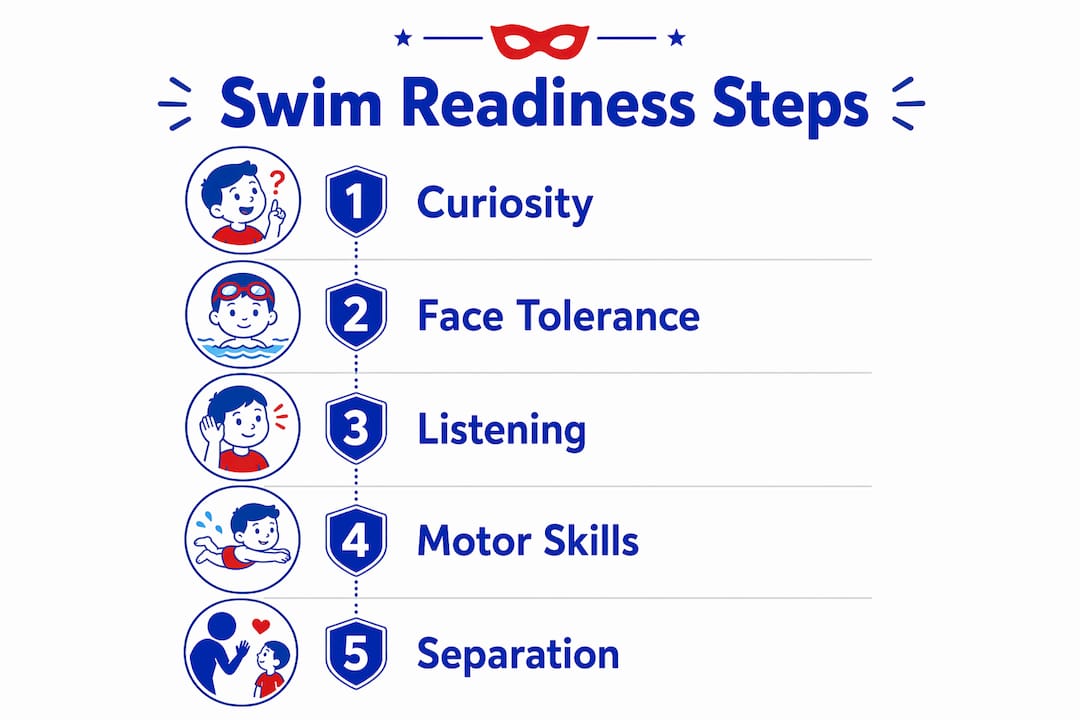
What are the real signs a child is ready for swim lessons?
Age gives you a ballpark. Behavior tells you the truth.
Curiosity about water is the clearest early signal. Children who lean toward the tub, splash enthusiastically, or point at pools are already building a positive association with water. That pull toward the water, rather than away from it, is what instructors call being “learning ready.”
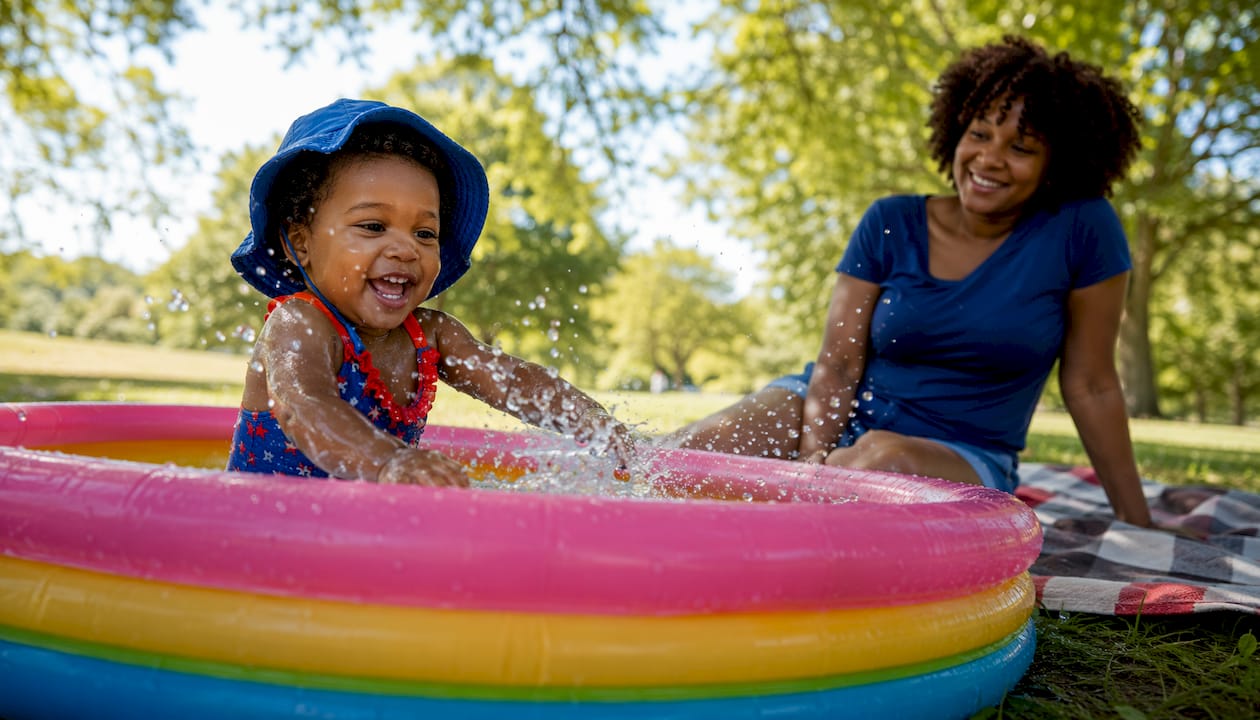
Tolerating water on the face is the single most practical predictor. A child who screams when a cup of water runs over their head during bath time will struggle in the pool, at least initially. A child who blinks, wipes their face, and keeps playing is already past the hardest hurdle.
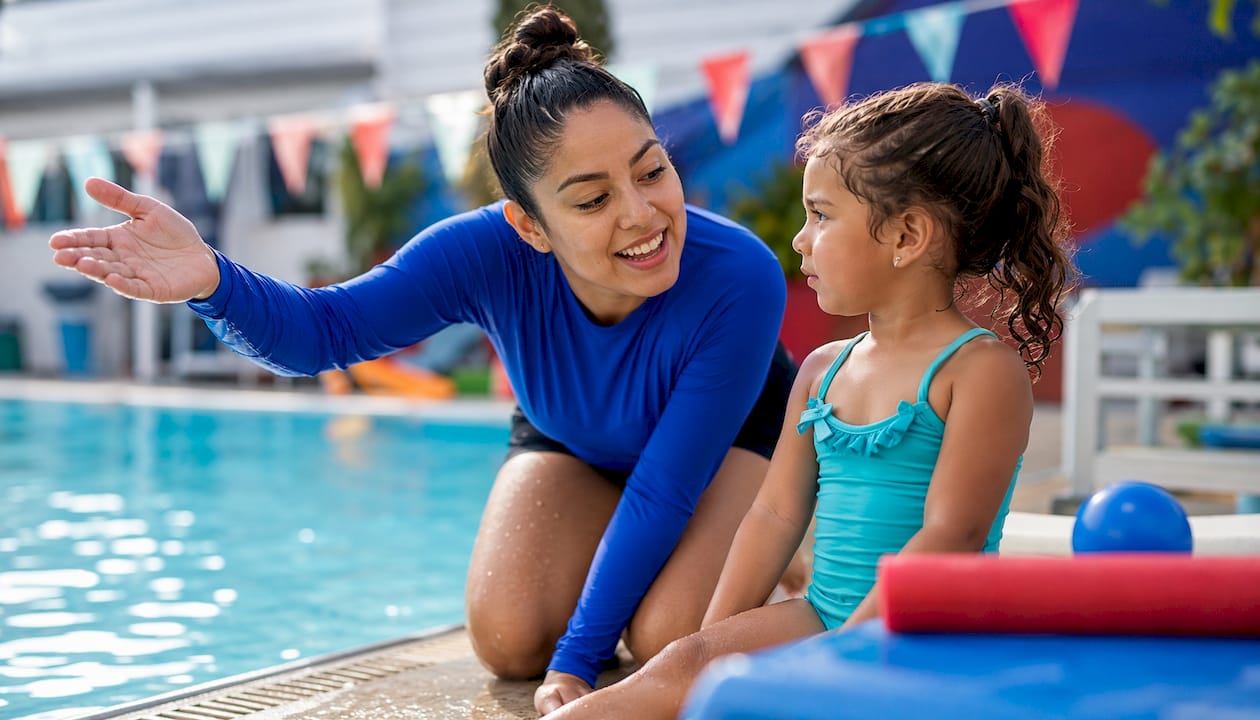
Following simple instructions matters more than parents expect. Swim instructors rely on a child being able to hear a cue and respond, even imperfectly. If your toddler can follow “kick your feet” or “hold the wall,” they have enough receptive language to benefit from structured instruction.
Basic motor control covers a wide range. For infants, it means reasonable head and neck stability. For toddlers, it means walking confidently and showing some coordinated leg movement in the tub. Neither requires athletic ability, just enough body awareness to respond to physical cues.
Brief separation tolerance is the one sign parents often overlook. A child who cannot separate from a caregiver for even a few minutes will find group lessons very difficult. Parent-and-me classes solve this, but it’s worth knowing where your child stands before the first session.
Pro Tip: If your child shows water anxiety, that is not a reason to wait. According to WaterWiseKids, trained survival instructors use stepwise desensitization that resolves fear faster than time alone does. Parent-in-water options exist specifically for children with high separation anxiety.
How to prepare your child before the first lesson
A few small habits in the week before lessons start can make a real difference in how the first session goes.
At bath time, try these:
Pour water gently over your child’s shoulders, then their head, narrating calmly as you do it.
Ask them to blow bubbles into the water with their mouth.
Practice a supported float: hold them on their back in the tub and let them feel the sensation of lying in water.
Play a short “wait your turn” game to build the attention and patience that group lessons require.
Gear checklist for lesson day:
Warm, well-fitting swimsuit (rash guards work well for toddlers)
Swim diaper if your child is not yet potty-trained
Two towels (one for poolside, one for the car)
A small comfort item for after the lesson, not during
Goggles are optional for beginners; many instructors prefer children learn without them initially
On arrival: Get there a few minutes early so your child can see the pool before getting in. Let them watch other kids in the water. Model calm yourself, because children read parental anxiety quickly. Introduce yourself and your child to the instructor before the lesson starts. That brief connection makes a real difference for hesitant kids.
For a detailed first-lesson prep guide, Superheroswimacademy has a full walkthrough built specifically for local families.
Which lesson format fits your child right now?
Not every child is ready for the same type of class, and picking the wrong format is one of the most common reasons early lessons go poorly.
Format | Parent present? | Typical starting age | Primary goal |
Parent-and-me | Yes | — | Water comfort, bonding, basic acclimation |
Small group | No | 3–5 years | Social learning, foundational skills |
Private lessons | No (parent nearby) | Any age | Accelerated progress, specific skill gaps |
Survival-focused | No | — | Self-rescue, floating, water safety |
Matching your child to the right format:
High separation anxiety or under 2 years old: start with parent-and-me classes
Socially confident, follows instructions, age 3+: small group lessons work well
Specific developmental concerns or very fast/slow progress: private lessons give instructors more flexibility
Safety is the primary goal regardless of age: survival-focused instruction addresses this directly
Families who want quicker skill acquisition or have scheduling constraints often choose short-format intensive lessons, which compress learning into fewer, longer sessions. The tradeoff is that consolidation takes longer without regular follow-up practice.
What should you ask before enrolling in any swim program?
Instructor qualifications are not a nice detail. They are the difference between a program that builds safety skills and one that just gets kids wet.
Before you enroll, ask:
Are instructors certified in CPR and First Aid?
What swim-instructor certification do they hold?
What is the student-to-instructor ratio for toddler classes?
Is the pool heated to a comfortable temperature for young children?
How are parents updated on their child’s progress and goals?
Is there lifeguard coverage during lessons?
These questions come directly from program-quality guidance that Superheroswimacademy uses to evaluate its own standards. A program that cannot answer them clearly is worth reconsidering.
Safety caveat: The AAP is explicit that swim lessons reduce drowning risk but do not make a child drown-proof. Drowning in children under 5 most often involves unexpected, unsupervised water access. Lessons are one layer of protection. Active adult supervision within arm’s reach remains the primary prevention strategy, always.
What does early progress actually look like after lessons begin?
Parents sometimes pull children from lessons too early because they expect visible skill gains in the first week. Progress in early swim instruction is mostly internal: comfort, trust, and body awareness build before any observable stroke does.
A realistic early timeline:
First 4–8 lessons: Your child learns to follow the instructor’s cues, tolerates submersion, and begins to relax in the water. This phase looks slow from the pool deck but is foundational.
Weeks 4–12: Basic floating with support, assisted gliding, and intentional kicking usually appear. Children who practice between lessons progress noticeably faster.
Months 3–12: Survival skills (rolling to float, reaching a wall) and early stroke mechanics develop, depending on age, lesson frequency, and individual pace.
Some children show fast early gains and then plateau. Others look stuck for weeks and then suddenly connect multiple skills at once. Both patterns are normal. If a child is consistently distressed after several sessions, that is the right moment to consider switching formats or adding private lessons rather than stopping altogether.
Key Takeaways
Most children show clear signs of swim readiness before age 4, and acting on those signs early, with the right format, produces safer and more confident swimmers.
Point | Details |
Top readiness signs | Curiosity about water, tolerates wet face, follows simple instructions, brief separation tolerance. |
AAP age guidance | Lessons can begin around age 1; most children are ready for formal lessons by ages 3–4. |
Safety caveat | Lessons reduce drowning risk but do not replace active adult supervision at all times. |
Consult a pediatrician | Ask before starting if your child has ear tubes, recurring infections, or developmental concerns. |
Superheroswimacademy | Offers parent-and-me, private, group, and survival-focused lessons in Palm Beach and Broward counties. |
What instructors actually see in those first lessons
The first lesson rarely looks like swimming. What it looks like is a child deciding whether the water is safe. That decision happens fast for some kids and slowly for others, and neither timeline says anything about how good a swimmer they will eventually become.
What consistently helps is starting before a child has built a strong fear response. Younger children who have not yet catalogued water as dangerous are easier to guide through the early discomfort. That does not mean older children cannot learn, only that the work looks different. When a 4-year-old arrives with genuine water fear, the first few sessions are about trust, not technique. Instructors who are trained in stepwise desensitization can move through that phase efficiently, but parents need to stay calm on the deck and resist the urge to rescue a child who is simply uncomfortable, not unsafe.
Parent-in-water sessions exist for exactly the cases where separation anxiety is high enough to block learning entirely. The goal is not to keep the parent in the water indefinitely but to use the caregiver as a bridge until the child trusts the instructor enough to work independently. Most children make that transition faster than parents expect.
Superheroswimacademy: survival swim lessons in Palm Beach and Broward counties
When your child is showing the signs and you want lessons built around safety first, not just stroke technique, Superheroswimacademy offers exactly that for families in Palm Beach and Broward counties.
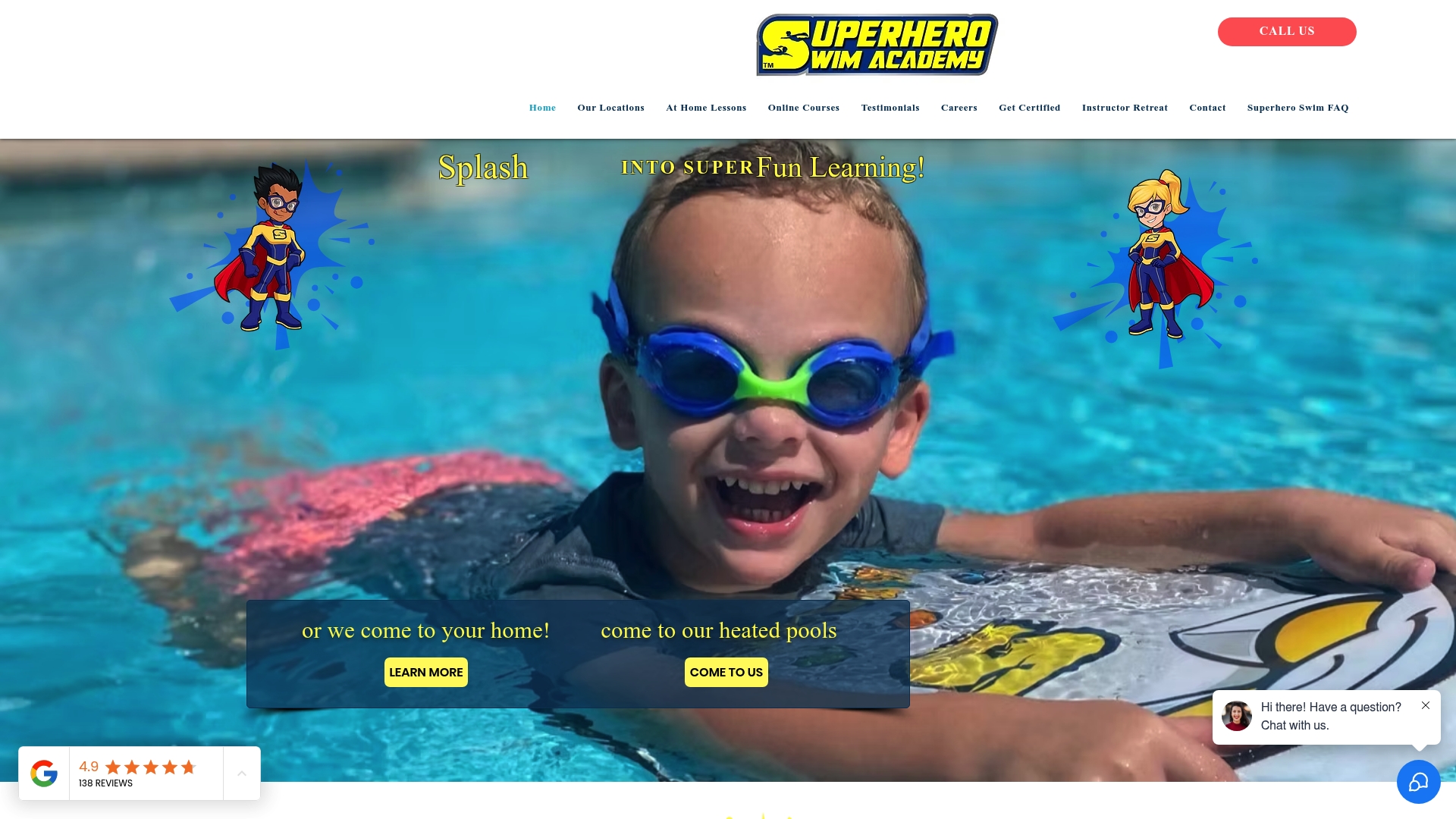
Every instructor at Superheroswimacademy is trained in CPR, First Aid, and the Academy’s own survival swim curriculum. Classes include parent-and-me sessions for the youngest learners, small group classes in heated pools, private lessons, and luxury concierge instruction at your home pool. For parents who want to teach their own children, online courses are also available. Over 2,500 children have come through the program, and parents consistently report meaningful skill gains within a short period.
View class options and book an assessment to find the format that fits your child’s readiness profile right now.
Useful sources for parents who want to dig deeper
HealthyChildren.org (AAP): The primary source for AAP age guidance and the safety-first framing around lessons and supervision.
WaterWiseKids Readiness Checklist: A practical parent-facing checklist covering observable signs, home-prep activities, and medical considerations before starting lessons.
Swum Blog: What Age Should Kids Start Swim Lessons?: A useful age-by-age breakdown of lesson formats and what learning outcomes typically look like at each stage.
Cleveland Clinic: When Should My Child Learn How to Swim?: Pediatric perspective on readiness, anxiety, and why earlier exposure generally helps.
Superheroswimacademy: How to Prepare Your Child for Their First Swim Lesson: Instructor-backed prep steps for Palm Beach and Broward families getting ready for lesson day.
This article is general information for parents and is not a substitute for professional medical or developmental advice. If you have concerns about your child’s readiness, consult your pediatrician.
Recommended
Comments