
Swim Academy Evaluation Criteria: A 2026 Parent's Guide
- superheroswim
- Jun 23
- 9 min read

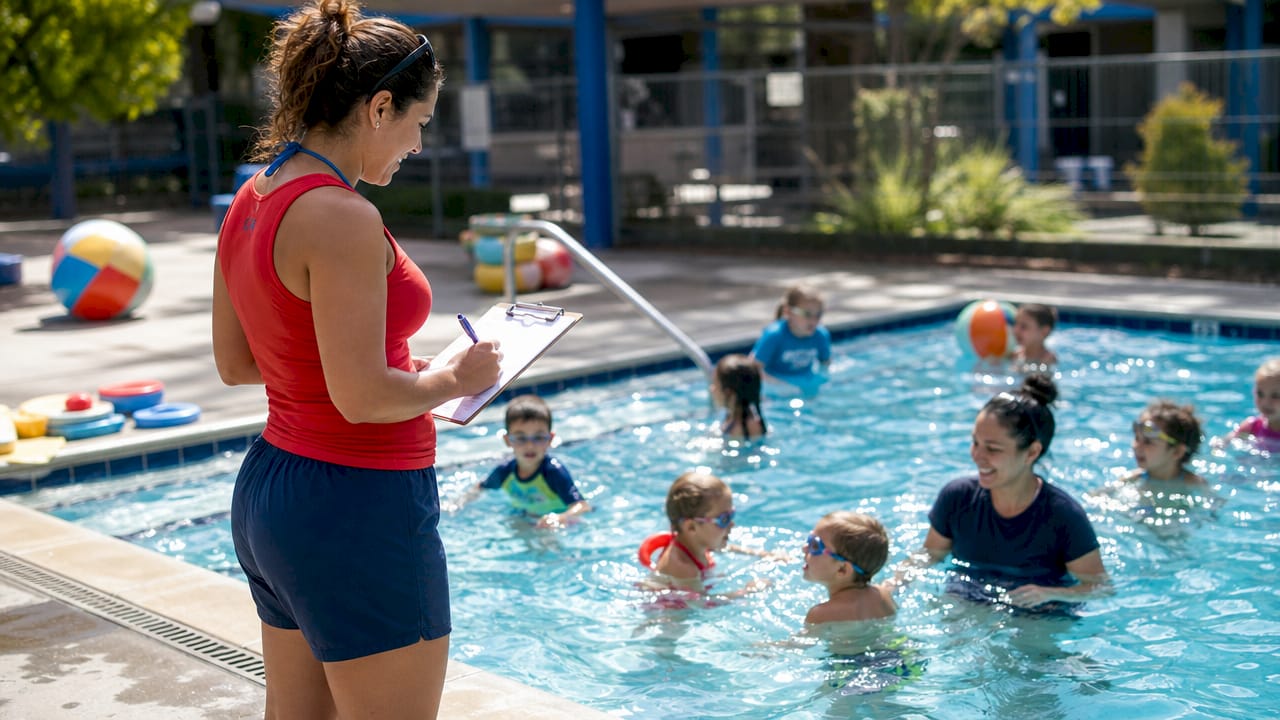
The essential criteria parents should use to evaluate swim academies include safety standards, qualified instructors, structured curriculum progression, and clear parent communication. These are not preferences. They are the baseline for any program trusted with a young child’s safety in the water. Swim academy evaluation criteria for parents cover everything from student-to-instructor ratios to how often a school formally measures your child’s progress. Superheroswimacademy has taught over 2,500 children in Palm Beach and Broward counties, and the patterns that separate effective programs from ineffective ones are consistent and measurable.
1. How to evaluate safety standards in swim academies
Safety is the first and non-negotiable criterion when assessing any swim program. A quality swim program requires lifeguard-certified staff with current CPR and first aid training, plus documented background checks for every instructor. These are not optional extras. They are the floor.
Key safety factors to verify before enrolling your child:
Staff certifications: Every instructor should hold current CPR, first aid, and lifeguard certifications. Ask to see documentation, not just a verbal confirmation.
Swimmer-to-instructor ratios: Industry guidelines recommend ratios of 1:3 to 1:5 for infants and toddlers. Advanced groups can go up to 1:6, but anything higher for young beginners is a red flag.
Lifeguard presence: A dedicated lifeguard on deck during lessons is separate from the instructor. The instructor cannot watch the whole pool while teaching.
Facility condition: Clean, warm pool facilities are not cosmetic. Water temperature directly affects toddler comfort and lesson effectiveness.
Emergency protocols: Ask specifically what the academy does in a medical emergency. A clear, practiced answer signals a prepared program.
The 1:3 to 1:5 ratio for infants matters because young children cannot self-rescue. One distracted instructor managing six toddlers creates genuine risk, not just reduced learning quality.
Pro Tip: Visit the facility unannounced before enrolling. Watch a class in progress. Count the children per instructor yourself.
2. Recognizing qualified and experienced swim instructors
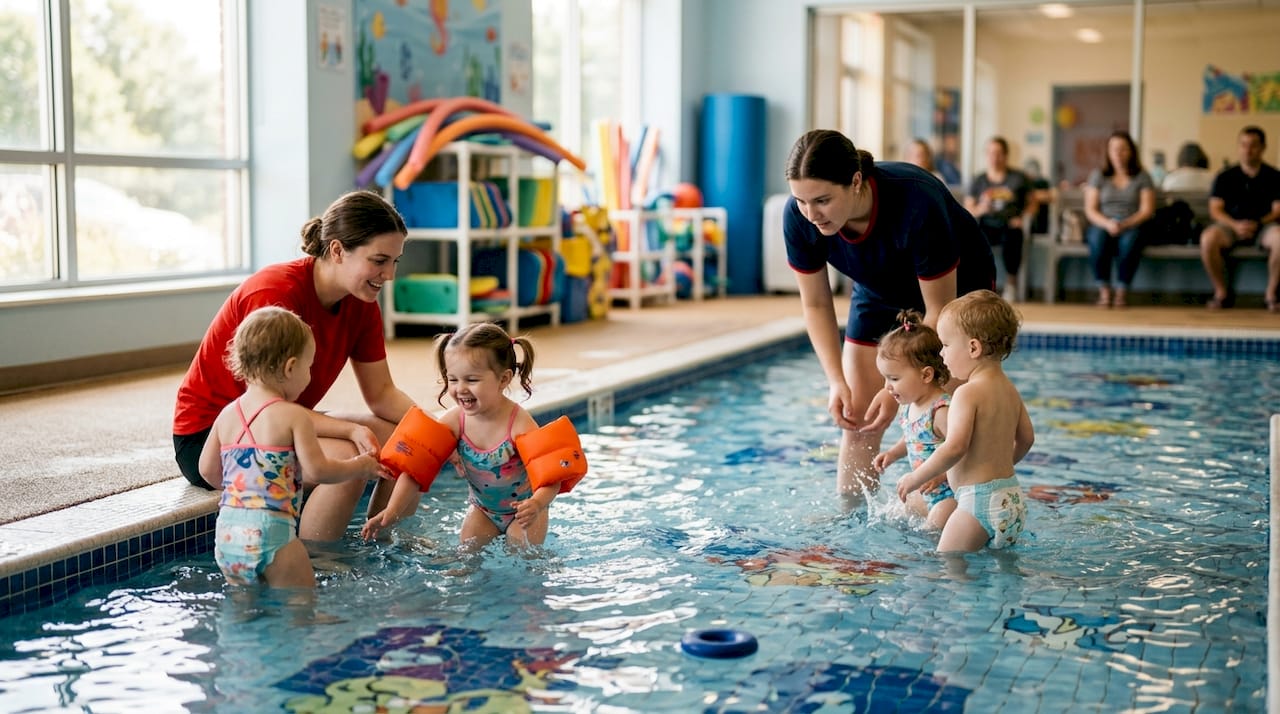
Instructor quality is the single biggest variable in whether a child learns to love or fear the water. Certifications matter, but so does how an instructor actually behaves with a nervous three-year-old.
What to look for in qualified instructors:
Formal certifications: Look for training in CPR, first aid, and a recognized swim instruction curriculum. Superheroswimacademy requires every instructor to complete its own survival swim curriculum in addition to standard certifications.
Specialization by age group: Teaching infants requires different skills than teaching six-year-olds. Ask whether instructors are trained specifically for the age group your child falls into. Age-appropriate instruction is a distinct competency, not a given.
Patience under pressure: Watch how an instructor responds when a child refuses to put their face in the water. A skilled instructor redirects without force. An undertrained one pushes.
Rapport and tone: Instructors should use encouraging language, make eye contact with children, and celebrate small wins visibly.
Red flags: Forced submersion without trust-building is a documented cause of long-term water phobia. Programs that force early submersion without establishing comfort first risk creating fear that takes years to undo.
Ongoing training matters as much as initial certification. Ask how often instructors receive continuing education and whether the academy conducts internal evaluations of teaching quality.
Pro Tip: Ask the academy if you can observe a class before committing. Any program confident in its instructors will say yes without hesitation.
3. Understanding curriculum structure and skill progression
A well-built swim curriculum moves children through skills in a logical sequence. Water confidence comes first. Breath control follows. Stroke mechanics come later. Programs that skip steps to impress parents with early “swimming” often produce children who perform in lessons but panic in open water.
The clearest sign of a structured program is a formal assessment schedule. High-quality swim programs conduct progress assessments every 30–60 days to confirm that advancement is skill-based, not time-based. YMCA South Australia, for example, schedules assessments approximately six times per year. That frequency keeps children from advancing before they are ready.
Curriculum Feature | What to Look For | Red Flag |
Skill sequencing | Clear steps from water comfort to stroke technique | No written progression plan |
Progress assessments | Formal evaluations every 30–60 days | Advancement based only on time enrolled |
Individualized pacing | Children revisit skills until mastered | All children advance together regardless of ability |
Survival skills | Floating, rolling, and self-rescue included | Only stroke technique, no survival component |
Parent reporting | Written or digital progress updates | Verbal-only feedback with no documentation |
Individualized pacing is the detail most parents overlook. A child who advances before mastering a skill builds on a shaky foundation. Ask the academy directly: “What happens if my child is not ready to move to the next level?” The answer tells you everything about their philosophy.
Parents can learn more about how academies track progress to understand what a well-documented assessment system looks like in practice.
4. The role of effective parent communication and feedback systems
Parent communication is a swim school assessment standard that separates professional programs from casual ones. You should never have to guess how your child is progressing.
Strong communication systems include:
Parent portals or mobile apps: Real-time progress tracking through a digital platform lets parents see skill milestones as they are achieved, not just at the end of a term.
Regular written updates: Progress notes after each assessment period give parents a record they can reference and share with other caregivers.
Clear advancement criteria: Parents should know exactly which skills their child needs to demonstrate before moving to the next level. Vague answers like “when the instructor feels ready” are not acceptable.
Parent involvement policies: Some programs require parents in the water for toddler lessons. Others limit parent presence as children gain independence. Clear communication about parent roles helps families prepare and stay engaged without undermining the instructor’s authority.
Feedback channels: Parents should have a direct way to ask questions between lessons, whether by email, app message, or a scheduled check-in.
Programs that provide real-time progress visibility build stronger trust with families. That trust translates into consistent attendance, which is the single biggest driver of skill development. A child who misses lessons because parents feel disconnected from the process loses ground fast.
5. Evaluating class size, lesson length, and scheduling flexibility
Logistics shape outcomes more than most parents realize. A brilliant instructor running a class of ten toddlers cannot deliver the same result as one running a class of four.
Factor | Recommended Standard | Why It Matters |
Class size (infants/toddlers) | 3–5 students per instructor | Allows individual correction and safety monitoring |
Lesson length (toddlers) | 15–30 minutes | Matches developmental attention spans |
Lesson length (older children) | 30–45 minutes | Allows skill repetition without fatigue |
Session frequency | 2–3 times per week | Builds muscle memory and water comfort faster |
Make-up policy | At least one make-up per term | Protects progress when illness or conflicts arise |
Lesson duration for toddlers is a detail many parents do not think to ask about. A 45-minute lesson for a two-year-old is not more valuable than a 20-minute one. It is usually worse. Toddlers lose focus and become cold, and the last 20 minutes of an overlong lesson often undo the progress of the first 20.
Location convenience also affects outcomes. A program 40 minutes away is one that families skip on hard weeks. Scheduling and location factors directly influence how consistently children attend, and consistency is what builds swimmers.
Pro Tip: Ask about the make-up lesson policy before you enroll. A program with no make-up option signals that your child’s progress is secondary to the school’s scheduling convenience.
6. What group class dynamics reveal about a program
Group classes are not just a cost-saving structure. They are a teaching tool. Children learn water confidence partly by watching peers succeed. A child who sees another toddler float calmly is more likely to try it themselves.
The confidence-building effect of group swim classes depends entirely on class composition. Groups should be matched by age and skill level, not just age. A nervous five-year-old placed with confident swimmers often regresses. A nervous five-year-old placed with peers at the same stage often thrives.
Ask the academy how they group children and whether they reassess groupings after each assessment period. Static groups that never change regardless of individual progress are a sign that the program prioritizes administrative convenience over child development.
7. Checking the physical environment and facility standards
The pool environment is a direct safety and learning factor. Warm water keeps toddlers calm and focused. Cold water triggers stress responses that make skill acquisition harder and lessons shorter than planned.
Pool facilities should be clean, well-maintained, and warm. This standard applies to the water, the deck, the changing areas, and the viewing areas for parents. A facility that is clean in the lobby but neglected poolside is not a facility that takes safety seriously.
Check whether the pool has a dedicated shallow area for young children. Lessons conducted in adult-depth water with no shallow zone require instructors to physically support children throughout, which limits what can be taught and increases fatigue for both instructor and child.
8. How to use parent feedback and reviews effectively
Parent feedback is one of the most underused tools in swim school assessment. Reviews on Google, Facebook, and local parenting forums reveal patterns that a facility tour cannot show you.
Look for reviews that mention specific instructor names, describe measurable progress, or reference how the school handled a problem. Generic five-star reviews that say “great place, loved it” tell you nothing. A review that says “my daughter was terrified of water in september and floated independently by november” tells you the program works.
Ask the academy directly for references from parents of children in your child’s age group. A confident program will provide them. Also ask whether the academy conducts formal parent satisfaction surveys and what they do with the results. Programs that collect feedback and act on it improve over time. Programs that do not, do not.
Key takeaways
The most effective swim academy evaluation for parents combines safety verification, instructor observation, curriculum review, and direct communication checks before the first lesson is booked.
Point | Details |
Safety is the baseline | Verify CPR certification, background checks, and student-to-instructor ratios before anything else. |
Instructor quality drives outcomes | Observe a class in person and watch how instructors respond to a hesitant child. |
Curriculum must be skill-based | Advancement should follow demonstrated ability, assessed every 30–60 days, not time enrolled. |
Communication signals professionalism | Real-time progress tracking and written updates separate quality programs from casual ones. |
Logistics affect consistency | Class size, lesson length, and location convenience directly influence how often children attend. |
What I have learned from watching hundreds of families choose swim programs
Parents almost always focus on price and location first. Those factors matter, but they are the last things I would check, not the first. The programs that produce confident, safe swimmers share one trait: they are transparent. They show you the curriculum. They show you the assessments. They let you watch a class before you pay a cent.
The programs that produce anxious children who associate water with stress share a different trait: they rush. They advance children before they are ready because it looks impressive. They use force or pressure when a child resists, because patience takes longer. I have watched children arrive at Superheroswimacademy after experiences like that, and rebuilding trust with water takes far longer than building it correctly the first time.
Trust your instincts when you visit a facility. If an instructor seems impatient with a crying toddler during a class you are observing, that is not a bad day. That is the program. Conversely, if you watch an instructor spend three minutes building a nervous child’s confidence before asking them to do anything, that is a program worth your money.
The technical criteria in this guide are real and worth checking. But the gut check of watching a class in action is equally valid. A program that welcomes your observation has nothing to hide.
— SUPERHERO
Superheroswimacademy: where these criteria are already built in
Superheroswimacademy was built around the exact criteria this guide covers. Every instructor completes rigorous training in CPR, first aid, and the academy’s own survival swim curriculum before teaching a single child. Student-to-instructor ratios are kept small, lessons are age-appropriate, and parents receive clear progress updates throughout their child’s program. With over 2,500 children taught across Palm Beach and Broward counties, the results are documented and consistent.
Parents who want to see these standards in action can visit the Superheroswimacademy homepage to review locations, lesson structures, and enrollment options. The academy’s approach to qualified swim instruction reflects every best practice covered here, applied to real children from day one.
FAQ
What is the recommended student-to-instructor ratio for toddlers?
Industry guidelines recommend a ratio of 1:3 to 1:5 for infants and toddlers. This level of individual attention is necessary for both safety and effective skill development at young ages.
How often should a swim academy formally assess my child’s progress?
High-quality programs conduct formal assessments every 30–60 days. Advancement should be based on demonstrated skills, not on how long a child has been enrolled.
What are the biggest red flags when evaluating a swim program?
Forced submersion without trust-building, no written curriculum, and instructors who cannot explain advancement criteria are the clearest warning signs. Any program that resists letting you observe a class before enrolling is also a concern.
How long should swim lessons be for a toddler?
Lesson durations for toddlers typically range from 15–30 minutes. Longer sessions exceed most toddlers’ attention spans and can make the experience stressful rather than positive.
Why does parent communication matter in swim program evaluation?
Programs that provide real-time progress updates through apps or parent portals build stronger trust and keep families engaged. Consistent attendance, which communication supports, is the primary driver of skill development.
Recommended
Comments