
Swim Float Swim: A Parent's Survival Swimming Guide
- superheroswim
- Aug 2
- 9 min read

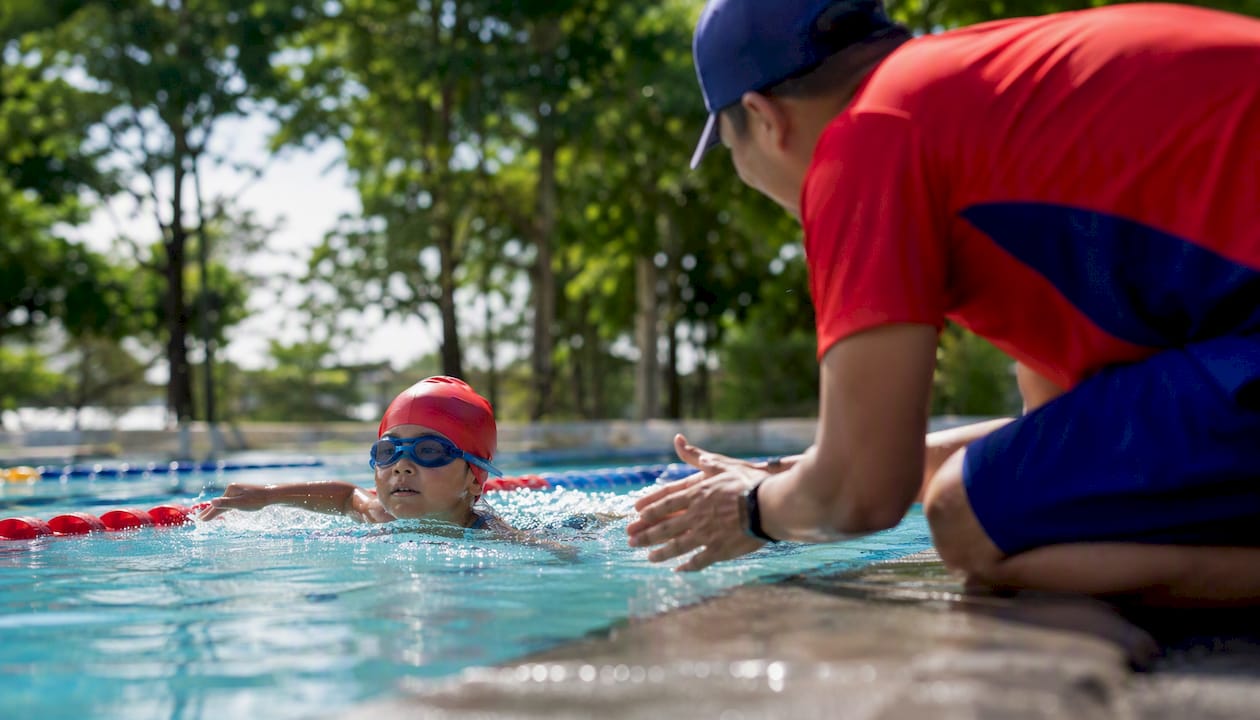
Swim–Float–Swim is a survival sequence that teaches a child to swim a short distance face-down, roll onto their back to breathe and rest, then roll forward and swim again toward safety. If your child is not yet enrolled in a certified survival-swim program, that is the single most useful thing you can do today.
Urgent safety layers every parent needs right now:
Active supervision: A designated adult watches the water at all times, no phone in hand.
Physical barriers: Pool fencing, door alarms, and self-latching gates reduce unsupervised access.
Life jackets in open water: U.S. Coast Guard-approved life jackets for any boat, lake, or ocean activity.
Enroll in a certified program: Look for instructors with CPR, First Aid, and a documented survival-swim curriculum.
Pro Tip: Don’t wait until summer. Many programs have waitlists, and starting lessons in the off-season means your child is protected before peak pool season begins.
Table of Contents
How does the swim–float–swim sequence actually work?
The sequence has three repeating phases, and understanding each one helps you recognize what your child is learning and why it matters.
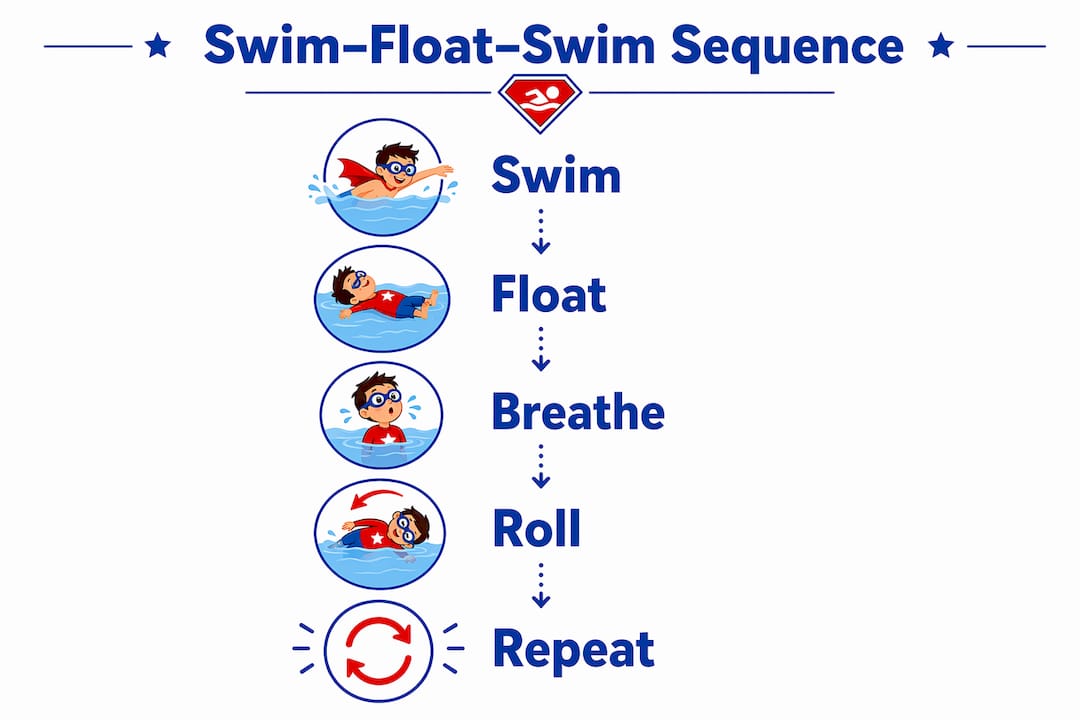
Phase 1: Swim. The child propels face-down through the water using a simple paddle-and-kick motion. Instructors focus on forward movement, not stroke perfection. The goal is covering a short distance toward the pool edge or a safe exit point.
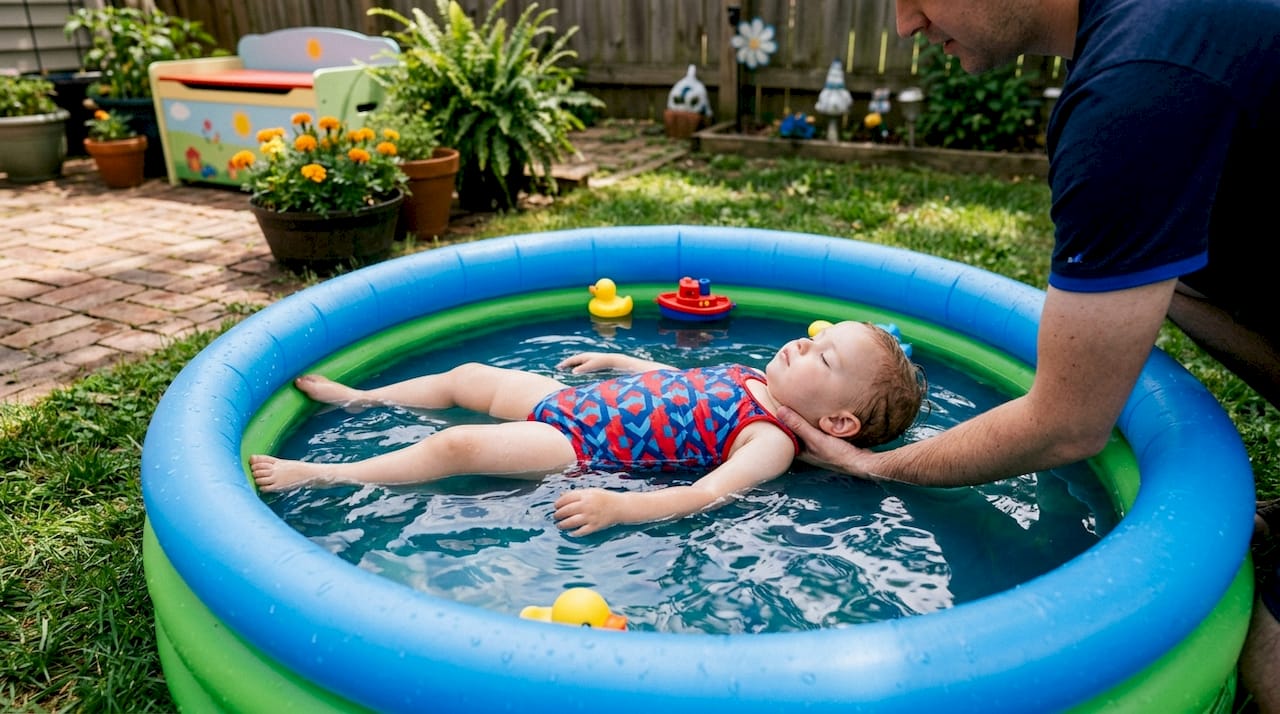
Phase 2: Float. When the child needs to breathe, they roll onto their back rather than lifting their head. Rolling to a back float keeps the hips high and lets the child breathe normally with almost no energy expenditure. Lifting the head instead drains the hips, burns energy fast, and is the exact opposite of what a tired child needs. The mechanics here are straightforward: tilt the head back, fill the lungs fully, and relax. A calm inhale adds real buoyancy. Tension sinks the body.
Phase 3: Swim again. Once breathing is controlled, the child rolls forward and continues toward safety. Repetition of this cycle builds muscle memory so the sequence becomes automatic, not a panicked improvisation.
Key mechanics that make it work:
Head tilt back opens the airway and shifts weight distribution toward a stable float.
Full lungs increase buoyancy; shallow, anxious breathing does the opposite.
Relaxed muscles reduce drag and help the body stay horizontal.
Small corrective kicks and arm positions are acceptable during the float. A stable, breathable position in moving water matters more than a textbook-perfect float.
The rollover transition is the neurological core of the whole method. It is also the part most likely to fail under stress. When a child panics mid-roll, they tend to revert to a vertical, high-energy posture that accelerates exhaustion. That is why skilled instructors spend a significant portion of early lessons isolating and calming this single movement, breaking it into micro-steps and pairing it with calming cues until it becomes automatic.
Pro Tip: Practice the rollover as a calm, everyday behavior, not a drill for emergencies. Children who learn it as a relaxed habit are far more likely to execute it correctly when it counts.
Is your child ready for swim–float–swim?
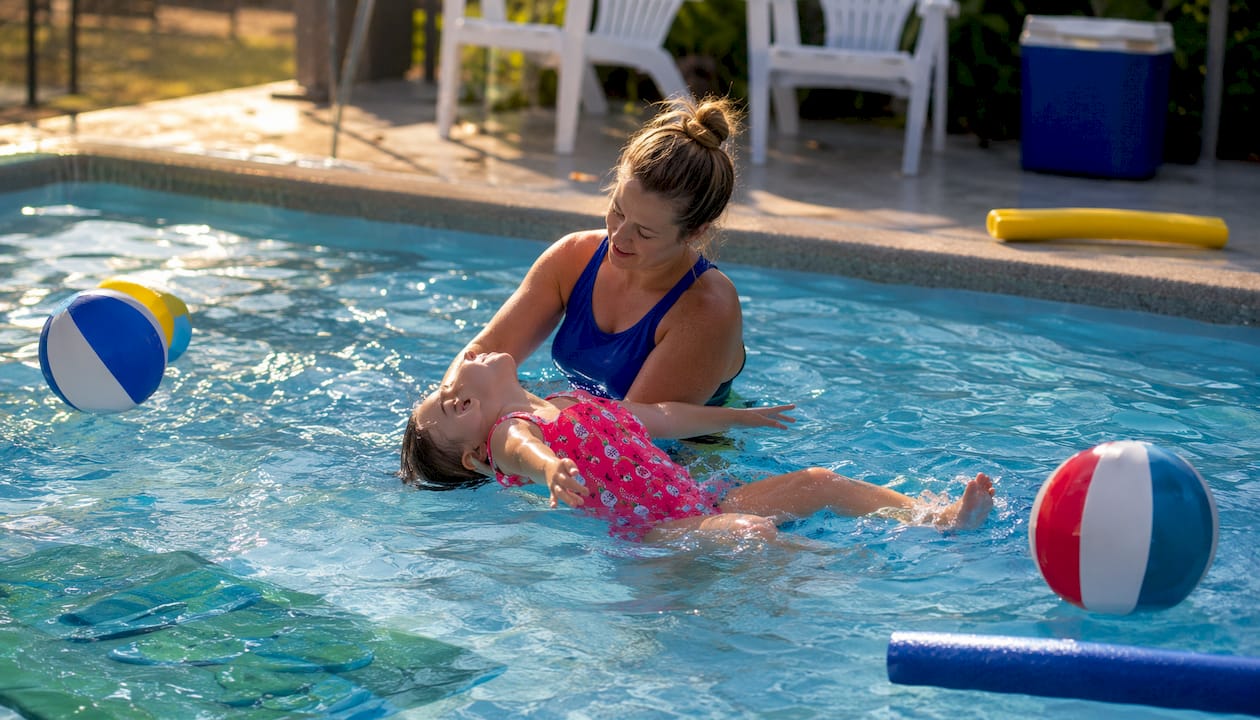
Age is a starting point, not the whole answer. Most survival-swim curricula follow a two-stage progression: rollback-to-float for infants (roughly 6–12 months), then the full Swim–Float–Swim sequence for walking toddlers (12 months and up) through preschool age.
Walking independently is one of the clearest readiness signals. It indicates enough trunk strength and motor coordination to support the rollover transition. Beyond that, look for:
Tolerance for water on the face and ears without prolonged distress.
Ability to follow simple one-step instructions (“kick your feet,” “look up”).
Basic trunk control when held horizontally in the water.
Emotional regulation sufficient to calm down within a short time after a surprise splash.
Some children are not ready yet, and that is normal. If your toddler is highly anxious in water, a few weeks of parent-and-child comfort classes often makes a bigger difference than jumping straight into survival-swim drills. The goal of those early sessions is water familiarity, not skill acquisition. Once a child can enter the water without sustained panic, formal survival-swim instruction tends to move quickly.
Individual variability is real. Two children the same age in the same program can reach the linked sequence weeks apart. Temperament, prior water exposure, and lesson frequency all play a role. A structured swim curriculum accounts for this by setting skill-based milestones rather than age-based deadlines.
What the research shows: Survival-swim curricula typically structure learning in two clear stages: rollback-to-float for infants, followed by the full Swim–Float–Swim sequence for toddlers and preschoolers. Readiness is skill-based, not birthday-based.
What do lessons look like, and how long does it take?
Most survival-swim programs offer four main formats. Each has a different pace and a different use case.
Format | Best for | Typical frequency |
One-on-one private lessons | Infants, anxious toddlers, fastest skill linking | Daily or 4–5x per week |
Parent-and-child sessions | Infants under 12 months, comfort-building | 2–3x per week |
Small group classes | Toddlers and preschoolers with some water comfort | 2–4x per week |
Fast-track / intensive | Families with limited time windows | Daily for 2–3 weeks |
Daily short sessions outperform weekly longer ones for young children. Motor memory consolidates during sleep, so frequent repetition across multiple days builds retention faster than one long weekly session. Private lessons accelerate this further because every minute is focused on that child’s specific sticking point.
What to expect on the timeline:
Most programs report visible sequence linking within 3–6 weeks when lessons are frequent and consistent.
Home practice between sessions shortens that window.
Children who attend only once a week typically take longer and may need more sessions overall to reach the same milestone.
The 3–6 week figure is a reasonable benchmark, not a guarantee. Frequency, home reinforcement, and the child’s starting comfort level all shift the timeline.
What credentials and safety standards should you require?
Credentials are not optional. Every instructor working with infants and toddlers should hold, at minimum:
Current CPR and First Aid certification (pediatric-specific is the standard for children’s programs).
Lifeguarding certification or equivalent water-rescue training.
Curriculum-specific training in a documented survival-swim program, not just general swim instruction.
Program-level safeguards matter just as much. One-on-one ratios for infants are non-negotiable. Heated, shallow pools reduce cold-water stress and help young children relax into the float. Documented safety protocols and a clear incident-reporting process tell you the program takes risk seriously.
Trust signals worth checking:
Parent testimonials that describe specific skill milestones, not just general satisfaction.
Transparent safety records and willingness to discuss emergency procedures.
Instructor continuity so your child builds trust with one teacher.
The RNLI’s float-first guidance reinforces why the float phase is so central: conserving energy and controlling breathing in an emergency is more effective than immediate active propulsion. A program that teaches this principle is aligned with international water-safety consensus.
For a deeper look at what separates a qualified instructor from a well-meaning one, instructor qualifications break down the specific training and safety protocols that matter most.
How can parents reinforce the skills at home safely?
Home practice works best when it is short, positive, and focused on one skill at a time. In a shallow backyard pool or bathtub, you can support the rollover and float without running a formal lesson.
Simple supervised drills:
Support your child horizontally and practice the head-tilt back float, holding them just under the shoulders and gradually reducing support.
Count aloud during the float so the child hears a calm voice and learns to stay still for a few seconds.
Practice rolling from face-down to back in your arms, narrating each step (“now we look at the sky”).
Common mistakes to avoid:
Encouraging head-lift breathing. It feels intuitive but teaches the wrong habit. Rolling to the back is the skill you want to reinforce.
Forcing repetitions when a child is panicked. A distressed child is not learning; they are surviving the session. End on a calm moment, not a struggle.
Over-relying on flotation devices. Pull buoys and similar training aids are technique tools, not safety equipment. A child who only swims with a flotation device has not learned to float independently.
Safety warning: Flotation devices, including arm floaties and swim rings, create a false sense of security. They are not substitutes for survival-swim skills or active adult supervision.
Anxiety is the primary barrier to a reliable float. Relaxation and breath control increase buoyancy more than any physical technique. If your child tenses up during the float, slow diaphragmatic breathing is the fix, not more repetitions.
Pro Tip: Try a “big breath, big float” cue. Ask your child to take the biggest breath they can before you lower them onto their back. The full lungs do most of the work, and the cue gives them something to focus on besides the water.
For safe setup and structure when practicing at home, backyard pool lesson prep covers the logistics in detail.
How do you choose a survival-swim program you can trust?
Start with a checklist before you make a single call.
Instructor credentials: CPR, First Aid, and curriculum-specific survival-swim training.
Student-to-instructor ratio: One-on-one for infants; no more than 3–4 children per instructor for toddler groups.
Curriculum documentation: Can they show you what rollback-to-float and Swim–Float–Swim progression looks like in writing?
Assessment before enrollment: A good program evaluates your child’s starting level before placing them in a class.
Progress reporting: Regular updates with specific skill milestones, not just “they did great today.”
Questions to ask on your first call:
What happens if my child has a water incident during a lesson?
Will my child have the same instructor each session?
What is your make-up policy for missed lessons?
How do you handle a child who is highly anxious or resistant?
Red flags to walk away from:
Vague answers about safety protocols or emergency procedures.
No documented curriculum or inability to explain the progression.
Large group sizes for infant or toddler classes.
Pressure to commit to a long package before any assessment.
Enrollment steps that signal a quality program:
A level-finder assessment or intake call before the first lesson.
A trial or intro lesson before full commitment.
Scheduled progress check-ins with parents.
Specific home-practice guidance between sessions.
Preparing your child for the first lesson also reduces first-day anxiety significantly, which helps instructors get to actual skill work faster.
Key Takeaways
The Swim–Float–Swim sequence is the most practical survival skill a young child can learn, and its effectiveness depends entirely on frequent, qualified instruction and consistent rollover practice.
Point | Details |
The sequence itself | Swim face-down, roll to back float to breathe, roll forward and swim again toward safety. |
Readiness is skill-based | Walking independently and tolerating water on the face are stronger readiness signals than age alone. |
Lesson frequency matters | Daily or near-daily sessions produce faster skill linking; most programs report visible progress within 3–6 weeks. |
Credentials are non-negotiable | Require CPR, First Aid, and curriculum-specific survival-swim training from every instructor. |
Superheroswimacademy | Offers private, group, and parent-and-child survival-swim lessons in Palm Beach and Broward counties, with CPR-certified instructors and a proprietary curriculum. |
Why survival swimming changes everything
Most drowning prevention conversations focus on barriers: fences, alarms, supervision. Those layers matter enormously. But they all assume an adult catches the situation in time. Swim–Float–Swim is the layer that works when no one does.
What strikes me about this method is how it reframes the child’s role. Instead of a passive victim waiting for rescue, a child who has internalized the rollover becomes an active participant in their own safety. That shift in agency is not just a feel-good idea. It is a practiced motor sequence that has been repeated enough times to run on autopilot under stress.
The programs that do this well are not the ones with the fanciest pools. They are the ones that spend the most time on the rollover transition, the ones that treat anxiety as the primary obstacle rather than a personality quirk to push through, and the ones that keep parents informed with specific milestones rather than vague reassurances. After teaching over 2,500 children at Superheroswimacademy, the pattern is consistent: the children who progress fastest are the ones whose parents understand what is being built and why each small step matters.
Superheroswimacademy: survival swim lessons in Palm Beach and Broward
Superheroswimacademy teaches the full Swim–Float–Swim sequence to infants, toddlers, and preschoolers through private in-home lessons, small group classes in heated pools, and parent-and-child sessions, all in Palm Beach and Broward counties. Every instructor holds CPR and First Aid certification and is trained in the academy’s own survival-swim curriculum. With over 2,500 children taught, the program’s track record is built on one-on-one attention, clear progress reporting, and a learning environment that makes children want to come back.
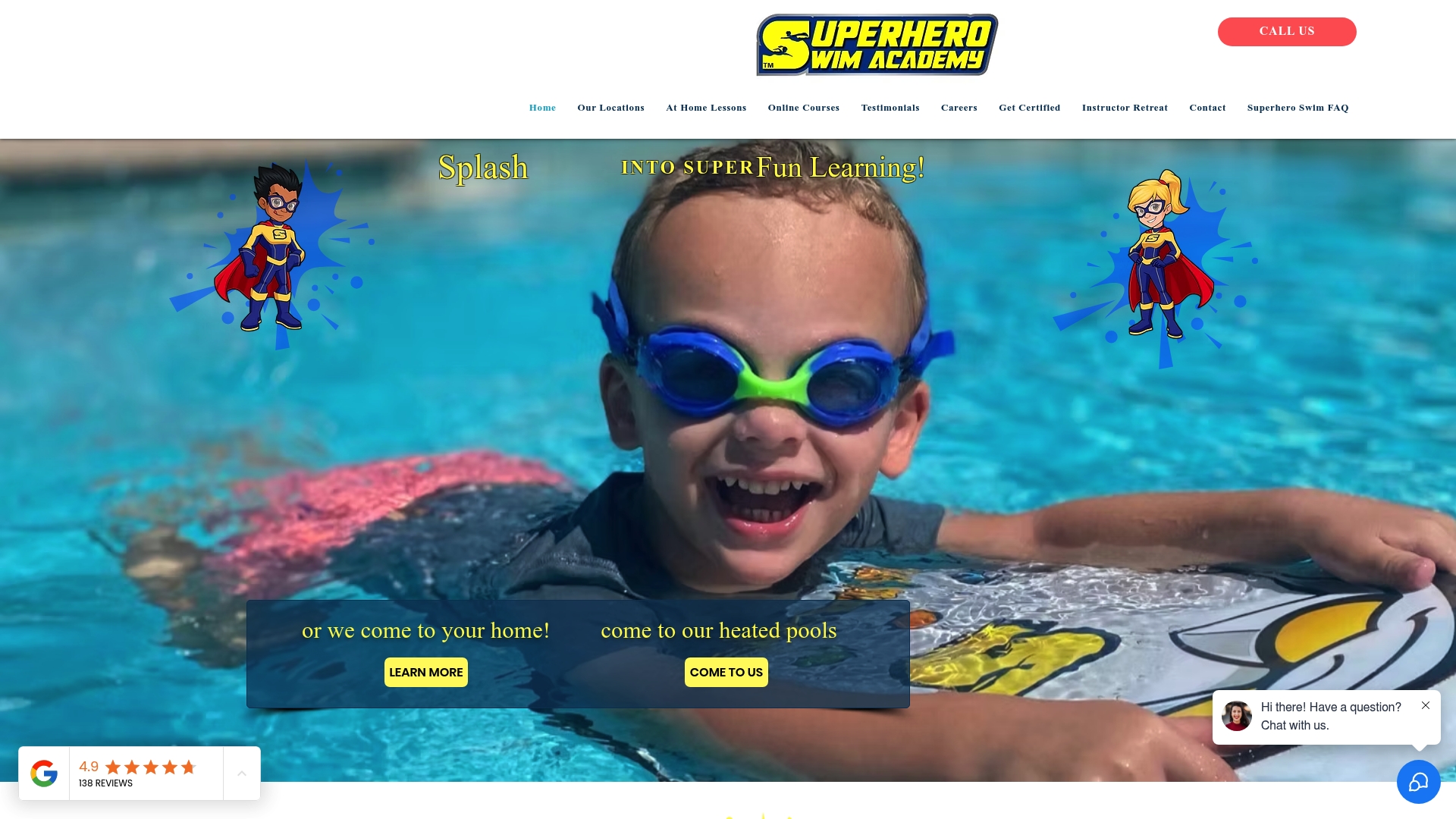
For families who prefer to supplement lessons at home, online courses teach parents how to guide their children through foundational water-safety skills between sessions. Fast-track and concierge options are also available for families with tighter schedules.
Book an assessment to find the right program for your child’s age and current skill level.
Useful sources
Swim–Float–Swim Method Explained, WaterWiseKids: Clear breakdown of the three-phase sequence and the rollover transition.
How to Float in Water, SwimOutlet.com: Technique guide covering buoyancy, head tilt, and relaxation mechanics.
Float to Live, RNLI: International water-safety authority on the float-first emergency response.
Swim–Float–Swim Sequence, PhD Swim School: Curriculum progression from rollback-to-float through full sequence.
Swim, Float, Swim (13+ Months), My Baby Swims: Program-level detail on toddler lesson structure and timelines.
National Drowning Prevention Alliance, ndpa.org: U.S. authority on drowning prevention statistics, advocacy, and water-safety standards.
United States Swim School Association, usswimschools.org: Industry standards and accreditation benchmarks for U.S. swim schools.
Superheroswimacademy, local booking and program details: Palm Beach and Broward county lessons, instructor credentials, and enrollment.
Recommended
Comments