
Swim Lesson Red Flags to Avoid: A Parent's Guide
- superheroswim
- Jul 14
- 8 min read

Swim lesson red flags are specific warning signs that indicate unsafe or ineffective instruction for young children. Recognizing these signs before enrolling your child, or early in a program, is one of the most direct ways to protect both their physical safety and their confidence in the water. The industry standard for young beginners is a maximum 1:4 instructor-to-student ratio, and swim lessons reduce drowning risk but do not replace active adult supervision. Knowing what to look for puts you in control of the decision.
1. Swim lesson red flags to avoid: oversized class sizes
The single most common warning sign in swim schools is a class that is too large. A safe ratio for young beginners is no more than 1 instructor to 4 students. That ratio exists because young children need constant physical support, verbal cues, and individual correction.
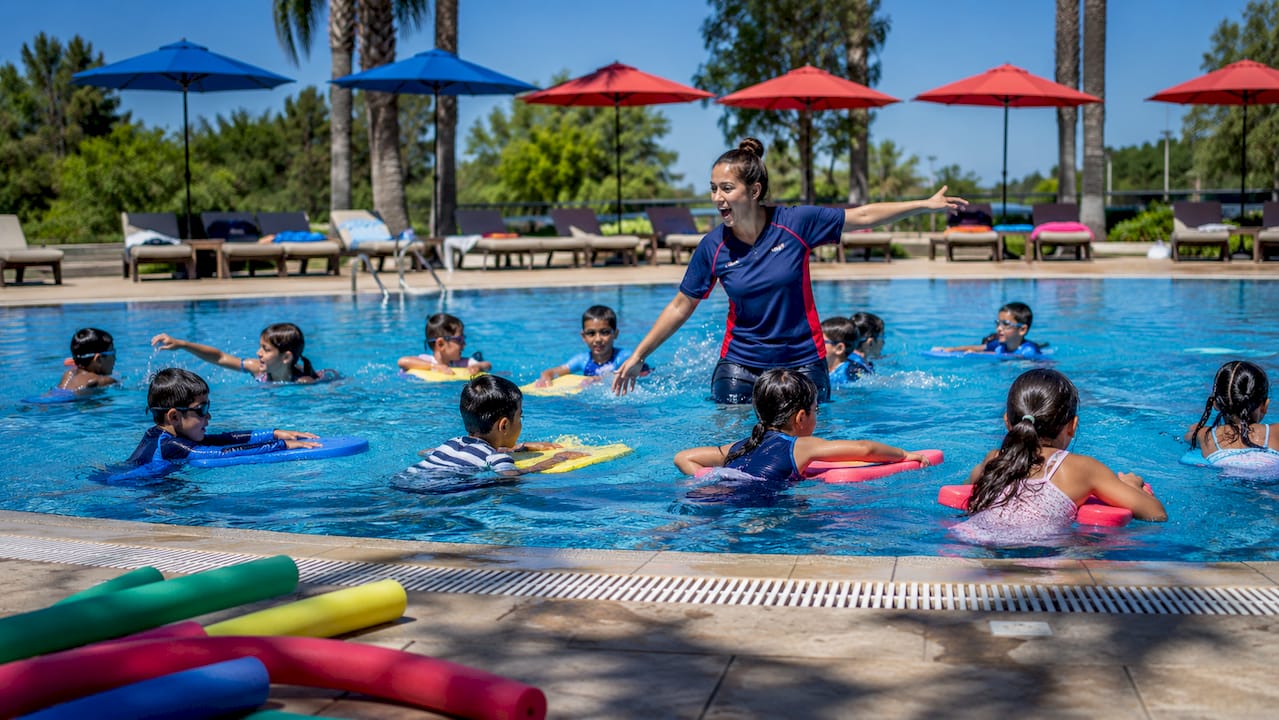
When a class exceeds 6 to 8 children per instructor, supervision gaps become dangerous. An instructor managing 8 toddlers cannot physically reach a child who slips below the surface in time. For anxious children, experts recommend an even tighter ratio of 1:2 or 1:3 to build trust without overwhelming the child.
Large classes also stall skill development. A child who spends most of the lesson waiting on the pool steps rather than in the water with the instructor is not progressing. Ask the school directly what their maximum class size is before you sign anything.
Classes with more than 4 children per instructor for beginners under age 6
No clear explanation of how the instructor manages multiple children at once
Children left floating or waiting unsupervised while the instructor works with others
No differentiation between skill levels within the same group
Pro Tip: Visit the facility during an active class before enrolling. Count the children yourself and watch how the instructor divides attention.
2. Persistent distress that does not improve
Some initial fear around water is completely normal. The red flag is distress that does not improve after 3 to 4 lessons. Consistent crying or refusal to return to the pool after four or more weeks signals that the teaching method is not working for your child.
Displacement behaviors tell the same story. Breath-holding, clinging to the instructor, or freezing at the pool edge after multiple sessions indicate a child is being pushed too fast. Quality programs respond to these signs by slowing down, adjusting technique, and rebuilding comfort before adding new skills.
A good instructor does not interpret fear as stubbornness. They treat it as information. If your child’s instructor dismisses ongoing distress or tells you to “just wait it out” without changing their approach, that is a clear sign the program is not meeting your child’s needs.
Watch for these specific signs:
Crying that starts before you even reach the pool, not just at entry
Refusal to participate in any activity, even games or songs
Physical symptoms like stomach aches or sleep disruption on lesson days
No visible change in comfort level after four or more sessions
Pro Tip: Keep a simple log of your child’s mood before and after each lesson. A pattern of distress that does not shift after a month is your signal to reassess.
3. Bad swim instructor traits and unsafe teaching methods
A qualified swim instructor holds current CPR and First Aid certification, recognized credentials, liability insurance, and verifiable references. Expired credentials or refusal to show documentation is a major red flag. This is not a paperwork formality. It is the baseline for anyone responsible for your child’s safety in the water.
Forced submersion is one of the most harmful teaching methods still used in some programs. Pushing a child’s head underwater against their will does not build water confidence. It builds fear and erodes trust. Any instructor who uses fear as motivation, whether through threats, shaming, or physical force, should be avoided entirely.
Inattentiveness during a lesson is equally serious. An instructor who checks their phone, turns their back on the pool, or holds extended conversations with other adults while children are in the water is creating a preventable hazard. Safety is most critical at pool entries, exits, and transitions, and those moments require full attention.
“Skipping a warm-up period that builds rapport with the child before instruction indicates a rigid teaching style that neglects emotional safety. Good instructors adjust pace and method to individual fear levels before any physical skill work begins.”
High instructor turnover is another warning sign parents often overlook. Frequent instructor changes stall progress and increase anxiety in children who have just begun to trust someone. A program with stable coaching staff over two or more years signals organizational health and genuine investment in quality.
Watch for these traits in any instructor you observe:
No warm-up or rapport-building before entering the water
Phone use or divided attention during active lessons
Forced submersion or physical pressure to perform skills
Inability to explain what a specific drill or game is teaching your child
Resistance to answering your questions about their certification
4. Warning signs around program policies and financial pressure
Ethical swim schools do not pressure parents into large upfront commitments before a child has taken a single lesson. Requiring $2,000 to $4,000 in annual packages without offering a trial lesson is a red flag. It prioritizes revenue over fit, and it leaves you with no recourse if the program turns out to be wrong for your child.
High-pressure sales tactics follow a recognizable pattern. A school that uses limited-time offers, countdown timers, or urgency language to push you into signing a 6 to 12 month contract is not confident in its own product. A program that is genuinely good does not need to trap you into it.
Transparency in billing matters too. Cash-only payments, vague invoices, or refusal to provide a written refund policy are signs of a school that does not operate professionally. You should always be able to get a clear answer about what you are paying for and what happens if you need to stop.
Red flags to watch for in school policies:
No trial lesson option before committing to a package
Upfront payment requirements of six months or more
No written refund or cancellation policy
Cash-only billing with no receipts
Pressure to decide on the spot during a sales call or tour
5. Resistance to parental observation
Parental observation during lessons is a vital safety benchmark, especially for children under six. A school that discourages or refuses parent viewing has removed your ability to verify that instruction is safe and age-appropriate. That removal should concern you immediately.
Observation does not mean interference. It means you can see what is happening and raise concerns if something looks wrong. Programs that welcome parental presence are confident in their methods. Programs that hide lessons behind closed doors or frosted glass are not.
The importance of parental visibility extends beyond safety checks. Children often perform differently when a parent is present, and a skilled instructor uses that dynamic constructively rather than treating it as a disruption.
6. Games without skill objectives
Play is a legitimate teaching tool in children’s swim instruction. The red flag is play that has no clear learning purpose. Ask the instructor what specific skill a game teaches. If they cannot give you a direct answer, the activity is entertainment, not instruction.
Instructors who spend more time on the pool deck than in the water with their students are another concern. Physical proximity matters for young children. An instructor calling instructions from the side of the pool while children splash independently is not providing the hands-on guidance that builds real skills.
A quality lesson has a visible structure: a warm-up, a skill focus, practice with feedback, and a cool-down. If every lesson looks identical regardless of what the children have mastered, there is no progression plan in place.
7. How to evaluate overall swim lesson quality
Positive markers are just as useful as red flags when you are choosing a program. The table below outlines what good looks like versus what raises concern.
Quality marker | What to look for |
Instructor engagement | Builds rapport before entering the water; adjusts pace to the child |
Class size | Maximum 4 students per instructor for beginners |
Parental access | Parents can observe lessons at any time |
Skill progression | Each lesson has a stated goal; children advance through clear milestones |
Distress response | Instructor slows down and adjusts when a child shows fear |
Billing transparency | Written refund policy; trial lesson available before commitment |
Water safety education extends beyond the pool. Understanding how comprehensive safety education reduces risk across all water environments reinforces why quality instruction matters at every level.
Pro Tip: Ask the school for a written progression plan before enrolling. A program that cannot describe what your child will learn in the first eight lessons has not thought carefully about instruction.
Key Takeaways
The most reliable way to protect your child in a swim program is to identify specific red flags before enrollment, not after a problem occurs.
Point | Details |
Class size is a safety issue | Ratios above 1:4 for young beginners reduce supervision and increase risk. |
Persistent distress is a signal | Ongoing crying or refusal after 3–4 lessons means the method is not working. |
Credentials are non-negotiable | Instructors must hold current CPR, First Aid, and recognized swim certifications. |
Financial pressure is a red flag | Ethical schools offer trial lessons before asking for long-term commitments. |
Parental observation is a right | Any school that blocks parent viewing removes your ability to verify safety. |
What I have learned from watching hundreds of swim lessons
The red flag parents miss most often is not the dramatic one. It is not the instructor yelling or the class of 12 toddlers. It is the quiet, consistent pattern of a child who never quite relaxes, week after week, while the instructor keeps moving through the curriculum anyway.
I have seen parents stay in programs for months past the point where the signs were clear, because they did not want to disrupt their child’s routine or waste the money already spent. Switching programs is not a failure. It is the right call when the evidence is in front of you.
Trust your instincts about what you observe. If a lesson feels chaotic, if the instructor seems distracted, or if your child’s fear is not shifting, those feelings are data. You do not need a formal complaint process to act on them.
The qualifications of a swim instructor are verifiable before you ever put your child in the water. Ask for documentation. A good program hands it over without hesitation. A program that hedges or deflects has told you what you need to know.
Swimming lessons are one layer of protection, not a guarantee. Active, non-distracted supervision by adults remains essential regardless of how skilled your child becomes. The goal of a quality program is to build real skills and real confidence, not just to keep children busy in the water for 30 minutes.
— SUPERHERO
Superheroswimacademy: swim lessons built around safety
Every concern raised in this article reflects a standard that Superheroswimacademy holds itself to. Each instructor at Superheroswimacademy carries current CPR and First Aid certification and is trained in the academy’s own survival swim curriculum. Class sizes stay small so every child receives direct, attentive instruction.
Parents can observe lessons and receive regular progress updates throughout the program. Trial lessons are available before any long-term commitment, and billing is fully transparent. Superheroswimacademy has taught over 2,500 children in Palm Beach and Broward counties, with parents consistently reporting faster progress and greater water confidence. If you are ready to find a program that matches what you have read here, enroll at Superheroswimacademy and see the difference a safety-first approach makes.
FAQ
What is a safe instructor-to-student ratio for young children?
The recommended maximum is 1 instructor to 4 students for young beginners. Ratios above 1:6 to 1:8 create supervision gaps that increase drowning risk.
How long should I wait before switching swim programs?
If your child shows persistent distress, such as crying, refusal to enter the water, or no improvement in comfort after 3 to 4 lessons, reassess the program immediately. Ongoing distress after four or more weeks signals the teaching method is not appropriate for your child.
Can I watch my child’s swim lesson?
Yes, and you should be able to. Parental observation is a recognized safety benchmark, especially for children under six. A school that refuses or discourages observation is a red flag.
What credentials should a swim instructor have?
A professional swim instructor must hold current CPR and First Aid certification, recognized swim teaching credentials, liability insurance, and verifiable references. Expired or undocumented credentials are a major warning sign.
Is it normal for schools to require large upfront payments?
Ethical swim schools do not require 6 to 12 month upfront payments before a child has completed a trial lesson. Pressure to commit to packages costing thousands of dollars without a trial is a clear red flag in swim school policies.
Recommended
Comments