
The Role of Parent in Swim Lessons: Your 2026 Guide
- superheroswim
- Jul 19
- 8 min read

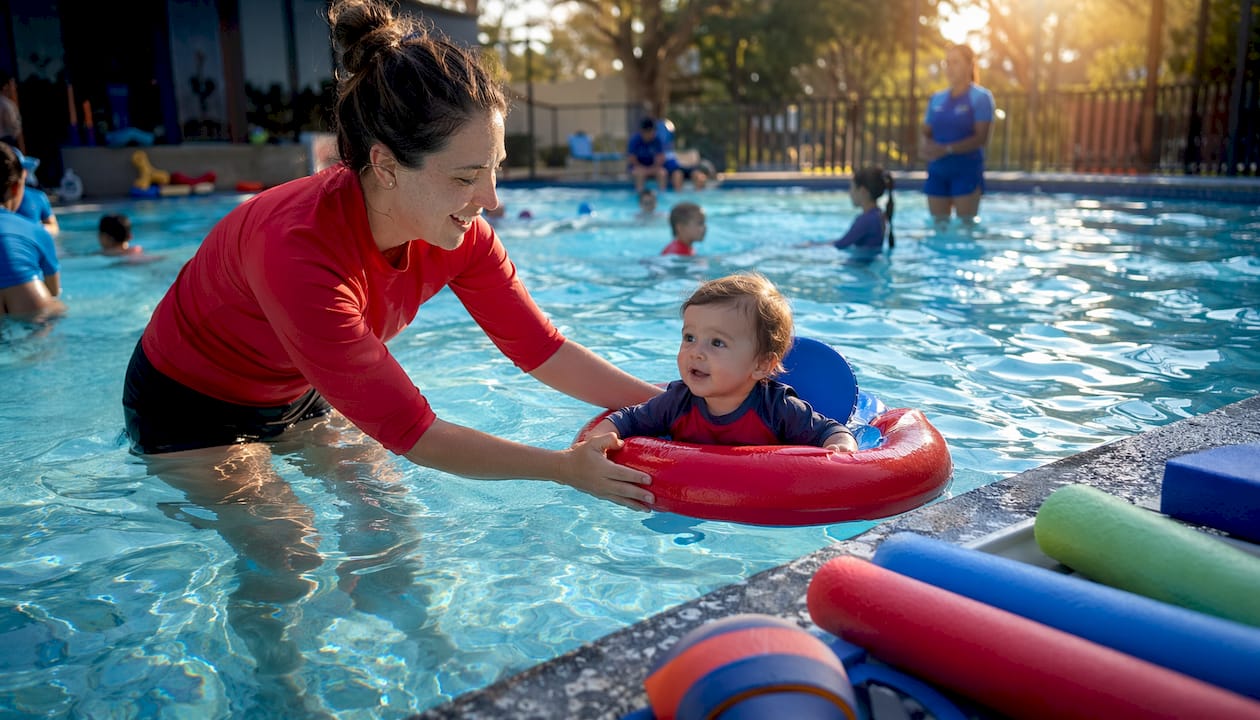
The role of parent in swim lessons is defined as the child’s primary safety anchor, emotional supporter, and learning partner, working alongside certified instructors to build water confidence and aquatic skills. Parent involvement in swimming directly shapes how quickly and how willingly a child learns. Research published in 2026 confirms that parental social support combined with quality teaching methods explains over 77% of variance in young children’s swimming motivation. That number tells you something critical: what you do as a parent matters almost as much as what happens in the water. Superheroswimacademy builds its entire program around this truth, actively engaging parents through clear goals and regular progress updates.
What is the role of parent in swim lessons?
Parents are not passive spectators in swim education. They are the emotional foundation that makes learning possible. A child who feels safe and supported by a parent will take more risks in the water, recover faster from setbacks, and stay engaged longer during lessons.
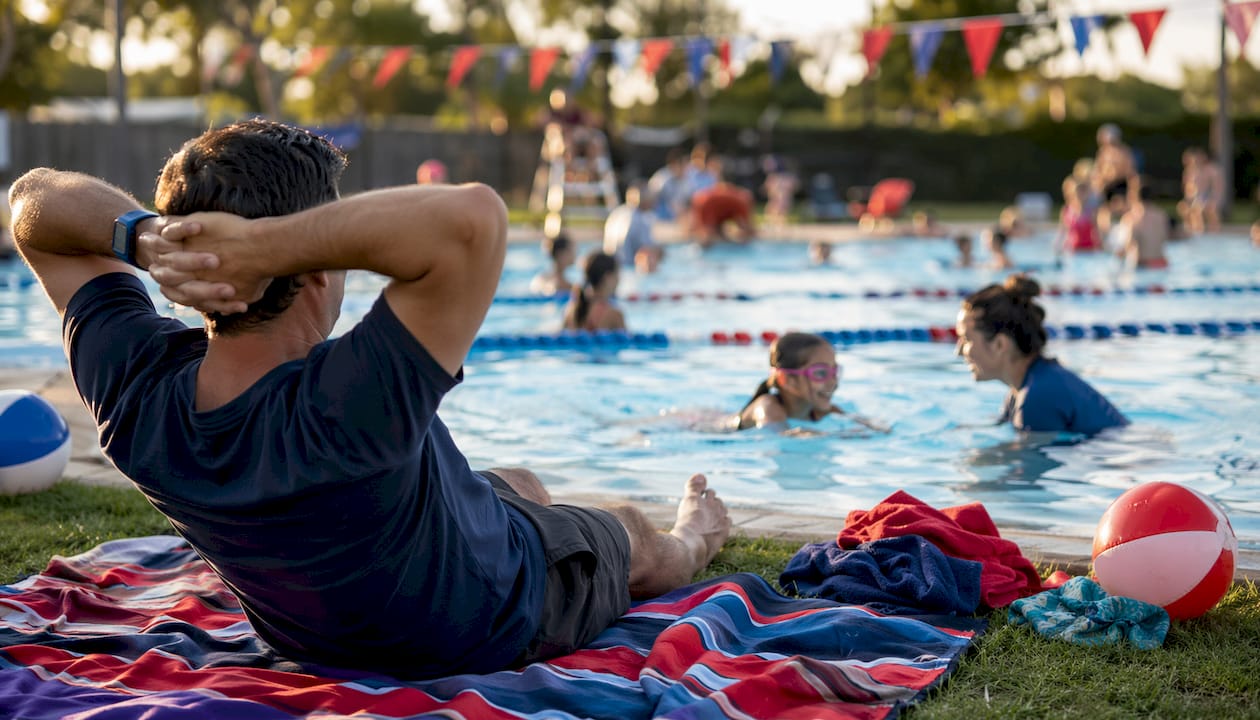
The importance of parents in swim classes goes beyond showing up. Parent participation acts as a safety anchor and confidence model, especially in infant and toddler lessons. When a parent stays calm at the pool edge, the child reads that calm as a signal that the water is safe. That emotional regulation is something no instructor can fully replicate.
Swim lesson success depends on a clear division of roles. The instructor handles technique, progression, and safety protocols. The parent handles emotional steadiness, logistical consistency, and home reinforcement. When both sides respect that boundary, children thrive.
How does parental involvement boost a child’s swim motivation?
A 2026 study found that parental social support carries a statistically significant effect on swimming motivation (β = 0.212, p = 0.015). That means your encouragement is not just feel-good support. It is a measurable driver of whether your child wants to get in the water at all.
Children who receive consistent verbal encouragement from parents show greater persistence when a skill feels hard. They are more likely to try again after a failed float or a scary submersion. That persistence is what separates children who plateau from children who progress steadily through each skill level.
Skill reinforcement at home also compounds lesson results. When you narrate a bath-time kick or praise your child for blowing bubbles in the tub, you are extending the lesson environment into daily life. Tracking consistent attendance and engagement is one of the most reliable predictors of skill progression, and parents control that variable entirely.
Pro Tip: After each lesson, ask your child one specific question about what they practiced. “Did you kick with straight legs today?” reinforces recall and shows your child that you value the work, not just the result.
How should parental roles change as children grow?
Supporting kids in swim training looks very different at age one versus age seven. The most effective parents adapt their involvement to match their child’s developmental stage, not their own comfort level.
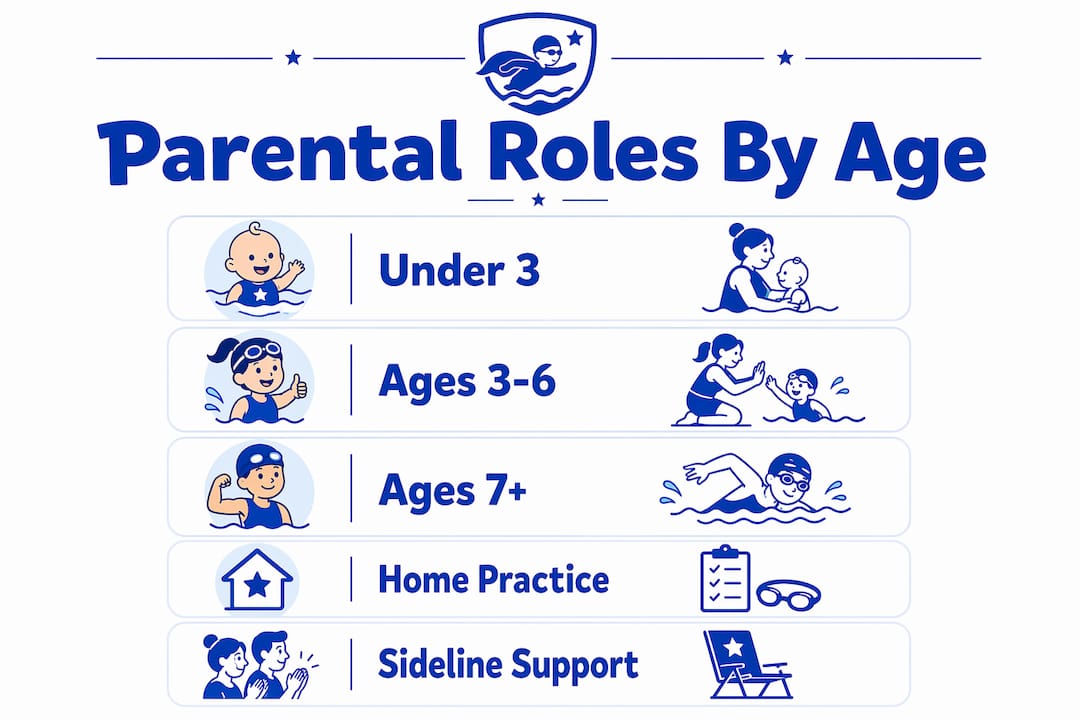
Under 3 years: direct water support
The American Academy of Pediatrics recommends touch supervision within arm’s reach for all children under three during water activities. At this stage, the parent is not just watching. The parent is the lesson. Infant swim programs primarily teach parents how to safely hold, support, and introduce their child to water rather than teaching stroke technique directly to the infant.
One of the most practical skills parents learn at this stage is the verbal cue before submersion. Consistent cues like “Ready, set, go” condition the infant’s breath-holding reflex over time. The parent delivers this cue every single time, building a reliable signal the child learns to trust.
Ages 3 to 6: stepping back to build independence
Children in this age range often progress faster when parents are out of their direct line of sight during lessons. That finding surprises most parents, but the logic is straightforward. When a child can see you, they have an escape route. They look to you for permission to disengage. When you step back, they redirect that attention to the instructor.
This does not mean abandoning your child. It means trusting the process. You are still present, just not visible. That small shift can produce a noticeable jump in focus and cooperation within just a few sessions.
Ages 7 and older: quiet sideline support
Older children benefit from knowing you are there without feeling watched or evaluated. Sit quietly, avoid coaching gestures, and save your feedback for the car ride home. Your job at this stage is to prepare your child emotionally before the lesson and celebrate effort afterward.
Under 3: Stay in the water, follow instructor cues, deliver consistent verbal signals before submersion.
Ages 3–6: Position yourself out of your child’s sightline to reduce distraction and build instructor trust.
Ages 7+: Observe from the sideline without coaching, and debrief positively after the session.
Pro Tip: If your child keeps looking at you during lessons, try moving to a spot where they cannot easily find your face. Most instructors will tell you this single change produces faster progress than any technique adjustment.
What should parents avoid doing during swim lessons?
The most common mistake parents make is acting as a second coach from poolside. Research shows this creates conflicting instructions that raise a child’s anxiety and undermine the instructor’s authority. A child caught between two sets of directions shuts down rather than tries harder.
Effective parenting for swim safety means knowing when to stay quiet. Your body language communicates as loudly as your words. Crossed arms, visible worry, or wincing when your child goes underwater all transmit stress directly to your child. Staying relaxed and smiling, even when a skill looks shaky, tells your child the situation is under control.
Communication with instructors matters, but timing is everything. Post-lesson conversations preserve the instructor’s authority and keep the lesson flowing without interruption. Waving from the bleachers to get an instructor’s attention mid-lesson breaks concentration for the entire group.
Here is what to avoid and what to do instead:
Avoid: Shouting technique corrections from the pool deck. Do instead: Write down your observation and share it with the instructor after class.
Avoid: Comparing your child’s progress to other children in the lesson. Do instead: Track your child’s individual milestones and celebrate each one specifically.
Avoid: Bribing your child to get in the water. Do instead: Use positive framing. “You get to practice floating today” lands differently than “You have to go to swim class.”
Avoid: Skipping lessons when schedules get busy. Do instead: Treat swim lessons as a non-negotiable appointment, the same as a doctor’s visit.
Avoid: Reviewing swim lesson red flags only after a problem appears. Do instead: Know what good instruction looks like before you enroll.
How can parents support swim education beyond the pool?
The most impactful parent involvement often happens outside the pool entirely. Home practice, positive attitudes, and consistent reinforcement of instructor guidance all correlate with faster progress and stronger motivation.
Bath time is the most underused training tool available to parents. Encouraging your child to blow bubbles, kick their legs, or float their ears underwater during a bath extends the lesson by several hours each week without any additional cost or scheduling.
Talking about water positively between lessons also shapes your child’s relationship with swimming long term. A calm parental presence during swim lessons matters more for a child’s long-term water relationship than immediate skill mastery. That principle applies at home too. How you talk about the pool, the instructor, and the upcoming lesson sets the emotional tone before your child ever touches the water.
Celebrating small milestones keeps motivation high. When your child floats independently for the first time, that deserves the same recognition as a school achievement. Effort-based praise, “You kept trying even when it felt hard,” builds the resilience that carries children through the more challenging skills ahead.
Practice bubble blowing and kicking during bath time at least three times per week.
Talk about upcoming lessons with excitement, not obligation.
Celebrate specific achievements, not just overall progress.
Choose a program that builds independence in kids rather than one that keeps children dependent on adult presence.
Maintain consistent attendance. Gaps in lessons reset progress faster than most parents expect.
Key Takeaways
The parent’s role in swim lessons is the single most controllable variable in a child’s aquatic progress, covering emotional support, safety presence, and consistent home reinforcement across every age group.
Point | Details |
Parental support drives motivation | Research shows parental involvement explains a significant share of variance in children’s swimming motivation. |
Role shifts with age | Parents move from in-water support for infants to quiet sideline presence for children ages 7 and older. |
Avoid poolside coaching | Acting as a second coach raises child anxiety and undermines instructor authority. |
Home practice multiplies results | Bath-time drills and positive water talk extend the lesson environment into daily life. |
Post-lesson communication works best | Share concerns with instructors after class, not during, to protect lesson flow and instructor authority. |
What I have learned from watching thousands of swim families
After working with over 2,500 children at Superheroswimacademy, I have noticed a pattern that no research paper fully captures. The parents who produce the most confident swimmers are not the ones who know the most about swimming. They are the ones who know the most about staying out of the way at the right moment.
That sounds counterintuitive. Parents invest real time, money, and emotion into swim lessons. Stepping back feels like doing less. But what I have seen repeatedly is that a parent who sits quietly and smiles produces a child who tries harder than a parent who leans over the lane rope with corrections.
The concept worth naming here is the difference between a mastery climate and an outcome climate. A mastery climate focuses on effort, improvement, and personal bests. An outcome climate focuses on performance, comparison, and results. Children in a mastery climate recover faster from failures and stay in the sport longer. Parents create that climate, not instructors.
The other thing I would tell every swim parent is this: your anxiety is contagious, and so is your calm. Children are reading your face constantly, even when you think they are focused on the instructor. The most powerful thing you can do during a lesson is look like you believe your child is going to be fine. Because they will be.
— SUPERHERO
Superheroswimacademy’s approach to parent and child swim success
Superheroswimacademy was built on the understanding that parents and instructors succeed together, not separately. Every instructor at the academy completes rigorous training in CPR, First Aid, and a proven survival swim curriculum designed specifically for infants, toddlers, and young children in Palm Beach and Broward counties.
Parents receive clear goals and regular progress updates so they always know where their child stands and what to reinforce at home. The academy’s online courses give parents practical tools for home practice, water safety conversations, and building their child’s confidence between lessons. With more than 2,500 children taught and consistent parent-reported improvements in a short time, Superheroswimacademy offers a program where your involvement is guided, valued, and built into every step of the process.
FAQ
What is the parent’s role during infant swim lessons?
During infant swim lessons, the parent is the primary handler. The instructor teaches the parent how to hold, support, and introduce the infant to water safely, including delivering consistent verbal cues before submersion to condition the breath-holding reflex.
Should parents watch their child’s swim lessons?
For children ages 3–6, staying out of the child’s sightline often produces faster progress by reducing distraction. Children ages 7 and older benefit from a quiet parental presence on the sideline without active coaching or visible anxiety.
How can parents help with swim lessons at home?
Home practice during bath time, including bubble blowing, kicking, and ear submersion, extends lesson time without extra cost. Positive water talk and consistent attendance are the two most impactful things parents control outside the pool.
Why should parents avoid coaching during swim lessons?
Parents who coach from poolside create conflicting instructions that raise a child’s stress and undermine the instructor’s authority. Research confirms that clear role boundaries lower anxiety and increase a child’s enjoyment of swimming.
How often should parents communicate with swim instructors?
Parents should share concerns and observations after lessons, not during them. Post-lesson communication preserves the instructor’s authority, keeps the lesson flowing, and gives the instructor full context to respond thoughtfully.
Recommended
Comments