
Why Swim Lesson Reminders Help Families Stay on Track
- superheroswim
- 1 day ago
- 8 min read

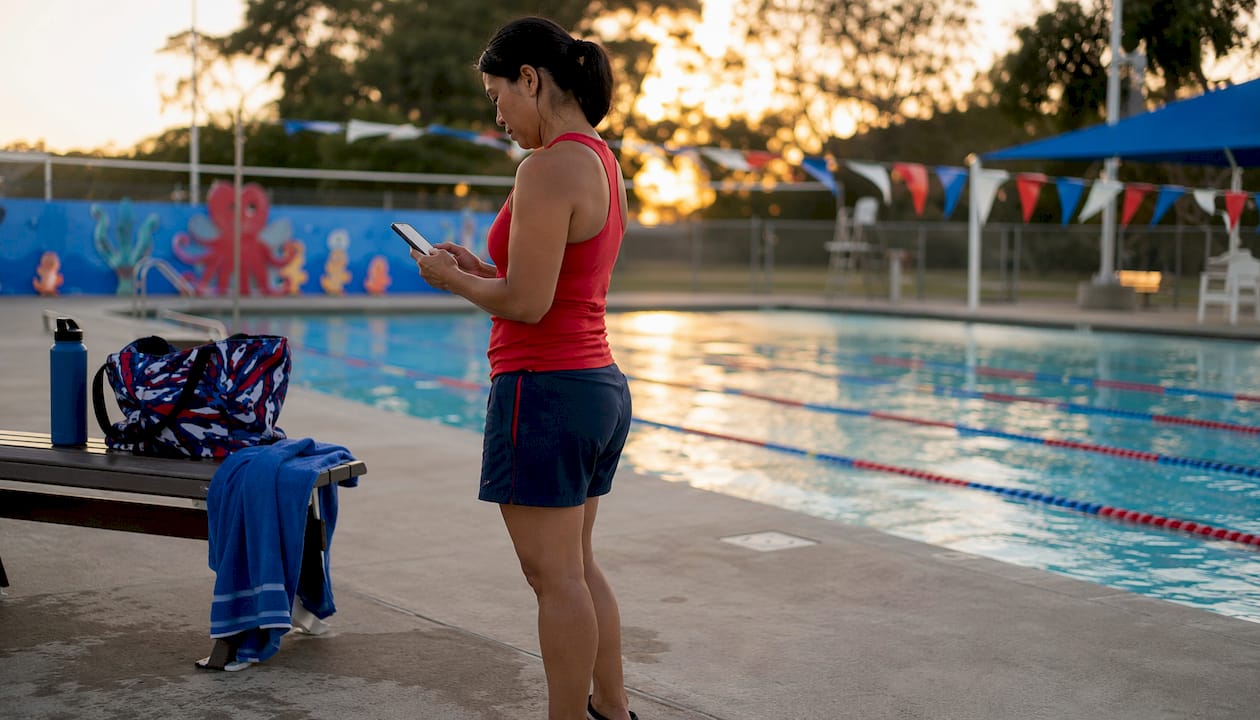
Swim lesson reminders help families by cutting no-shows, keeping children prepared with the right gear, and protecting the skill-building sequence that turns nervous beginners into confident, safer swimmers. Superheroswimacademy, which has taught many children in Palm Beach and Broward counties, builds automated reminders and progress notes directly into its enrollment process because the data is clear: families who stay informed stay enrolled.
TL;DR
Fewer missed lessons mean children progress through safety milestones faster and more safely.
Reschedule links and make-up prompts in reminders remove the friction causing permanent dropouts.
Progress notes tied to reminders keep parents confident and drive re-enrollment term after term.
Table of Contents
Why consistent attendance is the foundation of water safety
Missing even one or two lessons disrupts more than a weekly routine. Swim instruction is milestone-based: floating leads to breath control, which leads to propulsion, which leads to independent survival skills. Skip a session and a child may return to find the group has moved on, or worse, arrive unprepared for a skill that builds directly on the last one.
The American Red Cross structures its learn-to-swim progressions exactly this way, with each level requiring demonstrated competency before advancing. A child who misses the session where breath control is introduced doesn’t just fall behind on technique — they may lack the safety foundation the next lesson assumes. Consistent attendance is what keeps that chain intact.
Stat to know: Automated reminders improve children’s learning outcomes by keeping attendance consistent and by including gear checklists that prevent missed participation entirely.
How reminders actually change behavior and outcomes
The benefits of swim lesson reminders work through five specific mechanisms, not just memory-jogging. They reduce forgetfulness, prompt on-time arrival, trigger gear preparation, simplify rescheduling, and nudge re-enrollment before families drift away.
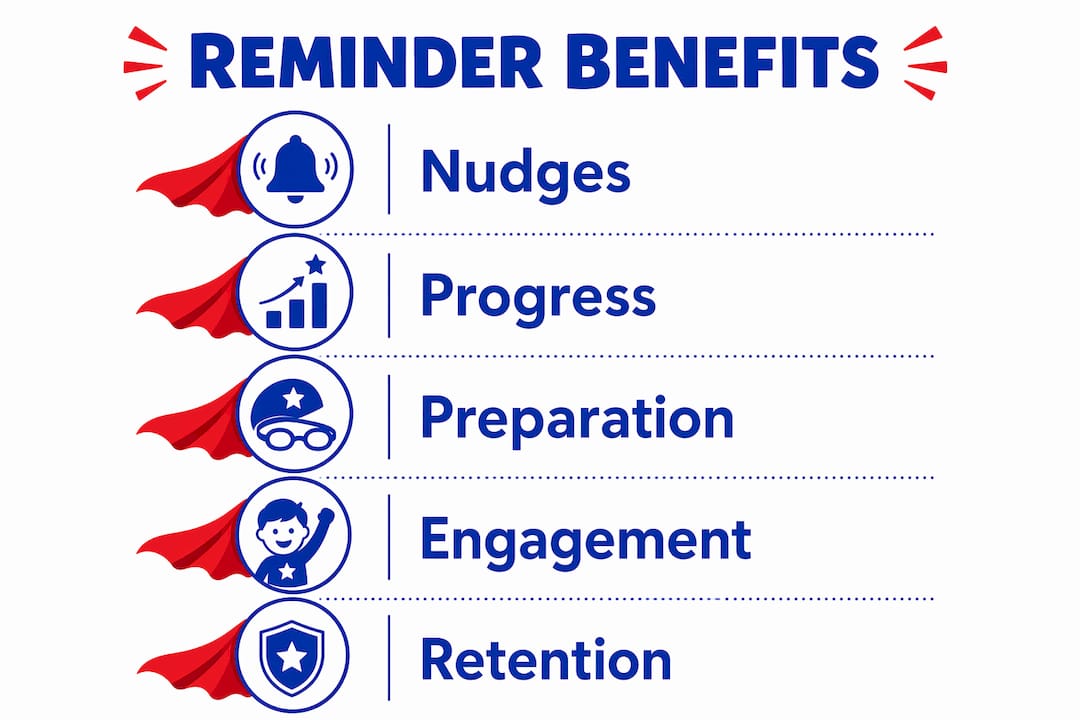
Behavioral nudges are the most obvious: a text the evening before puts the lesson back on a parent’s radar when dinner, homework, and bedtime have crowded it out. Operational automation matters just as much. Automated messaging systems prevent schools from splitting communication across texts, emails, and spreadsheets, which reduces admin time and keeps every message consistent. Make-up booking links sent before a credit expires increase rebooking rates without a single phone call from staff.
Progress transparency is the mechanism parents underestimate most. When a reminder includes a one-line skill note (“Maya practiced her back float today”), it turns a scheduling ping into a trust-building moment. That kind of update reassures parents during plateaus and keeps them committed through the harder stretches of learning.
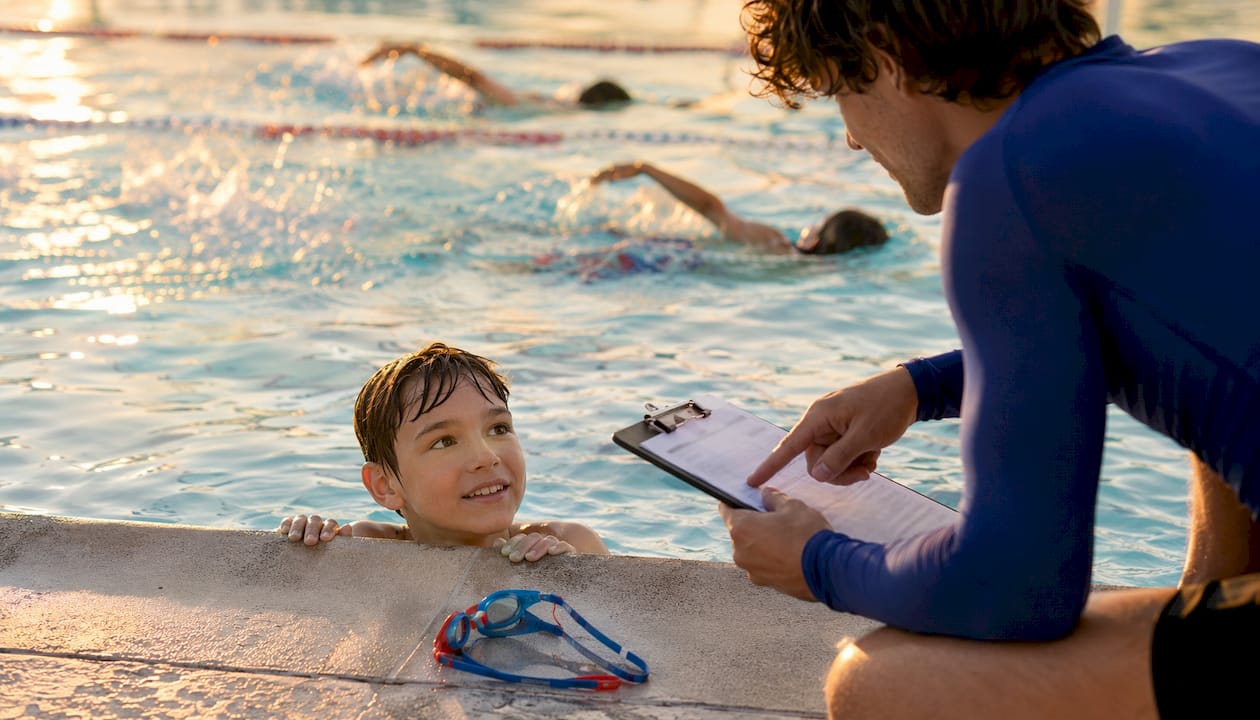
Pro Tip: Include a 5–10 minute arrival buffer and a gear checklist in every reminder. A child who arrives without goggles or a swimsuit cannot participate — and that wastes paid pool time for the family and reduces the instructor’s teaching window for the whole group.
What every effective swim reminder should include
Concise reminders built around a handful of standardized fields outperform long, unstructured messages every time. Here’s what to include:
Date, time, and location with the specific entrance or pool number
Instructor name and lane (when applicable) so parents know who to look for
Gear checklist: swimsuit, towel, goggles, swim cap, and any required flotation device
Arrival buffer: “Please arrive 5–10 minutes early”
Reschedule or cancel link so parents can act immediately without calling
Make-up policy reminder (one line: “Credits expire in 30 days — book your make-up here”)
Brief progress note tied to the student’s current skill level (“Working on freestyle arm stroke this week”)
The student’s name, current level, and instructor should be auto-populated from enrollment data. A reminder that says “Hi Sarah, Jake’s Level 2 class with Coach Maria is tomorrow at 4:00 PM” feels personal and trustworthy. A generic “You have a class tomorrow” gets ignored.
When and how to send reminders without overwhelming families
The single most effective reminder schedule runs four touchpoints: enrollment confirmation, a 48-hour pre-session message, an evening-before short text, and a same-day morning nudge for high-risk or frequently missed slots. Personalized messages see roughly 29% higher open rates and 41% higher click rates than generic broadcasts, which is reason enough to populate every message with the child’s name and level.
Trigger | Timing | Best Channel |
Enrollment confirmation | Immediately | |
Re-enrollment prompt | 2 weeks before session end | Email + app push |
Pre-session reminder | 48 hours before | |
Evening-before reminder | Night before, evening | SMS |
Morning-of reminder | Day of, morning | SMS |
Missed-lesson follow-up | Within 2 hours of no-show | SMS + make-up link |
SMS handles day-of and time-sensitive messages best because parents see texts faster than emails. Email works well for progress summaries and re-enrollment information where parents need time to read and act. App push notifications suit engaged families who have already downloaded the school’s app and want real-time updates on skill progression.
Sample reminder messages and a parent gear checklist
Short, channel-matched messages outperform long ones. Use these as starting templates:
SMS — Evening before: “Hi [Parent], [Child]'s swim lesson with [Instructor] is tomorrow at [Time], [Location]. Bring: swimsuit, towel, goggles, swim cap. Arrive 5–10 min early. Reschedule: [link]”
SMS — Morning of: “Good morning! [Child]'s lesson is today at [Time]. All set? See you at the pool!”
Email — 48-hour re-enrollment CTA: “Hi [Parent], [Child]'s current session ends in two weeks. Spots for the next term fill fast — [Child] is working on [skill] and is ready to keep going. Reserve your spot: [link]”
SMS — Missed-lesson follow-up: “We missed [Child] today! Your make-up credit is active for 30 days. Book a make-up here: [link]”
Parent gear checklist (screenshot or print this):
Swimsuit
Towel
Goggles
Swim cap
Labeled water bottle
Arrive 5–10 minutes early
What industry research says about reminders and retention
Poor communication is a leading cause of family dropout, and it consistently outranks price and scheduling conflicts as a reason parents leave swim programs. That finding from First Class Software’s retention research reframes the whole conversation: schools that invest in better reminders aren’t just reducing no-shows, they’re solving their biggest churn problem.
Industry retention experts reinforce this: consistent messaging transforms families from reactive to proactive participants, which reduces dropout and increases lifetime value for the school. Operators who automate reminders and make-up booking links also remove repetitive admin work and increase capacity utilization for paid pool time — a direct revenue benefit on top of the retention gains.
How Superheroswimacademy keeps families engaged with reminders
Superheroswimacademy runs a structured communication cadence for every enrolled family: automated enrollment confirmation, pre-session reminders with gear checklists, and post-lesson progress notes logged by instructors after each class. When a child misses a session, a make-up prompt goes out within hours, not days.
What sets the academy apart is the progress note layer. Instructors trained in CPR, First Aid, and the academy’s own survival swim curriculum log skill checks after each lesson. Parents receive a brief summary tied to their child’s current milestone, whether that’s floating independently, breath control, or early propulsion. That feedback loop keeps parents confident during the slower stretches of learning and makes re-enrollment feel like a natural next step rather than a sales pitch. With many children taught, the pattern holds: families who receive consistent updates stay longer and report faster skill gains.
Simple habits that make reminders actually work for your family
Parents’ small habits are what turn a reminder from a notification into reliable participation. The reminder does the alerting; the family’s routine does the rest.
Sync the school’s reminder to your family calendar the moment you receive the enrollment confirmation.
Pack the swim bag the night before, not the morning of. A reminder at 7 PM is the perfect cue.
Arrive 5–10 minutes early so your child has time to settle before entering the water.
Read the progress note with your child after the lesson. Even a 30-second conversation reinforces what was learned.
Book make-ups immediately when you receive the follow-up link. Credits expire, and waiting turns a missed lesson into a lost one.
Use the reschedule link in the reminder rather than calling the school. It’s faster for you and keeps the slot available for another family.
Pro Tip: Place the swim bag by the front door every Sunday evening if your child has a weekly lesson. That one physical cue eliminates the last-minute scramble that makes families run late or skip entirely.
For more on fitting swim lessons into a busy schedule, the habits that work best are the ones that remove decisions from the morning rush entirely.
Key Takeaways
Swim lesson reminders help families most when they combine timely scheduling alerts with gear checklists, progress notes, and one-tap make-up links that remove every friction point between a notification and a child in the water.
Point | Details |
Consistency protects safety | Missed lessons break skill sequences; reminders keep attendance steady so children reach safety milestones on time. |
Five touchpoints matter most | Enrollment confirmation, 48-hour reminder, evening-before SMS, morning-of text, and missed-lesson follow-up cover the full cycle. |
Progress notes drive re-enrollment | Brief skill updates tied to reminders reassure parents during plateaus and make re-signing feel natural. |
Poor communication causes dropout | Industry research shows communication gaps outrank price and scheduling as reasons families leave swim programs. |
Superheroswimacademy applies this in practice | The academy pairs automated reminders with instructor-logged progress notes and proactive make-up prompts for every enrolled family. |
Good reminders are really about trust, not logistics
The conventional wisdom treats swim lesson reminders as a scheduling convenience. That undersells them. A well-timed reminder with a progress note attached is a small act of professional care that tells a parent: we see your child, we know where they are, and we’re paying attention. That’s what builds the kind of trust that keeps a family enrolled through a plateau, through a missed session, through the inevitable week when life gets complicated.
Schools that treat communication as an afterthought lose families who genuinely loved the instruction. The reminder is the visible part of a larger commitment to keeping parents informed and children safe. When parents feel supported, they show up. When children show up consistently, they become safer in the water. The logistics and the safety outcome are the same thing.
Superheroswimacademy: where reminders meet real results
Families in Palm Beach and Broward counties who want more than a booking confirmation get exactly that at Superheroswimacademy. Every enrolled family receives automated session reminders, instructor-logged progress notes, and proactive make-up prompts as standard. With over 2,500 children taught by CPR- and First Aid-certified instructors, the academy’s communication practices are built around one goal: keeping children in the water consistently so they become safer, more confident swimmers.
Ready to get started? Check availability and enroll your child today. Spots in Palm Beach and Broward counties fill quickly, and consistent attendance from the first lesson is what makes the difference.
Useful sources and further reading
The sources below cover operational how-to guidance, industry retention research, and parent-facing resources for families evaluating swim programs.
SchedulingKit — Appointment Reminders for Swim Schools: Operational how-to on reminder timing, gear checklists, and make-up booking workflows.
First Class Software — Swim School Cancellation Reasons: Industry retention analysis identifying poor communication as a top dropout driver; includes Lane Harrison’s expert perspective.
Clubfit — How Swim Schools Can Improve Parent Communication: Retention-focused guide covering proactive communication, automated reminders, and trust-building with families.
Omnify — How to Communicate with Families at Kids Activity Centers: Email template guidance and personalization data for activity-center operators.
Appointible — Swim Lesson Software: Platform overview covering automated reminders, progress updates, and make-up booking flows for swim schools.
Superheroswimacademy — Swim Lessons in Palm Beach & Broward County: Local enrollment page for families seeking survival swim lessons for infants, toddlers, and young children.
Recommended
Comments