
What Does a Swim Lesson Trial Class Mean for Kids?
- superheroswim
- Jun 15
- 7 min read

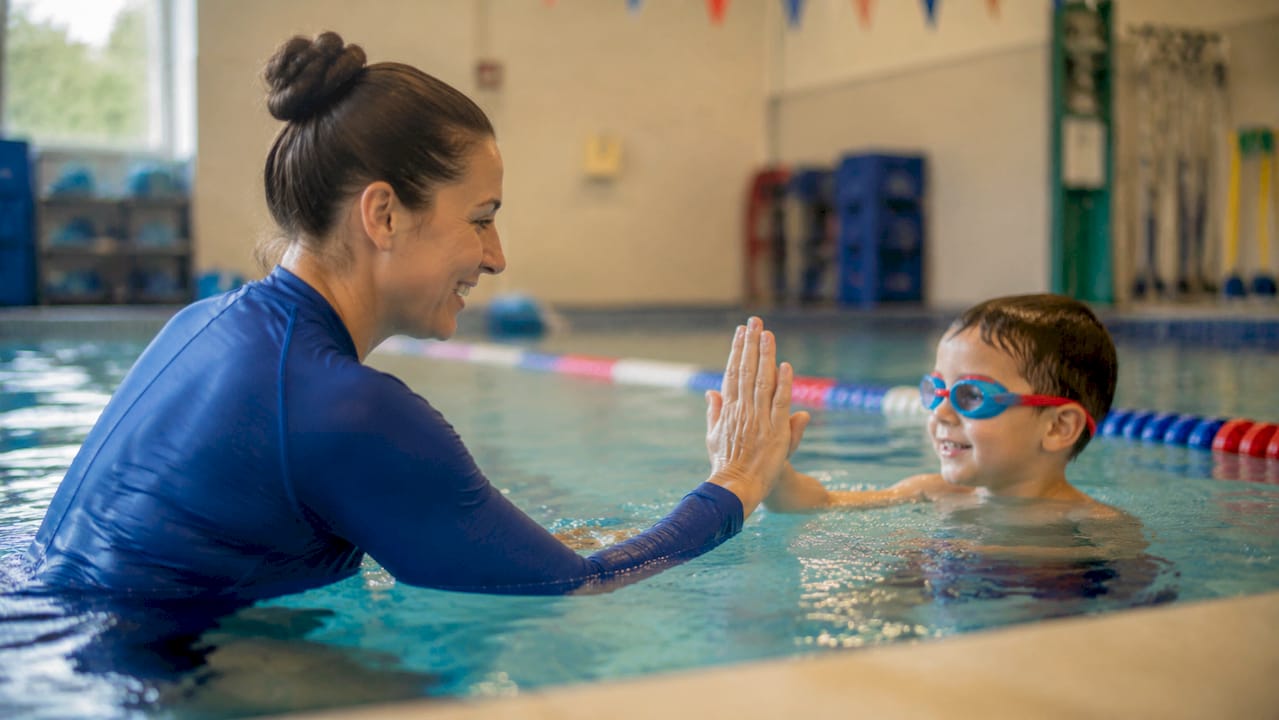
A swim lesson trial class is a structured, coach-led session that lets your child experience real swim instruction before you commit to full enrollment. It is not a casual splash session. Programs like Goldfish Swim School, The Swim Lab, and Katy Aquatics use these trials to evaluate your child’s water comfort, skill level, and readiness for group or private lessons. Understanding the swimming class trial meaning helps you choose the right program confidently, ask the right questions, and avoid placing your child in a class that is too advanced or too easy from day one.
What does a swim lesson trial class mean in practice?
A trial class is a real lesson, not a preview. The Swim Lab runs trial lessons at the same length and structure as regular classes, typically 45–50 minutes. That means your child gets a full coaching experience, not a watered-down introduction.
Not every program matches that format. Katy Aquatics offers 15–20 minute introductory trials. Shorter sessions still give instructors enough time to observe water confidence and basic coordination, but they offer less depth for placement decisions.
During a trial, coaches typically work through several key areas:
Water comfort: Does your child enter the water willingly? Do they panic or freeze?
Basic skills: Can they kick, float, or blow bubbles? Any prior experience shows up quickly.
Safety awareness: Do they respond to verbal cues and stop when asked?
Social readiness: In group trials, can they follow group instructions and wait their turn?
Breathing habits: Do they hold their breath or turn their head correctly?
The format also varies by program. Some schools run group trials with three to six children. Others offer one-on-one private trials, which give instructors a clearer picture of individual ability. Trial lessons serve a dual purpose: they introduce your child to the water environment and evaluate whether group lesson dynamics are a good fit.
Pro Tip: Before booking, call the school and ask directly: “Is this a full-length trial or a shorter intro session?” That one question tells you how seriously the program takes placement.
How do swim schools use trials to place your child?
Placement is the core function of a trial class. Skill and age-based placement is standard practice across reputable programs, and a trial gives instructors the live data they need to make that call accurately.
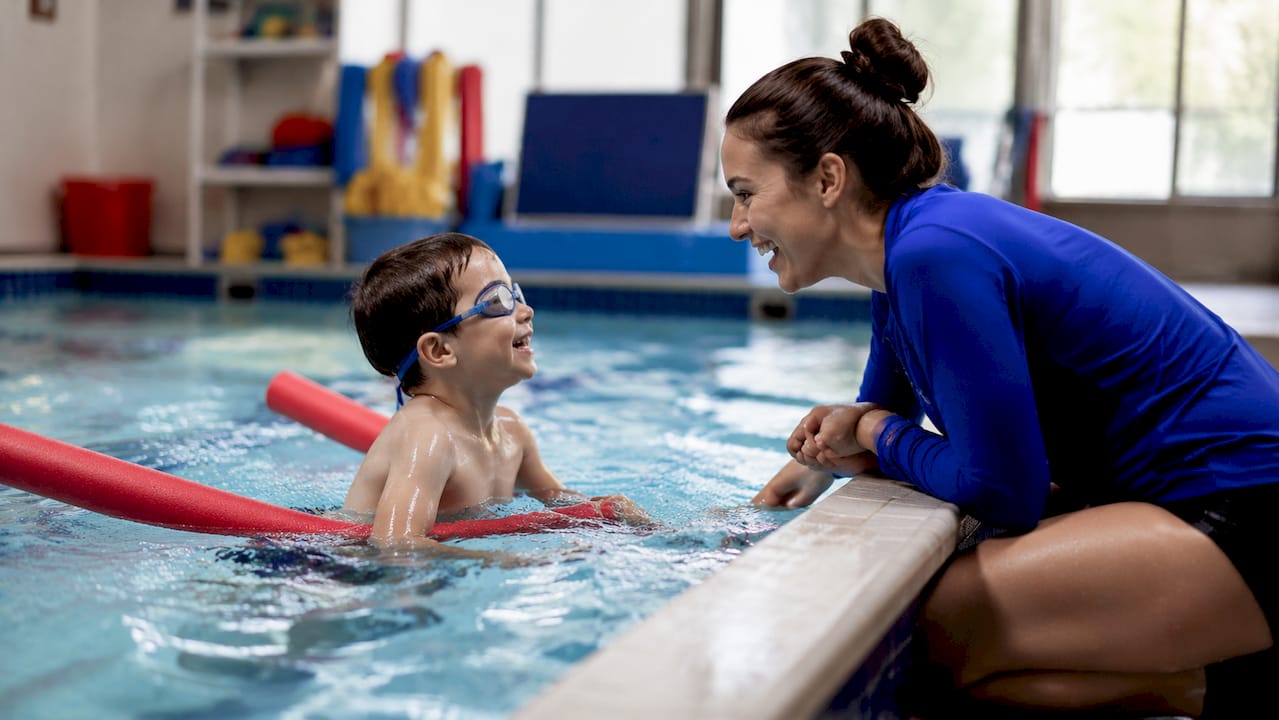
Coaches watch for four things during a trial: water confidence, physical coordination, listening ability, and breathing comfort. First lessons function as informal assessments rather than formal tests. That low-pressure approach helps children perform naturally, which gives instructors a more honest read on ability.
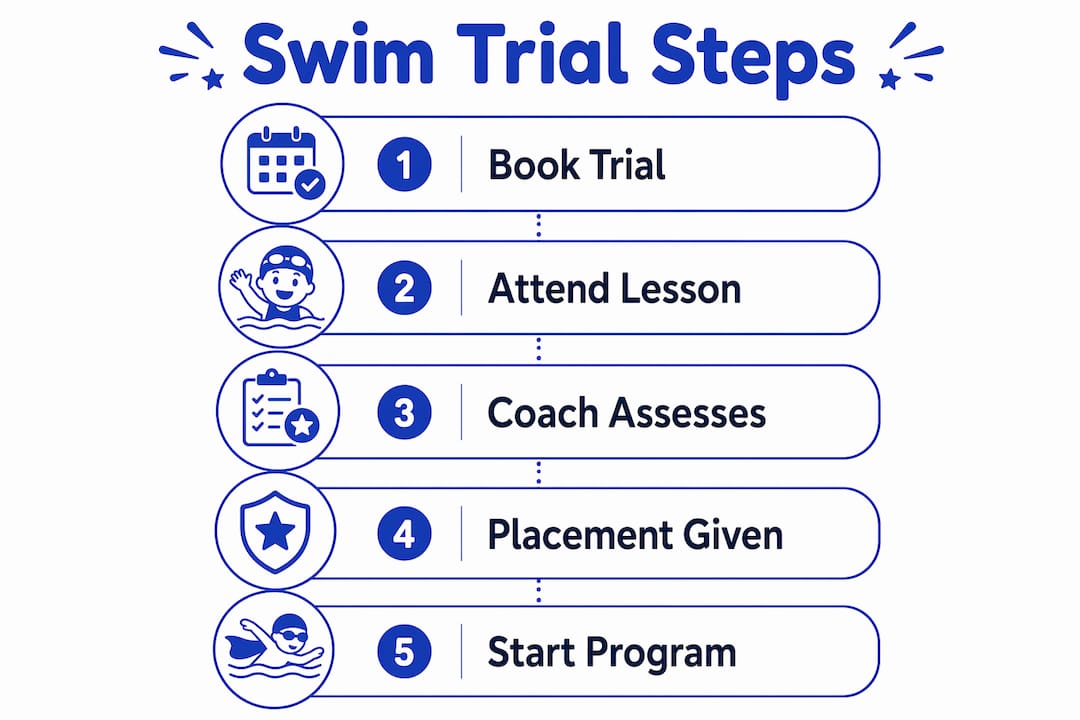
Here is how different program types typically focus their trial assessments:
Program Type | Primary Assessment Focus | Placement Outcome |
Infant/Toddler Programs | Water comfort, parent-child bonding in water | Parent-assisted beginner class |
Preschool Group Lessons | Listening, basic kicks, floating attempts | Beginner or pre-beginner group |
School-Age Group Lessons | Stroke mechanics, breath control, endurance | Skill-based level assignment |
Private Lessons | Individual coordination, fear response, pace | Custom progression plan |
Survival Swim Programs | Self-rescue instinct, floating, water entry | Safety-first skill track |
As a parent, your observation role during the trial matters too. Watching instructor-child interactions during a trial reveals teaching tone, safety attention, and how the instructor responds when a child is scared or reluctant. Those details tell you more than any marketing brochure.
Pro Tip: Tell the instructor about your child’s recent swim experience before the trial starts. Sharing prior swim history helps coaches calibrate their assessment and give you a more accurate placement recommendation.
Free vs. paid swim lesson trials: what parents should know
Trial class policies vary widely, and the fee structure often reflects program quality and instructor credentials. The Swim Lab charges $20 per trial class. That fee covers reserved pool time, a certified instructor, and a full-length session. Free trials do exist, particularly at community programs like Portland Parks & Recreation, but they often come with longer waitlists and less personalized attention.
Several factors drive whether a program charges for trials. Instructor certification level, pool facility quality, class size limits, and curriculum depth all play a role. A $20 trial at a specialized academy is often a better investment than a free session at an overcrowded community pool. You can read more about what drives swim lesson costs to understand what you are actually paying for.
Before you register for any trial, ask these questions:
Is the trial free or paid? Confirm the exact fee upfront.
How long is the session? Full-length or abbreviated?
Is it a group or private trial? Group trials show social dynamics; private trials show individual ability more clearly.
How many trials are allowed per child? The Swim Lab limits one trial per swimmer, which is common policy.
What happens after the trial? Will you receive a placement recommendation the same day?
Can I reschedule if my child is sick? Trial slots are limited and first-come, first-served, so rescheduling may mean rebooking from scratch.
The last point matters more than most parents expect. Trial slots fill up fast at quality programs. Once you book, treat it like a confirmed appointment and come prepared to make a decision.
How to make the most of your child’s trial class
Your job during the trial is to observe, not just wait. The benefits of swim lesson trials extend beyond your child’s experience. You are also evaluating the program.
Watch the instructor closely. Does the coach get down to eye level with your child? Do they use calm, clear language when a child hesitates? Do they notice when a child is overwhelmed and adjust? These behaviors signal a high-quality teaching environment. A consistent swim lesson routine builds on that foundation, so the quality of the first session sets the tone for everything that follows.
Watch your child just as closely. A child who is nervous at the pool edge but smiling by the end of the session is showing real progress. A child who shuts down and refuses to engage may need a different format, a private lesson instead of a group class, or simply more time before starting formal lessons.
After the trial, use this checklist to evaluate what you saw:
Instructor engagement: Did the coach connect with your child personally?
Safety attention: Were pool rules enforced consistently throughout the session?
Child’s emotional response: Did your child seem curious, comfortable, or at least willing by the end?
Class management: Was the group orderly without being rigid or stressful?
Placement clarity: Did the instructor give you a clear recommendation for next steps?
Communication: Did the school explain the progression path and what skills come next?
If you can check four or more of those boxes, the program is worth serious consideration. If you check fewer than three, keep looking. One trial is rarely enough to judge a child’s long-term potential, but it is enough to judge a program’s quality.
Key takeaways
A swim lesson trial class is the most reliable way to match your child to the right program and skill level before committing to full enrollment.
Point | Details |
Trial class definition | A structured, coach-led session that mirrors a real lesson, not a casual preview. |
Duration varies by program | Full trials run 45–50 minutes; shorter intro sessions run 15–20 minutes depending on the school. |
Placement is the primary goal | Instructors assess water comfort, coordination, and listening to assign the correct skill level. |
Fee policies differ widely | Some programs charge around $20 per trial; others offer free sessions through community parks. |
Parent observation matters | Watching instructor behavior and your child’s reaction gives you data no brochure can provide. |
Why trial classes tell you more than you think
After working with over 2,500 children at Superheroswimacademy, I can tell you that parents consistently underestimate what a single trial class reveals. Most come in focused on whether their child will cry or cooperate. That is the wrong thing to watch.
The real signal is how the instructor responds when a child does cry or refuse. A skilled coach does not push through resistance. They pause, redirect, and rebuild confidence in real time. That response tells you everything about the program’s philosophy. I have seen children who were terrified of water in their first trial become fully independent swimmers within months, because the instructor read their fear correctly and adjusted.
Trial classes also reveal something parents rarely consider: whether the program tracks progress in a way that keeps you informed. A trial where the instructor walks you through what they observed and what comes next is a program that respects your role as a parent. A trial that ends with a vague “she did great, see you next week” is a red flag.
The swim class trial importance is not just about your child’s readiness. It is about your confidence in the program. Use the trial to ask hard questions. Ask what happens if your child plateaus. Ask how instructors handle fear. Ask what the safety protocol is if a child slips. The answers tell you whether you are enrolling in a program that takes your child’s safety as seriously as you do.
— SUPERHERO
Start your child’s swim journey at Superheroswimacademy
Superheroswimacademy offers trial swim lessons built around one priority: your child’s safety and confidence in the water. Every instructor holds CPR and First Aid certification and is trained in the academy’s proven survival swim curriculum.
Parents receive clear placement feedback after every trial, along with a personalized plan for what comes next. With locations across Palm Beach and Broward counties, finding a convenient trial slot is straightforward. Over 2,500 children have learned to swim through this program, and parents consistently report visible progress within weeks. Schedule your child’s trial today and see exactly what a quality swim lesson looks and feels like before you commit.
FAQ
What is a swim lesson trial class?
A swim lesson trial class is a structured, coach-led session that mirrors a regular swim lesson. It lets your child experience real instruction while the instructor evaluates water comfort, skill level, and readiness for placement.
How long does a swim lesson trial class last?
Trial class length varies by program. The Swim Lab runs full-length trials of 45–50 minutes, while Katy Aquatics offers shorter 15–20 minute intro sessions.
Do i need swim lessons before a trial class?
No prior swim lessons are required. Trial classes are designed to assess your child from whatever starting point they are at, whether that is zero experience or some basic water familiarity.
Are swim lesson trial classes free?
Some programs offer free trials, particularly community-run programs. Others, like The Swim Lab, charge around $20 per session. The fee typically reflects instructor credentials and session quality.
How do i know if my child is ready for swim lessons after a trial?
The instructor will give you a placement recommendation based on what they observed. If your child showed any water comfort and responded to basic cues, they are ready to start. Most programs have beginner levels designed specifically for children with no prior experience.
Recommended
Comments