
What Is a Parent Observed Swim Lesson? A Parent's Guide
- superheroswim
- Jun 26
- 7 min read

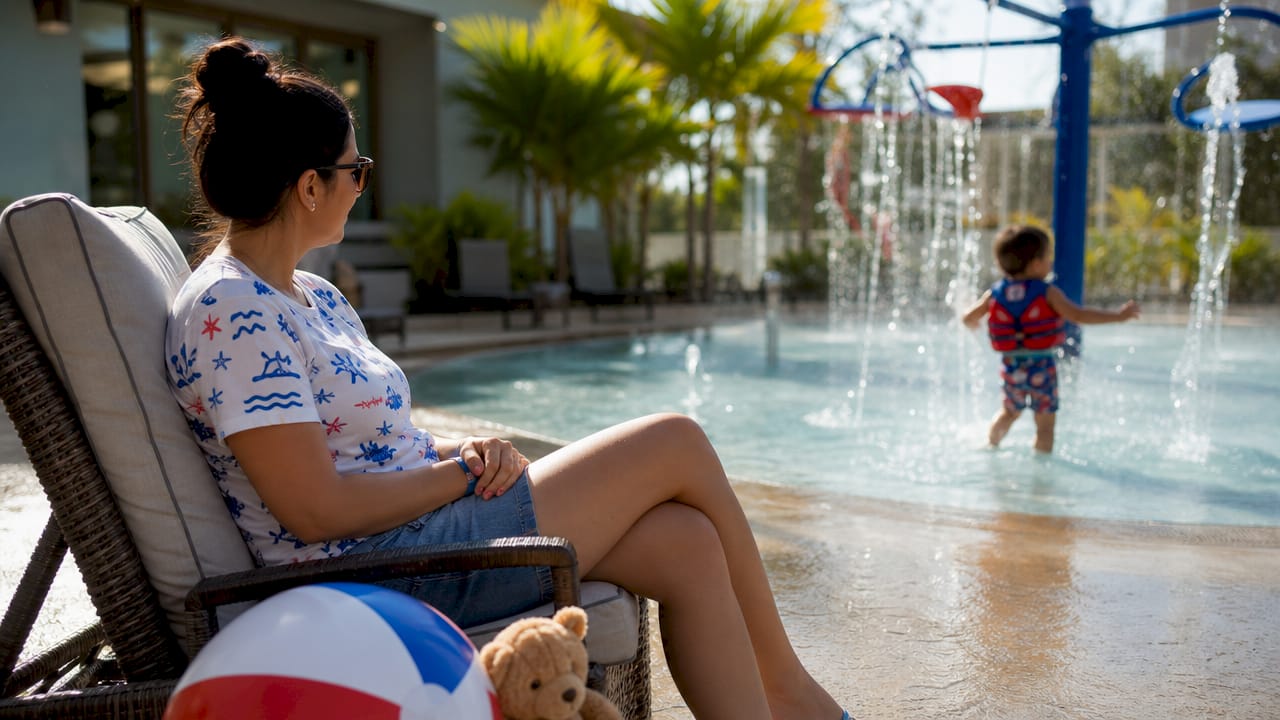
A parent observed swim lesson is a structured class format where parents watch their child’s swimming instruction from a designated poolside area, supporting safety awareness and skill development without stepping into the instructor’s role. The American Academy of Pediatrics recommends swim lessons starting at age 1 to reduce drowning risk, and parent observation is built into most reputable programs as a core feature. Superheroswimacademy, which has taught over 2,500 children across Palm Beach and Broward counties, structures its lessons so parents stay informed and engaged at every stage. Understanding how this format works helps you show up prepared, calm, and genuinely useful to your child’s progress.
What is a parent observed swim lesson and how does it work?
A parent observed swim lesson is the industry’s standard term for any swim class where a caregiver watches from outside the water while a certified instructor leads the session. The format differs by age group, and knowing those differences prevents confusion on your first visit.
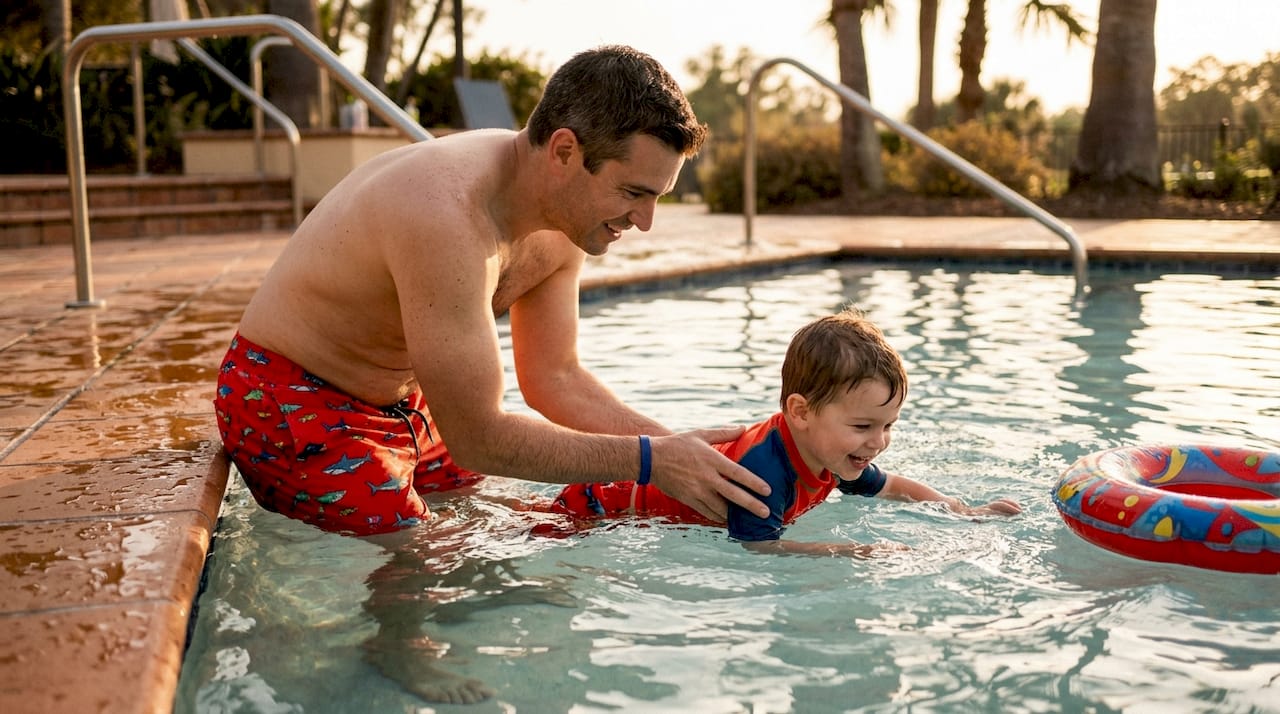
For children under 3, most programs use a parent-and-me model. Parent-and-me classes require one adult per child in the water for the entire 30-minute lesson. You are not a bystander in these sessions. You are an active participant, holding your child, following the instructor’s cues, and modeling calm behavior in the water.
For preschool and school-age children, the format shifts to true observation. Parents arrive 10–15 minutes early, settle into designated seating, and watch from poolside while the instructor runs a 30-minute session. Most programs include a brief check-in period at the start or end so you can ask questions or receive a quick progress update.
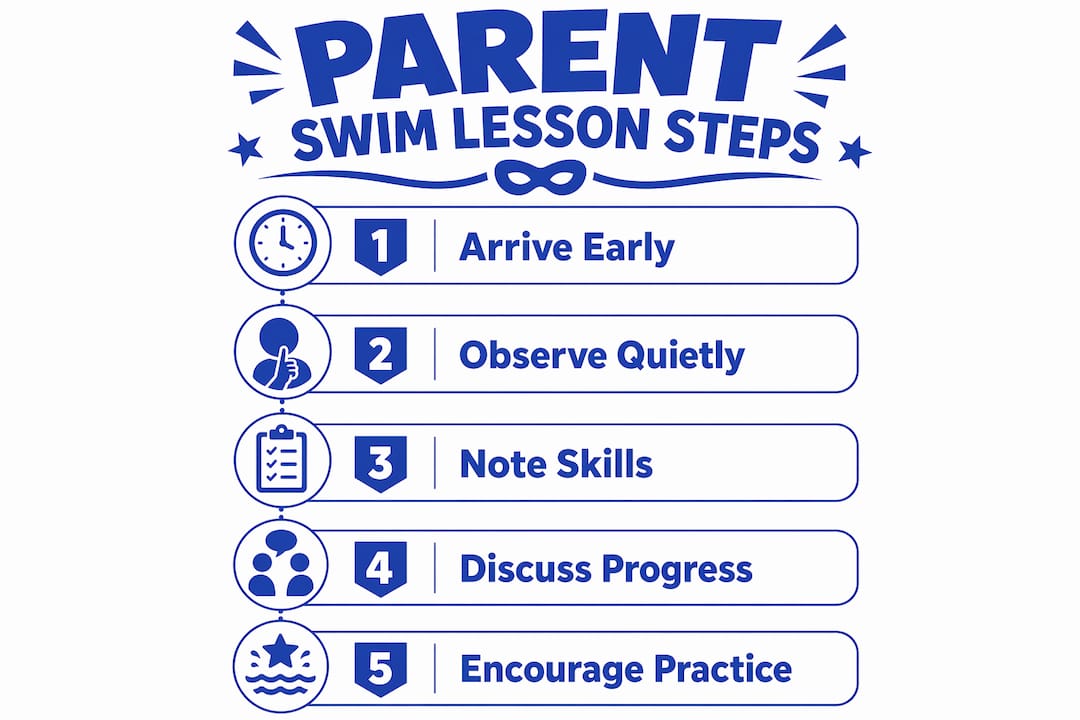
The key distinction is this: observation does not mean passive. You are reading your child’s body language, noting what skills the instructor is building, and preparing to reinforce those skills at home.
How do parent observed swim lessons work for different age groups?
The structure of parent observation changes significantly as children grow. Here is how the formats break down by developmental stage:
Infants and toddlers (ages 1–3)
One parent or caregiver enters the water with the child for every session
The adult follows the instructor’s lead on water entry, submersion, and floating techniques
Physical closeness helps the child feel secure while building foundational water skills
Water competency training at this age directly reduces drowning risk for children ages 1–4
Preschool children (ages 3–5)
Parents typically move to poolside seating as children gain independence
Children ages 3–6 often progress faster when parents watch from outside their direct line of sight
Separation encourages children to focus on the instructor rather than seek parental approval after every skill attempt
Sessions remain 30 minutes, with a brief transition period before and after
School-age children (ages 6 and up)
Parents watch from designated viewing areas and follow program safety protocols
Coaching from the sidelines is actively discouraged by most programs, including those following USA Swimming guidelines
Progress updates happen before or after lessons, not during
Understanding age-appropriate swim instruction helps you set realistic expectations for each stage and avoid the common mistake of treating a 6-year-old’s lesson like a parent-and-me class.
What are the benefits of parent observed swim lessons?
Parent observation delivers measurable benefits for both children and parents. These go well beyond simply watching your child splash around.
For children:
Emotional security. Parent-child swim lessons act as an emotional anchor for young swimmers. Children read their parent’s calm reaction to water and use it to regulate their own anxiety. A relaxed parent signals that the pool is safe.
Faster skill development. Children who practice swim skills between lessons improve faster than those who only attend class. Watching lessons gives you the knowledge to run those practice sessions correctly.
Growing confidence. Knowing you are nearby, even from a distance, gives anxious children a safety net that gradually becomes unnecessary as their skills build.
For parents:
Water safety awareness. Observing lessons teaches you to recognize swim readiness cues, proper body position in water, and early signs of fatigue or distress.
Stronger bonding. Parent-child swim lessons create a shared experience that strengthens the parent-child relationship, especially in the parent-and-me format where you are physically in the water together.
Peace of mind. Seeing the instructor’s methods firsthand builds trust in the program and reduces the anxiety that comes from dropping your child off and waiting blindly.
Water activities also support broader sensory and motor development in young children, making swim lessons a high-value investment beyond safety alone.
Pro Tip: After each lesson, spend five minutes asking your child to show you one thing they practiced. This simple habit reinforces the skill and signals to your child that you value what they learned.
How can parents maximize the effectiveness of observing swim lessons?
Your behavior during observation directly shapes your child’s experience in the water. Parental stress signals pool danger to children. An anxious facial expression, a tense posture, or an audible gasp when your child goes underwater can undo minutes of careful instructor work.
The most effective parents at poolside follow these practices:
Stay calm and neutral. Your child will glance at you for reassurance. A relaxed, interested expression tells them everything is fine.
Avoid coaching from the sidelines. Acting as a secondary coach disrupts the instructor’s cues and confuses your child about who to listen to. Save feedback for after the lesson.
Communicate with instructors outside lesson time. Ask questions before the session starts or after it ends. Interrupting mid-lesson breaks the child’s focus and the instructor’s flow.
Manage your own expectations. Progress in swim lessons is rarely linear. A child who seemed to regress one week often makes a visible leap the next.
For anxious children, use a gradual distance strategy. Severely water-anxious children benefit from parents standing in their sight during early lessons, then gradually moving further away over 3–5 sessions as trust and confidence grow.
Pro Tip: Bring a small notebook to lessons. Jot down one or two skills the instructor focused on. Use those notes to guide your next backyard pool or bath time practice session.
Trusting qualified swim instructors is not passive parenting. It is the most effective thing you can do to accelerate your child’s progress.
Parent participation vs. observation only: which format fits your child?
These two formats serve different developmental needs. Choosing the wrong one for your child’s age or temperament slows progress.
Feature | Parent-and-me (in-water) | Observation only (poolside) |
Typical age range | Ages 1–3 | Ages 3 and up |
Parent location | In the water with child | Designated seating area |
Parent role | Active participant | Attentive observer |
Child’s focus | Parent and instructor together | Instructor only |
Primary benefit | Emotional security, bonding | Independence, faster skill gain |
Session length | 30 minutes | 30 minutes |
The in-water format works because young children lack the cognitive ability to follow an instructor’s cues without a trusted adult nearby. The observation format works because older children need to practice responding to authority figures independently. That skill transfers directly to school, sports, and every other structured learning environment.
Switching formats at the right time matters. Moving a 4-year-old from parent-and-me to observation-only lessons is not abandonment. It is the right developmental step. Programs like Superheroswimacademy guide parents through this transition with clear goals and regular progress updates so the shift feels natural rather than abrupt.
Key Takeaways
Parent observed swim lessons are most effective when parents understand their role by age group, stay calm during observation, and reinforce skills between sessions.
Point | Details |
Definition is age-dependent | Children under 3 need in-water parent participation; older children benefit from poolside observation. |
Calm presence matters | Anxious parental expressions signal danger to children and can slow skill development. |
Observation is active | Watch for skills practiced so you can reinforce them during home bath or pool time. |
Gradual separation builds independence | Moving further from anxious children over 3–5 sessions accelerates confidence and skill gain. |
Practice between lessons accelerates progress | Children who reinforce swim skills outside of class improve faster than those who only attend lessons. |
What I’ve learned after watching hundreds of families at the pool
Parents consistently underestimate how much their presence affects their child in the water. I have watched children who were perfectly calm with an instructor suddenly freeze the moment they spotted a worried parent gripping the pool fence. The child was not reacting to the water. The child was reacting to you.
The hardest thing for most parents to accept is that stepping back is an act of support, not neglect. When you sit quietly, watch with genuine interest, and resist the urge to wave or call out, you give your child permission to focus. That focus is where real learning happens.
Parents also tend to measure progress by the wrong metrics. They want to see their child swim a lap. What they should be watching for is whether their child enters the water without hesitation, whether they recover from a stumble without panicking, and whether they listen to the instructor without looking back for approval. Those are the real milestones.
My strongest advice: practice matters more than most parents realize. The lesson plants the seed. What you do between lessons determines whether it grows. Even five minutes of supervised water play reinforces what the instructor built. Show up, stay calm, take notes, and practice. That combination produces confident, safe swimmers faster than any single lesson format alone.
— SUPERHERO
How Superheroswimacademy supports parent observed swim lessons
Superheroswimacademy builds parent observation into every program it offers across Palm Beach and Broward counties. Each instructor holds CPR and First Aid certification and follows a proven survival swim curriculum designed specifically for infants, toddlers, and young children.
Parents receive clear goals and regular progress updates so observation never feels like guesswork. Whether your child is ready for a parent-and-me class or an independent lesson, Superheroswimacademy matches the format to your child’s age and confidence level. Explore swim lessons near you or browse online swim courses to find the right starting point for your family.
FAQ
What is a parent observed swim lesson?
A parent observed swim lesson is a class where parents watch their child’s swimming instruction from a designated poolside area while a certified instructor leads the session. For children under 3, the format typically requires a parent in the water alongside the child.
At what age can children take swim lessons without a parent in the water?
Most programs transition children to observation-only lessons around age 3, when children can follow an instructor’s cues independently. Children ages 3–6 often progress faster when parents watch from outside their direct line of sight.
Can parents talk to the instructor during a swim lesson?
Parents should save questions for before or after the lesson, not during. Interrupting mid-session breaks the child’s concentration and disrupts the instructor’s teaching flow.
How long are parent observed swim lessons?
Most parent observed swim lessons run 30 minutes, with parents arriving 10–15 minutes early for check-in. A brief transition period at the start or end allows for progress updates between the instructor and parent.
Does watching swim lessons actually help my child improve?
Yes. Children whose parents observe lessons and reinforce skills at home between sessions improve faster than those who only attend class. Observation gives parents the knowledge to run effective practice sessions outside of formal instruction.
Recommended
Comments